In Acadia Parish, the sound of the accordion tells a story of migration, memory, and cultural fusion. At Roberts Cove Germanfest, German heritage meets the Cajun and Creole rhythms of Louisiana, showing how an instrument carried


When the accordion comes alive at Roberts Cove Germanfest, it carries the sound of two homelands. Germany lives in the pulse of the polka, while the heartbeat of Cajun and Creole Louisiana answers in the dancers’ steps. Between them unfolds a story of migration, memory, and music, one that continues to echo across Acadia Parish today.
Here, heritage is a kind of gumbo: German roots slow-simmered with Cajun and Creole traditions, bound together by the unmistakable voice of the accordion.
This shared sound didn’t appear overnight. It was built, piece by piece, through generations of adaptation, experimentation, and community.
The story begins more than a century ago. In 1884, Mervine Kahn, the son of German immigrants, opened a general store across from the train depot in Rayne, just one year after the town’s incorporation and two years before Acadia Parish was even established.
A French-speaking Jewish merchant, Kahn created more than a place of business; his store became a gathering place for surrounding communities. Known for quality goods and friendly service, it remained in operation for 106 years, closing only in 1991.
Among the fabrics, tools, and groceries, Kahn sold German-made accordions, an unfamiliar instrument to local Cajuns at the time. There were no teachers, no tutorials, no guidebooks. Early musicians learned by ear, by instinct, and by trial.
One story, passed down through generations, captures that moment of discovery. A local musician known as Nonc Adam (Uncle Adam in French) saved his money to purchase an accordion, but asked Kahn if he could try one out before committing to it.
When he began to play, the music spilled out of the store and into the street. A crowd gathered. One by one, people dropped coins into his hat; someone even added a jar of moonshine. By the time he finished, Adam had earned enough to buy the instrument, without using his savings.
Moments like that reveal the accordion’s irresistible appeal.
That same energy still defines Cajun music today. Steve Riley, leader of the Mamou Playboys, describes it as music that “opens doors”—dynamic, powerful, and impossible to ignore. For him, the accordion is both inheritance and future: “A poor home is one without an accordion.”


For Bubba Hebert, great-grandson of Iry Lejeune, the connection runs even deeper. He says, “It’s in the blood.” As a child, when he grew fussy, his mother would place his grandfather’s accordion in his play area, and its presence alone was enough to calm him. By five, he was demanding his own. A few years of lessons turned into a lifetime of playing, proof that tradition isn’t just preserved—it’s lived.
That same generational thread runs through Zydeco as well. As Church Point native, and Grammy award recipient Chubby Carrier explains: “My grandfather played the accordion. My father played the accordion. They taught me as the third generation to play the Zydeco music in our family… I wanted to keep my Daddy and my grandfather’s legacy going… we don’t want it to die.”
Crowley music legend Wayne Toups took that tradition and pushed it forward. Another Grammy-winning artist, Toups pioneered “Zydecajun,” blending Cajun and Zydeco into a sound that is both rooted and innovative.
As Toups explains: “Well, you know what, it belongs, just like the food. It belongs. I mean, you cannot define Louisiana without that Cajun sound… whenever you hear a diatonic accordion, the first thing you think about is Louisiana.”
For Toups, the accordion isn’t just an instrument, it’s identity. A sound that signals place, culture, and history the moment it’s heard.

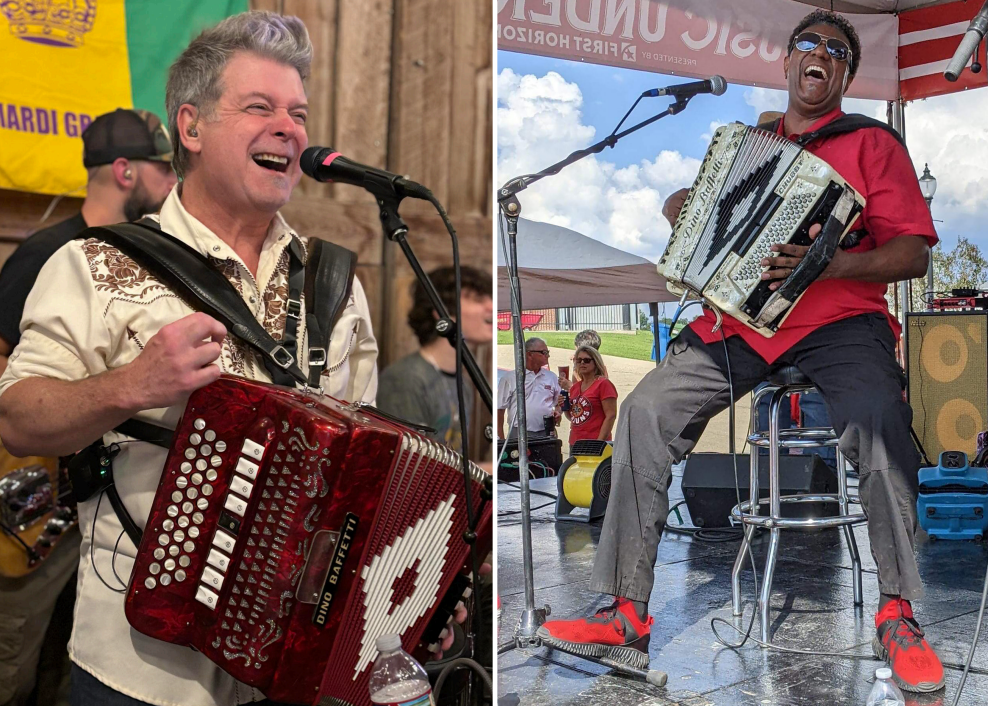
To musicians and communities across South Louisiana, the accordion has become a defining voice, one that carries far beyond the region’s borders. But it wasn’t always that way.
Before the accordion found its place, South Louisiana music relied heavily on fiddles and guitars. There was just one problem: volume. Wooden floors, leather-soled shoes, and multiple couples dancing made it nearly impossible to hear the stringed instruments. As accordion maker Larry Miller explains, “you couldn’t hardly follow the rhythm.”
In 2002, Jerry joined IBERIABANK, which was undergoing significant expansion. He was appointed Senior Vice President and led the Private Banking division, catering to affluent clients and high-net-worth individuals. He focused on providing personalized banking solutions, estate planning, and investment advisory services.
The triangle helped cut through the noise, but the sound was still incomplete.
At first, the accordion didn’t quite fit. Early instruments came in keys that clashed with Cajun traditions. Only later, when they were built in C and D, aligning with fiddle tuning, did everything click. Suddenly, the accordion didn’t just join the music; it transformed it, giving dancers a rhythm they could feel and follow.
Then came another challenge. During World War II, accordion imports declined sharply. Soldiers returned home with stories of destruction: shops gone, instruments shattered. But instead of losing the music, Louisiana craftsmen adapted. They learned to repair accordions, then to build them from scratch, ensuring the survival of a sound that had become central to Cajun and Creole identity.
That spirit of adaptation continues today.

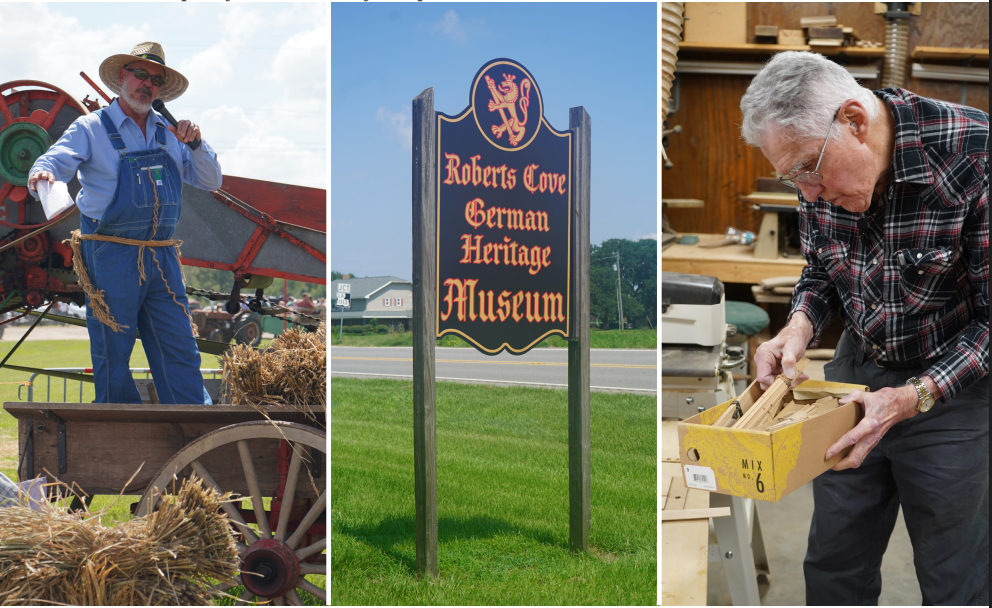
In 1994, when Louis Cramer founded Roberts Cove Germanfest, he turned to Larry Miller for guidance. Miller, one of the two co-founders of Iota’s TeeMamou Mardi Gras Folk Life Festival, shared his experience and resources, even loaning a stage for Germanfest’s first year.
More than thirty years later, both traditions endure. Germanfest now draws thousands, while the Cajun Mardi Gras celebration continues just fifteen miles away in Iota. Distinct, yet deeply connected, the two festivals reflect the same truth: Acadia Parish is not one story, but many, woven together.
At Germanfest, the accordion still leads. It rises above the hum of conversation, the clink of beer steins, and the laughter of children running barefoot through the grass. Families gather. Traditions are remembered. New memories are made.
Each October, a founding family is honored. In 2026, that honor goes to the Habetz family, descendants of the German Catholic settlers who arrived in the 1880s. Their legacy, like the festival itself, centers around St. Leo IV Catholic Church and the surrounding community that continues to keep those roots alive.
Like Acadian culture before it, German heritage in the region faces the challenge of preservation. Languages fade. Traditions shift. Time moves forward.
But for one weekend each year, the music returns, loud, proud, and unmistakable.
And when the accordion comes alive, it carries everything with it: history, identity, and the enduring rhythm of a place that refuses to forget.