


The Remarkable Journey of a Distinguished Creole Cardio-Thoracic Surgeon, Nurtured by Heritage and Fueled by Unconditional Family Support
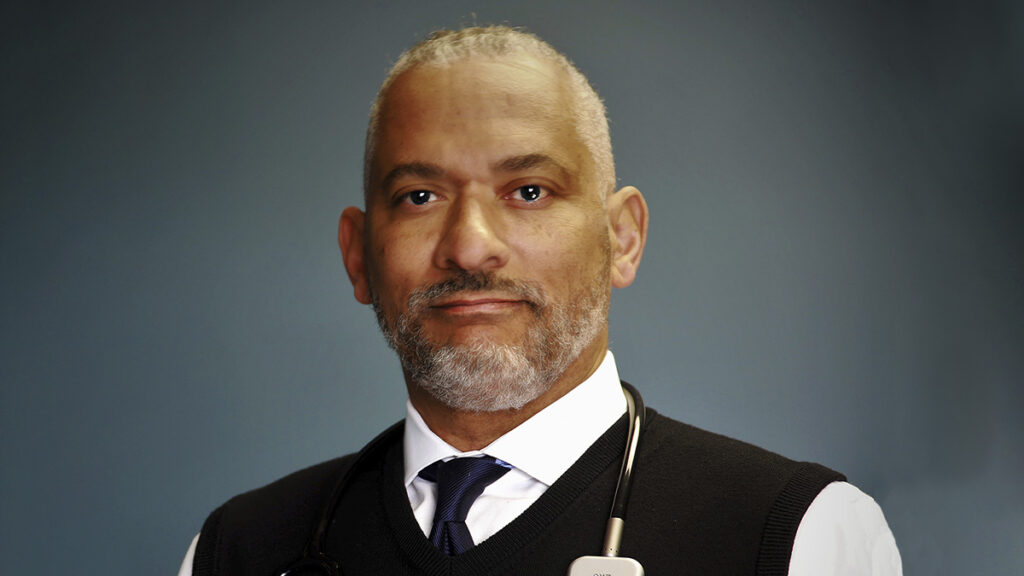
Statistically speaking, Dr. Antoine Keller is a glaring anomaly, a veritable rara avis and arguably a bona fide medical superhero. A distinguished African-American cardio-thoracic surgeon with over twenty years experience, based out of Lafayette, Louisiana, he is without doubt the modern black Creole spiritual descendant to of the famous classical physicians Imhotep, Hippocrates and Galen.
This suave, resolutely handsome man in his mid-late fifties, possessed of a burnished copper completion with red undertones, a pencil thin moustache and a salt and pepper beard connoting gravitas, exudes both precise medical knowledge and moral authority, as well as consummate professional expertise. His face – warm, re-assuring, and suffused with compassion as well as competence (think of a black Creole George Clooney in E.R.) – is that of a dedicated specialist highly skilled in matters of the heart and the lungs – and one all patients long to behold when encountering a physician whose vast anatomical erudition, decades of experience and exceptional dexterity and deftness of touch in the operating theatre will ensure that their chances of survival or longevity exponentially increase.



Parents
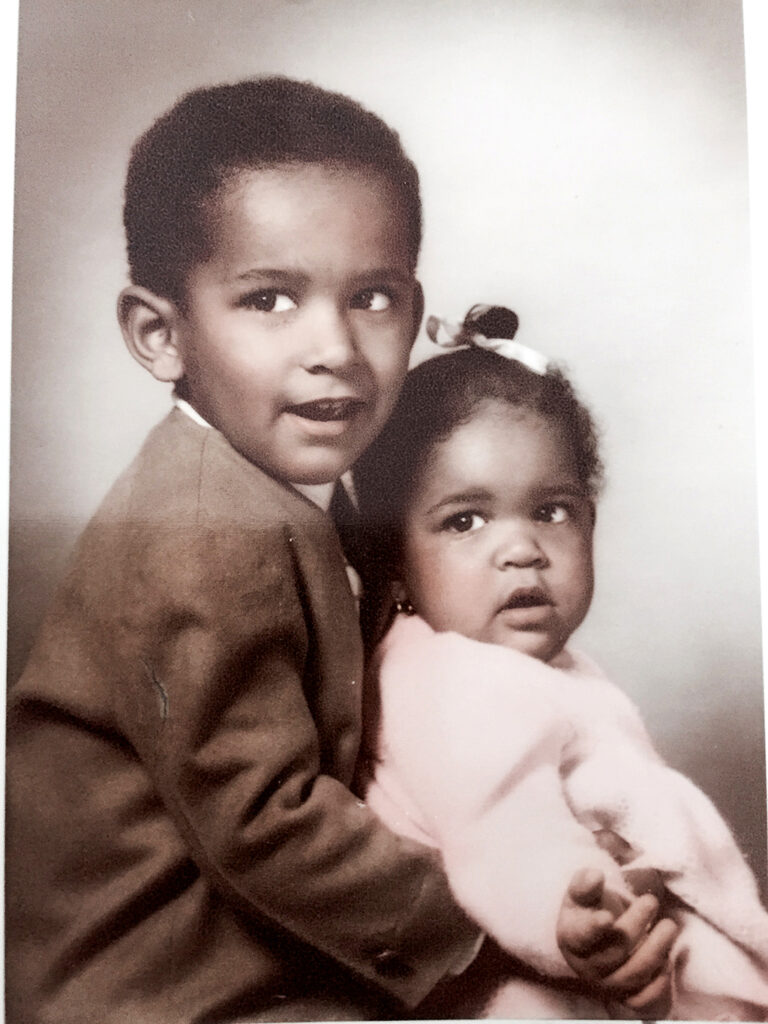
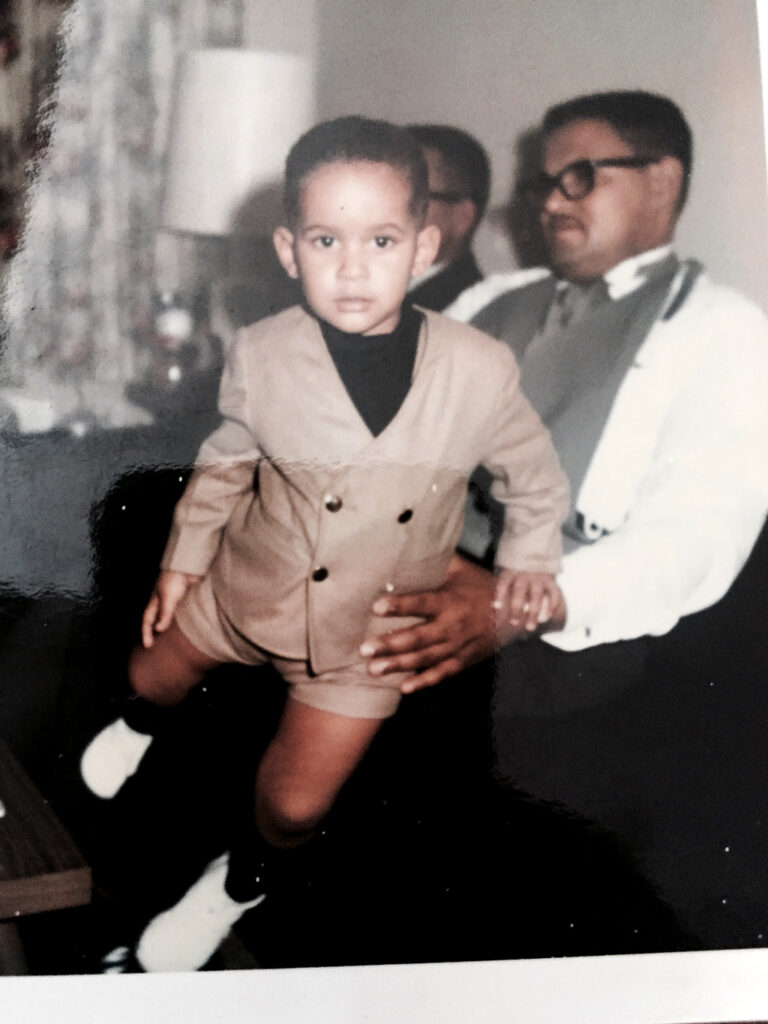
Of Creole stock with some French and Indian heritage, both sides of Dr. Keller’s family hail from Louisiana. Born in New Orleans in the 1940s, Dr. Keller’s father attended St. Augustine High School, then went into the army and travelled the world, to Germany, the Far East and also India. It was these global peregrinations which inspired him to want to be a political scientist. Thus on leaving the army, as his son relates, “he went to college on the GI Bill and then realised that he had an affinity for African politics and African history. So he packed up the family and moved to Wisconsin to the University.”
As Dr. Keller ruminates on has father’s many achievements from his humble beginnings, a note of immense pride is discernible in his voice. “It was remarkable to me that he ended up accomplishing all the things that he did, considering where he started.”
Dr. Keller’s mother was from a small rural Louisiana town, one of nine children. Her father took care of a sugar cane farm and the family lived in a wooden clapboard house with no AC and no refrigerator, only an ice box. As he explains, “It was a rural existence that was akin to living on a plantation. It wasn’t as oppressive, because slavery was obviously done by then, but there was certainly servitude and it was very a segregated place.”
One seminal influence in his life has been the stability and the unconditional love and support afforded to him by his extended family. As he explains, “We would always come back to the family. That was a grounding support service to me. Whenever we would go overseas, we would always come back here because this is where most of our family was. That was very comforting to me growing up, to know that there was a place where you had unconditional support, no matter what was going on.”

Peripatetic Childhood
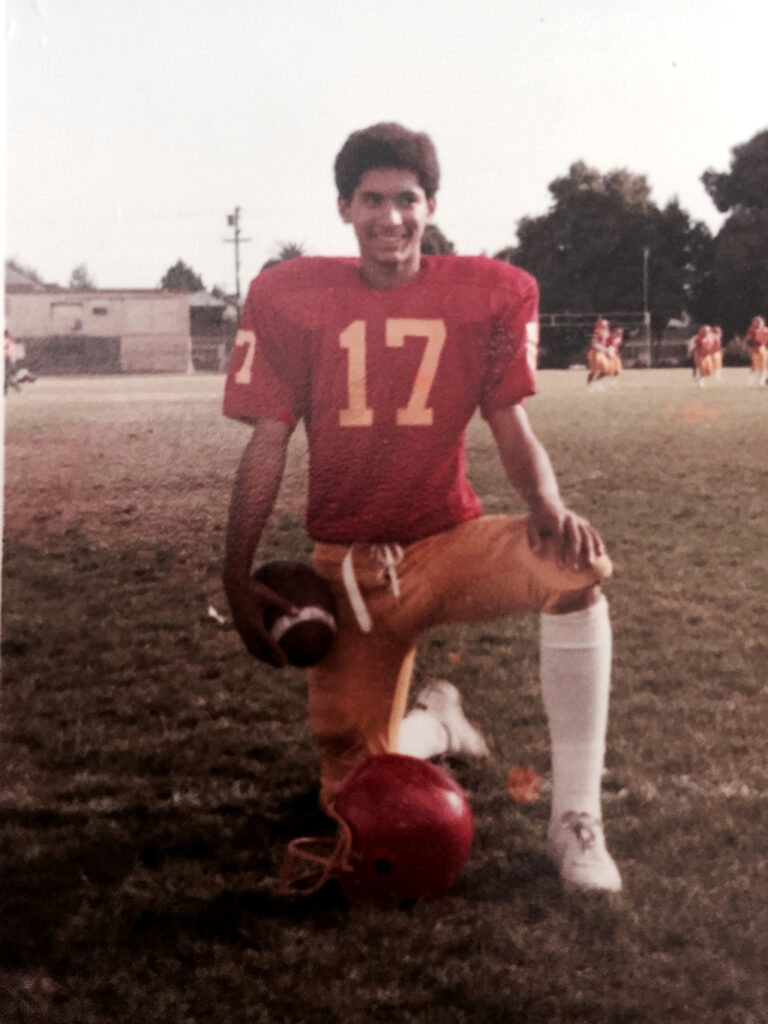
Due to his father’s academic position as Chairman of African studies at UCLA and his scholarly work studying elections and emerging democracies, first in Kenya and then in Ethiopia, Dr. Keller had a decidedly peripatetic childhood. It is one which he sees as a wholly positive experience, and one which was instrumental in contributing to the development of both his intellectual curiosity and his profoundly humanistic and culturally relativistic worldview.
Arriving in Nairobi, Kenya aged five, another colossal influence on his intellectual and mental development as a boy was a neighbour and family friend. As Dr. Keller explains in his distinctively rich, sonorous baritone, fondly recalling his east African childhood sojourn, “One of the best things about my time in Kenya was that we had a friend, Hoover Liddell, who was working with the Peace Corps, building schools in the bush outside Nairobi. He was a mathematician. This was before television. Obviously, we didn’t have TV, ESPN or video games or anything like that. So I lived next door to a mathematician who always had puzzles and games and stimulating things for us to do. In those days kids didn’t say that they were bored. The answer was, “Well, go outside and play if you’re bored.” So we did a lot of that, but I always had access to mind games and teasers because I lived next door to a mathematician. And I think that really shaped and moulded my early childhood.”
The family then moved to Addis Ababa in Ethiopia when Dr Keller was in Junior High school, at the time of the revolution there in 1974. Marvelling at the spectacular aesthetic grandeur of the country and its breath-taking scenery, juxtaposed with the pejorative and hostile press it so often receives in the media, he affirms that Ethiopia is “one of the most beautiful places I’ve ever been in my entire life.” He continues, “People think about Ethiopia and they think of famine and desert. Yet there’s a reason why it’s the cradle of civilization – because it’s just such an incredibly beautiful place.”
Yet one decidedly unsavoury incident served not only as a harbinger of the country’s ensuing descent into instability, military violence and a febrile environment not conducive to the well-being and safety of children, but also as a catalyst for his family to leave Ethiopia. As he explains, recalling the traumatic event, “We were coming home one day from school and the military police stopped the bus. The bus driver started having an argument with the police and they made everybody get out of the bus and kneel down on the side of the road and put our hands on our heads. They had machine guns everywhere and there was this big fight with the bus driver. Eventually they let us go, but when my mom heard about it, I think she was done, so we just left. It was so bad, we actually left my dad there, and he followed us a few weeks later.”
Dr. Keller’s nomadic childhood afforded him not only inestimable travel opportunities, golden African vistas and the broadening of his geographical and intellectual horizons, but perhaps more importantly, having been exposed to a plethora of foreign climes, cultures and stimuli, a truly international perspective at odds with traditional American insularity. As he says, reflecting on that time of his life, “It was fortunate for us because we got to go to beautiful places. But that experience (in Ethiopia) was particularly harrowing because of the fact that we were in the midst of the conflict. But it was a fantastic time for me during that part of my childhood, because I was exposed to a different worldview – one which I think very few people who grow up in this country can appreciate.”
These global travels also gave him a heightened sense of gratitude and of lucidity about what really matters in life. Looking back on the halcyon days of his childhood, he reflects with philosophical detachment and wisdom gleaned from his travels, “We did a lot with a little. We did not have 30 different kinds of cereal to eat in the morning, and we didn’t have all the entertainment choices that we have now. So I learned to be grateful for having all of those things, but also to understand that we can probably do without most of them.”


Education
Dr. Keller began his formal education in Kenya. As he recalls fondly, “The first school I ever went to was in Nairobi. It was called Consolata Elementary School and it was a Catholic school.” He continues, recalling the school uniform and the daily recitals.
“We used to wear khaki shorts and white shirts with a crisscross pattern of light blue. We used to have to stand in the courtyard of the school and recite our prayers, the Lord’s Prayer and Hail Mary. I didn’t know my prayers, so I was lip syncing my prayers long before Milli Vanilli.” His jocular reference to the 80s pop duo famously caught lip syncing, said with his eyes twinkling, injects some mirth into our conversation.
He subsequently attended UCLA and then proceeded to medical school at Duke University in North Carolina. His experience of living in the American South was both formative and an eye opener, and thus an immensely valuable experience. “It was a bit shocking to me to be in the South culturally because it was so different from all of the other places that I had ever been, or lived, or spent any time.”
After Duke, Dr. Keller did his general surgery residency at Tulane University in New Orleans, having been recommended for the position by his chairman at Duke. Due to his parents having family in the area, as he explains, “Tulane was a very comfortable place for me, because my parents had eleven siblings and all of my cousins, aunts and uncles were here in Louisiana. So it was a good place for me to be.”
Having returned to North Carolina for his cardiac surgery training, he was then personally recommended for a job in Lafayette – a job which used the endo-vascular skills (doing cardiac surgery with catheters and wires, instead of with big cuts) which he had learnt at Carolinas Medical Center.


Serendipity on his Medical Journey to becoming a Doctor
Dr. Keller’s journey to a professional life in the highest echelons of cardiac surgery began inauspiciously in high school in Berkley with a kindly, solicitous biology teacher who saw his potential and encouraged him to submit an essay to the California Medical Association who were running a competition for high school students. He duly won the prize – one person from the entire state of California was granted a research apprenticeship in Oakland. “So I did breast cancer research for the summer and then part of the next year.” He continues, clear about its sizeable impact on his career trajectory. “It changed my life because it exposed me to the hospital. It gave me a model and a template to be able to say, Well if this is what I want to be, then this is what I will have to do, because I see these people doing these things.”
It was however ironically an accident which directly influenced the course of his university studies. Breaking his wrist during his junior year of college was actually serendipitous and a huge boon for the rest of his life. Explaining what transpired, he says with gratitude, “When I broke my wrist, my orthopaedic surgeon had just finished his residency at Duke. He asked me where I was applying to school. I didn’t really know where North Carolina was or where Duke was, but I said, “No, I hadn’t applied to Duke.” He said, “If you apply, I’ll write you a letter of recommendation.” So I applied about two weeks after the deadline. They accepted me and they even gave me a scholarship.”
As he recounts, somewhat emotional even after all these years, “So I went to Duke and it was just fortuitous that I broke my wrist. It was the best thing that ever happened to me.”
Ruminating on the remarkable course of his life’s journey, Dr. Keller’s exhortation’s is powerful and prescient. “You should pay attention to your circumstances and take advantage of opportunities when they present themselves. And how important relationships are and getting to know people and to let them get to know you.”
Decision to become a Cardiac Surgeon
Dr. Keller’s motivation to become a cardiac surgeon speaks to something remarkable and compelling in his psyche – the active desire to be the last line of defence. As he volubly explains, “When I was trying to decide what type of doctor to be, I chose something that was the backstop for everything else – cardiac surgery. The cardiac surgeon is the person they call when nobody else knows what to do or can do anything else. There is nobody else behind us. So I think that challenge probably lead me in the direction of cardio-thoracic surgery, because you just have to work harder and just be the one who is going to take care of things when nobody else can.”

Race in America
Dr. Keller’s time at Duke Medical School afforded him much more than merely a top class medical education. It also powerfully brought home to him the ubiquity of race as a defining, all-encompassing concept in America, and its overwhelming importance in contemporary society, not to mention its pernicious, essentially limiting nature. This knowledge remains with him to this day. He explains with his customary clinical lucidity, “Living in the South as a young adult really brought into sharp relief the fact that race pervades everything in America, specifically in the south. And very much more than I had originally come to know growing up. Race and culture are omnipresent, more so than class or classism in this country. So it was an awakening.”
He continues with the comprehension and conviction of one who has thought deeply about the matter. “Race is paramount in terms of the way people see every day. We spend a lot of time in medicine talking about implicit bias and the impact that has on people and how they treat other people. And it is something that I have struggled with over the years in my professional life, just because there are a lot of micro-aggressions directed at physicians who are African-American that might not be directed at them if they were not African-American.”
However he readily admits with a tone of ambivalence in his voice that sometimes even the best education does not offer sufficient insulation or protection against insidious racism, “So I’m conflicted about the importance that (race) should have in my daily life, because it’s always there. I’ve been to the best schools; I’ve had the best training; I have had experiences that most people would never even dream of, but sometimes that’s not enough.”
It is evident when Dr. Keller speaks that he does not feel America has yet reached the much vaunted post-racial nirvana that was somewhat naively heralded during the Obama years. As he cogently explains, “When I’m talking to kids about race, invariably the question will come up, “Well, this is the 21st century. We don’t have racism anymore. And since the Civil Rights Movement we don’t have a race problem. Obama was the President. How can we have a race problem?” He continues with a genuinely quizzical expression on his face. “This fascinates me because I think it just took the last five years for us to realise that all of these implicit biases that you wondered whether people might have, or not have, were made explicit and continue to be made explicit. And so now you don’t have to wonder about it. They must have always been there, must they have not?”
He believes these implicit biases (which form the basis of quotidian racism) “are really front and centre and a primary consideration for everyone when they interact with everyone else.” With characteristic honesty and laudable, revealing candour, he even states, “These biases go both ways, because there are times in which I make a presumption about someone being racist before I’ve even said hello to them.”


On his Creole Heritage
Dr. Keller is naturally very proud of his Louisiana Creole heritage. Reflecting on what it means to be Creole, he enthuses that, “Creole is a melting pot of cultures, not necessarily from the African diaspora, but from an African-Caribbean and multicultural world perspective.” Crucially, he is at ease with the intrinsic hybridity which he sees as the key component of being Creole. “What’s more, it’s okay to have all of these different kinds of mixes, because each of those individual cultures contributes to the final Creole expression of culture.” He continues, evidently passionate, accepting the multiplicity of Creole identity. “I think that’s really important to me and part of it is affirming the fact that it’s okay to be Creole, because we enjoy all of these things and nuances about the way that we are.”
His own Creole Identify
The ostensible disparity between genotype and phenotype is often a source of consternation (and occasionally joy) in Creole communities worldwide. Dr. Keller is black, and naturally identifies as such, but, like many people with his reddy brown complexion, undeniably possesses a racially ambiguous phenotype which means that he is often mistaken for a variety of nationalities and ethnicities. As he explains somewhat stoically, by now used to it, “I’ve been mistaken for Ethiopian a lot, because of my nose. I’ve also been mistaken for Middle Eastern, Puerto Rican and Dominican. In Cairo, everyone tried to speak to me in Arabic.”
Biracial Children
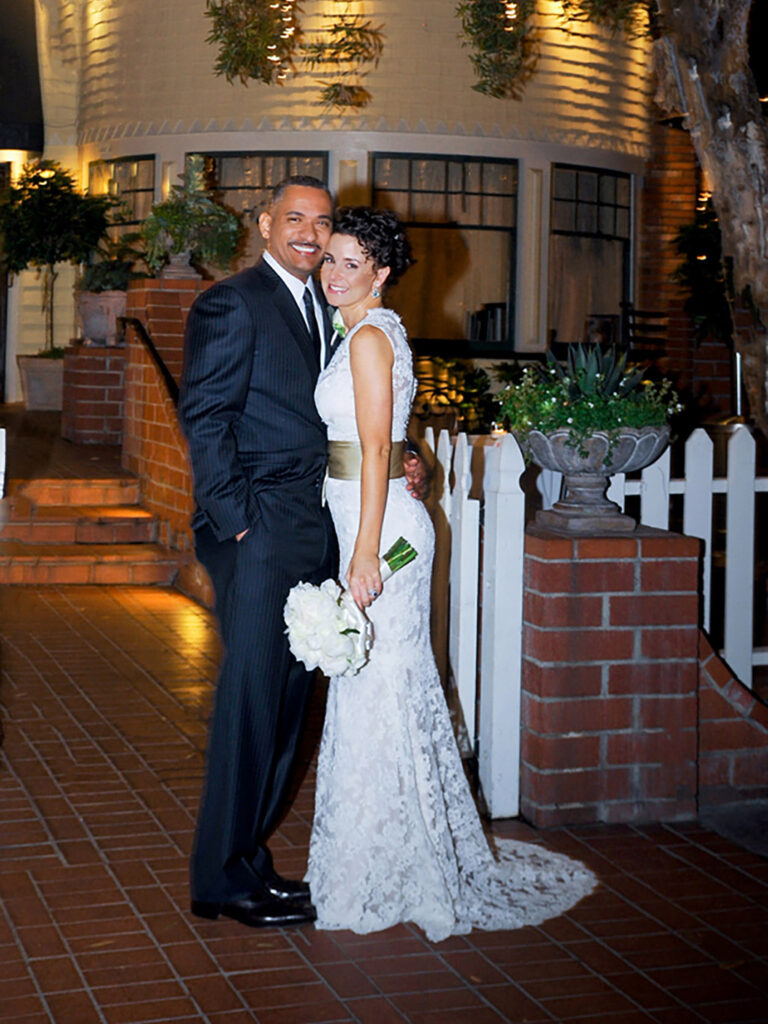
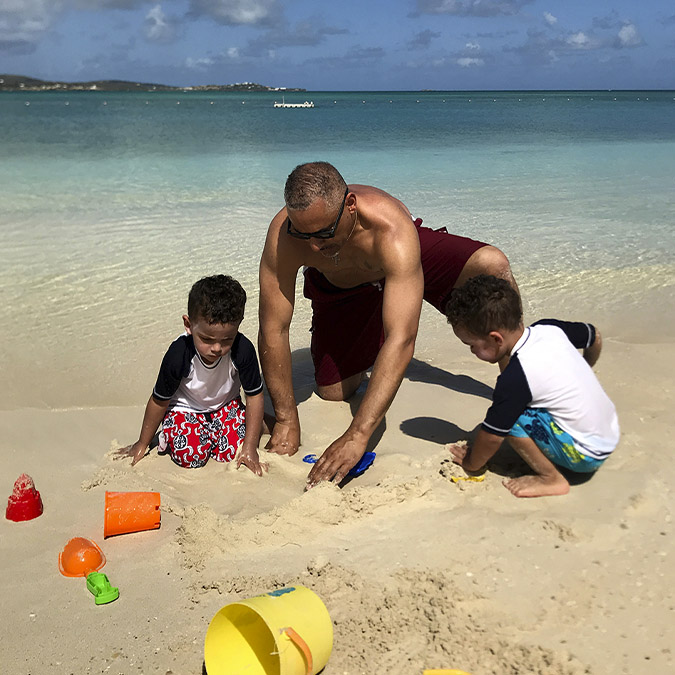
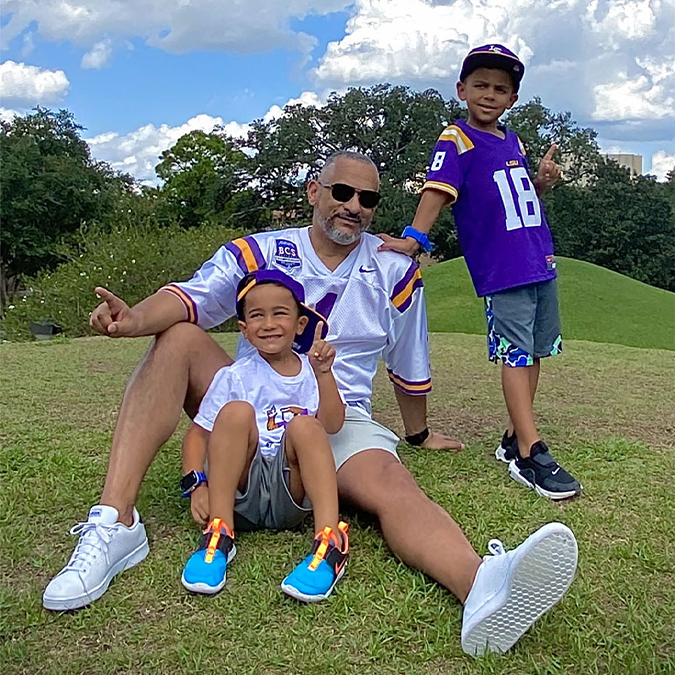
Dr. Keller has been married twice and has three children, one from his first marriage and two from his current. As he explains, “My first wife comes from a very regal Creole family in New Orleans, so my daughter is more Creole than she is not Creole. My second wife is white, so my two children with her are biracial.”
Given that race is traditionally both an exceedingly contentious and often inflammatory topic which dominates American society, Dr. Keller proceeds to talk with a disarming candour about currently being in a mixed-race marriage and of his wife’s attitude to having two biracial children. “My wife and I have a lot of conversations about the fact that our kids are biracial. She’s a little bit more hesitant to talk about the fact that they will be considered black, regardless of whether they are mulatto or whatever label you would ascribe to them. But the reality of the situation is that our world is racially oriented and they will be considered black before they are considered anything else. And that is difficult for her to reconcile.”

Overcoming Challenges
Dr. Keller was able to overcome any challenges he faced on his journey by drawing inspiration and encouragement from the many successes of his family. “Whenever things would get extremely difficult, I would often reflect on the fact that my dad, my mom, my uncles and my aunts were very successful people. And that meant that no matter what happens, I’m going to be successful too.”
Moreover, Dr. Keller relied on his own strength of mind to overcome his anxieties about medical school and graduate from Duke University Medical School. He recalls, “I had teachers who thought I couldn’t take the rigors of a medical education. I was told by my summer writing coach that I could not write very well. And I was not going to amount to much because I just couldn’t put one word in front of the other and that challenged me. Perhaps that was her goal to challenge me, but it worked. So I paid special attention to that and to a lot of other things academically speaking in order to be able to have the confidence that I was smart after all.” Dr. Keller duly concentrated on honing his writing skills and, by dint of a combination of practice and perseverance, has gone on to author and co-author more than 40 publications, presentations, and abstracts.
Moreover, unafraid to frame his experiences in an explicitly racial way, one of the biggest challenges Dr. Keller has faced on his journey to being the exceptional surgeon he is today was unequivocally “the fact that I was a young black man in America trying to succeed and excel a space that was decidedly white and male.” He adds, with no bitterness, just dispassionately scientific empiricism, “Racism is really born out of insecurity more than anything else and replacement fears.” On the need to exceed others expectations of his own ability, he is again painfully honest. “Just having to overcome – and not just barely overcome, but greatly exceed expectations was something that was ever present.”
Importance of Mentorship
Dr. Keller credits his family and mentors he found along the way with giving him the sense of confidence to persevere. As such, he is a staunch advocate of mentoring and evidently sees it as an important and vital way for young people to learn invaluable life skills. As he states, “Mentorship is important. Everyone asks what makes a good mentor? I think that it is different things for different people. I have a lot of very successful friends who are hesitant to be mentors because they don’t think that they would have anything useful to teach young kids. But I think that just by giving kids an opportunity to be able to see what you do, how you carry yourself and what kinds of things you find are important means more than anything that you could ever read in a book.”
With a genuine humility, Dr. Keller readily acknowledges the role circumstance has played in his success. “I do extraordinary things every day. There are very few people who can do what I do. And I’m saying that not to say that it is remarkable that I can do it. A lot depends on circumstance and a lot depends on taking advantage of the circumstance and having guidance along the way.”
Experience of the World
Sounding suspiciously like Lord Chesterfield (the 18th century English moralist famous for his Letters To His Son), Dr. Keller is keen to assert that wisdom gained from life and being out in the world is arguably superior to knowledge gained from school and in books. As he states, “One of the most valuable lessons I learned when I was a kid is that your world around you will teach you infinitely more than you will ever learn in school. My daddy never wanted to know what my grades were. He never looked at my report card. Sometimes it was good, sometimes it was not so good, but he was more worried about what I was experiencing in my life.”


Hurricane Katrina
In his early forties at the time, Dr. Keller was among the first wave of brave doctors and medical professionals who flew into New Orleans after Hurricane Katrina hit in August 2005. Boarding a helicopter, he instinctively went to the aid of people trapped in the Superdome. As he relates, painting a chilling, dystopian picture of widespread chaos and devastation, as well as disorder, “There were about 35,000 people in there at the time. There were no lights, no running water, no plumbing and no air conditioning. It was darkness. If it wasn’t for the hole in the roof of the Superdome, there would’ve been no light whatsoever. Plus it was unsafe. People were getting stabbed and shot. The national guard was sitting in the parking lot because they had not been activated yet, while we were trying to give people IVs and people who were in dialysis who didn’t have dialysis and babies who were dehydrated and diabetics who were in comas.”
Reflecting on what has been learnt from the debacle that was the immediate local political response to Katrina, Dr. Keller is scathing of the tedious bureaucracy which hindered getting assistance to where it was needed most. As he explains, politely but forcefully, “I was disheartened to know that we are in the richest country in the world with the most resources anywhere and yet bureaucracy really let us down.” He continues sardonically, “One of the things that my dad’s research in emerging democracies in Africa found out was that in the countries that have a benevolent dictator, the populace actually has a better standard of living than in the countries that have the democratic, with a small D, bureaucracy and red tape and a paralysis of indecision.”
In terms of lessons learnt from Katrina and its aftermath, he is both phlegmatic and pragmatic. “It has taken us a long time to recover from Hurricane Katrina for a number of reasons. I think one would hope that we learn lessons from times like that. But I think the prevailing sentiment is that this is just something that happens to us here every now and then and it’s going to keep happening and we so just have to keep moving along.”
Despite the plethora of negatives surrounding Katrina and the harrowing destruction that he witnessed, Keller nonetheless observed an adamantine resolve and resilience among survivors which has taught him an invaluable lesson for life. “During the storm, I learned how strong people are. It gives me confidence in the strength of the human spirit.”


Achievements on the Journey
Like many wise folk, Dr. Keller does not see success as being strictly teleological. “You can talk about achievement in both professional and personal terms. As regards both, I don’t look at it as a destination, but I look at it as simply trying to do better or more today than I did yesterday.” He continues his sagacious explanation, “There’s not going to be a time when I will say I have arrived and this is all I’ve ever wanted to be, because things change with the years. And so I think I have accomplished more now than I ever felt that I would. But I think my perspective is very different now than it was when I was in my twenties.”
Goals accumulated one after the other. “I just had a goal. And when that goal was reached, there was another goal. And then there was another goal. And so when I say you can’t be where you are without having been where you’ve been, it really hits home in that regard, because of the fact that if I had not accomplished the goals that I had set out for myself along the way, then there’s no way that I would be here.”
Encouraging more black Doctors
Dr. Keller is naturally very keen to encourage more black doctors, given the current dearth in the medical profession at large, and especially considering their percentage of the population as a whole. “Many students who are interested in medical school only need some encouragement,” said Keller judiciously. “Getting more minorities into medicine has been a pet project of mine because the need is so great.”
Practicing medicine in Lafayette, Dr. Keller sees first-hand only too clearly the impact of racial health disparities in the high rates of heart disease, diabetes and amputations that often result. “New faces are needed in medicine to help fight these disparities,” Keller said unequivocally and with a tone of urgency in his voice. As he continues to explain, he becomes more animated and it is evident that this is a topic about which he passionately cares.
“Hispanics and African Americans constitute about somewhere between 14 and 18% of the population. But we have only about three or 4% of physicians in America who are black, which is quite a big discrepancy.” He continues his lament, one sadly backed up by the statistics. “We have trends in this country where African American men especially are showing that they have less of initiative to go to college and more initiative to go into business. So we have fewer African American men in education after high school in college. There is a very low percentage of African Americans in medical school, in residency training and in practise as physicians.”
He then duly elucidates why this poses such a grave problem for society. “It’s a problem because there are cultural nuances related to medical issues that cannot really be understood by people who do not come from the culture in which those medical issues have evolved. There are cultural issues like food insecurity, the impact of poverty and the impact of stress and race discrimination which have evolved out of the institution of slavery.”
Continuing somewhat lugubriously, saddened by the adverse conditions which continue to afflict his own racial demographic, he states, “There are a lot of pressures placed on African-American people that subsequently compound medical issues. People who are not African-American might not be able to understand how much culture interacts with the patho-physiology of certain diseases.”
Race ought not to, but tragically often does play a factor in the quality of the medical treatment which black patients receive. A racial and cultural disconnect, and a lack of empathy, often have negative consequences. As Dr. Keller explains, citing cultural culinary traditions among Louisiana’s poor black population, “When you ask white doctors who have been to prep school and to very exclusive colleges and had very privileged lives to go into the inner city or to a rural area they don’t understand why these people eat every part of the pig and boudin. This is a generation long habit that has evolved out of not having much, even though that’s not the way it is now. They still eat those things because that’s what they were raised on.”
He continues, visibly empathetic to the predicament of the rural black poor. “So to tell someone you’ve got to cut the salt out of your diet or that you can’t eat those little delicious chunks of pig fat that are fried in pig fat because it’s bad for your health, it’s unrealistic to be able to expect that doctor to have the same understanding of the nuance of that culture as someone who has been there forever. This is why it’s important to have physicians who come from these areas go back to these areas to practise.”
Reflecting on his own motivation for what he does, he states matter of fact, wholly devoid of hubris, in a tone replete with gratitude and profound humanism, but also reflecting the exigencies of the situation. “That’s one of the main reasons I’m back here – because I’ve been all over the world, seen all these amazing things and had all of this fantastic training, but this is where people need me.” He adds, “Our Heart Sense programme has evolved out of an understanding that people who live in poverty stricken areas and people who have lived in disadvantaged communities don’t have people in those communities that understand the intricacies of being in that community and being in that community for generations.”
The harrowing plight of the poor – and its knock on effect on accessing medical care – is both stark and chastening. As he speaks, one can almost hear the anger at the palpable injustice rising up in Dr. Keller’s voice. “There are some zip codes in Baton Rouge where they don’t even have a doctor. We also have culturally significant issues like transportation. People can’t go to the doctor because they don’t have a car. They have to take a bus for a whole day to get to the doctor and then wait in the doctor’s office for a whole day and then go home. Moreover, they can’t afford to take a day off work, because many of them work for cash, as then they won’t be able to feed their family. They don’t have childcare, especially in the time of the pandemic. When there’s no school, they don’t have somebody who can watch their kids while they take a whole day to go to the doctor, so they don’t go.”
Dr. Keller is aware of what his own visibility – and his desire to help those less fortunate and be seen by those in need, does for such folks. “It gives them the confidence to be able to go. And it also shows them that there are people who care about touching them and giving them something without asking for something in return. And that’s a very difficult thing to come by these days.”


Non-Profit Company
In his spare time, Dr. Keller runs a non-profit company whose overall goal is to reduce racial disparities in medical care and “to make a model that we can roll out in communities all over the country – in rural communities and communities that have high minority populations – to be able to count people that have been historically uncounted – people that have not had access to technology and diagnostic regimens that would allow them to be able to live longer healthier happier lives.”
The disparity of outcomes in much cardiac treatment between races is of huge concern to Dr. Keller. As he explains, “As a cardiac surgeon, one of the most common operations that we do is aortic valve replacement. If someone in a disadvantaged population has an aortic valve replacement with catheters and wires we call it transcatheter aortic valve replacement and they’re black or Hispanic or come from an area with a high degree of poverty, they have the same expectation of a favourable outcome as a white patient does in an academic institution. There’s no difference – the outcome’s exactly the same. We in medicine have come to believe that outcomes are the holy grail. But when you analyse the fact that African Americans and Hispanics and people who come from poverty stricken areas don’t get this transcatheter treatment as much as they get conventional surgical treatment which is attended by a mortality risk which is twice as high, then you start to see some disparities. So we have to shine the light on the fact that these access disparities exist.”
Dr. Keller is also realistic when addressing the fact that bias and colour prejudice still exists even in his own discipline of cardiology. With a refreshing, almost searing honesty “When you ask a cardiologist if they feel that they are biased when the patient is white or when the patient is black, they will invariably say no. But it’s just not so. It’s a very difficult thing for people to reconcile the fact that they may have biases that they don’t realise that impact how they take care of patients. And it’s something that we struggle within our medical community every day. Even I do.”
Three Wishes
When it comes to the proverbial three wishes he would like to be granted, Dr. Keller elects to focus exclusively on eradicating racism and the implicit bias which engenders bigotry, commenting on what he has noticed of the zeitgeist. “Over the last five years, a lot of people’s inhibited biases have now become uninhibited and it’s hurtful to a lot of people in our community. I think it is born out of insecurity and replacement fears. This ideal of American exceptionalism and yet how all men are created equal is a very difficult thing to reconcile. The hypocrisy of it bothers me. So I would like to fix that.”
Conclusion
Dr. Antoine Keller’s remarkable medical skill and peerless ability as one of the country’s leading cardio-thoracic surgeons have indubitably saved countless lives and ameliorated the quality of many more. Like the playwrights William Shakespeare, Terence Rattigan and local literary titan and novelist Ernest Gaines before him, Dr. Keller’s knowledge of the human heart (albeit in an anatomical, as opposed to an emotional sense) is unparalleled.
An African-American trailblazer and a proud, racially conscious Creole man, keen to both encourage more black doctors and to see better, more racially equitable medical care delivered to the urban and rural black poor, Dr. Keller’s litany of achievements are as humbling as they are truly inspirational. The people of Baton Rouge, the state of Louisiana and America at large are all exceedingly fortunate to have been graced by his unique and rare skillset. Like his classical predecessors Hippocrates and Galen, masters of ancient medicine both, one hopes that he too will go down in history for his consummate dedication and ardent commitment to helping and healing his fellow man.