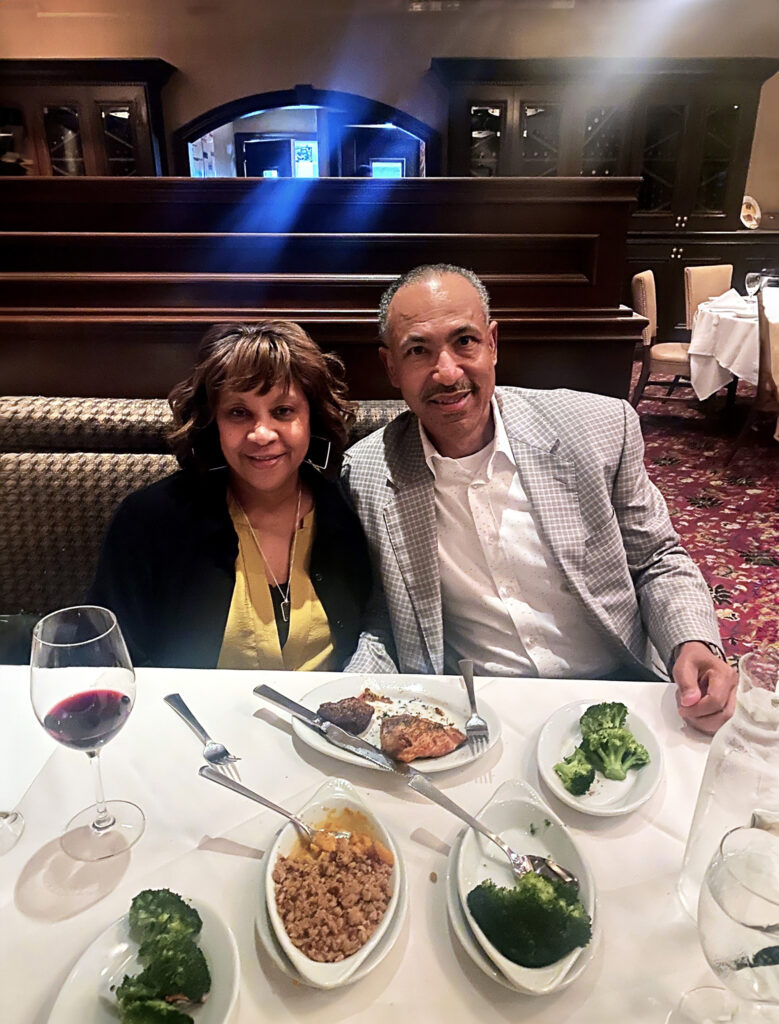
Simien & Miniex are names that resonate deeply within Louisiana’s cultural and professional spheres, echoing a legacy of distinction and achievement. Clyde Simien & Rickey Miniex have carved out a remarkable niche in the realms of law, entrepreneurship, and philanthropy. Their story unfolds as one of deep camaraderie and shared ambition, from their early days as childhood friends to becoming the founding partners of the esteemed law firm Simien & Miniex. Together, they have skillfully navigated the complexities of their professions and society, transforming challenges into milestones of success, integrity, and community contribution.
Simien and Miniex are two highly distinctive, evocative, Gallic-sounding names that have resounded and resonated throughout Louisiana for many years. What’s more, these are two elegant, powerful and harmonious Creole surnames which, when said together – as they have been for many years – glide off the tongue as effortlessly as those of other legendary duos, like Holmes and Watson, Sam and Dave, Crockett and Tubbs, or even Key and Peele.
Clyde Simien and Rickey Miniex represent an impressive duo in Louisiana law, entrepreneurship, and philanthropy. Their enduring friendship and highly successful business collaboration have led to the creation of a great empire. Indeed, their accomplishments together are the essence of fantasies. Since 1987, founding partners Clyde Simien and Rickey Miniex have been at the helm of their law firm, Simien & Miniex. Best friends since childhood and roommates during law school, they have been in business together for 36 years, consistently demonstrating devotion, loyalty, and determination as a team. As African-American Southerners, they have skillfully navigated life’s challenges, obstacles, and fluctuations, overcoming adversity, poverty, disappointments, and racism often faced by many in their community. Triumphantly, they have achieved remarkable success, accumulated significant wealth, and found happiness and fulfilment, all while staying grounded and generously contributing to their communities.
The remarkable connection between these two intelligent, articulate, and accommodating gentlemen, both now in their early 60s, goes beyond their seemingly innate camaraderie, genuine close friendship, and profound mutual respect. Instead, their empathetic bond, collaborative synergy, and exceptional understanding of each other are so striking that a first-time observer could easily mistake them as the living exemplification of Aristotle’s renowned concept of “one soul in two bodies.”
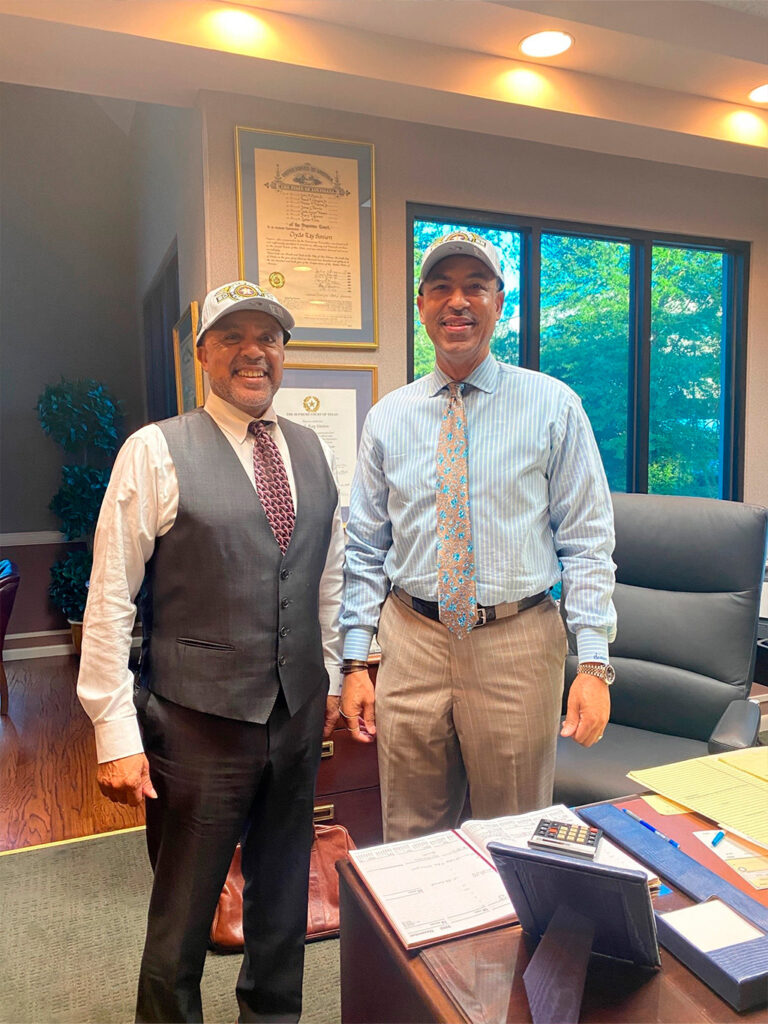
Differing slightly in height, both sporting polished copper-toned complexions, well-groomed moustaches, stylish suits, and friendly dispositions, Simien and Miniex epitomize a first-rate team. As lawyers, entrepreneurs, and philanthropists of exceptional calibre, unwavering integrity, and unparalleled skill, they continue to pursue their mission of driving positive social and economic change and promoting much-needed racial uplift for their community, despite their numerous accomplishments.
Upbringing
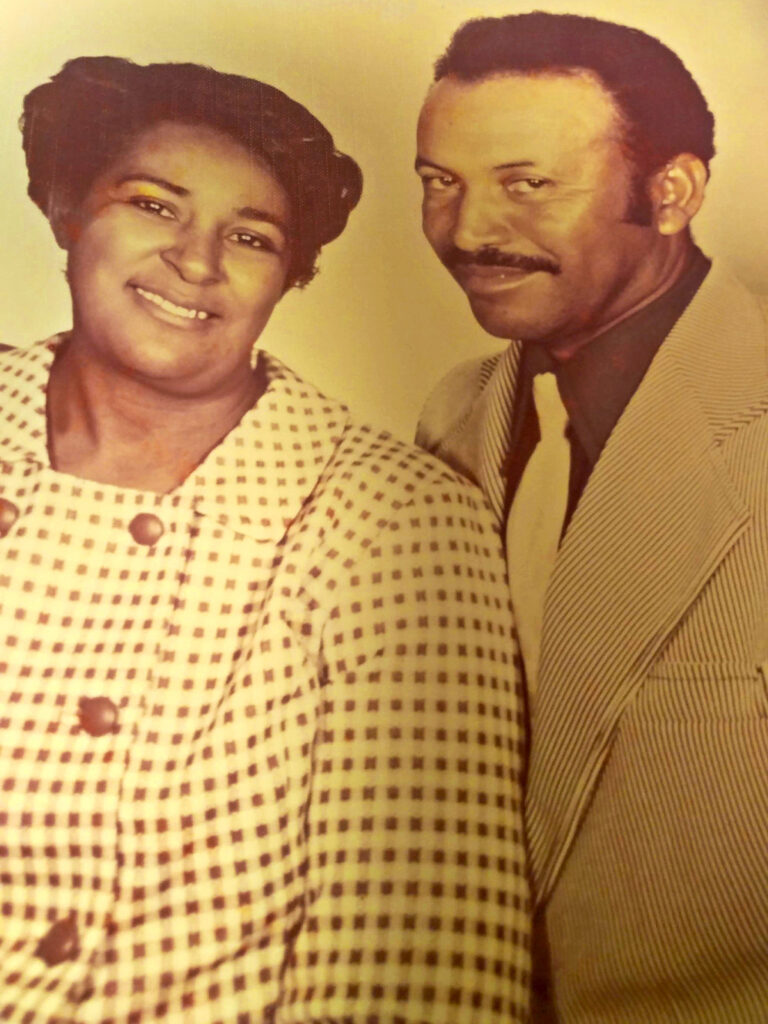
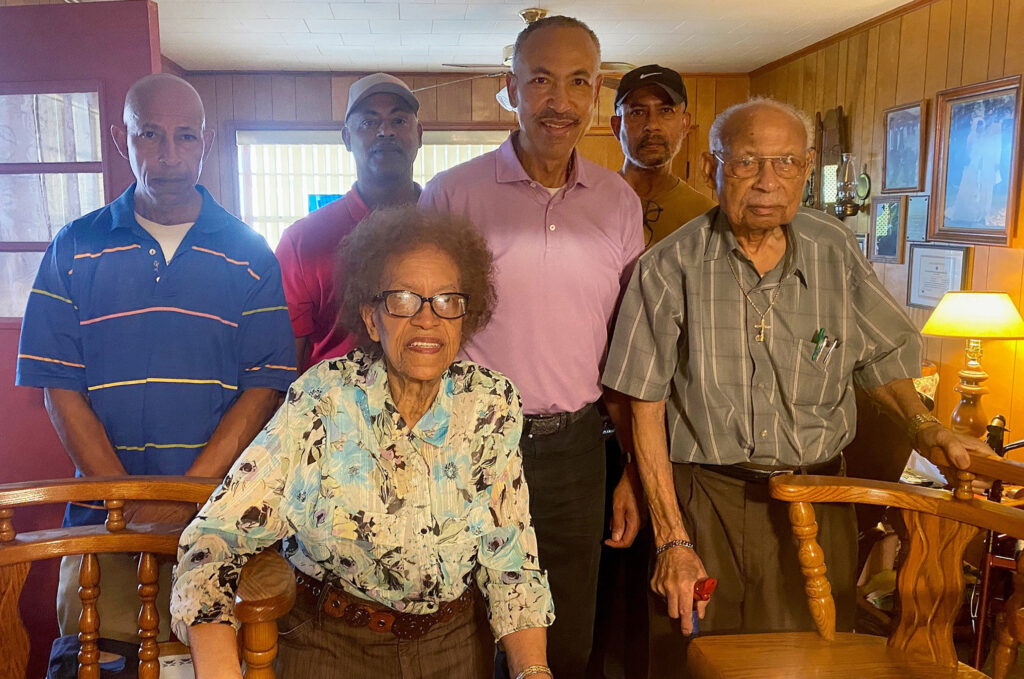
Hailing from Opelousas and Sunset, Louisiana, Simien and Miniex come from working-class families facing their own struggles. Simien’s Father spent 33 years driving a furniture store truck, while Miniex’s parents experienced the hardships of rural, agricultural poverty, labouring in the fields from sunrise to sunset. Additionally, both of their parents had limited access to formal education. Yet, given their humble and challenging beginnings, it is perhaps unsurprising that both men hold education in high regard, recognizing the wealth of opportunities it can bestow upon individuals.
Importance of Education
Education has always been paramount and a seminal cornerstone of Clyde Simien and Rickey Miniex’s respective outlooks on life. With a passion bordering on zeal, Miniex asserts, “We’ve always thought that education is the key to changing the world and young people.” He continues, visibly passionate, “Our experience has been that there’s certainly a different mindset between young people who are not educated and young people who are. Growing up in Louisiana, having a lot of ancestors who did not have the opportunity to become educated, and by that, I mean formally educated. We’ve seen some that have grown and learned informally. Those with education, albeit informal, have been much more successful than those who have not become educated.”
Commenting on his observations, he adds, “I think you can recognize education right away – in the way, people live, in the way they think. You can recognize it in their propensity to go and vote and have their voice heard. So we’ve always thought that education is the key.”
Citing the influence of his uneducated parents, both born in 1930, Miniex talks with indelible pride and fulsome admiration of the sage advice he received from them. “Because neither of our parents formally graduated from high school, they’ve always taught us that education is the key to success. Education is the key to moving into the future and doing more things.”
Offering a significant perspective, he explains, “We were raised by parents who lacked formal education, but they imparted the valuable lesson that education is crucial. I also believe it’s not solely about the grades you earn in school; it’s the knowledge you acquire through the educational experience.”
To demonstrate their unwavering commitment to the noble pursuit of education and the extent to which they advocate for its significance among young people, Miniex shares an example involving a recent client. “I had a client who came in – a teacher – and she said that there were a couple of students who couldn’t afford school uniforms, so she was buying uniforms for them. And so I told her, not even knowing who the students were, that I’ll go halves with her, just because I know that she probably didn’t have that much money as a teacher.” He concludes his story by saying, “So we are die-hard regarding education!”
Rickey Miniex’s passion for self-improvement, insatiable appetite for education, and firm conviction in its power, almost like a universal remedy, stem from his upbringing on a farm. There, he developed a tireless work ethic due to witnessing his parents labouring from before dawn until well after dusk, day after day.
In a manner that may serve as a humbling reminder for today’s generation, often characterized by indulgence, idleness, and preoccupation with social media platforms like Snapchat and TikTok, Miniex elaborates, “I believe my farm upbringing and the work ethic it instilled in me are the reasons. In that environment, you had to work hard, or you wouldn’t eat. So by the time I was 10 years old, I was already labouring in the fields.”
He adds, without any vestige of self-pity or resentment, just a matter of fact, this-is-how-it-was-back-then tone of voice, “In my family, we didn’t play sports because we had to work in the fields. So my parents always told me that if you don’t want to do this all your life, go to school.”
He affirms fiercely, “I’ve always had that passion for education. So when I left high school, I went to college; I graduated from college, then went back to college; I graduated from college again, then went back to law school. I understood that the purpose of it was to help you to be able to succeed. He concludes, manifesting his wisdom and philosophical insight, “Success, in our opinion, is not just money but is being able to help and influence other people. I don’t think you can do that without knowledge and education.”



Decision to go to Law school
Miniex’s decision to pursue a legal career after studying for an initial undergraduate degree in Finance, followed by another bachelor’s degree in Accounting, was partly motivated by the lack of job opportunities readily available to black people in the financial field at the time. As he duly explains, “I had graduated from what was then the University of Southwest (now the University of Louisiana). I’d gotten a Bachelor’s degree in Finance, and there weren’t many jobs available for people of colour in Finance. So not finding employment, I decided to go back to school again for another Bachelor’s degree. So I got a degree in Accounting, and I was fortunate to get a job and take the CPA exam and pass it. But I felt like there was just more for me.”
However, he was also inspired by the encouragement of his long-time friend Clyde Simien. “Then I ran into a fellow I knew from Upper Louisiana with whom I went to high school, who was telling me these great things about law school. And we’ve been friends and law partners for almost 50 years.”
Thus, Simien actively encouraged his old school friend to attend law school since he was also going. As Miniex relates their unforeseen conversation – one which would have a colossal – and lasting impact on both of their lives, he smiles contentedly, looking back on a well-made decision.
“And Clyde says, “Well Ricky, you passed a CPA exam and have two degrees. So I don’t see why you can’t do well in law school”. I said, “Clyde, maybe you’ve got a point there”.
With the gratitude he still evidently feels for his dear friend audible in his voice even after all these years, he says definitively, “The reason I went to law school is that Clyde encouraged me. That’s how I got to law school.”
As for Simien, he knew from an early age what he wanted to do with his life – and that he wanted to pursue a legal career path. “I’ve always wanted to be an attorney as far back as I can remember. From way back in the first grade, I’ve always looked up to individuals who were attorneys. What’s more, I’ve always wanted to make a difference in life and give back.”
Simien’s Upbringing
Simien goes on to describe how, despite his parents, Vincent and Mercedes’ limited formal education and humble earnings, they were able to provide their children with what truly mattered through careful resource management and personal sacrifices. “Both my parents did not have much formal schooling. My dad had a third-grade education and my mom an 11th-grade education, and they both have never had a combined income in any single year of more than $15,000, yet they had four sons, and they sent all four sons to college.”
Being taken to the doctor as a child by his dad, who could ill afford the medical bills, is another powerful and deeply motivating memory for him. “I can still remember being taken to doctor’s appointments by my dad, and of course, he did not have health insurance back then. I can remember him counting out $20 bills for the doctor, and I knew it was money that they didn’t really have, but they wanted to try and have the best healthcare for their kids.” He adds poignantly, “I would always see those things and say, one day, I want to make certain that I’m able to help them and give back to them the things that they’re doing for us.”
Although Simien desperately wanted to attend the prestigious HBCU Howard University (in Washington D.C.), his Father was somewhat less impressed by his son’s choice of university – for purely fiscal considerations. But, as he recounts, “I’ll never forget my dad laughing at me and saying, “Son, that’s great. You can go if you can figure out how to get there”.

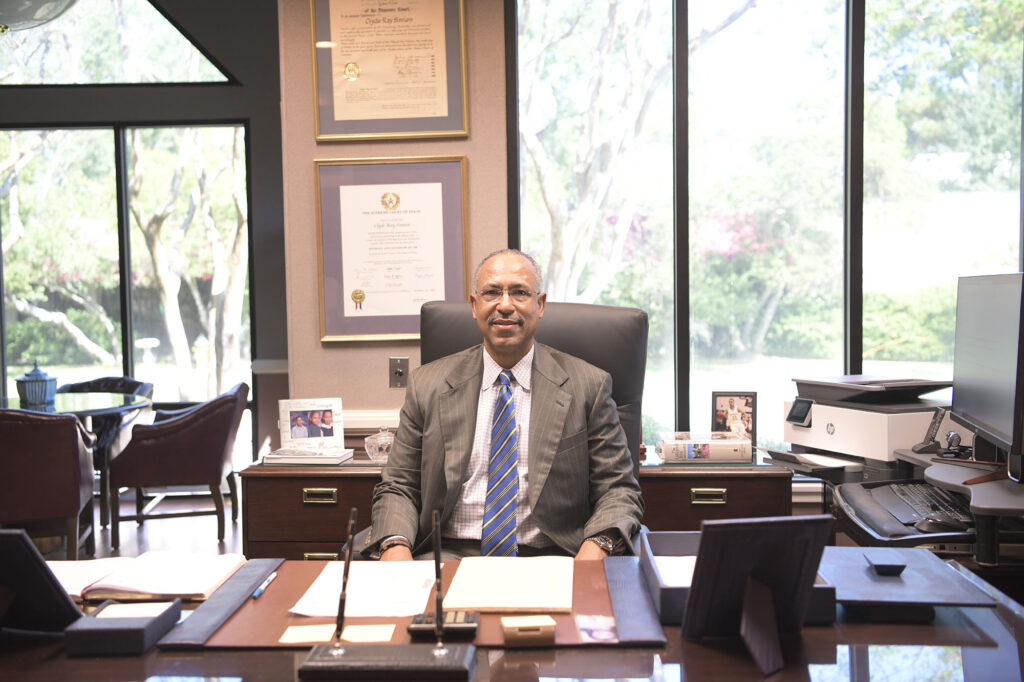
Clyde Simien at the University
Due to financial constraints, Simien had to settle for a different college than his preferred choice. Soon, he encountered aspects at USL (University of Southwestern Louisiana), his home university, that did not sit well with him. He explains, “I knew that attending Howard was out of reach without the necessary finances, so I opted for USL instead. However, I came across numerous things there that I found displeasing.”
Sadly, Simien’s time at USL was blighted by what he feels was the prevalence of racist attitudes. He had observed a social and racial phenomenon at the university that had begun to puzzle and increasingly trouble him. He explains, “When I went to USL, I went there with many friends, and 90% of those friends did not make it to their second year in college. I saw many of them fall by the wayside, so I kept trying to figure out how all these people from Opelousas went to USL but did not make it into the second year.”
Black Progressive Student’s Organisation
Therefore Simien took it upon himself to try and remedy this far-from-perfect state of affairs and founded a student organization in response. As he continues, recalling the zeal of his youth, “I saw so many disparities with racism at USL that I wanted to try and help the situation, so I founded an organization called the Black Progressive Students Organisation – a socio-technical organization dedicated to helping facilitate the positive development of minority students at USL, specifically in regards to their educational, environmental and social needs.”
Concerned by the noticeable lack of African-American students in specific disciplines, Simien’s student organization sought to identify the reasons behind this disparity and take action and improve the situation. He adds, “We wanted to try and figure out why so many African-Americans were flunking out, why so many African-Americans had less than a three-point GPA (grade point average)? And why so many of us who are bright were in the lower technical curriculums, like sociology? You saw very few African-Americans like Rickey, who was in Finance or who graduated in Accounting, Computer Science or Engineering. Hence this organization was designed to try and help find out some of these reasons.”
However, Simien’s student group, not an official, campus-recognized organization, was denied university access. He recalls, “We needed an African-American advisor, but we could not find one African-American professor or even staff member who wanted to be an advisor to this Black organization.” He adds, ruefully recalling what must have been a challenging time, “We were labelled as a militant organization by the university. So I wondered why not one African-American professor, staff member or administrator wanted to be part of a great organization? And I finally learned they were all afraid of losing their jobs.”
His frustration and disappointment with the university authorities was evident. “We just wanted the university to see that we were a group of predominantly African-Americans who wanted to try and help the university. We wanted to try and elevate those who were freshmen to make it to their sophomore, junior, and then senior year. So we brought concerns to the university, and we came up with what we thought were some solutions, and one was that there were no mentors on campus. There were only three or four African-American professors and three or four staff members. So there were no mentors or one we could go to.”
In terms of learning outcomes, Simien is painfully lucid about what that experience taught him – the twin importance of education – and the need to understand economics. “That taught me a valuable lesson. It taught me that there’s another part to it once you get the education. You need to also understand how economics works. That’s a very, very important part. I think Creole people and the African-American race still do not understand how economics plays a major role alongside education. Education alone is not enough. You have to understand how economics works in this American system that we are in.”
Having graduated from UL (in Accounting, like Miniex), he realized what type of institution he wanted to study next. As he explains pointedly, “I told myself, I said, I don’t want to go to any of the predominantly white universities because I know there’s a lot of racism probably going on there, just like at UL. I wanted to go to a historically Black college.”

Southern University Law Centre
With a striking unity of purpose, Simien and Miniex then embarked upon law degrees at Southern University Law Centre, despite tight funds. As Simien recalls, “Rickey was ahead of me by one year. He had already worked at a major CPA firm in Lafayette, so he had some income before college. I, however, had zero income, so I really didn’t have a way to afford to go to law school.”
Father McKnight
Despite having no funds to pay for Law School, Simien, with admirable resolve, tenacity and dogged determination, was nevertheless undeterred. He then had the good fortune to meet Reverend A.J. McKnight, who he refers to in hagiographic terms as a “wonderful man” and “an icon in the Creole community,” someone who “was like the Martin Luther King of the whole Acadiana area. You’d hear him on the radio, and people would talk about him with such high esteem.”
Father McKnight was also a generous benefactor in the local community, helping African-American students who were going to medical school with loans, provided that they would pay him back once they graduated.
“So I drove to see him in Opelousas, where he was one of the Catholic priests at Holy Ghost. And I said, “Father McKnight, I would love to attend law school, but I don’t have enough money. Can you help me”?
Father McKnight’s initial reply was not in the affirmative.
He said, “Well, I only do it for African American students who are going to medical school”. I said, “Father McKnight, please can you make an exception”? Again undeterred, Simien persevered and went back two or three times until he was told, “Clyde, I’ll make this exception. But since you’re going to law school, you draw up the promissory note.”
But there were two important caveats to Father McKnight’s generosity. First, as Simien relates it, all these years later, “There are two things that I’m going to require once you graduate from law school. One is that you pay me back, so we’ll make a payment arrangement, and you have to pay me back in full.” And then he said, “The next thing is I want you to pay it forward. I want you to go out there and help other African-Americans.”
Paying it forward
Father McKnight then explained his reasoning for wanting Simien to “pay it forward.” “Clyde, the days of the Martin Luther Kings, the Reverend Jesse Jacksons, the Joseph Lowerys, the Vernon Jordans – are pretty much gone where we will see these types of leaders on the national level.”
McKnight then challenged Simien with a call to action at a local, grassroots level. “I’m going to challenge you to come out of law school and try and do certain things on a local level, and hopefully, it will catch on, especially with African- Americans, because we are starting to understand the educational part behind it. We’ve always understood the social part, but we don’t understand the economic part of it.”
Simien admits, “I was only at that time 22 years old, so that didn’t mean a whole lot to me, coming from a poor area in Opelousas with parents on a low income. But as life went on, I looked up to this man and said, “I want to try and see what all this means”.
Thus, thanks to Father McKnight’s heart-warming generosity and tangible financial support, Simien made it to Law School, and from that point onwards, he and Miniex were wholly animated, consumed and driven by a single desire. “Our sole mission was to come out of there, do as well as we could and be the best attorneys that we could be.”
With Miniex graduating number two in his class and Simien number four in his, they were aware on leaving law school that, having imbibed Father McKnight’s advice, “we needed to make a statement, not only with education but with economics.”
Elucidating the reasons behind their fiscally-motivated rationale, acutely conscious of the freedom which money can bring, Simien says forcefully, “I wanted to make certain that if I went out there and said something that was on my mind, that I didn’t have to be afraid; that if I got married or if I had kids, I didn’t have to worry about where the next plate of food was going to come from. I wanted to ensure that we were economically independent.”
Finding a job after Law School
Although they were initially hopeful after completing law school and achieving outstanding grades, securing a job in their desired field proved challenging, discouraging, and seemingly near impossible. They each sent out over one hundred job applications but sadly met with no success whatsoever. As Simien relates, “Now Rickey, who had a Finance degree, and an Accounting degree, a CPA, and had graduated number one in his class, sends out a hundred resumes in 1986 and does not get one job offer. I sent out over 100 as well and did not get one single offer either. So it was very, very discouraging.”
He goes on with a sombre tone, reminiscing about those bleak periods filled with the disillusionment of persistent rejection and the subsequent detrimental impacts on their self-worth, “In fact, we would get rejection letters on lots of the resumes we sent out to firms before the interview had even taken place. They would already send us a rejection letter, not knowing that we had an interview in the future with them. So it was extremely discouraging.”
As Simien readily admits, given they were trailblazers in their own families, they were unsure how to navigate this professional arena, lacking qualified people around them to ask for advice. “We could have just given up at that point and not known what to do. We were the first in our families to have this advanced education, so we couldn’t go to an uncle, a mom, a dad or a cousin and say, What do you do with a law degree? So we went out and looked for a job but couldn’t find a job anywhere. So we had no choice but to say we must start a practice independently.”


Starting their own Law practice
It is often said that “necessity is the mother of invention.” Never was that truer than in the case of Simien and Miniex. As Simien shares their difficult and occasionally humiliating journey to obtain a loan to start their own practice, it becomes clear that these two resilient men possess unwavering determination. Miniex aptly interjects, stating, “One aspect I’m certain you’ve noticed is that we are not ones to give up.”
“We went to every bank in Lafayette, none of which were African-American owned, and we asked to borrow $5,000 to start a business. Rickey would put his name on the line for $2,500 and me for $2,500. Being accountants, we figured that we could start a business with $5,000. Not one bank would make us a $5,000 loan – not one bank!”
Recalling the embarrassment and humiliation they felt at sitting in bank lobbies being effectively forgotten about, he says, now finally able to smile about it, even though the memory is still somewhat painful. “I remember us wearing white shirts and going to the banks, and they would forget that we were even out there. Then, the bank would close, and we would still sit in the lobby. Finally, Rickey Miniex adds, “The maintenance people had to tell us to leave.”
Swiftly running out of options, the pair turned to Dr. James Caillier, a former mentor and fraternity brother of Simien’s from UL, and explained their pitiful situation and the hundreds of job applications they had sent out to no avail. Dr. Caillier, utilizing his extensive network, kindly arranged for them to meet Wayne Elmore at Commerce and Energy Bank. As Simien relates the genuinely poignant, touching story, his eyes seem to mist over with emotion. “So Rickey and I go to the bank to see Mr. Wayne Elmore, and he meets us standing up in the lobby and says, “Dr. Caillier says that you two young men are good individuals, and we are going to take a chance on you. But we don’t think that you’ll be able to start any business, especially a law firm, with $5,000, so we will make you a loan for $7,500”.
Miniex duly chips in again: “We still have a picture of that check today.”



Their First Premises
Given their restricted resources, the first premises for their law practice – at 712 West Congress Street – was an old, dilapidated house which, since they had run out of money, they could not afford to decorate. As Simien recalls with a wry smile, thinking back to those struggling early days. “I would mow the lawn at about two or three o’clock in the morning because we didn’t want anybody to see that lawyers were mowing their own lawns.”
As Simien continues their tale of financial hardship, it is evident that they are both strong-willed and exceedingly tenacious men. But even decorating their office was impacted by a lack of money.
“We couldn’t afford to paint the walls, so we got this wallpaper from Lowe’s department store because it was so cheap. So I’m putting up hanging the wallpaper, but we ran out of wallpaper, which had been discontinued because it was so cheap. So we called every Lowe’s in the state of Louisiana, and we finally found that same wallpaper at a Lowe’s in New Iberia, and we were able to finish the wall.“
With humility, Simien states, “So we started in that building, and we didn’t know anything about how to practise law, but we knew that we had the education, and we knew that we had the desire that we wanted to help people and do the right thing and pay Father McKnight his loan back.”
Paying Father McKnight for the loan was a priority, but so too was taking advantage of the Father’s copious wisdom, good counsel and generous advice, as they were both keen to glean all they could from him. “Every time Father McKnight would come, he would tell us about what he thought that, as young attorneys, we could start doing to give back.”
Early days of their Law Practice
Nonetheless, the initial phase of their law practice was challenging and hardly profitable. As Simien concedes with lighthearted honesty, “When we started practising law together, we saw that we were not very successful in making money because people would not come to two young African-Americans who had this old house and who were probably just not very good at what they were doing at the time.”
Luckily for the pair, they then went to Raymond Blanco, the Vice President of USL at the time (whose wife Kathleen was the first female governor of Louisiana) and asked him for advice on running a successful business.
It was Blanco who then helped both men get part-time jobs, calling a good friend of his, Nathan Stansberry, the District Attorney in Lafayette. Thus Miniex got a job as an Assistant District Attorney in Lafayette, and Simien was taken on as an Assistant District Attorney in the 16 JDC in St. Martin Parish. Simien explains, “Rickey and I now could afford to put food on the table for each of us. And now we could take on clients, we figured that we could build this practice up, and we started being successful. We started talking with Father McKnight, and we started doing well.”

Becoming Entrepreneurs
Heeding Father McKnight’s advice of wanting African-Americans to get into the “economic stream” and become entrepreneurs, once Simien and Miniex started making money in their law practice, they decided to invest and opened a hotel – the StayBridge Suites – which they duly owned for ten years. “That hotel was $15 million”, Simien relates. “Rickey and I each put up $2.5 million, got a non-recourse loan, and we held that hotel for 10 years until we sold it in 2019.”
They also wanted to use their financial success to help change the racial composition of the workforce and make it more equitable. “We had 22 employees at that hotel. Of the 22 employees, 95% of them were white. So here we are, two African-American owners, and we are saying 95% of our employees are white, so we wanted to make a change and bring the mainstream into this.”
Yet due to the baleful spectre of racism still prevalent at the time, combined with their own business acumen, they chose not to name the hotel after themselves, giving it instead the name the O’Brien Group of Baton Rouge because they knew that it would be financially ruinous if the (white) clientele associated the hotel with black owners. Therefore they took the drastic step of not attending their own hotel’s grand opening. Simien recalls, “I had my wife and my little kids in the car watching the grand opening and seeing the ribbon-cutting ceremony from across the street. My kids were saying, “Dad, isn’t that our hotel? Why can’t we go and play with the Sesame Street animals that they have over there”?”
He goes on, cognizant of the unfortunate and commonplace occurrences of racism and the direct financial consequences they would face if it became widely known that the hotel was owned by African-Americans. “We knew that we could not have that hotel labelled African-American-owned. Otherwise, people would not use it.”
However, they succeeded in changing the composition of the hotel staff and after five years, 80% of the employees were African-Americans. They even made history by having the first African-American upscale GM of any hotel in the United States.
Since then, the pair have also built La Veranda, a $30 million, 220-unit apartment complex in Lafayette.
Broadening their growing business empire, the duo has ventured out with impressive foresight, commendable expertise, and keen discernment, now even investing in coffee roasteries. “We were the first African-Americans with franchise rights to a coffee beanery. We had a store in that Acadiana Mall. We were the first majority African-American owners of two businesses in the largest mall in Lafayette.”
Of their remarkable and bountiful success from exceedingly humble, modest beginnings, achieving so much, despite starting with so little and enduring so much adversity, Simien says, immensely cognisant of those who helped them achieve it, “All of this feeling came from our upbringing, the Father McKnights, the Dr. Cailliers, the Raymond Blancos – the feeling that with an education, you can make a difference in life and you can give back.” he adds, rightfully proud, “So you can see what a $7,500 investment did.”
Miniex adds stoically, with profound philosophical insight, “Those struggles we encountered early in life helped us with the struggles later in life. If we didn’t have those early struggles, I don’t think we’d be where we are today.”
Most importantly, Simien and Miniex’s friendship has remained steadfast and unyielding amidst all the fluctuations and obstacles. “We’ve always been best friends.” Equally, their philosophy of life has never wavered. “Our goal has never been to make a lot of money. It has always been to help people and to give back. That’s been our philosophy 36 years ago, and it’s still our philosophy today.”
Their words show genuine humility and kindness and explain why they continue to do what they do. “We could easily stop practising law and live a very comfortable life for the rest of our lives. We’ll probably never utilize all the money we’ve made, but we just love helping people. We give back a lot. We’ve always had that desire to help. And we’re both strong into religion – our Catholic faith. The more we’ve given, the more we’ve received. And we continue that philosophy today.”

Still working through choice.
Despite their formidable financial success and the ability to relish the tangible rewards of their thriving legal and entrepreneurial skills, Simien and Miniex maintain a tireless work ethic and the drive to continue dedicating long hours to their endeavours. Miniex explains that his appetite for hard work is visibly undiminished after all these years: “We still work pretty much six, seven days a week. I don’t think over the last 36 years we have missed more than two or three Saturdays because we work on Saturdays.”
“Working hard is the key to success,” adds Simien astutely.
Although Miniex and the fictional boxer Rocky Balboa (portrayed so iconically on film by Sylvester Stallone) may not appear to share many similarities, the guidance Miniex’s mother provided on how to achieve success in life bears a striking resemblance to the poignant speech in Rocky Balboa (2006), where the titular character expounds on “how winning is done.”
“My mom always said that when things get tough and life knocks you down, you have got to get up, dust yourself off and start off again the next day. The guy who makes it does not stay on the ground. The guy who makes it is the guy who can get himself up, dust himself off and start again.”
Mentoring young people
Besides making a difference in the community through their law firm and providing legal services, Simien and Miniex are devoted philanthropists. They are equally passionate about their volunteer roles as mentors to young people in the local community – something they have both been doing in their spare time for over twenty years in the Acadiana area.
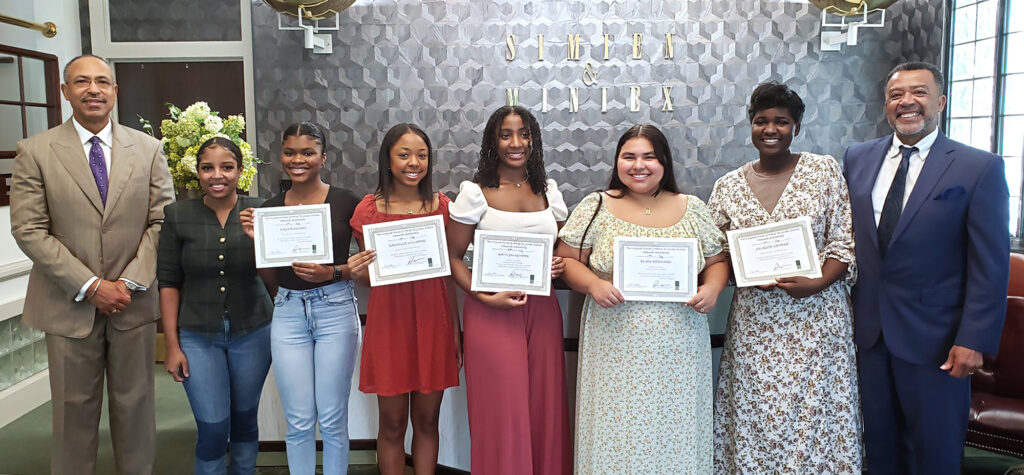
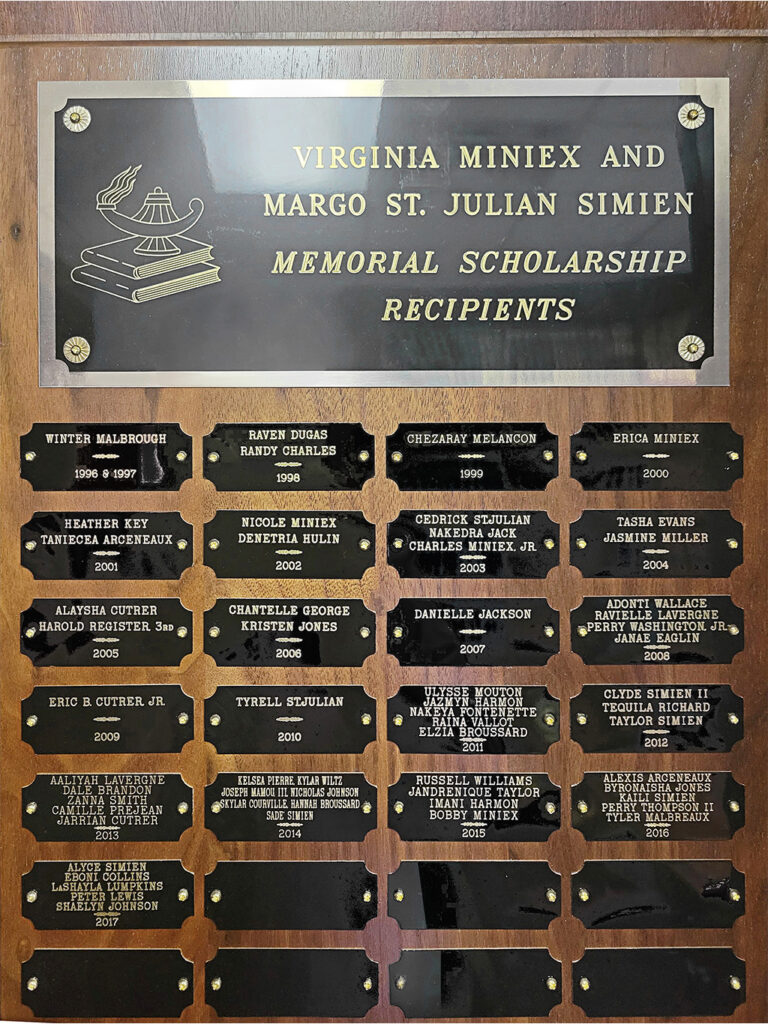
To do this effectively, they established a scholarship fund – the Virginia Miniex- Margo St. Julian Simien Scholarship – to honour the beliefs of their respective parents, namely that obtaining a good education is central in a young person’s life. The scholarship has existed for over 25 years and is awarded to deserving high school students who strive to pursue their education. “The goal is to help young kids, inspire young kids, and motivate them,” says Miniex.
Consciously directing their attention towards high school graduates between the ages of 17 and 18, Rickey Miniex explains, “The focus is marginal kids – kids who have enough grades to make it to college, but maybe not as much financial support and maybe not as much mentoring from parents.” He articulates the selection criteria for the types of young people they want to help most, “We don’t look for the straight-A students because those kids probably have enough mentoring already. We’re looking more for the marginal kids who just need an “Attaboy!” or some “You can do it” encouragement and may be missing some funds. We can then fill in the blanks for them for those funds.”
There is only one stipulation to qualify for their mentoring “program” of support: “We require them to enrol in a university, no matter where that university is, and to pursue some type of bachelor major.”
Simien explains with genuine pride at the longevity of their commitment to mentoring and the various successes of their former mentees, “It’s been 20-some years, so some of them are doctors, and we have some that are lawyers. So we’ve had a lot of success, but we haven’t tracked them all because you have to remember that over 25 years, it’s well over a hundred people.”
Both clearly find it highly gratifying when their former mentees keep in touch, come back to visit or invite them to their graduation dinners. But their mentoring doesn’t cease at graduation but continues as long as possible. “One of the kids had gotten a degree in computer science, and we wrote him a letter of recommendation and tried to help him get a job with some of the local computer companies.”
Regarding their specific mentoring style, they exhibit nurturing, uncle-like care and engage in encouraging conversations, drawing from their own knowledge, wisdom, and firsthand experiences in navigating similar situations. “We try to encourage them to call us and talk about those moments of “turbulence” that we all experienced at school. So often, the kids just need someone to talk to. Of course, they often talk to their parents, but sometimes they need to talk to someone who’s been through it and who’s come out the other side, so to speak. So in addition to giving them funds, we talk to them about our experiences, try to help them along the way, and encourage them not to give up.”
For Miniex, the inspiration to tangibly help others and the desire to mentor young people was derived from his loving, supportive parental structure. As he is quick to explain, evidently grateful for being blessed with such approachable parents, “I certainly had what I call “the rock” at home – parents I could always talk to. I live here in Lafayette, but home is where I grew up, so I could always go back and talk to them.”

Infiltrate in order to Ameliorate
Simien then articulates another crucial part of their philosophy of success and of civic engagement – that of what he calls “infiltration”. With its clear association to covert military operations in hostile territory, the term reflects a highly admirable mindset. It showcases two deeply involved individuals eager to contribute to their city’s social contract to improve their communities. However, they are also weary of the historical marginalization and exclusion from the decision-making and governing process resulting from how their race has been treated in Louisiana.
As Simien explains with a shrewd grasp of realpolitik and the practicalities of getting things done locally, “You have to infiltrate, you have to get into those groups. Rickey has been on the Board of Aashana Hospital System in Lafayette for seven years. I was on the Unified Code Development System in Lafayette, trying to make a difference in how you go about building restrictions or commercial restrictions. I was on the Chamber of Commerce, United Way, 232-HELP. We have to get into those systems.”
For him, showing that you belong is critical to acceptance. He adds, “One way they let you into those systems is if you show that you belong.” Whilst never explicitly explaining who “they” refers to, he doesn’t need to since it is implicit, obvious and wholly understood in the context of the city’s history.
He continues, without rancour or animosity, “I don’t think that the white race wakes up trying to figure out how to become racist. I want to believe that everyone’s a child of God.” He then adds in an impassioned voice, the care evident in his gently rising tone, “But if we don’t care where the garbage is being placed each day, if we don’t care whether or not we have a board to operate the hospital system if we don’t care about the violence in our communities and knowing that’s why the Walmarts are leaving and that’s why the restaurants and the department stores do not come, then who are we to blame for those things?”


Lafayette’s Geographic + Economic Divisions
Simien then proceeds to cite Lafayette and the stark contrast of its geographical, social and racial divisions – as an example of the civic failures he and Miniex are keen to address and are working to eradicate. “In Lafayette, I’m sure you’ve heard of the north side of town versus the south side of town.”
With evident frustration and sadness in his voice, he then poses a powerful and revealing rhetorical question. “Look at all of the businesses. Where are they? They’re on the south side of town. You don’t even have one urgent care facility on the north side of town. You don’t have dessert places, you don’t have restaurants. So until we figure this out on our own or with the help of these other people, we’re never going to make a difference. And I would think that there are north sides in all major cities in America.”
He adds sadly, pointing up the contrast between the affluent and impoverished parts of the city. “I just came from a tour of the East Coast – Savannah, Georgia and Charleston, South Carolina. You have the same thing there – the contrast between the north and south sides. You have the poor areas, and then you have the economically developed areas. “But,” he asserts defiantly, with hope now audible in his tone, “We can make that difference.”
Proceeding to detail how he and Miniex are altruistically trying to change their city for the better and, in so doing, trying to encourage others to follow suit, he says, unashamedly, “Rickey and I are proven examples that it has to start somewhere, and we feel that we are making that difference and we are trying to set a roadmap for others to come back and make that difference.”
He continues, addressing the ostensibly racialized nature of the city’s geography and lack of investment, “Right now, we’re trying to figure out how you help economically develop the city’s north side. For example, Cane’s Fried Chicken, Burger King, and McDonald’s are all on the south side. So why do African-Americans drive five miles from the north side to go the south? Well, we know why these businesses will not come to the north side – because there’s a crime, theft, and all kinds of things that don’t look right, so they don’t come there.”
In terms of the tangible steps he and Miniex are taking to practically assist the city’s economic regeneration, he clarifies, “We are trying to help the President of the Lafayette Economic Development Association (LEDA) right now. We’re trying to help her to develop that north side. And you’re not going to convince even those of us who have lots of money to put up a business there until you make other changes.”
Warming to his theme, he then tells of the importance of establishing local partnerships. “You have got to establish a partnership with the police department and say, maybe we need some extra help at these businesses so that people won’t be threatened and that they’re not going to be robbed or have people stealing from their businesses. You may partner with the school board to say there’s too much truancy. Seven of every ten kids truant here in Lafayette Parish are African-American.”
With impeccable concomitant logic, noting the frequent, established and well-trodden path from truancy to youth delinquency and crime, he adds, “If the kids are truanting, then guess what? They’re not in school, so they’re doing bad things.”
“So maybe we have to partnership, and we have to commit, try and get these businesses to come on the north side, to a partnership with these various agencies like the school board, the police department, social services, and say, okay, we are going to work hand in hand, and we are going to try and make this a vibrant area. So you’re not afraid to come here and enter that business.”
Keen to stress the power of self-belief, Rickey Miniex concludes, “From my parents, I learnt that life’s battles aren’t always won by the stronger man or, the faster woman, but sooner or later the person who wins is the person who thinks they can.”
Three Wishes
When it comes to the proverbial three wishes they would like, Simien and Miniex’s choices reveal their deeply caring, compassionate natures, their devoutly Christian values and their overwhelming belief in the primacy of education to improve life chances for young people.
Clyde Simien rolls his wishes into one, articulating his strong religious convictions, invoking Jesus’s death on the cross for mankind’s salvation to stress the overwhelming importance of love. With admirable moral clarity, he says, “I wish that the world was a much better place than it is now and that everyone looked at what God wanted us to all get from Him dying on the cross – and that is to love one another.” He then adds thoughtfully, “If we understood that concept, we probably would not have 90% of the problems we do (in the world).”
Rickey Miniex’s three wishes are about the power of love, the importance of acceptance and the gift of education.
“I wish everyone loved one another for who we are, to try and get along and accept one another. Everybody has strengths and weaknesses – we need to understand that and accept that. So my first wish is that we would all get along, love and accept one another.”
He goes on, his voice is laden with real emotion, extolling the power of education and its capacity to change young lives while drawing an essential distinction between various forms of education. “My second wish would be that we could educate young people. And when I say educate, sometimes there’s a stigma that means you must go to school. But I think education is knowledge. It’s not just about school. You can get it from reading, you can get it from wherever you want. So I think my second wish is that if we could educate every young person, we’d have a better world.”
“My third wish would be the opportunity because I really think that if you have all these young people who are educated and knowledgeable, but they don’t have any opportunity, then I’m not sure whether it all works.” Then, concluding with a defiantly optimistic and gratifying faith in young people’s abilities, he asserts, “But I also think that if you educate young people, they will be able to figure out the economics to provide the opportunity for others. So my third wish would be to have an opportunity for younger people to do something with their lives.”
Conclusion
Clyde Simien and Rickey Miniex perfectly define what “civic duty” looks like. Decent, upstanding and morally courageous pillars of their community – and obsessively determined to keep their promise to “pay it forward”, together they are a dynamic team unafraid to challenge the status quo and render life a little more equitable for those less fortunate.
With their impoverished backgrounds, long-standing friendships, ebullient and contagious passion for education and indomitable spirits, Simien and Miniex are a true force of nature, be it as lawyers, entrepreneurs, youth mentors or philanthropists.
Lafayette is indeed fortunate to have these two remarkably talented, kind and generous men as not only residents, but community stalwarts, improving everyone’s tomorrows by dint of the civic uplift they are so assiduously involved in, still heeding Father McKnight’s advice on a local level after all these years.
Both Clyde Simien and Rickey Miniex are living proof that – with intelligence, hard work, drive and resilience, it is possible to not only transcend one’s circumstances, no matter how inauspicious or challenging, but also to not let the cards one has been dealt at birth stymie one’s chance at human flourishing and fulfilment. So may these two Creole surnames persist in making a lasting impact in Lafayette and beyond for years to come!