


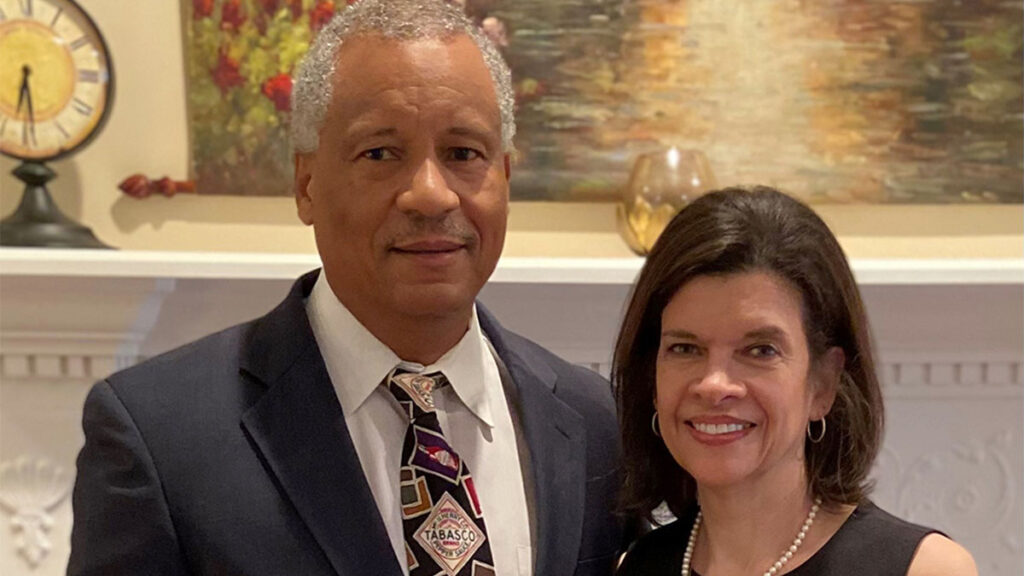
Charting Willie Leday’s inspiring transition from a humble cotton picker to the Chief Probation Officer of Western Louisiana, this tale unravels a man’s determination to build a legacy beyond the confines of tradition.
During a quintessential Louisiana summer, Willie Leday realised he’d never make it as a farmer. The family trade just wasn’t for him – and his mother made this very clear as he slowly picked cotton in the hot and humid weather.
Willie recalls her saying: “You need to go to school and do something with yourself because you’ll never make a living doing this.”
This marked a turning point for Willie, the eldest of nine children growing up in the small community of Grand Prairie. The family business had seen the men become sharecroppers or independent farmers for generations, but Willie was about to take his career into unchartered territory.
Breaking from tradition, he trained to go into criminal justice and ultimately became the Chief Probation Officer for the Western District of Louisiana. This wasn’t just a career in which he could make a decent living but also one in which he could – if done correctly – carve out a legacy.
It was a role in which he could help people, serving them and the community.
“I firmly believe that every person can be saved,” reveals Willie when asked about the countless men and women whom he supported during his career. He adds: “Almost everybody can be saved if we give them a fair chance and opportunity.”
Yes, Willie wasn’t suited to farming – but he certainly wasn’t afraid of rolling up his sleeves and completing a hard day’s work.


The Challenge at Hand
Criminal justice isn’t just about putting the bad guys behind bars. Instead, it’s also about ensuring that the good guys – or at least those capable of being good – have the opportunity to realise their potential. This was Willie’s responsibility during his multi-decade career in the probation service.
Now retired but still an active part of the community through initiatives like sitting on the board of the Lafayette Economic Development Authority, Willie worked with offenders that – with the right aid and rehabilitation – could become law-abiding citizens and positively contribute to society.
Willie quickly points out that ‘everyone we had on supervision was guilty of a crime’, but he also clarifies that factors such as alcohol, drugs and anger were usually what had initially led them to a life of crime.
His vast experience has taught him that removing these vices or supporting people to manage them can effectively prevent reoffending.
“There’s no one reason why someone commits a crime. Sometimes it’s their background, the way they grew up and sometimes it’s greed,” reveals Willie. “Sometimes it’s just circumstantial stuff that occurs in their lives that leads them down that wrong path.”
Willie’s explanation almost makes it sound so simple. The reality, however, is never that straightforward. While Willie admits it was ‘a challenging job’, he’s also fast to divulge that it was a role that brought him a lot of satisfaction.
“I’m a people person,” he says. “I thoroughly enjoyed the role, and I liked making contact with the family, talking to them about the issues and the problems.”
It’s a refreshing reminder of how there’s more good than bad in the world – and how sometimes we just need people like Willie to bring this out of others.
Making a Difference
Willie is a big believer that people can change, and he’s mainly put this to the test ‘in the field’ while working directly with offenders on probation. In addition to this, he also recognises that problems can be solved through the changing of laws and bringing in new legislation that better reflects evolving crime landscapes.
He highlights the U.S. crack epidemic as evidence of this. When the drug-ravaged communities in the 1980s and early 90s, it disproportionately affected those who were poor or from minority backgrounds. Willie played his part in making sure that the right punishments were handed out when he sat on the advisory group for the United States Sentencing Commission.
“I always tell people that it’s not for us to judge,” explains Willie. “It’s for us to figure out how they got there and what we can do to help them move away from the position they’re in.”
Of course, Willie isn’t naive. He was in the game long enough to conclude that not everyone can be helped. He recognises that the truly dangerous people are few and far between, but occasionally there will be individuals who sadly ‘just can’t be saved’.
He reveals: “A handful of people are so dangerous. These people need to be locked up for my safety, your safety, and the community’s safety.”
Coming to this conclusion must be difficult, especially when he’s seen how so many people can turn their lives around and become decent members of society. While the wins must feel so sweet, they must make the losses feel that much more bitter.
Willie says: “As my grandfather used to say, ‘You can’t make someone do something they don’t want to do’. You just can’t.”
It seemingly brings Willie comfort to lean on these wise words of his grandfather, especially since family played such as a pivotal role in his early life.


Growing up
Those hot and humid summers farming in the fields might not have brought the best out of Willie, but for the longest time, it was the only template he had for life living in Louisiana. Willie’s family had a long history as sharecroppers, with his father and uncles working as farmers and following in his grandparents’ footsteps.
Due to this, Willie didn’t really know any difference – nor did he realise that his family could be categorised as poor. In his mind they were no different from those living around him.
Willie ponders: “We were poor, but we really didn’t know we were poor because everybody in the area was pretty much in the same situation.”
It became easier for him to connect these dots as he became older. In one instance, he ‘distinctly remembers’ his grandmother requiring medical care and having to access it at a charity hospital.
Meanwhile, he now recognises that his upbringing – complete with big family get-togethers in rural Louisiana – was a reflection of Creole culture. For Willie, the penny only dropped when he became older.
“I now understand more about the Creole culture,” he says. “I don’t know that people thought of that very much as part of their heritage here until maybe the last ten years. It’s become a more public issue now.”
This is a great example of the benefit of looking back at life with the luxury of hindsight. After all, you never quite know what might have been staring you in your face the entire time.
Memory Lane
Willie now realises that his family were ‘poor’ and also that they were part of the Creole culture. Reflecting on life as a black child growing up in Louisiana, he can’t help but wonder whether prejudice must have been more present when he was growing up than he first realised.
However, he quickly concludes that he didn’t spend too much time thinking about racism when he was younger.
“I never really thought of racism very much when I was growing up,” says Willie. “It’s kind of hard to explain.”
Willie recalls one scenario where he and his siblings would play with a white child who lived nearby. It was all harmless childhood antics, but Willie remembers hiding the child under the bed when the boy’s parents were close by because it would be ‘unacceptable’ to them if they knew their son was playing with black children.
Willie adds: “I think I grew up knowing there was a line there, but it was never threatening.”
Of course, racism is something that the world still deals with – and Willie’s family is sadly no different. When talking about the subject of prejudice and discrimination, he reveals the anguish he felt when his daughter was the victim of it.
Willie recalls: “I remember my reaction to my daughter’s first experience of racism when she came home one day and said that one of her friends told her she couldn’t go to her birthday party because her parents didn’t want black kids there. It angered me because my child was upset, and I said, ‘Well, you don’t need to be there’.”
It’s fortunate that Willie’s own childhood doesn’t immediately bring up such painful memories. Instead, he mainly remembers being a gifted athlete and the struggles of moving around a lot. During his younger years, his family first lived in Grand Prairie before relocating to Washington and then later to Lafayette.
In many ways, this experience is what allowed Willie to become a success in his career. He broke out of a bubble and broadened his horizons – ultimately giving him the much-needed realisation that there are all manner of characters in the world.
He says: “I went to multiple schools, which in some ways benefitted me, maybe because I got to meet different people and make different friends and different cultures.”
Whether he knew it or not at the time, Willie was paving a path to a fulfilling career.


Opportunity Knocks
There are several factors that motivate a person when deciding what – or who – they want to be. This includes money, job satisfaction and the potential to make an impact.
For Willie, however, one of his primary driving forces was setting a good example for his brothers and sisters. As the eldest of nine, it was important for him to set the standard and show his siblings what could be achieved.
“There’s always that desire to be a perfectionist,” he recalls. “The desire to set the perfect examples for your brothers and sisters as you’re growing up.”
As the first to graduate from high school, Willie knew he had to make a splash. He initially did this by securing employment at CVS Pharmacy, which was then known as Eckerd Pharmacy. He admits that he ‘loved working there’ but that by the end of the summer, his mind had begun to wonder about the prospect of going to college.
He chose to study a two-year criminal justice programme and enrolled at the University of Louisiana at Lafayette. He decided on this course after being inspired by a friend who had followed a similar route.
Willie reveals: “I had a friend of mine that was a state trooper, and I thought, ‘Well, that would be a great job for me’.”
Of course, life takes many twists and turns. Not only did Willie not become a state trooper, but he also stayed on at the college for an additional two years to complete a bachelor’s degree.
This turned out to be a great idea. It gave Willie a chance to attain a more coveted qualification and reap many of the rewards coming his way. He seemed to be the perfect fit for the University of Louisiana at Lafayette.
Praising the college, Willie says: “They are very good at helping and giving minority students opportunities there.”
One such opportunity came when Willie undertook work at a juvenile home for girls. It was one of his first instances of dipping his toe into the sector where he’d spend his working life – and he wasn’t without nerves. In particular, Willie was conscious of the fact that it could take just one false accusation to derail his career before it had even started.
Luckily, this fear was never realised. In fact, he enjoyed the temporary role and found it to be massively beneficial in helping him to decide that the sector was indeed for him.
“I got along well with the kids, and it was a great job,” says Willie. “It was a great experience and a good education for me in doing that kind of work.”
The girls he helped were aged 9 to 15. There would, of course, be chances to help many other people as his life and career progressed.
Making his Mark
The next step for Willie was to keep the momentum going when he graduated. This was easily done as he secured an internship at the state probation office working for the Department of Corrections for the State of Louisiana.
The team must have loved Willie, as evidenced by the fact that he was offered a full-time role upon the completion of his internship. Willie was relishing his time there too – going so far as to believe it would be where he’d be for the rest of his working life.
“I loved that job, and I thought I was never going to leave,” admits Willie. “I thought I’d retire from there. However, a few years later, I got a better opportunity.”
With his career accelerating so fast, everything was really coming together for Willie. This wasn’t just about money either, with Willie acknowledging how it must have been very motivational to see their big brother thrive for his younger siblings.
“My siblings always saw that stringent, father-like figure who was always demanding of them and had high expectations for them,” reminisces Willie. He adds: “But there is actually a funny side of me. I guess most people don’t see that, though.”
The aforementioned opportunity was a chance to join the federal probation office. This time though, the decision wasn’t just his to make, especially as he and his wife-to-be were getting serious in their relationship. They talked it through, weighed the pros and cons, and then decided that Willie should apply.
Then, the application was successful. The role would be located in Lafayette, and the pay was a lot more money. Accepting it was a no-brainer.
Thus began a 30-year-long career in criminal justice with the United States Probation Office.


Highs and Lows
Every job has its highs and lows. This was undoubtedly true for Willie, who, throughout his time working on probation, dealt with offenders aged 18+. In some instances, he supervised people in their 80s (some of whom had spent most of their lives behind bars).
Sometimes the rewards were right in front of Willie, such as when he noticed a young woman smiling at him from across a restaurant while dining out with his wife. This woman turned out to be someone whom Willie had previously supervised, and she couldn’t resist the opportunity to express her appreciation for his help and support.
Willie recalls: “She spoke up and said, ‘I just really wanted to say thanks’.”
Unfortunately, there are those who are capable of causing a conflict of conscience for Willie and his colleagues. As Willie reveals, when his team have dealt with rapists, he’s had to remind his co-workers that it’s not their job to pass judgment.
Speaking about one particular offender who had been found guilty of rape, Willie says: “We don’t like the crime, but who are we to hate the guy? We’ve got to give him every chance to succeed.”
This ability to lead isn’t just something that Willie will have learned from his time in management (a position he found himself in for half his career) but likely also from his time setting an example for his siblings.
By all accounts, Willie always comes across as reasonable, composed and authoritative. It shouldn’t surprise anyone that he’s been able to command so much respect and really make his voice heard.
Solving Problems
Willie is full of so much enthusiasm when talking about his career in criminal justice. The role was clearly about so much more than just providing a comfortable life for him and his family. Instead, he saw it as his responsibility to ‘resolve the problems that vulnerable people were facing so that they could become well-rounded individuals who were capable of contributing to society.
He says: “My job was about working with people, identifying their problems, trying to resolve these problems, and then trying to make them productive citizens.”
For Willie, it was often about finding appropriate treatment and arranging for them to access support at the appropriate places. More often than not, it was about helping these offenders find employment. This would usually allow them to stay on their feet and reduce the chances of them reoffending.
Willie reasons: “If you are working and you can support your family, you’re probably going to stay out of trouble.”
Willie made this happen in many ways, including by working directly with individuals. In addition, he also worked on a programme in Alexandria, Louisiana, that saw the city council change their laws to allow convicted felons to work for the government.
This is a fantastic example of real, long-term change in which he played a part.


A Man of Many Talents
Willie had proven himself to be a man of many talents by the time he retired from his role as the Chief Probation Officer for the Western District of Louisiana. It marked another checkpoint on a journey that started with him picking cotton alongside his family.
Retirement did come as a shock to him. After more than three decades in criminal justice, he needed to re-assess who he was and what he could contribute.
Willie argues: “This is the only country where we’re known by what we do. We’re not known by who we are, we are known by what we do.”
As a highly distinguished man with so much experience under his belt, he struggled with the thought of leaving work. In the end, he quickly became used to life as a retiree and is content with what he achieved during his working life.
“Once I got away from work, it’s been very relaxing, and I’m at peace,” he says. Willie adds: “I wouldn’t go back again.”
There’s no doubt that Willie built a legacy. In fact, he’s even got awards to show for it. This includes the Martin Luther King Award that was presented to him by the Catholic Church.
As well as collecting new accolades, Willie continues to serve his community in numerous ways. But as much as he’s still playing his part, he no longer defines himself by professional standards.
Willie says: “It’s great to be remembered for what I’ve done, and I still want to be involved in things in my community and help people. But I’m happy to be me, and I’m happy to be a father and a husband.”
Willie definitely deserves to look back and smile at what he’s achieved – even if there are more achievements to come!