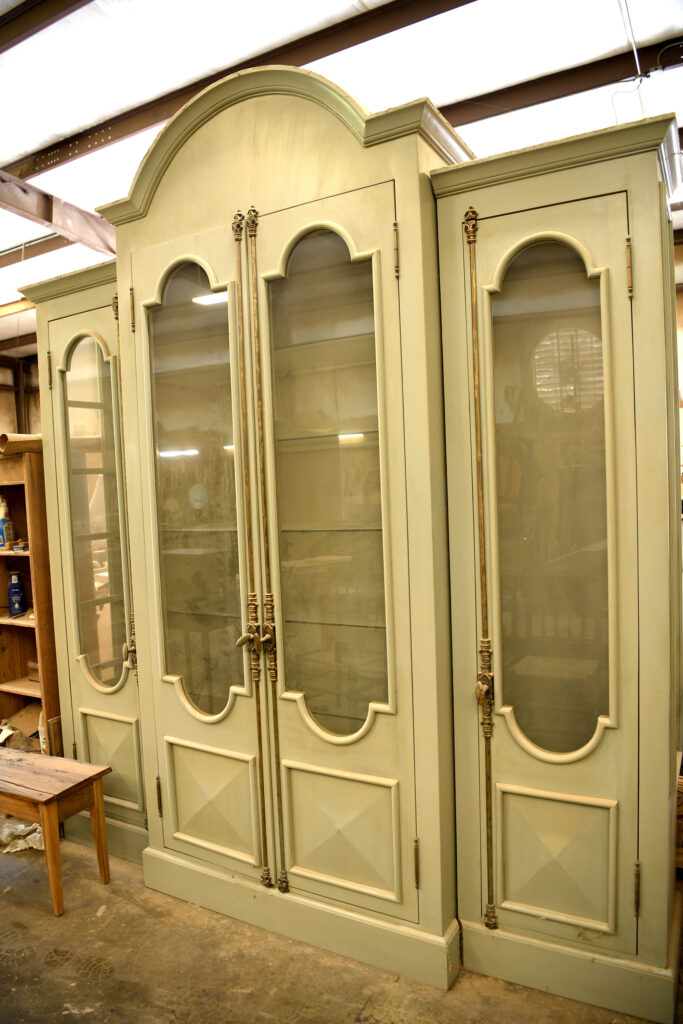
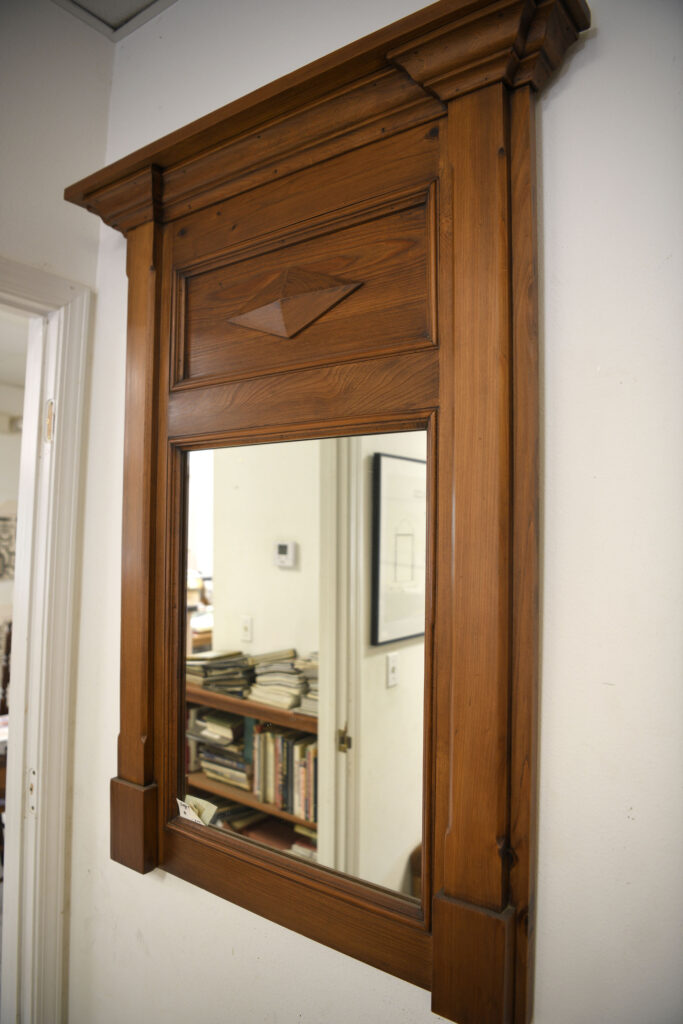
For nearly fifty years, Louisiana furniture maker Greg Arceneaux has crafted timeless pieces that honor the region’s Creole heritage. Working alongside his wife, Liz, Greg blends tradition, utility, and artistry to create furniture that tells a story and is built to last for generations. This is a story of legacy, craftsmanship, and culture you can hold in your hands.
In a quiet workshop in Covington, Louisiana, sawdust swirls like confetti beneath Greg Arceneaux’s boots. The smell of fresh-cut cypress lingers in the air, and a gumbo spoon, carved from a scrap of walnut, takes shape under his hands. “If we’re not making sawdust,” he says with a smile, “then we’re not doing our job.”
At the heart of the workshop, and of the business, is not just Greg, but also his wife and partner, Liz Arceneaux. With sharp wit and a fierce loyalty to Louisiana’s cultural memory, Liz has been by his side for decades. She handles everything from clients to social media and shares in the storytelling. She brings a family legacy, rich with heritage, jewelry, and old New Orleans memories that live in every detail.
Together, they have spent nearly fifty years building more than furniture. They’ve built a life rooted in Creole tradition, community, and craftsmanship. His chairs, her presence, their shared purpose, it all lives in the grain of the wood and the spirit of their work.
This is not just furniture. This is a legacy you can sit on.


Roots and Cultural Identity
Greg Arceneaux’s roots run as deep as the cypress trees that inspire his work. His family arrived in Louisiana with the early French explorers, before New Orleans was even on the map. On his father’s side, he descends from French and Spanish settlers. On his mother’s side, the lineage includes English, Welsh, and even a trace of Nigerian ancestry. “That’s about as Creole as it gets,” Greg laughs.
But for him, Creole has never been about race. It’s about culture. “Creole means a mixture. French and Spanish. French and African. French and Indian. French and German. That’s the truth of Louisiana.” It’s a truth woven into his life and every piece of furniture he creates.
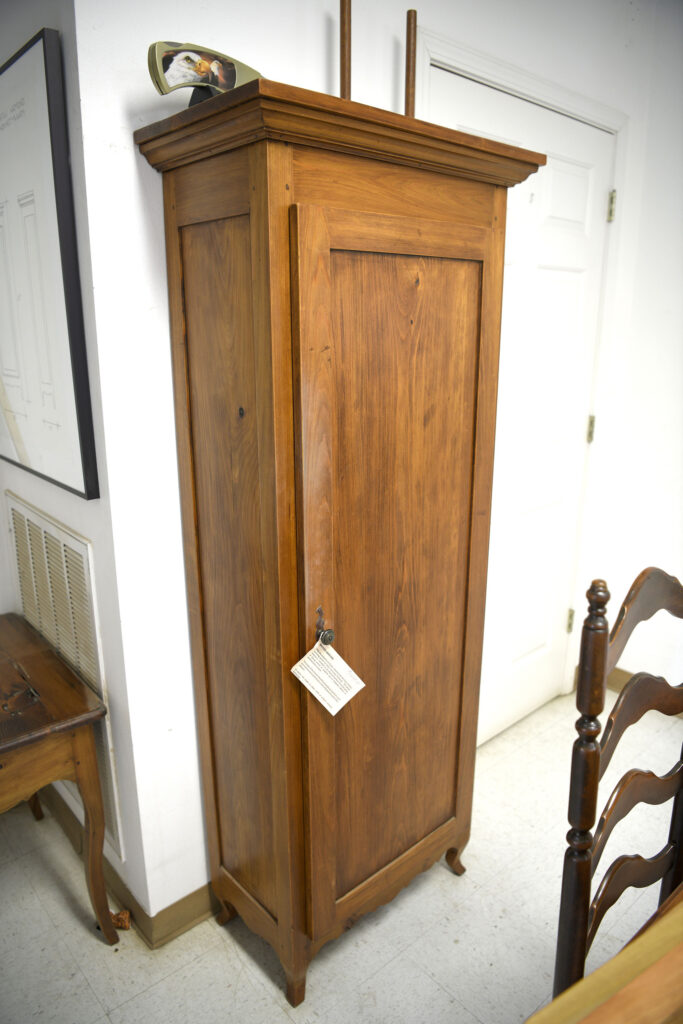
Liz, whose family once owned Creedmore Plantation in Violet, St Bernard Parish, LA, adds her thread to the tapestry. “My parents had to elope,” she recalls. “Mother was Catholic, dad was Lutheran, and that was a big deal in New Orleans back then.” Liz’s roots are as richly layered as Greg’s. Her family home on Broadway Street was a multi-generational house, filled not with kitchen cabinets, but with antique marble-topped sideboards and armoires used for storage. “When they moved to the suburbs in the 1970s, they just shoved all of that into a little brick ranch house,” she laughs. “Creole furniture in every room.”
Their stories echo the same blended heritage Louisiana is known for: German, French, and Southern traditions woven into daily life.
A Calling in Craft
Greg Arceneaux knew early on what he wanted to do with his life. After graduating high school in 1969, he told his father he wanted to become a furniture maker. No schools nearby offered that kind of training, but that didn’t stop him. His father helped him buy a few tools, and Greg began teaching himself, scavenging wood from wherever he could find it and building furniture in his garage.
He briefly studied sculpture at LSU, but something didn’t feel right. “I realized I wanted to have a daily impact on people’s lives,” he says. “Sculpture was beautiful, but good furniture has that same sculptural quality and serves a purpose. It becomes part of someone’s everyday life.”
In the 1970s, he built exhibits for the Natural History Museum and converted storage rooms into libraries with custom bookcases and tables. At night, he worked out of his home shop in Lafayette, creating pieces for local clients.
For Greg, the appeal was never about fame. “At the time, I didn’t care if people even knew my name, as long as they used the furniture. That’s what mattered. That it lived with them.”
That perspective hasn’t changed. He still builds with the same goal: to create something useful, meaningful, and lasting.


Tradition in Every Joint
In an era of mass production and disposable trends, Greg Arceneaux stands firmly in another lane, where craftsmanship still matters and furniture is made to last for generations.
From the beginning, he taught himself traditional joinery techniques, guided by intuition, research, and a deep respect for history. “Mortise and tenon joints have been around for thousands of years,” he explains. “They’re strong, hold, and don’t rely on glue. That’s how our ancestors built things to endure.”
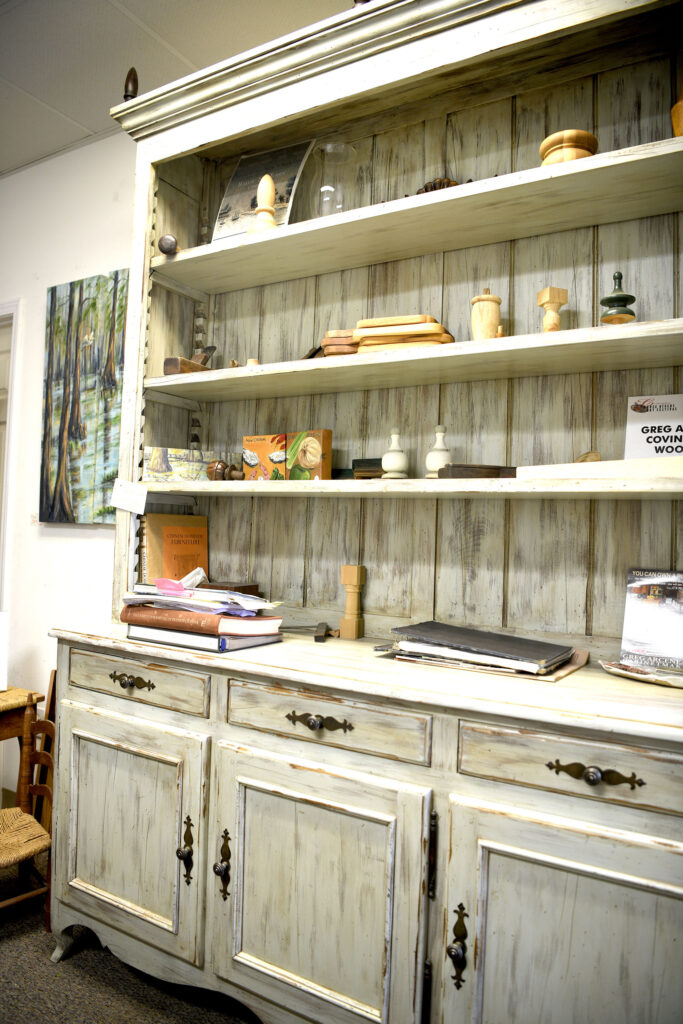
In the early days, Greg sourced wood the way most people might hunt for antiques, on instinct and with persistence. He pulled boards from demolition sites and motorcycle crates, reclaimed hardwoods from old homes in Lafayette, and salvaged wide slabs of virgin cypress that would otherwise be burned or buried. Long before it became fashionable, he was recycling wood not just for sustainability, but out of necessity.
One of his favorite materials is sinker cypress, logs that sank in Louisiana’s lakes and rivers a century or more ago, often during transport. “Some of it is archaeological-grade,” he says. “It could be a hundred years old, or five thousand. You’re not just working with wood, you’re working with history.”
Everything Greg builds is solid wood. No veneers, no particleboard. His spoons, cutting boards, beds, and armoires are made to be used and to outlive their owners. “I tell people, these chairs, this table, they’ll be around a hundred years from now. That’s the idea.”
It’s not just the materials. It’s the spirit with which they’re shaped. “You take something ordinary, wood that nobody else wanted, and give it a second life. That’s the beauty in it.”
Greg Arceneaux – Designs Rooted in Place
Louisiana furniture has a story to tell, one carved not only in wood but also in history, geography, and necessity. For Greg Arceneaux, understanding that story is central to everything he builds.
Creole furniture, he explains, is a reflection of Louisiana’s unique blend of cultures. Influences from French, Spanish, African, Native American, and German traditions come together in an elegant yet functional style, simple yet deeply expressive. “What people forget is that Louisiana was a frontier,” Greg says. “We were carving out an existence. Our furniture had to be useful first, beautiful second.”
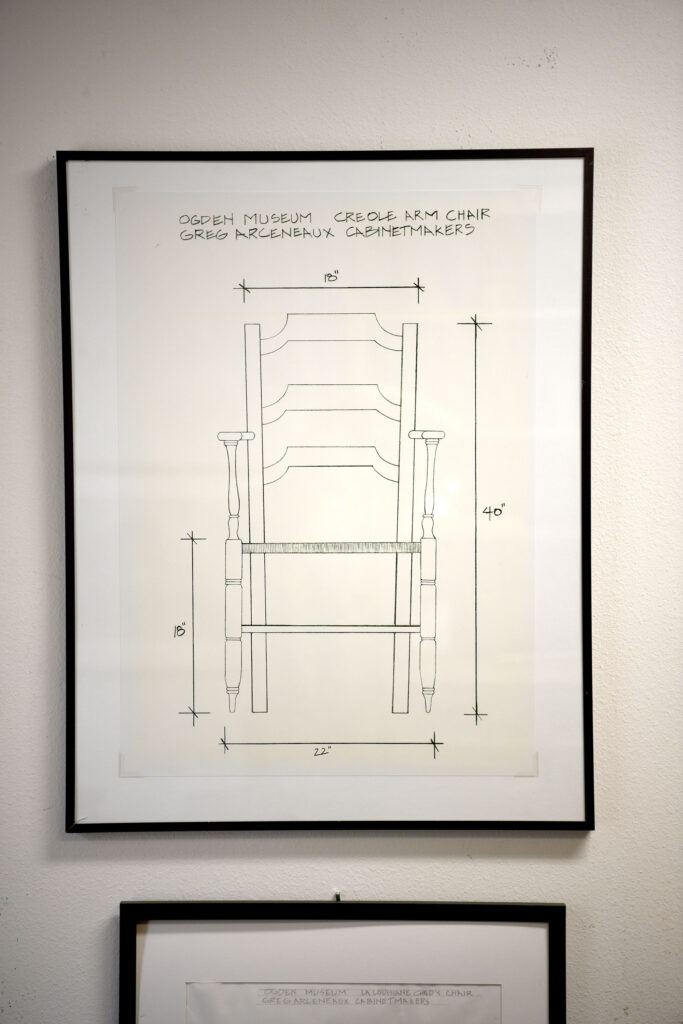
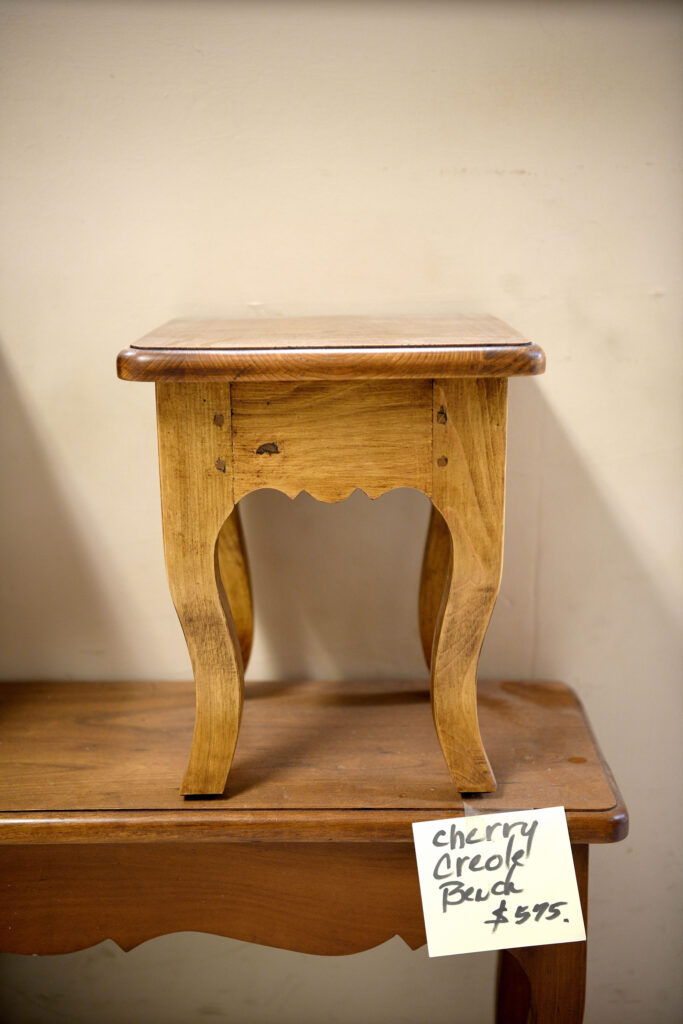
Compared to the more ornate Canadian or European pieces, Louisiana Creole furniture tends to be cleaner in design, with no heavy carvings or elaborate inlays. Distinctive features like scalloped aprons and the cabriole leg give it character, but the overall aesthetic leans toward restraint. “It’s about capturing the essence of design, not embellishing it,” he says.
Many of the Acadians arrived as refugees and brought a peasant practicality. Their furniture was even more austere, made from what was available, designed to meet everyday needs. “Sometimes they had a trunk, sometimes nothing,” Greg adds. “But they built with purpose.”
That sense of purpose lives on in Greg’s work. His pieces don’t just echo the past; they honor it, carrying forward a style that has too often been overlooked in favor of trends from elsewhere. “Just because something’s not in a museum,” he says, “doesn’t mean it didn’t exist. It just means we haven’t preserved it yet.”

Cultural Preservation and Impact
Greg Arceneaux doesn’t just build furniture; he preserves a culture. His work can be found in museums, historic homes, and landmark institutions across Louisiana, from Shadows-on-the-Teche to the Louisiana State Museum. But his mission isn’t about display, it’s about continuity.
Greg stepped in the late 1980s when the Cabildo in New Orleans caught fire during renovations. As a founding member of the Louisiana Furnishings Industry Association, he helped document the original timber frame structure. He later won the commission to recreate the table and chairs for the Sala Capitular, the historic seat of government. “They had a description, but no surviving furniture,” he recalls. “We built from the ground up, guided by history and heart.”
Since then, Greg has built more than 30 pieces for the Louisiana State Museum, including work for the Presbytère. His pieces have been commissioned for Laura Plantation, the Ogden Museum, and Pat O’Brien’s in the French Quarter. Every piece is crafted with the same care, whether going into a museum or a local family home.
Jazz Fest, too, has been a vital part of their journey. “This will be our 37th year,” Liz notes proudly. She manages the logistics, documents their presence online, and brings their tradition to a broader audience. “Every year we wait for the jury results, and when we get in, it’s a sigh of relief.”
After Hurricane Katrina, when much of New Orleans was still shut down, the Arceneauxs used their skills to help families rebuild, not just their homes, but their sense of stability. “People had piled their lives on the curb,” Liz says quietly. “One of our clients told us, months later, that the only pieces to survive the flood were Greg’s. They found them under a house, three blocks away.”
That work earned Greg a special award of excellence, but for both of them, the reward was personal. “We just wanted to help,” Greg says. “It felt like the right thing to do.”
Crafting for People, Not Just Places
Greg Arceneaux has built thousands of pieces over his career, but not every project ends with a handshake and a thank-you. The nature of custom work, especially when it’s deeply personal and meticulously handcrafted, comes with its challenges.
He recalls one client who commissioned a grand armoire, visited the workshop regularly, and approved every detail. The design, wood, and hardware were all selected in consultation. “We redid the panel on the door three or four times,” Greg says. “She was involved at every step.” However, weeks after delivery, she called and insisted the piece was “nothing like what she wanted.”
It was a stunning claim, especially given the detailed process and her final payment. “We did everything right. We even had signed drawings. But sometimes you get a client you can’t please.” They settled the issue legally, returning her money, and have since tried to resell the piece at half the price to recoup the cost of labor and materials. “It’s a beautiful piece,” he adds. “One of a kind.”
Despite such setbacks, Greg remains grounded. He knows that for every problematic client, dozens more treasure his work. From large-scale commissions to something as simple as a cutting board, each item is built with care and intention.
“I design for life,” he says. “Furniture that fits a purpose, that makes a home feel complete. Most of the time, people get it. And that’s enough.”


An Endangered Craft, a Living Legacy
At 74, Greg Arceneaux shows no signs of slowing down. Retirement is not yet in his plans, not because he has to keep working, but because what he does is too rare to walk away from. “There aren’t many people left doing this,” he says. “I’d love to pass it on, but it takes time, and not everyone wants to do the work.”
Over the years, he’s had a few young people express interest, but training a furniture maker is not a weekend workshop. It takes years of hands-on practice, patience, and reverence for culture and quality that can’t be taught quickly.
That’s why, in the late 1990s, Greg joined a group of educators and artisans to create a certification program in Louisiana that would train craftspeople, provide jobs, and build a value-added industry around the state’s abundant timber. The plan included vocational training at schools like Delgado and Southeastern, with pathways for technical skills and business development.
The program never fully materialized. The trend at the time was outsourcing. “Everybody was sending work to Mexico, China, Indonesia,” he says. “They kept asking why I didn’t follow. I told them I want my neighbors to have jobs. Good jobs. Jobs they can be proud of.”
To this day, Greg believes education is the key to keeping the craft alive, not just teaching woodworking, but restoring dignity to working with your hands. “Not everybody’s meant to go to college. Some people want to come home at the end of the day and see what they’ve made. That should be valued.”
Personal Life and Philosophy
When the tools are put down and the sawdust settles, Greg Arceneaux reaches for his guitar. He plays not for an audience, but for himself. “I’m not great. I’m not even good,” he laughs. “But I play every day because it brings me peace. The music carries the stress away.”
After a day of shaping tangible things, such as chairs, tables, and spoons, music offers him something more ephemeral. “You play a note and it’s gone. You won’t hear it again,” he says. “It’s the opposite of what I do in the shop, and that’s what I love about it.”
Greg and Liz, partners in every sense, also share a passion for cooking and gardening. Their yard is a year-round bounty of greens, onions, tomatoes, eggplant, and herbs. “Almost anything fresh out of the garden is my favorite meal,” Greg says. “I’m a lifelong organic gardener. It’s how I grew up, and it’s how I live.”
When they’re not working with wood or tending to plants, they’re often in the kitchen, cooking meals together and enjoying the quiet rhythm of home. This life is built not only on craft and culture but also on shared values, simplicity, care, and a deep appreciation for what lasts.
Greg Arceneaux: https://www.gregarceneaux.com/

A Legacy You Can Hold
When asked what he hopes people remember about his work, Greg Arceneaux doesn’t hesitate. “It comes from a deep well of culture that we call Louisiana,” he says. “The designs are rooted here. They’re part of this place. And they’re meant to be used, loved, passed down.”
His furniture tells stories, not just of French joinery or Creole curves but of resilience, identity, and quiet dedication. In a world quick to discard, Greg builds to endure. His pieces hold the weight of memory and the promise of permanence.
“If I had three wishes,” he says thoughtfully, “the first would be peace on earth. Then, people could be more tolerant, more accepting of each other. And last, we’d learn to celebrate our differences instead of letting them divide us.”
He smiles, then shrugs lightly. “That’s what I try to do in my work, in a way. Bring something good into the world. Make something that matters.”
In his workshop, surrounded by solid oak chairs, spoon molds, and Louisiana cypress, Greg returns to the piece he’s shaping, a dark, gleaming spoon carved from walnut and poplar. “This one’s for a gumbo pot,” he says. “It’ll stir something warm.”