


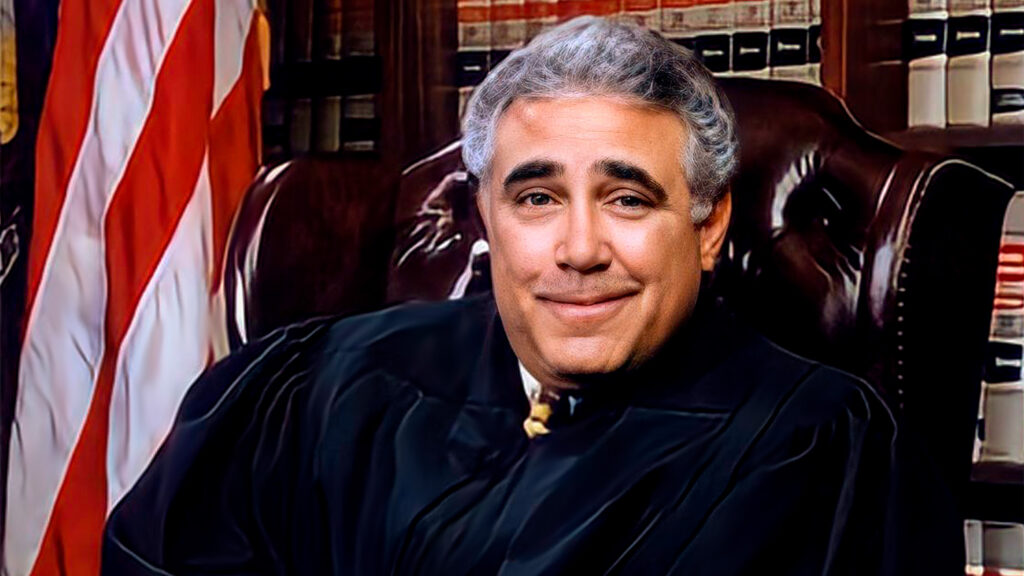
Though retired from active service, Louisiana’s eminent Judge Richard Theodore Haik Sr. continues to shape the pursuit of justice, using his unmatched legal wisdom and unwavering commitment to equality for a more humane and just society.
Make no mistake – even after retiring from active service in 2016, Judge Richard Haik, Sr remains a towering judicial and moral presence in Louisiana, having served seven years on the state bench and been a judge on the federal bench for over twenty-five years.
He is now practising as a mediator and arbiter for the firm Morrow, Morrow, Ryan, Bassett & Haik, where he has the pleasure of working alongside his son Richard. Haik is enjoying a late-career renaissance, bringing to bear the full extent of his prodigious legal expertise and doing what he inimitably does best – helping people from all walks of life find equality and justice in the pursuit of human flourishing.
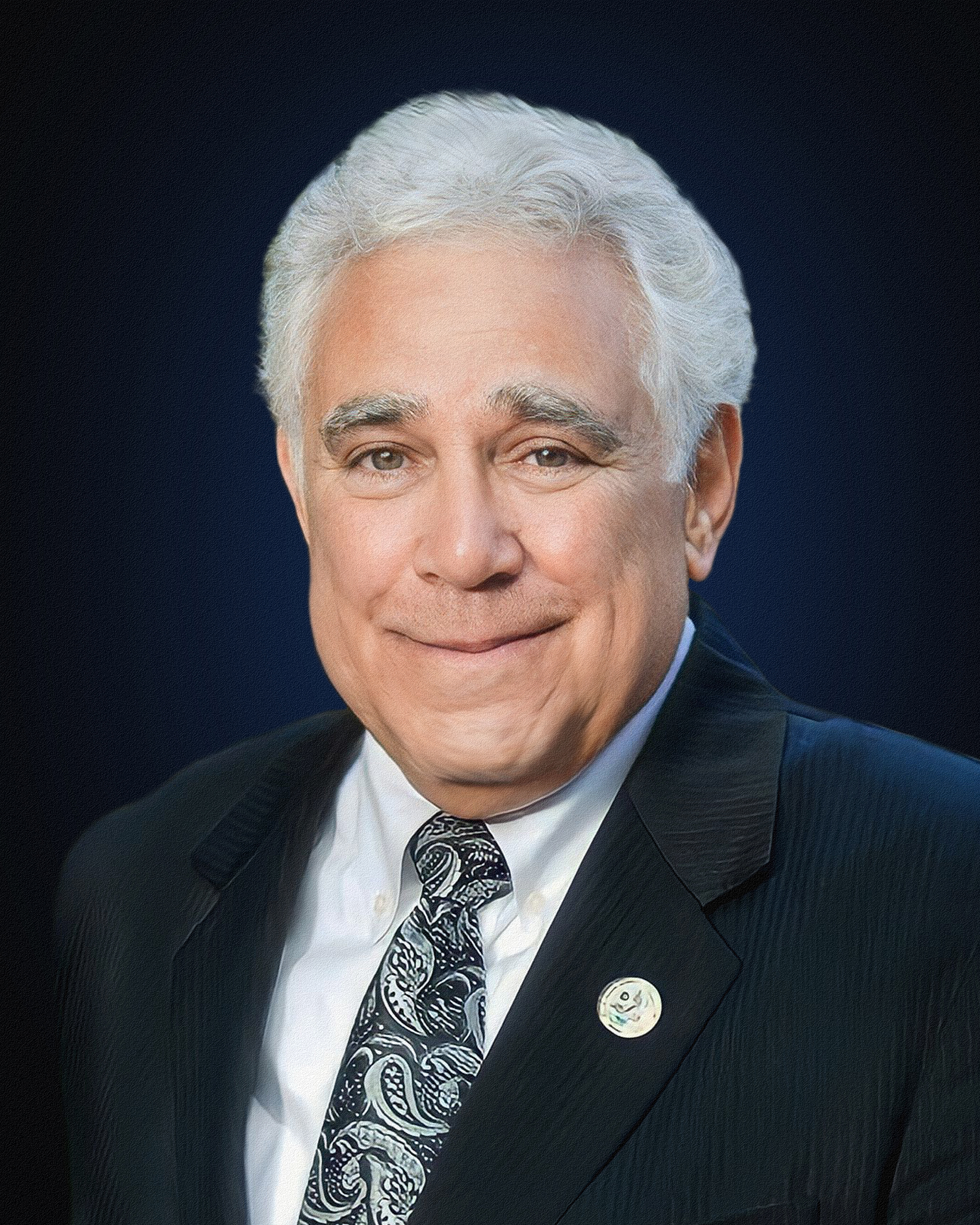
Don’t be fooled – as some legal adversaries have to their cost – by his bouffant white hair, thick eyebrows and a cherubic smile, one which connotes distinguished senescence and a concomitant diminution of vigour. Au contraire, Haik, Sr is a man of immense legal, as well as military experience, energy, prodigious forensic wisdom and, perhaps most importantly, the possessor of a deeply humane, benevolent, egalitarian and compassionate worldview, especially when it comes to race (the perennial bête noire as far as America, and in particular the South, is concerned) and an ardent believer in racial equality – the advancement of which has been a constant throughout his career.
Haik has selflessly dedicated his life to serving the community from which he hails and to promoting justice, peace, and safety for all and duly has a remarkable judicial track record to show for it.
Judge Richard Family and Upbringing
The grandson of Lebanese Catholic immigrants who came to Louisiana to escape persecution for their Christian religious beliefs (including the threat of beheading) in 1900, Haik was born in Lafayette and brought up in New Iberia, where his father ran a small furniture store which catered to a predominantly African-American clientele.
Given the colonial history of the Levant, French was widely spoken in Lebanon at the turn of the 20th century, in addition to Arabic. He explains Louisiana’s religious and linguistic attractions for his refugee grandparents: “That’s why Lebanese people came to this part of the country – because it was predominantly Catholic. All of my grandparents spoke French.”
Perhaps due to his father’s negative experiences, Haik Sr has always felt racial prejudice acutely. “My father was born in Bogalusa, Louisiana, but he hated it there because of the way they treated the black people and the Lebanese, so he left and came to New Iberia, where the French people embraced him.”
Due to his father being gregarious, he settled in well. As Haik relates, “They liked him, as he was very outgoing. My mother was not outgoing, but she was adamant and the kind of person who called it as she saw it.”
One of five children, Haik had a happy, stable childhood – notably one imbued with the immigrant, mercantile work ethic that courses through his veins. Whilst money may at times have been in short supply due to the occasionally erratic nature of his father’s business endeavours, character, integrity, and moral fibre were indeed not, and being surrounded by these virtues in abundance as he grew up directly contributed to the development of his moral compass.


Judge Richard Haik’s Parents
Unstinting in his praise for the job they did in parenting him, Haik is effusive. “My parents are both first-generation Lebanese and great parents.” It is evident from the way Haik speaks with such fulsome admiration about his father that he was a colossal presence in – and an enduringly positive influence on his life. He says with tremendous filial pride, “My father was an individual who was before his time.” He continues, “He was not an entrepreneur. He had very little money, but he had great character, and to me, that’s more important than money.”
Haik’s interest in people and desire to be involved in civic affairs can also be traced back to his father. As he explains with discernible pride at his father’s tenacity and resilience – attributes, he has certainly inherited, “My father was very civic minded. He started the Iberia General Hospital in New Iberia, and he got a lot of flack from that because the doctors owned the only hospital in Iberia Parish, and when he started to push for another hospital that was publicly owned, the doctors didn’t like him. But it didn’t stop him. He went ahead and kept going forwards with that project and worked on it for 12 years.” He adds, the reverence clearly audible in his tone, “My father was an amazing person.”
Haik’s father ran twice for mayor of New Iberia, losing on both occasions. However, in all probability, racism was the defining factor in his not winning – something which Haik has to this day, never forgotten. Recalling an incident on the campaign trail when as a child, he accompanied his father “stumping” (standing on the back of a pick-up truck and talking to a group of people), an example of the ethnic prejudice which his father experienced – albeit white on white – all those years later still rankles, leaving a bitter taste in Haik’s mouth. As he says, “After my father spoke, he walked around, shaking hands with everyone. Two individuals talked in French because they thought my dad didn’t understand French, but he knew French. One told the other, “Don’t vote for him because he’s a Dago, which is a derogatory racial epithet for an Italian. My father turned to these two guys and said in French, “I’m not a Dago. I’m Lebanese and speak French as well as you do.” That really shocked them.”
Treat Everyone with Respect
Haik’s father taught him many invaluable life lessons, including that we all share the same human condition and that, united by our common humanity, irrespective of our skin colour, we are all equals and that every human deserves the same respect. He states, “I learned from my parents that everyone was the same.” To illustrate how he learnt this priceless lesson from his father, Haik recalls the salutary moment – a foundational one which elucidates much about his father – and Haik too. “On my 10th birthday, my father gave me a puppy. We were out at our farm, and I was hugging the puppy. There was an African-American gentleman who lived there whose nickname was Cowboy. When I got the dog, I was so excited. Cowboy was asking me some questions, and I said, “Yes” and “No”, but I never said “Sir”, or “Yes, sir, or “Thank you, sir.” Even on my birthday, we went home, and my father said, “Come into the bedroom and put your hands on the bed.” (meaning that he was going to spank me). I said, “Dad, what did I do? Why are you going to spank me?” He said, “You never said “Yes, sir,” and “No, sir to Mr. Cowboy.” He adds, without bitterness but with the recollection of that spanking still clear in his mind, “I never, ever forgot that lesson.”


Education
Haik attended a small catholic school in New Iberia. Throughout his school years, he displayed remarkable athletic and footballing prowess – a rarity for one who was also intellectually inclined. With an unassuming air of modesty, he says, “I was an Allstate football player at school and had a full scholarship.”
Winning Like Christian Gentlemen
Haik’s high school football coach, Bobby Banna, also profoundly influenced him and his general outlook. “My high school coach was Armenian and greatly influenced my life. I will never forget the many things he taught me about life. My father loved this man, and I loved him like another father.”
Haik then relates an incident from his footballing days, which illustrates how coach Banna succeeded in inculcating in him firm moral values. After committing an egregious foul on the pitch against a player from the opposing team because he was frustrated at his team losing, Haik says, “My coach was out on the field yelling at me. Come here, Dickie, come here. He grabbed my face mask, looked me in the eye, and said, “We win like Christian gentlemen and lose like Christian gentlemen. They played better than us. After this game, you will go to that boy and apologise. Do you understand me? I will kick you off the team if you ever do that again. I don’t care how good you are. I’ll kick you off. I knew him. He meant it.” He adds, savouring the worldly wisdom he learnt that day on the pitch, “That’s a life lesson. You win some, you lose some, but if you lose, lose gracefully, and you lose like a gentleman, like a Christian gentleman. When you win, do the same thing. You congratulate the other side for a great game and continue with your life.”
Haik’s football coach also imparted genuine confidence to his young player and an awareness that “no matter what, I could do something good. I learned that confidence from my coach, who was a wonderful human being.”
One could argue that the confidence he learnt on the pitch “to do something good” has remained with Haik ever since, and he has amply manifested it in greater, more important spheres of endeavour to such an extent that coach Banna would undoubtedly be immensely proud of his former pupil.
University
After graduating from high school, Haik attended the University of Southwest Louisiana (now called the University of Louisiana, at Lafayette), and played football there for the Ragin’ Cajuns for four years. While he was just three hours shy of obtaining a degree in Economics and Finance, he graduated in 1971 with a Bachelor of Science in General Business. He explains, “I should’ve had degrees in economics and finance because I was only three hours shy of each, but I had to go to Fort Polk.”
Continuing his journey, he says, “I went to Fort Polk in the National Guards. From Fort Polk, I went to Fort Benning for Officers’ Candidate School (OCS).”
Haik’s military accomplishments are almost as impressive as his legal ones. He served in the Louisiana Army National Guard from 1971 to 1978, obtaining the rank of Captain and company commander of the New Iberia unit, and from 1980 to 1984, he was a reserve Captain in the US Army.
No mere “weekend warrior”, Haik’s long involvement with the American military in an auxiliary capacity belies a deep and abiding sense of patriotism – not uncommon in the children of immigrants – and a profound gratitude to the country which afforded his grandparents’ safety and a chance of a better life when fleeing religious persecution in their Middle Eastern homeland.
Law School
Haik managed to seamlessly combine his military training with pursuing his legal studies. As he recalls smiling, “I started law school two days late because they wouldn’t let me out of the graduation for (US Army’s) OCS Officers’ Candidate School. It didn’t hurt me much, and I ended up with a perfect guy as my roommate, whom I did not know before law school. We did many things together, and he’s still one of my best friends.”
Haik graduated from Loyola University New Orleans School of Law with his Juris Doctor degree in 1975.
Judge Haik’s Career
After law school, Haik returned to New Iberia and immediately got married. As he explains with a joyful countenance, “I met my wife when I was in law school, and we got married right after I left law school. Her last name was Burke. Her father was very well-liked and very well-connected in New Iberia.”
Haik’s brother Ted was already an attorney who was running for state representative, and this prompted Haik to seek a judicial appointment. As he relates, “After my brother got elected for his third term, I asked him if he was going to stay and be a state representative. When he said yes, I said, “Well, I’m running for judge. Because I’m doing all the office work and want to make my own way.”
With an active social conscience and being civic-minded like his father, while practising law Haik helped set up a legal charity to help poor people who could not afford legal representation. He proudly explains, “I helped start the Acadian Legal Services programme to help the poor. I was the first Vice Chairman of that group, and I’m very proud of it because it helped many people. I did a lot of pro bono work because of my brother. You did it when you felt that some people didn’t have legal representation, so I was there for seven years.”
Haik was a private practice attorney in New Iberia from 1975 to 1984. At that point, at age 34, he was elected as a Louisiana state District Judge for the 16th Judicial District in New Iberia to the seat vacated by John Malcolm Duhé Jr. and duly served on the state court until 1991.
In 1991, at the comparatively young age of 40, Judge Haik was appointed to the United States District Court for the Western District of Louisiana by President George H. W. Bush, again to the seat vacated by John Malcolm Duhé Jr. He duly served as Chief Judge of the district court from 2002 until 2009.

The Importance of Education
Haik is in no doubt about the life-changing importance of education. He expounds with passion and clarity, “In my opinion, the most important thing for anyone to succeed at is education.” He then adds sagaciously, “Education is so important. It’s the thing that helps everyone succeed. I learned that from my parents, especially from my mother. Education is the key to success. It really is. If you have Education, then you understand everything.”
He continues with understanding and empathy, “Young people will get educated as long as the parents are behind them to get educated. I recognise that it’s often difficult. We have a lot of poor people in Lafayette, black and white. The ones who make something of themselves are the ones who force themselves to be educated.”
Reflecting on his own parents’ respective levels of educational attainment, Haik is frank and compassionate for those whose families aren’t educated. He admits, “I was very fortunate. My mother was educated. She graduated from college and became a teacher. My father got a college scholarship, went to college and played football for one semester, but then his family’s home burnt down while he was there. So, before he started his second semester, he quit college, went to work and then gave all the money to his parents to buy another house.”
Greatest Career Achievement
Given his ardent belief in the overwhelming importance of Education and of the exponential amelioration in life chances it confers, it is perhaps no surprise to learn that in Haik’s opinion, the greatest judicial achievement of his career was one which involved seeking to provide equality of educational opportunity across the racial spectrum to the young people of Louisiana.
He is referring to what was arguably his most high-profile case – the Lafayette Parish Public School System’s desegregation case, where he ruled on April 24, 2006, that after 41 years, the school system was free from judicial oversight of its operations. As he says laconically, “I did what I thought was right.” He continues, “Everybody was angry with me. I didn’t care. I had a job to do, and my job was to try to get everyone equal as much as we could.”
As he continues without a shred of self-doubt, “My greatest achievement was the school desegregation case. After that, it seemed like the African-American community in Louisiana started flourishing since a child going to a predominantly black school could transfer to a majority white school, and there was always an educational difference there.”
He continues, evidently passionate to this day about the intrinsic nobility and worth of the cause he fought so bravely, “The predominantly black schools have great principals. In fact, at one point, I told a school superintendent, “I want you to take seven principles in these predominantly black schools and put them in the predominantly white schools. I also want you to take the principals from predominantly white schools to predominantly black schools. The reason for that was the leader of those schools made a difference. They made the teachers work harder. They made things happen. And the Education went much better.”
Despite a couple of threats from disgruntled parents, when the transfer came into effect, Hail was ultimately applauded by many parents who understood the importance of what he sought to achieve by the verdict.
One of the most common criticisms he encountered was that transporting African-American students to predominately white schools would result in high-achieving schools being “dragged down” and their educational levels plummeting. Haik is adamant that this was not what happened. As he says with conviction, “That’s not what happened. What happened was that the kids who were there, who were smart, who understood, helped lift those kids up. I had to review reports every year as to what was going on to see if what we were doing was making some progress, and it was – kids went from getting very poor grades on these standardised tests to obtaining really good grades on these tests, and it was because these kids were in a different environment. Their teachers and the principals were more demanding of everyone, and those kids reacted to that. Instead of pulling other (white) kids down, the bussed-in African-American kids came up.”
In the run-up to the landmark ruling, Haik attended many school board meetings, often at night, speaking at length to dissenters. He told myriad parents, “That’s why I’m making these changes so that these children could know what it is to be successful in what they do. I know it’s a little uncomfortable, but that’s OK because sometimes you have to get out of that comfort area and do what’s right for your children and your grandchildren.”
He continues, relating with moving emotion what he said on many occasions to those parents, “I’m doing this for your child. For my child. For every person’s child that goes to school. I’m doing this for them. If you don’t like me, it’s OK. I know a lot of people who don’t like me, but I’m going to do what I think is best for the community as a whole.”
He adds, with genuine fulfilment and a colossal sense of satisfaction, “It’s all about opportunities. It’s a wonderful thing when education and opportunities meet, so I’m proud of that. Of all the things that I’ve done, I think I’m the most proud of that more than anything else I accomplished in my life, except for my own children and my wife.”
In a jocular tone, he says, “They called me the Desegregation Czar because desegregation came up again while I was on the federal bench.”
He explains the rationale behind the ruling: “I went to every school in Lafayette Parish to see how things were going, and what I saw was the schools here in Lafayette, the predominantly black schools, were run down. They didn’t have good books. They didn’t have good chairs to sit in, and in one elementary school, the teacher even had books under the desk to keep the desk from falling apart.”
He adds, with a sense of total vindication, “The criticism stopped when they realised I was trying to help everyone get a good education. I closed four predominantly African-American schools because they were so run down and dilapidated that they needed something to happen. We got it done, and I think it was very successful.”
Essentially Haik’s landmark desegregation ruling was instrumental in helping build a thriving African-American middle class in Louisiana, one wholly predicated upon Education. As he says, “I like to look now at what Lafayette is, and I see a lot more African-Americans who are lawyers, doctors, engineers, and dentists and who are making their way because of education.”
$2 Million Bribery Case
Another notable (albeit moderately terrifying) incident in his career was when some members of the New Orleans mafia attempted to bribe him. As Haik readily explains with admirable stoical equanimity, “Everybody has a few bumps here and there. One of my bumps was when somebody tried to bribe me in a civil case right after I got on the federal bench and offered me $2 million to throw the case.”
In addition to reporting it to the police and FBI, Haik was understandably shaken up and went to see his senior judge, perturbed by the implication that he had a moral flaw the assailants were trying to exploit. “I went to see Judge Shaw, who was my chief judge at the time. I was very distraught about it and asked him, “Is there something in my character that’s a flaw that they thought could come to me? And he said absolutely not. You have the case. That’s the only reason they came to you.”
Two people went to jail for the attempted bribery, and Haik was required to testify “at one of the tough trials.” As he continues, understandably reluctant to re-visit a conspicuously dark time in his life, “That was a scary part of my time on the bench because we discovered that one of the individuals was connected with the mafia in New Orleans.”
Haik admits with great emotional honesty, “It was kind of scary, but it is what it is. I wasn’t afraid for myself. I was afraid for my family, but they had round-the-clock US Marshals watching my house and outside of my kids’ school, making sure nobody was hanging around. My wife even had an escort everywhere she went.”
Haik personally assisted investigators in gathering evidence to obtain federal indictments against the individuals involved and, in so doing, demonstrated remarkable personal bravery and fortitude. With a grimace etched on his face at the distasteful memories which talking about the case evokes, he says calmly, “It lasted only about six months before they went to trial, but I made like I was going to accept. They actually paid me $50,000 in cash, and of course, the FBI was taping everything and videoing everything.”
He adds, with a laudable ethos of impassioned civic duty but one naturally tapered by concern for the well-being of his immediate family, “It lasted for quite a while. It lasted long enough to make my family a little nervous. My kids weren’t nervous because they were still young and didn’t understand, but it was a serious situation.”

Most Difficult Part of Being a Judge
With remarkable candour, Haik openly admits that as a judge, “I did not like to sentence people to jail. That was always difficult for me.”
Unusually for a judge before sentencing, Haik, throughout his time on the bench, operated an “open door policy” whereby people could come and talk to him about the defendant before he sentenced them, to provide additional information, act as a character witness or give context to the alleged misdemeanours.
As Haik explains, “When I was on the state bench, I had an open door policy. A lot of judges don’t want people coming to talk to them about someone when they’re getting ready to sentence. On the other hand, I liked it because they knew the child or the person involved. Normally, it’s an 18-year-old who’s robbed a store, and it was the first time they’d ever been in any trouble. All I saw in the report was that they robbed a store. Somebody had a gun. There was no context.”
Far from being aloof and remote, Haik prided himself on being approachable. He adds, “People knew they could come to me anytime they wanted. I did that on both the federal and state benches. I would talk to people who knew them better. That’s why I always thought listening to others before I sentence someone was important.”
Haik, a man of deep religious conviction, would also pray before making a decision. He confides, with a gravitas befitting the responsibility of his role, “Many times before sentencing, especially when sentencing young people, I would close my doors and pray for the right decision because that was difficult to put somebody in jail.”
He adds, elucidating the context of the moral quandary he was often faced with, “If the young person brandishes a gun and shoots somebody, that’s different. That means they really don’t want to help, but if they’re there and somebody else is doing the bad stuff, that kid may need another opportunity. There were many times that I gave opportunities that didn’t work. That’s not on me. I gave them the opportunity, but when they wanted the opportunity and they worked on that opportunity, I didn’t see them again, which was great. It’s an opportunity to be educated.”
Career Challenges
Unfortunately, but perhaps not unexpectedly, given the endemic nature of racism in the South, Haik feels that he experienced a fair degree of racism during his career on account of his Lebanese heritage. This in itself is remarkable – a savage indictment on racial myopia prevalent (back then, at least) in Louisiana, given that he is white. As he admits with an eloquent chronic understatement, “Being Lebanese in a predominantly Cajun environment was a little difficult.”
A Deep Affinity with Black People
Perhaps because of his Lebanese heritage, and the discrimination his immigrant grandparents faced on arriving in Louisiana, and perhaps because of just being a decent human being committed to equality of opportunity for all, Haik has long nurtured a deep affinity for black people. He explains, “The Lebanese people have traditionally always had a wonderful relationship with the black community in Louisiana because we also felt discriminated against.”
Be it in his choice of friends, college roommates or those in the judicial world he has actively sought to frequent, assist and elevate – including lawyers Ricky Miniex and Clyde Simien from Lafayette, colleague Judge Ivan Lemelle, state representative Marcus Bryan, Willie Laday and Don Washington. Haik has consistently proved himself to be a powerful and committed ally to African-American and Creole people in Louisiana.
He says with profound and evident sincerity, “Not because of the colour of their skin, but because of the strength of their character. There are a lot of Creoles in New Orleans. It’s amazing to me how they have overcome some of the problems they had in their lifetime, and Willie Laday is one of them. Don Washington is one of them, and Clyde Simien is one. Ricky Miniex is one. Marcus Bryan is another one. It has been my privilege to know them.”
As he proceeds to give the example of Leroy Boudreaux, an African-American football player who Haik used to the dorm with at university and who subsequently became a friend for life or the time when he stood up at a political rally and cited his white Afro hairstyle as an example of the similitude between their races, saying, “I’m one of you. Look at my hair. Which is closer to you than us?”, Haik has always felt a marked kinship with African-Americans and Creole people.
Decision to send his children to a Predominantly Black School
That enduring affinity was perhaps also demonstrated by Haik’s decision to send his own children to a predominantly black school. He remarks, “My kids went to St. Edwards in Iberia, a predominantly black Catholic school. We wanted our kids to learn about the Catholic religion. I loved the fact that my kids went to school there. It opened their eyes too to the fact that children of colour are just as smart as children who are white. It’s something my parents always told me.” He reiterates, “My father once told me, “You don’t judge a person by the colour of their skin. Judge them by the strength of their character.”
Decision to Retire
Haik stepped down from the judicial bench in 2016. As he recalls, “I stayed on the bench for 25 years. I got to the point that I was proud that many of the lawyers from the bigger firms sent the young people to argue motions in front of me – I took great pride in that.”
He admits that his modus operandi in the courtroom was kind and non-confrontational. “I tried never to embarrass a lawyer in open court. Sometimes I’d stop court, take somebody out, and tell them you’re messing up. Don’t do this anymore.”
Explaining his decision to retire, he says, “I enjoyed serving as a judge, but it got to the point where I was getting older. I was 66 when I totally retired, and by then, I was getting a little grumpy. So I thought it was time for me to get off. Federal judges can stay on as judges until they die if they wish. State judges have an age limit of 70, which I think I’m 73. I think I could still do the job.”
Honours and Awards
Judge Haik has won many honours, awards and plaudits during an illustrious career. Amongst others, he was the 2019 John A. “T-Jean” Hernandez III Memorial Award recipient (presented for achievements in Francophone leadership), the 2016 Loyola University Alumni Glass Award winner, and the 1994 ULL Outstanding Alumni Award recipient. Recently he received the Distinguished Jurist Award of 2022 from the Louisiana Bar Foundation.

Family
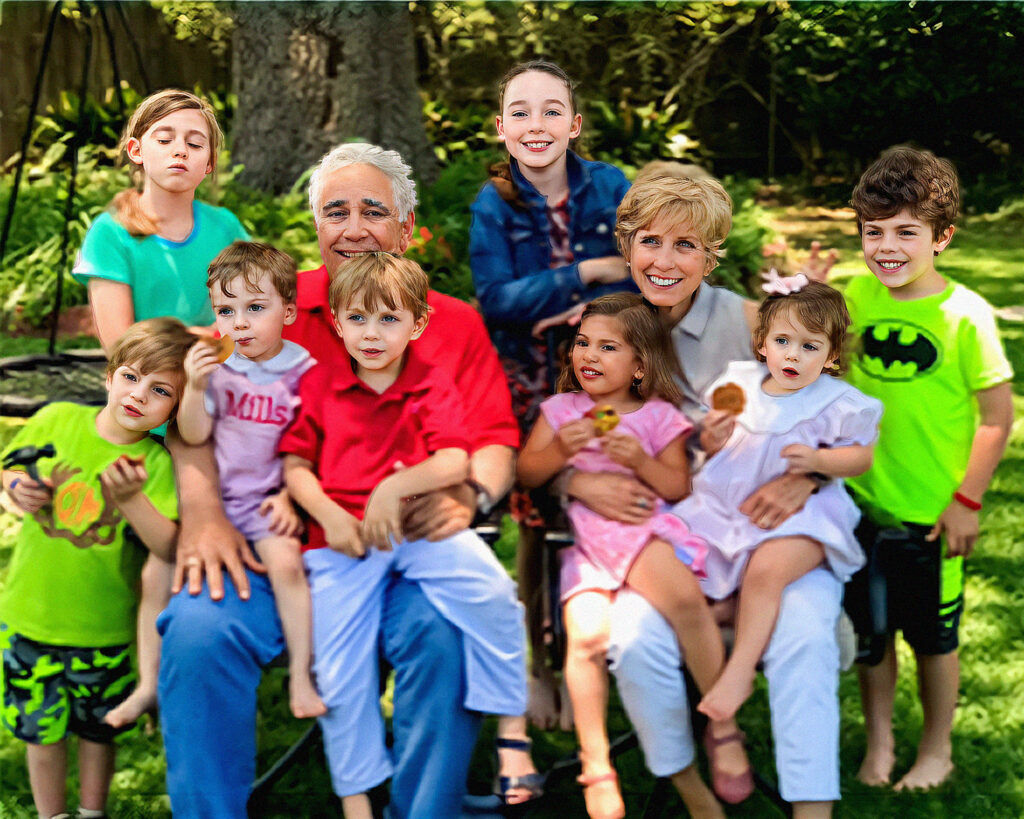
Haik and his wife Kathleen have three children, Elizabeth, Richard, and Mary Carolyn and are now doting grandparents to nine grandchildren. He has always immensely valued his family, and it is no surprise to hear him extol their worth with humility and extreme gratitude.
“I think my greatest achievement actually is my family – my wife and my children. They are all very successful. They’re wonderful kids and a wonderful wife. That has to be the thing I’m most proud of. It’s simple.” He adds, his enthusiasm and sense of being blessed infectious, “I’ve got a great wife and three beautiful children, two of whom are attorneys. One is a special ed teacher, and I’m proud of all three of them. Very, very proud.” He admits with self-deprecating humour, “My wife is a lot smarter than I am, and she took care of them while I was working, and she was a teacher by education.”
Hobbies
Outside of the courtroom, in a conscious effort to get away from the manifold stresses of being a federal judge, Haik has long nurtured a predilection for hunting. As he says with an evident passion, “I love to hunt. I love to go deer hunting. So, if anybody reads this and they want to invite me to go deer hunting, I will go.”
Three Wishes
When it comes to the proverbial three wishes he would like were he granted them, Haik’s are a mixture of serious and joyful desires, combining temporal concerns about human mortality with more philosophical desires about human solidarity and mutual understanding. He says, “I wish that I live long enough to see my grandchildren at least finish high school and college, be on their own and then marry. That’s my one wish in life.”
With a jocular twinkle in his eyes, he adds, “My second wish is that my wife never leaves me because I wouldn’t be able to find my socks. She runs the household and is a wonderful and knowledgeable human being.”
Concluding with a more philosophical precept – one which has imbued his whole life and career, Haik states with an eloquent solemnity, “My third wish is that people learn how to get together more and understand more of life, because when you understand, then you’ll accept.”
Message to the World
As for his “message to the world” – one especially directed towards young people- Haik is quick to share Dr King’s famous galvanising, utopian racial mantra, which his father instilled in him. He says with copious pride, “I would tell them the same thing my father told me: Do not judge someone on the colour of their skin but on the strength of their character.”
As he continues, recalling how he came to learn that lesson in childhood, “That’s something I learned when I was very young and after my father whipped me for not calling Mr. Cowboy “sir.” I knew how strong he was about that and how strong my mother was about that too. I know how strong my wife is about that, and I know how strong my children are about that.”
As he adds gnomically, “The thing that changes the world is Education the right way. Not the wrong way, but the right way.”
Haik is also keen to address the old chestnut of guns and gun control, which seem to be a perennial blight on the national landscape – Second Amendment constitutional right or an antediluvian recipe for disaster and license to wantonly kill? Given his penchant for hunting and his stance as a libertarian, he says, in a measured tone, “I’m a true believer that Everybody should be able to live their life the way they wish to live it. I think we now have too many guns flying around. Although I have a lot of guns myself, I use them for hunting. I love to hunt. But I don’t think guns are the problem. I think the people who have the guns are the problems.”
Conclusion
Throughout his illustrious legal career, Haik has exhibited – and continues to show – a profound and compassionate understanding of human nature, its foibles and quirks, alert to when human beings are at their best and at their worst. Perhaps it comes with the territory, but Haik prides himself on being a good judge of character.
Haik is not only a dedicated lifelong public servant – but also a unifying conduit, a bringer together of people, and someone who has devoted much time and effort to bridging gaps between communities, be they African-American, Creole or white, exploiting his own liminal position on the racial spectrum (due to his Lebanese heritage) to leverage goodwill and solidarity.
With his deep affinity for black people and Creole culture, and more specifically, empathy for their plight and what they have collectively endured, Haik embodies in his dealings, both personal and professional, the mantra that his father taught him many years ago – to judge a man “not by the colour of his skin, but by the strength of his character.”
In our age of myopic, often discombobulating identity politics and internecine Culture Wars battles, which seem to thwart our common humanity as opposed to encouraging it, not only Louisiana but the world at large needs more men of the vision, integrity and moral fibre like Richard Haik.