


Madagascar is an island nation in the Indian Ocean, located off the coast of southern Africa. With a land mass of 587,000 sq km, it is the fifth largest island in the world. The 29.2 million inhabitants are of mixed culture, with a diverse heritage dating back at least 2,000 years.
The Creole culture in Madagascar today is similar to that of its neighbouring nations, including Seychelles, La Reunion and Mauritius. Many different ethnicities have combined over the centuries to create the diverse population of modern Madagascar.
This includes Austronesian people who made the journey by sea from Borneo, immigrants from India, Bantu people arriving from Africa across the Mozambique Channel and European colonisers.
Madagascar’s isolation meant a unique culture developed from the coming together of people of many different heritages. Native cultures represent around 90% of the current population. This includes 18 recognised sub-groups within this main group.
How did Creole culture develop in Madagascar?
There is evidence the first settlers arrived in Madagascar around 2,000 years ago. They were either of Indonesian heritage or of mixed African and Indonesian descent. The exceptionally diverse ethnicity of Madagascar has made it difficult for scientists to ascertain its exact cultural origins.
Coastal populations, such as the Temoro on the southeast coast, the Vezo fishing community in southern Madagascar and the Mikea people of the Mikea Forest, on the southwest coast, have 70% African and 30% Asian ancestry.
Studies have suggested a small group of settlers of Polynesian descent arrived in Madagascar some 2,000 years ago. Other settlers of Southeast Asian descent contributed to the melting pot of cultures on the island. Other groups include the Banjar people of Indonesia and the South Kalimantan Dayak people, of southeast Borneo.
The first European to discover Madagascar was the Portuguese explorer Diogo Dias in 1500, while on an expedition to the Cape of Good Hope with the armada of the military commander and navigator Pedro Álvares Cabral. Dias sighted the island after his ship was separated from the main fleet, having taken a route further east.
Consequently, the Portuguese made several raids on Madagascar in the 16th century, destroying a number of existing settlements. The French also invaded the island in the 17th century. They built Fort Dauphin in the southeast in 1642, maintaining it until 1674.
During the late 17th and early 18th centuries, in a troubled period in the island’s history, pirates frequented Madagascar – including the notorious Captain William Kidd – to prey upon merchant’s vessels using the Indian Ocean shipping channels.
Historians believe the many different ethnic groups making up Madagascar’s modern population didn’t establish any real sense of “national” consciousness until this period. As new immigrants and political ideologies arrived from overseas, a sense of national collectivity spread across the island’s existing population.
The term “Creole” was largely connected with the plantation societies of the 16th and 17th centuries. It was often used as a means of defining the enslaved workforce and indigenous population from the colonials and slave masters. It normally identified descendants of Portuguese, French and Spanish settlers in the West Indies or Latin America.
In other locations, such as Madagascar, there was no such cut-and-dried definition of the people who considered themselves Creole. Being a Creole was about having a certain spirit and understanding of the culture. The collective sense of being Creole evolved across Madagascar over two centuries after the first Europeans arrived.


Hardships and challenges
In the 18th century, France colonised the Mascarene Islands to the east of Madagascar, comprising Mauritius, Réunion and Rodrigues. This led to new challenges for the people of Madagascar, who had already fended off attempts by European invaders to colonise their land.
Many fell victim to slave traders, who were trafficking people to satisfy the long-distance and local demands of the plantation owners across the Indian Ocean. Natives of Madagascar, as well as East African slaves, were captured by unscrupulous colonists.
The export of slaves from Madagascar onto neighbouring plantation islands to produce sugar was a rare phenomenon, compared with other Creole nations where enslaved people were imported to work. As the sugar market grew, merchants and plantation owners were always looking for alternative labour supplies.
From the 1830s, they rapidly moved down the west coast of Madagascar, purchasing slaves independently. The trade was managed by experienced “middle men” the Arab Antalaotra, while capital was supplied by the Indian Karany. In addition, thousands of Madagascar’s citizens were taken forcibly to American ports as slaves.
For the people of Madagascar, the hardships of life on a relatively poor island were exacerbated further by the constant threats from neighbouring colonies and transatlantic slave traders looking to capture more people.


The Franco-Malagasy Treaty of Friendship in 1862 recognised the Kingdom of Madagascar’s sovereignty. Then, between 1882 and 1885, the Franco-Merina War broke the power of the slave traders to a degree. Following Creole calls for French intervention in 1895, slavery was abolished in Madagascar the following year.
However, certain clauses in the Treaty of Friendship authorised the French to take over the land, natural resources and the use of labour in Madagascar, throwing the island’s sovereignty into doubt. Several protest movements sprang up and the French quashed them by violent means.
Anxious to make its conquest secure, France eventually annexed Madagascar by force and it became a French colony on 6th August 1896. While the French intervention had effectively wiped out the slave trade from Madagascar, the colonists exercised complete control over the colony.
The living conditions for local people deteriorated, while their rights and freedom were violated. They were subject to hard labour for little reward, combined with high taxes. They were reduced to little more than a cheap workforce to construct new railways, roads and ports and cultivate crops.
There were various protests and uprisings against the French rulers throughout the early 20th century. During World War II, the living conditions of the population deteriorated even further. Rice was requisitioned for the war effort in Europe and Madagascar suffered a famine, while 34,000 Malagasies were conscripted to serve in the French army.
Following the end of WWII, in 1946, Madagascar became a French overseas territory, rather than a colony. France agreed to let the territory’s people decide their own fate in 1958. The Malagasy Republic finally gained independence in 1960, severing ties with France in the 1970s.
Gisèle Rabesahala was the first Malagasy woman appointed a minister in 1977. She had devoted her life to her nation’s independence and was regarded as a pioneer in the nation’s politics, including human rights and people’s freedom, at the time of her death in 2011.
Language of Madagascar
French and Malagasy are the two official languages of Madagascar. The Malagasy language shares a number of common words and meanings with several Indonesian dialects. Despite French remaining one of the official languages of Madagascar, research shows only around one-fifth of the population speak it in day-to-day life.
One of the largest ethnic groups in Madagascar is the Réunionese Creole population, numbering around 119,000 people and speaking their own dialect of Réunion Creole French. This language is also spoken in Réunion and Comoros.
While Madagascar is located geographically close to Bantu-speaking Africa, its Malagasy language is closer to Western Malayo-Polynesian. Bantu elements are present in every dialect of Malagasy and have been established for generations.
Both French and Malagasy are taught in schools. The language of politics is normally Malagasy, while business is often conducted in French. Every official text is published in both languages. Some critics believe having French as an official language is a harmful colonial relic, but others consider it to be beneficial.

Architecture of Madagascar
Madagascar boasts an interesting mix of older Arabic and Creole influences in its architecture before the colonial classical architecture became widespread in the late 19th century. Madagascar has a unique type of dwelling known as “trano gasy“, which is an interpretation of a traditional Creole house with added masonry.
The word “trano” means a house, while “gasy” is short for Malagasy. In rural areas of Madagascar, the Malagasy houses in the trano gasy style are more prevalent.
The simplified brick houses, typical of the highlands, can range in colour from deep red to almost white. The colour depends on the characteristics of the earth used to build them.
There are also examples of local architecture with a Victorian slant, dating from around the 1860s. Architects from the London Missionary Society built many churches in Madagascar during the Victorian period and some of the Malagasy houses were inspired by their techniques.


Cuisine of Madagascar
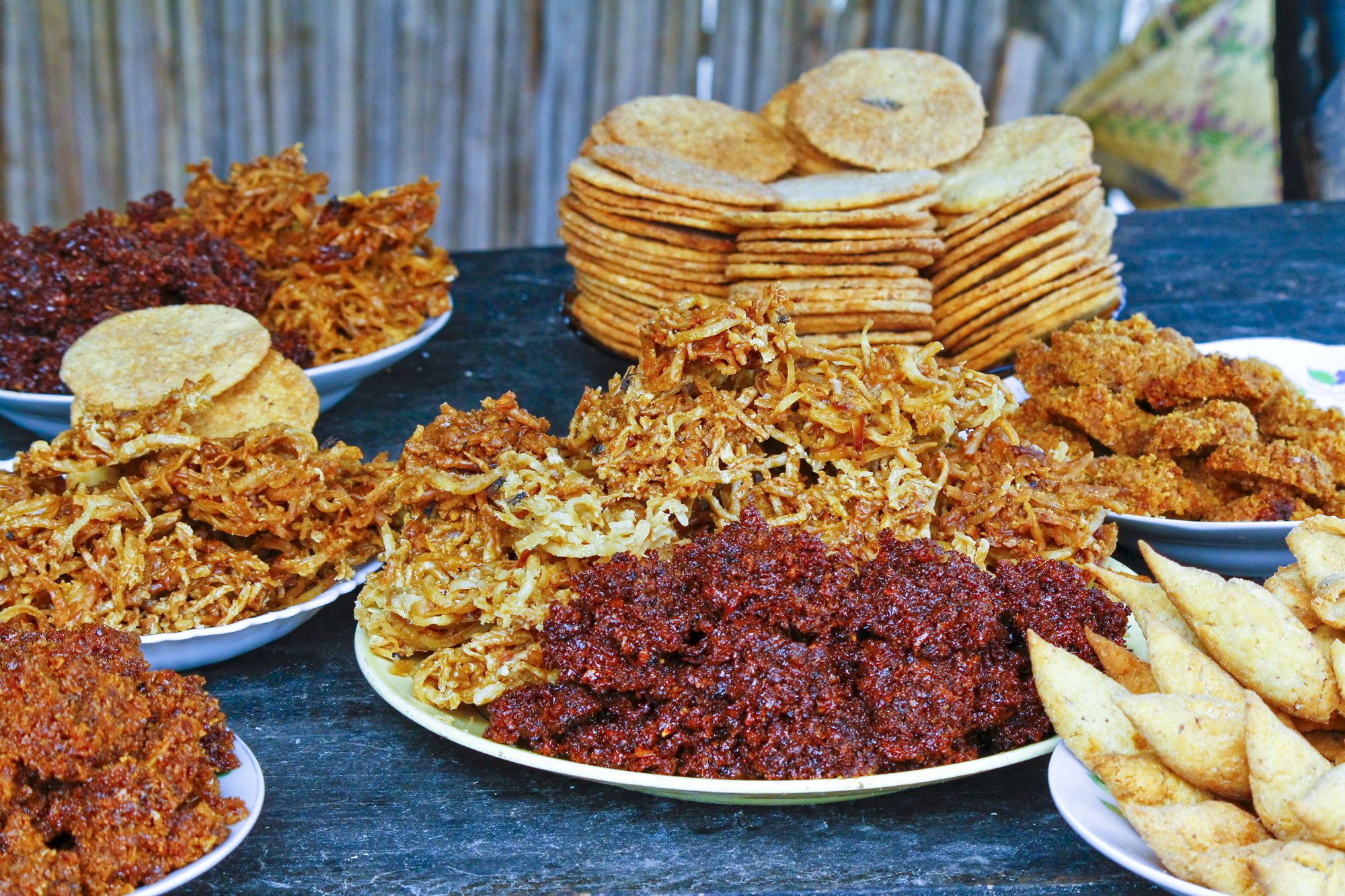
The cuisine of Madagascar consists of spicy dishes with onion, chilli, garlic, curry, ginger and tomatoes. A traditional breakfast consists of a plate of rice with fried egg or chorizo, accompanied by French bread and butter and condensed milk.
A base of rice is used as an accompaniment for many dishes, including vegetarian and meat options. They are often dressed with a sauce that contains garlic, onion, ginger, salt, or vanilla. Popular dishes include Hena Kisoa sauce with pork and pea stew and Sesika, a kind of black pudding served with boiled rice and white beans.
A wide range of tropical fruit, such as mango, tamarind, guava, pineapple, coconut and avocado, are used for fruit juice and desserts.
Music and dance
The people of Madagascar love music and dance with a distinctly Creole flavour. The traditions have been passed down through the generations. The various cultures of the island share music as a means of keeping old traditions alive.
Because of the unique heritage of Madagascar, a lot of the island’s dances aren’t understood by people outside the local culture. In recent years, renowned dancer Andrien Dadiva began a project to preserve traditional music and dance in Madagascar for future generations.
One genre is Malagasy drumming, used for celebrations, healing ceremonies and dancing. The music has African, Asian and Arabic rhythmic influences. Malagasy music incorporates elements from the island’s various coastal and highland regions. Each has unique rhythms and instruments, including drums, string instruments and flutes.
Creole culture has grown significantly across Madagascar since the 16th century heralded the arrival of the Portuguese and French, giving the diverse society a common identity that transcends the many different sub-cultures.