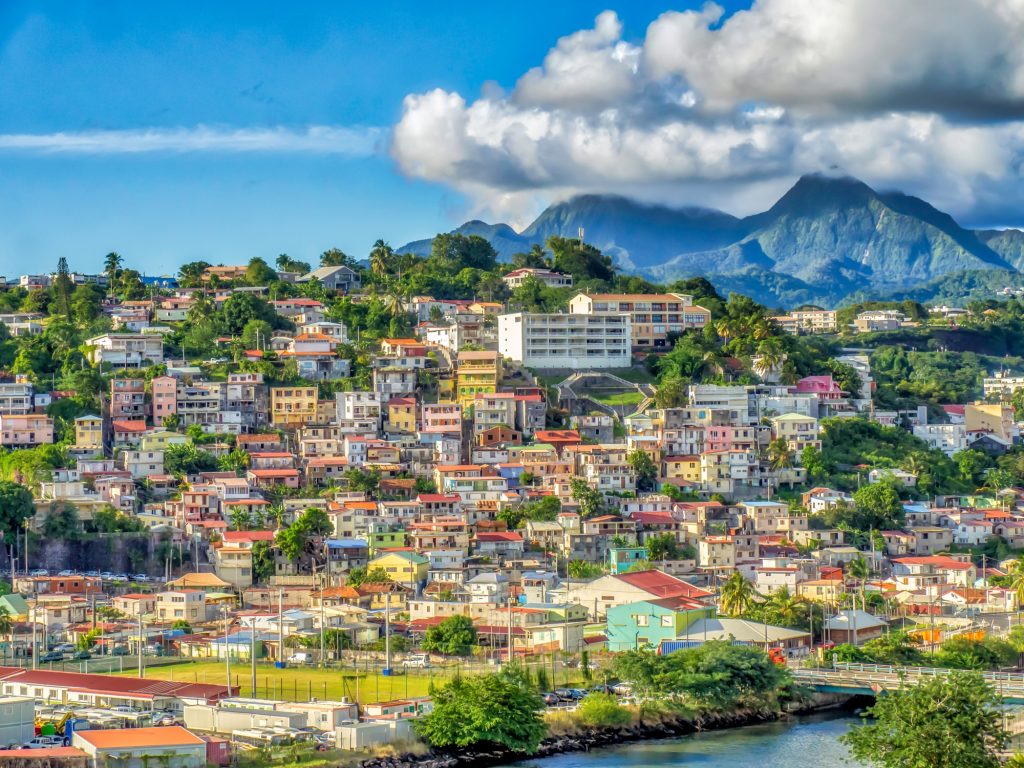
Martinique, an overseas region of France, is a Caribbean island with a population of 367,500 people. Part of the Lesser Antilles, its culture reflects a blend of mainly French and African influences, dating back to the 17th century.
With a total area of 1,128 sq km, its largest city and capital, Fort-de-France, is a mix of narrow streets and steep hills, with the 12.5-acre La Savane park, bordered by cafes and shops, located in the bay.
The island’s original populations were Arawaks and Carib Indians, but the culture became more diverse after the first Europeans arrived. The main language of Martinique, Creole, is spoken in most homes and informal contexts. Mainly derived from French, it has sprinklings of African, English and American Indian dialects.


Origins of Creole culture
Settlements of Arawak people on Martinique date back to around 130 AD. They were believed to have arrived from South America. An eruption of Mount Pelée in 295 AD caused the deaths of many people, but in 400 AD, more Arawaks arrived. They lived peacefully until the Caribs first settled on Martinique in 600 AD.
Over the next few centuries, the Caribs spread across Martinique and the Arawak population declined, due to diseases and conflicts with the Caribs. The population remained unchanged until the Europeans arrived, after the Spanish navigator, Christopher Columbus, discovered the island in 1493.
He landed there on his fourth voyage of discovery in 1502, taking pigs and goats to the island, but the Spanish weren’t interested in colonising Martinique, having a greater interest in other parts of the New World.
More than a century later, in 1635, the French statesman and clergyman, Cardinal Richelieu, formed the Company of the Isles of America. Its purpose was to occupy and govern the Caribbean islands on behalf of the French crown.
This resulted in a party of around 100 French settlers, led by the French trader and adventurer Pierre Bélain d’Esnambuc, arriving in Martinique on 1st September 1635. They met resistance from the local people but overcame them quickly with their superior weapons and armour.
The first French settlement was created at St Pierre, where they built Fort Saint Pierre, at the mouth of the Roxelane River. Jean Dupont was the first governor of Martinique. The settlers grew crops, including cassava, potatoes, indigo, cotton, tobacco and cacao both to live on and for export.
Merchants from France and elsewhere sailed frequently on the trade route to Martinique to buy the settlers’ wares and the colony became fairly prosperous. The French established Fort Saint Louis in 1638, initially as a wooden stockade. They added 26 cannons, a ditch and high stone walls two years later.
During the next 25 years, France took full control of the whole island. In 1658. there were said to be around 5,000 French settlers on the island. Any Caribs who offered resistance were killed in the conflict, with the survivors being forced back to the 12 km long Caravelle Peninsula.
The French profited mainly from sugar trading and cultivated increasing amounts on the plantations. Sadly, this led to the start of the slave trade in Martinique in 1685, after King Louis XIV drew up Le Code Noir, a legal framework to permit the capture of Africans from their homeland.
They were transported to work as slaves on the French sugar plantations. The interaction of the French colonial settlers and the enslaved African people proved a defining moment in the island’s history. It led to the mixed culture of the island and the Creolisation of Martinique that exists today.


Hardships of plantation life
As well to the enslaved Africans being forced to suffer the hardships and cruelty of the plantations, the impoverished French colonial settlers were also subject to hard labour. They had been attracted to emigrate to Martinique by government propaganda offering them a new life under the sun, where they could earn a fortune.
They were known as “volunteers” but in reality, they were indentured servants who earned a pittance. If they worked for their master for three years, they were told that they would be given their own land, but few of them even lived that long.
The French peasant workers, unused to the heat, climate and hard labour, fell victim to diseases and seldom survived to claim any land themselves. More French peasants were persuaded to go to Martinique to increase the dwindling labour force.

Life for the enslaved Africans was even worse, as they faced challenges such as physical cruelty and violence on a daily basis. Martinique’s economy developed and products were exported to France and to neighbouring Dutch and English colonies. However, the ruling colonists’ wealth grew at the expense of the impoverished workforce.
The French Revolution led to the English Empire occupying Martinique from 1794 to 1815, but it was later returned to the French. Slavery in Martinique was abolished in 1848 by the French Minister for foreign territories, Victor Schoelcher.
Martinique suffered a devastating natural disaster when Mount Pelée erupted on the 8th of March 1902, destroying the capital Saint-Pierre and killing 30,000 people. The capital was relocated to its current location, Fort-de-France.
Martinique was granted the status of official French territory in 1946. Since 1982, it has been considered a French Region. Its economy is based on agriculture, with the sugar, banana and pineapple plantations being subsidised by the French economy.


Creole language of Martinique
Today, people of mixed African and European heritage account for more than 90% of Martinique’s population as a result of the intermingling that began in the 17th century, A smaller percentage of the population is descended from immigrants from the Indian subcontinent, who were brought in when extra labourers were needed.
A Creole language similar to the dialect spoken in Haiti is commonly heard in Martinique today, despite French being the official language. The Creole dialect developed and grew to enable the poorer members of the population to communicate in the absence of a shared first language.
The majority of the population today speaks Antillean Creole, with Martinique being a melting pot of linguistic diversity. Initially, it enabled enslaved Africans of different tribes to communicate with each other. Stripped of their culture, identity, language and society, they struggled to communicate in their native tongue.
In order to overcome the linguistic barriers of speaking to each other and to the French settlers, they combined words and phrases from numerous languages to create a new form of communication known as Creole. Over the decades, it evolved into a recognisable language. It spread beyond the plantations and today is prevalent across Martinique.
French was declared the official language for Martinique’s government, media and schools, but the expressive nature of Creole ensured it quickly became the main dialect spoken informally between families and friends.
Both French and Creole are spoken today in contemporary Martinique, including in schools and on the radio. The co-existence of both widely-used languages is a prime example of how Martinique has embraced its mixed culture to create a distinct heritage of its own.
The Architecture
Fort-de-France has distinctive colonial-era architecture, with stone and wood constructions featuring verandas associated with Creole buildings. In recent years, architectural changes have projected a less colonial look, with enclosed, air-conditioned buildings mixing with the older, more open properties.
However, there are still plenty of beautiful houses and villas displaying Creole architecture, their brightly coloured exteriors evoking feelings of another time.
The town of Le Carbet owes its name to the large, conical, straw huts, reminiscent of the American Indian days. Now popular among tourists, it was the place where the Carib Indians once lived. Christopher Columbus also landed there during his final trip in 1502.
Monuments to the leader of the abolitionist movement, Victor Schoelcher, are dotted about Martinique. However, one monument in La Savane park – a statue of the Martinique-born wife of Napoleon Bonaparte, Empress Josephine – is a subject of ongoing controversy.
It has been vandalised several times, as protestors view it as a symbol of continued colonialism and racism since Napoleon was in favour of slavery.


Music and dance
The music and dance of Martinique are known all over the world, thanks to such global groups as Compagnie Créole and Kassav. The Zouk genre has grown more popular than the biguine of the past. However, the group Malavoi preserves this traditional instrumental style.
Martinique boasts a distinctive style of drumming known as gwo-ka, while the island also has a rich folk heritage, something that the tourist audience particularly enjoys.
Music and dance play a large role in traditional celebrations, such as Bannzil Kréyol – the International Day of Creole – and the Mardi Gras carnival.
Cuisine of Martinique
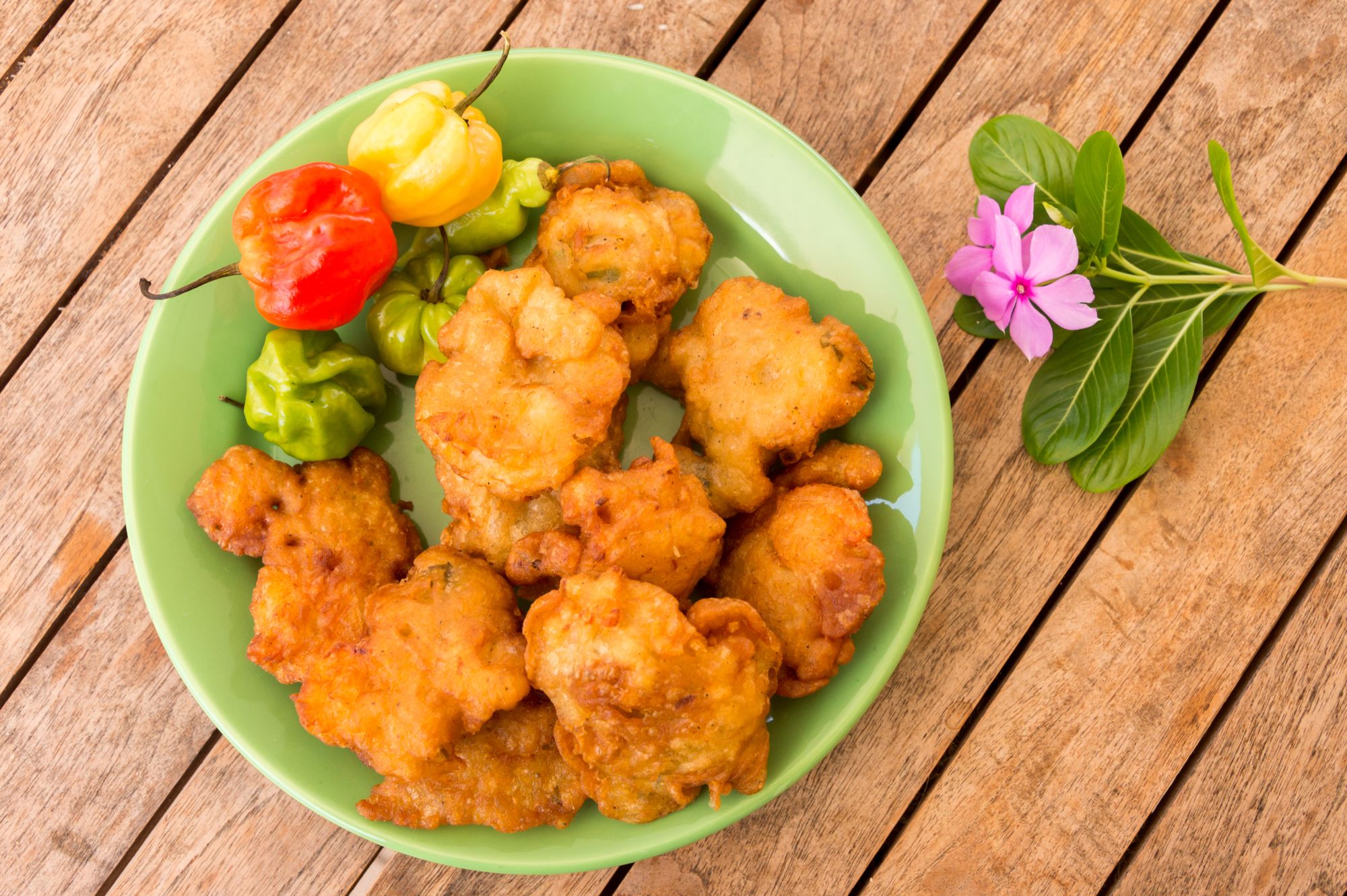
Daily cuisine is characterised by a blend of French and Creole cooking, often seasoned with hot pepper known as piment. Beef and poultry are the most popular meats.
Shellfish and seafood are also popular ingredients of local cuisine, including salted cod, octopus, blaff – boiled fish with chives – and the national dish of court-bouillon, which is fish in a tangy tomato sauce.
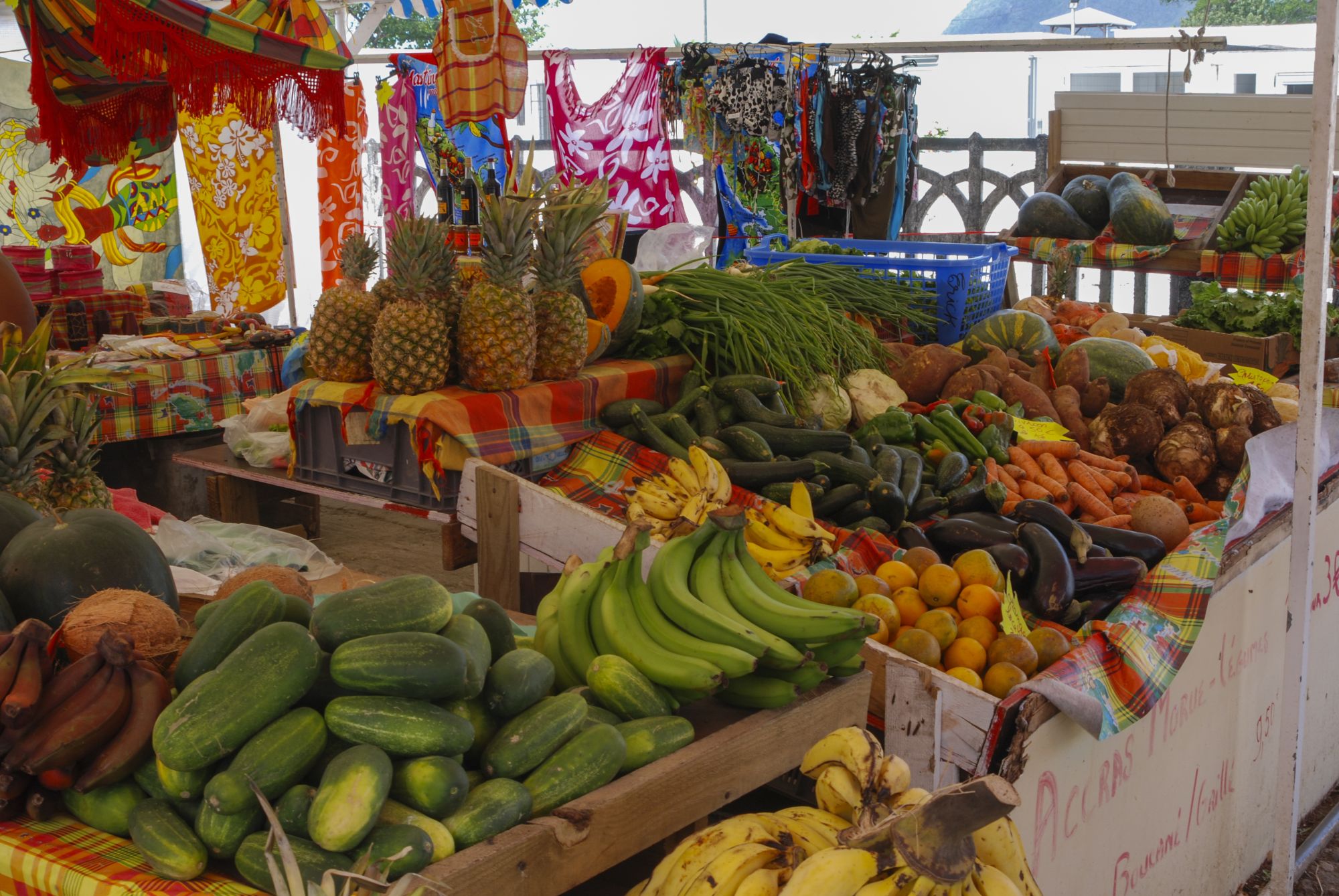
Outdoor markets sell locally-grown fruit and vegetables, such as coconuts, bananas, pineapples, guava, mangoes, passion fruit, breadfruit, yams and gumbo.
Today’s vibrant mixed culture in Martinique has a distinct Creole feel. The population has grown from an initial handful of French settlers and African immigrants into the rich 21st-century society, where Antillean Creole is the main day-to-day language and the heritage is alive and well.