


Combining the spirituality of the Americas with a Caribbean climate and laid back culture, the stunning nation of Honduras dazzles visitors with its natural beauty and diverse wildlife.
Boasting some of the most spectacular and mysterious ancient sites in the world, many of the finest widest sandy beaches in the Caribbean, and the planet’s most bio-diverse reef system, the second-largest country in Central America has until now been something of an undiscovered jewel on the tourist map.
But Honduras is rapidly gaining in popularity as a holiday destination as celebrated by Minister of Tourism, Nicole Marrder Aguilar during the interview with Kreol Magazine.


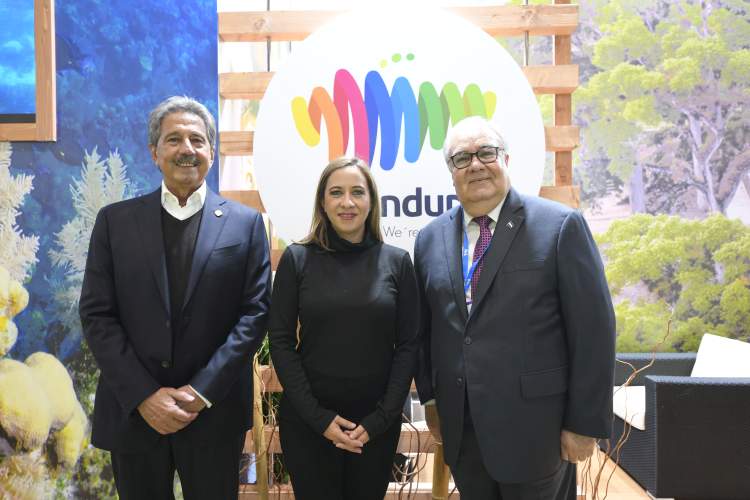
With improved connectivity to the rest of the world and investment in the country’s tourism infrastructure, Ms Marrder Aguilar celebrated the republic’s renewed push to market itself as the number one choice for those wishing to explore the riches of Central America.
Speaking at the three-day event, which brings together professionals from the travel industry, the Tourism Minister for Honduras highlighted Copán Ruinas – the most studied archaeological site in the Mayan world; the Bay Islands with their reefs, scuba diving, bars and restaurants; and Cayos Cochinos – an archipelago of fifteen small islands – as the “greatest strengths” that Honduras to offer.
But Ms Marrder Aguilar, who was involved in her family hotel business for 20 years before obtaining a government post, also drew attention to how much more Honduras has to offer, saying:
“The culture, the gastronomy, the colonial sites that the mainland offers, also open a possibility of having a long and very diverse vacation throughout the country.”

Copán Ruinas – mystical and magical
Described by Ms Marrder Aguilar as “magical”, the Copán Ruins are the most impressive attraction left to us by the ancient civilisation of Maya. Widely believed to be the Mayan’s most prominent royal city, Copán was inhabited for 2,000 years. Ruled by a dynasty of 16 kings at its peak between the 5th and 9th centuries, at its most populated, the settlement was home to 20,000 inhabitants.
Covering an area of 250 acres, the people of Copán built great monuments, temples and sculptures. The heart of the city covered just 37 acres and contained a great plaza to the north and a mighty acropolis to the south.
First discovered by European explorers in the 1500s, despite many of the ancient people’s books and texts being destroyed by Spanish conquerors, a great number of the hieroglyphs and carvings at Copán were spared and remain to this day.


The Mayans were an extraordinary race who lived in the countries which are today Mexico, Belize, Guatemala, El Salvador and Honduras and developed one of the most sophisticated and complex civilisations in the Western Hemisphere.
As well as the farmers who grew crops including corn and beans, Copán would have been home to some of the most prominent astronomers, mathematicians, scholars and scientists of the age. The Maya were responsible for several remarkable scientific achievements until their culture began to decline at the end of the 11th Century. Copán, like many cities of the Maya, was simply abandoned after the great Mayan collapse.
Today, Copán is a most rewarding visit and visitors can spend hours exploring the paths, walls temples, sculptures and tunnels of the forest-framed ancient settlement. The site is home to a small colony of vibrantly coloured and noisy macaws. The scarlet macaw is the national bird of Honduras and these bright-feathered birds would have lived alongside the Mayans who considered the macaw to be sacred.
There are four different museums at Copán Ruinas and the small modern-day base town is a charming location in which to spend a few nights with its boutique hotels, hostels, coffee shops and restaurants.


The Bay Islands of Honduras
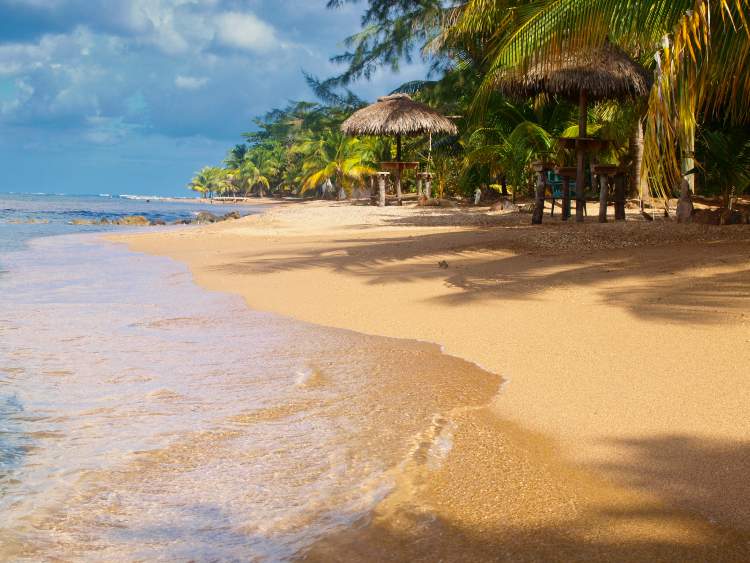
Described by Ms Marderr as some “the most beautiful in the entire Caribbean”, the Bay Islands encompass the three islands of Roatán, Útila and Guanaja as well as a collection of smaller cays lying 25 to 50 km north of Honduras in the Carribean Sea.
The area is best known for its spectacular diving and snorkelling. The reefs surrounding the islands form the second-largest barrier reef on our planet and are teeming with fishes, sponges, rays, turtles and majestic whale sharks, which pass by on their natural migratory routes.

Roatán – the ultimate holiday resort
Christopher Columbus was the first European to set foot on the Bay Islands when he discovered Honduras in 1502. Columbus would give the country its name – Honduras meaning “great depths” and named after the deep waters surrounding its coastline
The English established a settlement on Roatán in 1638 which was later destroyed by the Spanish. The British would abandon the islands for the next century before returning to establish a colony in the 18th Century. England surrendered the Bay Islands in 1859 but the locals remain proud of their British heritage and speak English to this day.
Roatán is the largest of the islands and offers sophisticated hotels, restaurants and bars. Water sports feature extensively on the island with diving, glass-bottomed boat tours, windsurfing and jet skiing on offer. West End Village and its famous stretch of sand is a popular place for tourists to congregate. Away from the ocean, you’ll find Roatán to be a lush jungle and mountainous terrain with botanical gardens, nature trails and opportunities to get close to an abundance of native animals, birdlife, flora and fauna.


Utlila and Guanaja – low key and laid back
Utila is more low-key than its larger neighbour and is popular with backpackers making their way through Central America. The island has a charming small-town feel and its lively nightlife makes Utila a popular destination as well as being home to the national Whale Shark & Oceanic Research Center.
Meanwhile, Guanaja is less visited than Roatán and remains largely untouched. Guanaja Town, known to locals as Bonacca, occupies its own little island and is often referred to as the “Venice of Honduras” with its houses jampacked on stilts. Reputedly, former US President Jimmy Carter is a regular visitor to fish and relax.


Cayos Cochinos – a bucket list destination
The Cayos Cochinos are a group of small islands consisting of Cayo Menor and Cayo Grande along with over a dozen little coral cays. The Cayos are still often referred to as the “Hog Islands” thanks to the legend of the famous pirate Henry Morgan. Morgan – today the face of a famous spiced rum – reputedly planted hogs on them in the 17th Century so that he and his fellow pirates would have fresh meat to enjoy on their return.
Described by Honduras’ Tourism Minister as “one of the ten places to know before you die”, the Cayos Cochinos have no roads or vehicles and are only inhabited by around 100 people living in the fishing villages of Chachauate and East End. Visitors can lodge in one of the few hotels or find accommodation in the small villages. Day trips to the Cayos are popular with a boat ride taking around an hour from Utila.
The waters surrounding the Cayos are protected and the local people are only permitted to fish with hand lines. The archipelago is home to the world’s only pink boa constrictors, which gets its colour from the diet it eats on the island, and the endemic species of iguana known locally known as the Jamo.
And there’s so much more to discover in Honduras
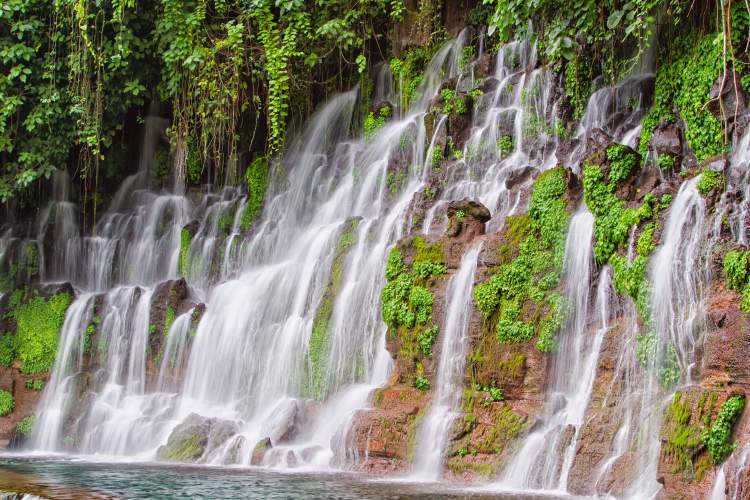
Ms Marderr highlighted the above destinations as the “greatest strengths” of the tourist offering in Honduras but added that the country has so much more to offer visitors.
As the Tourism Minister went on to say, Honduras is “the most mountainous country in all of Central America without volcanoes or volcanic activity”; “the geographical position of the country, makes the continent’s flora change, transitioning from coniferous to another type of flora to the south”; and the area boasts “a lot of bird migration, which makes us one of the most attractive destinations for bird watching.”
Being in London for the trade show, Ms Marderr was keen to discuss connectivity with Europe, highlighting direct flights which connect Milan in Italy and Madrid with Honduras.

The Tourism Minister also discussed the possibility of a direct flight to England, saying:
“We are studying the possibility of linking the destiny of the north coast of Honduras with the city of La Ceiba, through British Airways, which connects London with Grand Cayman and Grand Cayman we have a direct connection with Honduras. So that is one way that we could perhaps package an offer for the British, which may make more sense than a connection with 2 or 3 stops.”
Ms Marderr was keen to point our that Honduras lies in the heart of Central America and so can offer a “multi-destination experience” for tourists visiting the continent. The future for tourism in Honduras, it would seem is truly bright.

