


“I loved the feeling of freedom in running, the fresh air, the feeling that the only person I’m competing with is me.”
It’s quite unusual for a person to be able to retire at the age of just 23. This, however, is exactly what sprinter Wilma Rudolph did in 1963. The abrupt end to a star-studded career wasn’t because she was injured or because she’d achieved lifelong wealth, instead it was driven by the simple desire to go out at the top of her game. This is exactly what Rudolph – the fastest woman in the world – managed to do.
Rudolph was easily one of the most recognisable black women, not just in the United States but all over the world, by the time she was just 20-years-old. She was hot off the heels of one of the most incredible performances in the history of the Olympic Games, having won three gold medals at the event’s 1960 installment held in Rome, Italy.
In order to fully understand why Rudolph’s outstanding victories were so inspiring to her generation and the generations that have followed, you actually have to look back to the challenges she faced in her childhood.
Rudolph was born in Saint Bethlehem, Tennessee in 1940. Black children in this era were often faced with insurmountable strife due to their race, but Rudolph faced added burdens due to poor health.
She suffered from a number of illnesses as a child, including scarlet fever and pneumonia. However, the fiercest obstacle to a normal childhood – and indeed a normal life – came when she contracted infantile paralysis caused by polio. Rudolph lost the use of her left leg and foot, with doctors even telling her she would never walk again. It seemed a life of anguish was ahead.
Rudolph would eventually make a career out of overcoming the odds – and you could say that this ability to prove people wrong began when she was just a young girl. She did wear a leg brace for a lconsiderable time during her childhood, but this was removed when she was 12-years-old. The stage was then set for her to achieve her destiny.
Later in her life, Rudolph would shed some light on how she managed to go from a disabled girl to a history-making athlete. She told Ebony:


“I think the thing that made life good for me is that I never looked back. I’ve always been positive no matter what happened.”
Rudolph quickly began to excel in sports when she finally put her physical limitations behind her in high school. In particular, she was a standout on her school’s basketball team. Then – when she was just 15 – she caught the eye of track and field coach Ed Temple. Despite the fact that Rudolph was only in tenth grade, Temple immediately knew she was a natural athlete.
Things then moved rather fast for Rudolph, who found herself signed up for the 1956 Olympic Games held in Melbourne, Australia. It was a fantastic first outing for the teenager, who – as the youngest member of the US Olympics teen – would go on to clinch a bronze medal as part of the 4 x 100-metre relay.
Ahead of the 1960 Olympic Games, it’s important to remember that Rudolph was making strides and turning heads for a number of reasons aside from the fact that she was a world-class athlete. She was a woman, who was black and had been disabled – three qualities which – until that point – made success difficult for an individual.
In 2006, biographer Maureen M. Smith would write:
“Wilma Rudolph’s story is more than the races she won and world records she established. It is the story of a young woman who overcame tremendous obstacles that should have kept her from ever experiencing athletic success, and yet she is the epitome of triumph.”
Rudolph was the proud owner of three gold medals in track and field by the end of the 1960 Olympics. It was a headline-grabbing result – not least because she was the first African American woman to achieve such a feat. Rudolph earned the medals after coming first in the 100-metre and 200-metre events, as well as the 4 x 100-metre relay.
It was an accomplishment that astounded many, with countless people comparing the moment to Jesse Owens’ history-making performance during the 1936 Olympic Games held in Berlin, Germany.
In 1994, the executive director of USA Track and Field, Ollan Cassell, argued:
“[Rudolph] was the icon. The symbol of Wilma Rudolph equalled that of Jesse Owens. I think she was for women what Jesse Owens was for men.”

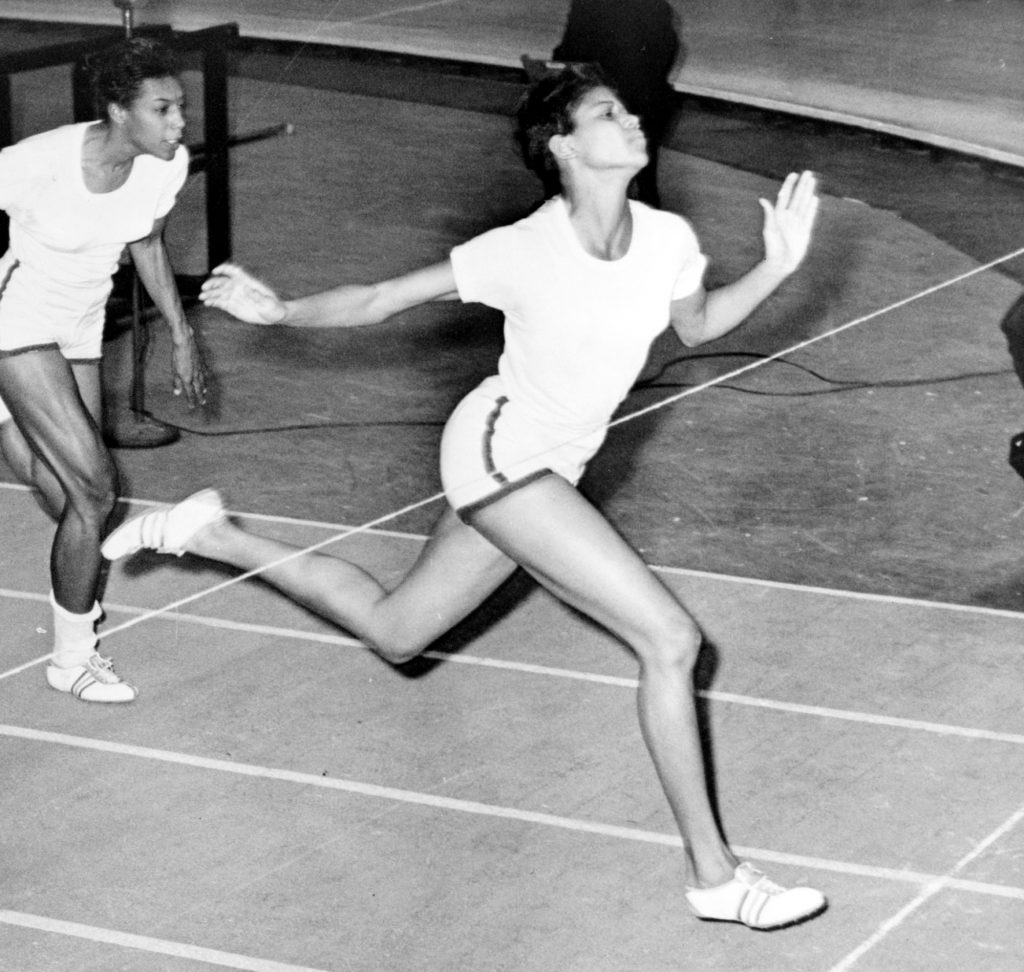
Rudolph returned home following the Olympics, having earned the nicknames ‘The Tornado’ and ‘The Fastest Woman on Earth’ thanks to her 23.2-second record in the 200-metre race. She would immediately use her newfound fame to aid civil rights, insisting that a parade and banquet held in her honour in Clarksville, Tennessee would be fully integrated.
Rudolph would retire from professional competition in 1963 and devote her time to teaching and coaching. She also set up the Wilma Rudolph Foundation, with the purpose of helping to develop young athletic talent and allowing others to follow in her footsteps.
There was still glory to be had, specifically when it came to being honoured for her achievements. This included her induction into the Black Sports Hall of Fame in 1973, the Women’s Sports Hall of Fame in 1980, and the US Olympic Hall of Fame in 1983.
Rudolph sadly died from a brain tumor in 1994. Only a few years earlier, she took the time to reflect on her achievements – insisting that the success wouldn’t have tasted so sweet had she not had to overcome so many challenges.
In an interview with the Chicago Tribune in 1989, she said:
“Believe me, the reward is not so great without the struggle. The triumph can`t be had without the struggle. And I know what struggle is. I have spent a lifetime trying to share what it has meant to be a woman first in the world of sports so that other young women have a chance to reach their dreams.”