


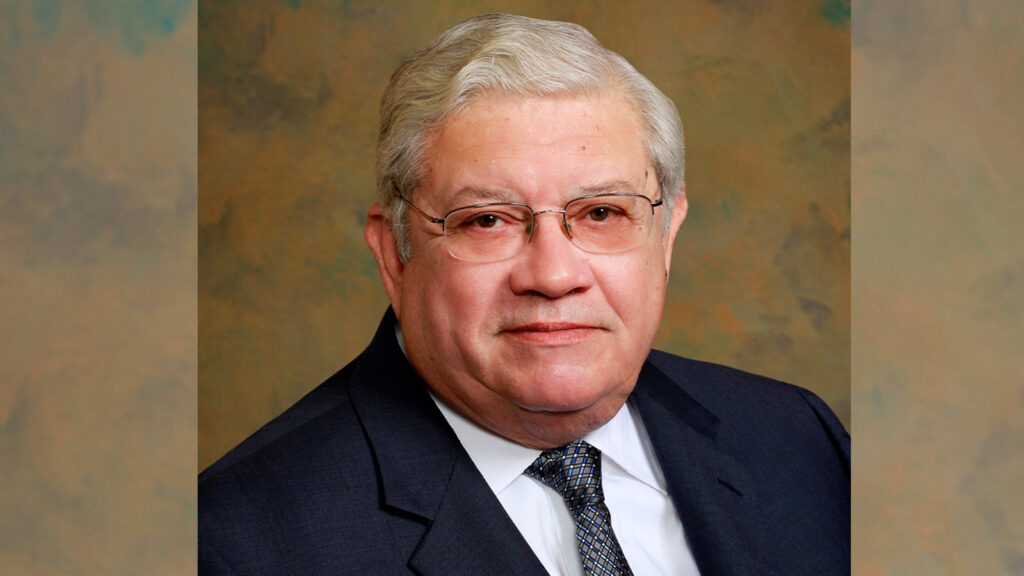
Journey with us as we explore the illustrious career of Winston DeCuir, Sr., a beacon in the legal profession who gracefully walks the tightrope between his humble Creole roots and a thriving legal practice. A heartwarming tale of success, charm, and unyielding dedication to his community.
Winston DeCuir, Sr. is the kind of successful lawyer many starting out in the profession eagerly aspire to be – a highly respected senior partner in his own thriving metropolitan law firm in Baton Rouge (DeCuir, Clark & Adams) who has enjoyed an illustrious, fulfilling and lucrative legal career, replete with winning myriad important cases and gaining favourable landmark verdicts, but one who is also cognisant of his humble, Creole roots and has consciously chosen to never stray too far from them, despite a physical appearance which could have easily enabled him to do so, had he so desired.
A kind-hearted man with a genial disposition, full of Southern charm, and good humour and with a down-to-earth personality wholly devoid of affectation or conceit, DeCuir is positively Falstaffian when it comes to loving life with a passionate, joyful ebullience. But, much to the chagrin of the adversaries who have had to cerebrally joust with him in court over the years, he is a man in possession of a razor-sharp forensic mind, one honed over several decades by grappling with the minutiae of complex legal issues, which he brings to bear on both his professional and personal life.
Having been admitted to the bar in 1975, and in the course of his impressive career a member of the Louisiana and U.S. District Courts, Eastern, Middle and Western Districts of Louisiana, the U. S. Court of Federal Claims, the U. S. Court of Appeal, and the 5th Circuit, United States Supreme Court, DeCuir is a man of formidable accomplishments, but one who wears them lightly and with an appealing, self-effacing modesty. With a penchant for straight talking, DeCuir is a dyed-in-the wool man of the people who has spent his life advocating on behalf of the people and the institutions of Louisiana.


Family Background
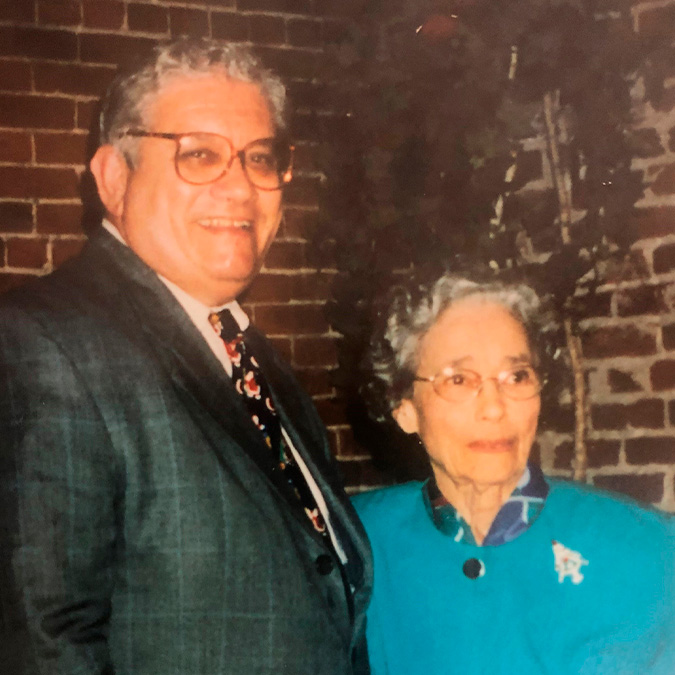
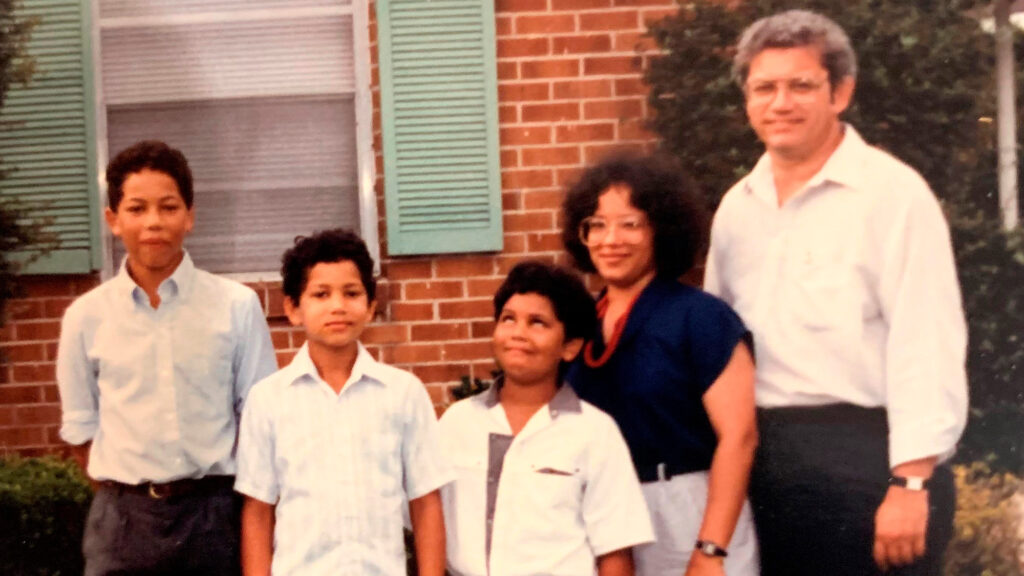
Hailing from working-class, rural Louisiana Creole stock on both sides, DeCuir is evidently proud of his ancestry and of his humble origins. As he explains, “My mother’s family is from a little town near Marksville called Latanier. She grew up in Latanier, got married at a fairly young age, then moved to Baton Rouge where my daddy lived.” He adds in a jocular tone, “My mother comes from a very big family – she claims there were 16 of them, but I can only count 13.”
“My dad’s side was from Pointe Coupee, but my dad moved here to Baton Rouge when he was about ten. My dad’s family was pretty small. I never met his mother (who died during the Scarlet Fever outbreak), but I knew his dad, my grandfather, August, who lived till I was about 16.” He continues with warmth, evidently fond of his grandfather and the close bond they shared. “My dad’s father was in construction all his life – he was a cement mixer. My mother’s dad was a cotton sharecropper in the Alexandria area and he did that all his life.”
It was the intra-state rural migration which brought his family to Baton Rouge. As DeCuir says, conscious of the material sacrifices his forbears made, ”Both sides of my family were born in Louisiana. My mother’s folks were born about several hundred miles north of Baton Rouge and my dad’s folks were born 50 miles northwest of Baton Rouge, but they both all came to Baton Rouge to find work.”
Neither of his parents possessed much formal education. As he remarks unashamedly, highlighting the dearth of educational opportunities available to rural Creole communities at the time, “Neither my mother nor my father finished high school. They were like sharecroppers. There was very little school for my mum mom to go to in the Marksville area and it was the same thing in Baton Rouge for my father.”
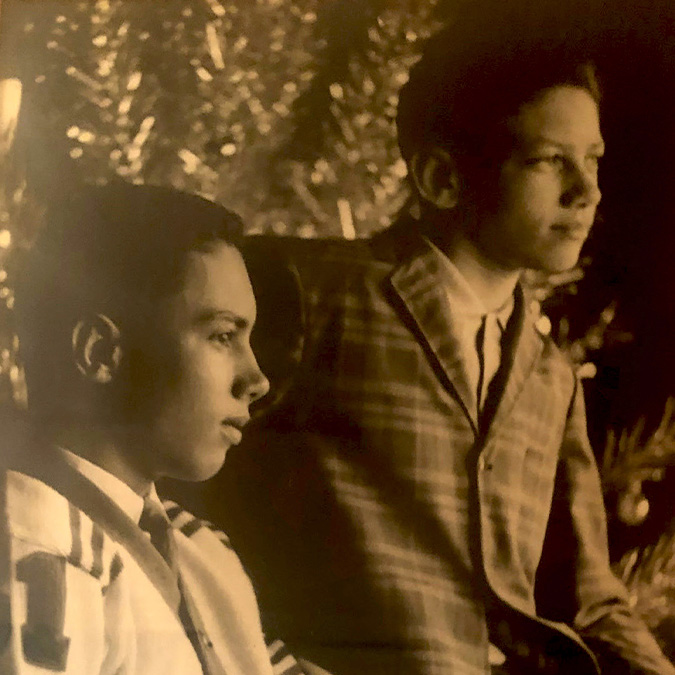
DeCuir had only one sibling an elder brother, Maurice Michael, affectionately known as “Doctor Mike”. As he recalls poignantly, “My mom and dad only had two children. I had one brother, who was older than me. He became a doctor and did pretty well for himself in life, but sadly he died a few years ago.”

Upbringing and Creole Identity
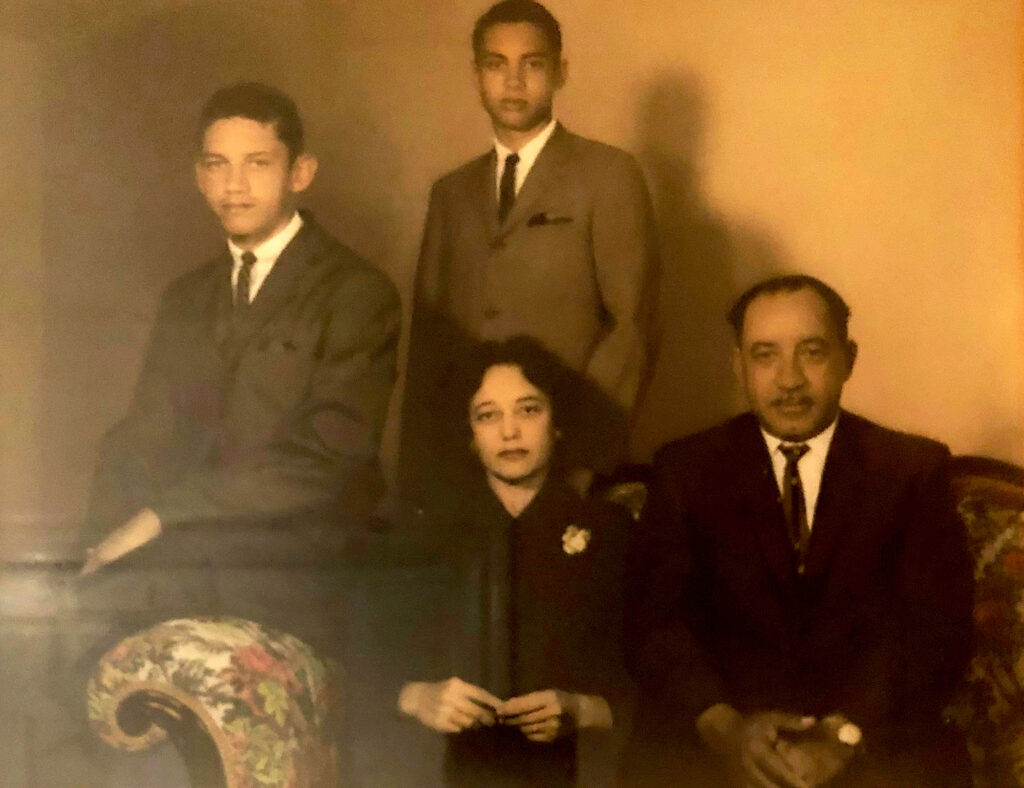
Born in Baton Rouge, DeCuir’s upbringing – in an effectively hermetically sealed Creole enclave, was one which thus naturally engendered in him a strong Creole identity. As he explains, “I grew up in South Baton Rouge, which had a lot of Creoles who mainly just lived in clusters in established subdivisions or established areas.” He adds, nonchalantly referencing the similitude which abounded during his childhood, “We used to hear the word Creole, but didn’t think that much about it, because everybody pretty much looked alike.”
Revealing the effectively racially segregated nature of Louisiana society at the time, and, more specifically, the liminal place which Creole people occupied in it, he adds, almost as an after-thought, “What was pretty interesting was that we saw very few white people. In fact, I didn’t understand the difference between white people and non-white (i.e. black) people for a long time. We didn’t see very many white people. We were pretty much protected. We went to our own little church, went to our own little school, and lived in communities where we all had a lot of people that looked like us there and all our relatives were there, so for me, it was a normal upbringing. It was like a small city within a big city.”
Reflecting on how his Creole upbringing shaped him and his family, he recalls how his father’s lack of spoken English initially made life difficult for his father and his father’s siblings. “I remember my father telling me when his family moved to Baton Rouge, he couldn’t speak English and they spoke Creole. When he and his brother started school, they were about 10 and he said the only person that he could talk to at school was his brother. They couldn’t understand anybody else, but they quickly caught on.”
Sadly, DeCuir does not speak Creole himself, shaking his head when asked. But his story is one often heard throughout Louisiana – and even in the islands, where young people increasingly don’t speak or even understand the language of their forefathers. “Interestingly, they didn’t teach us how to speak Creole, because the old people who were not tremendously literate would speak Creole when they didn’t want us to know what they were saying. So we never really learned how to.” He adds, with a palpable sense of regret, “I can pick up a few words here and there, but I was never a speaker.”

Education
DeCuir enjoyed a traditional, small town, Catholic education. As he relates, “I started going to school at five – a little place called Payne Kindergarten, where half the people were Creole and the other half were black.” He then throws in an important caveat, which is illustrative of the often fraught, problematic relationship which some black people had back then with being seen as Creole, “Not that black isn’t Creole, but you know what I mean. They did not identify as Creole.”
DeCuir benefitted from being taught by nuns, attending Saint Francis Xavier School until ninth grade, which, as he relates, is “a traditional Creole Catholic school”. Recalling his teachers, he states fondly, “In elementary school we had nuns. Some were very strict and some were very nice. Most of the nuns were Creole. In fact, almost all were from an order in New Orleans; Sisters of the Holy Family, which was a set of black and Creole nuns who ran schools throughout south Louisiana.”
Then in the ninth grade DeCuir went to McKinley High School, and Southern University Laboratory School, both public schools, a public school, which he felt was both schools were “a big change and a big difference”. but it nonetheless enabled him to excel academically and thus go on to apply to universities.
University
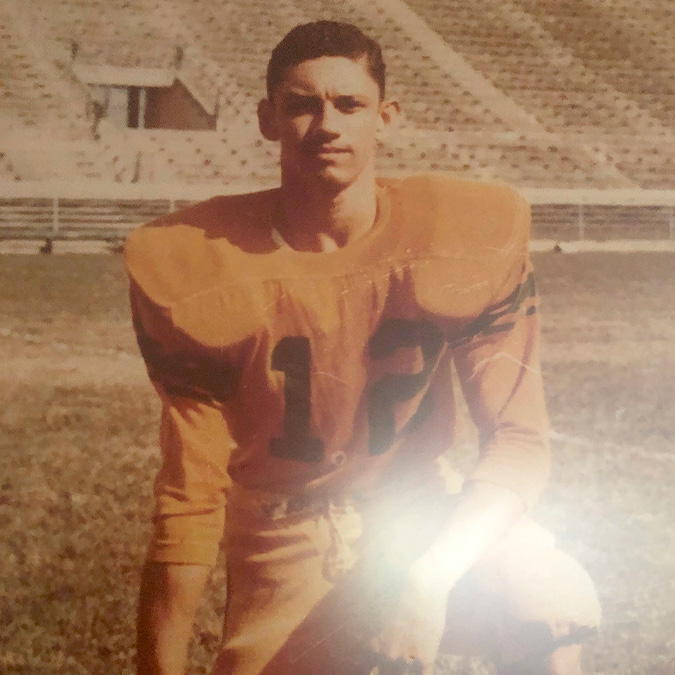
As it happens, DeCuir had not given much thought to his choice of university, as he had assumed that he would focus on sports. By his own admission, “In high school, I was somewhat of an average to better than average athlete. I thought about going to college, some place to play baseball or football, but that didn’t pan out.”
DeCuir continues, elucidating how his social escapades at his university influenced his choice of studies. “I ended up going to college at Xavier (in New Orleans). In fact, I originally went there as a Physics major.” Chuckling heartily, reminiscing on his bacchanalian undergraduate experiences, DeCuir euphemistically explains how he was initially distracted from his studies by the febrile, hedonistic party atmosphere of the Crescent City. “Truth to tell, it was really my first time out of Baton Rouge for any extended period of time and the bright lights and good times in New Orleans caught up with me, so I didn’t have enough time to do Physics and have a good time in New Orleans.” He then adds, a note of triumphant audible in his voice, “So I dropped the Physics, changed my major to Business and graduated in Business.”
Despite his penchant for nocturnal extra-curricular activities, DeCuir duly graduated with a Bachelor of Science degree from Xavier University in 1970. Strangely, given the distinguished legal career which would follow, he admits that “it was only during the last year of college that I started thinking about going to law school.”
On Graduating Xavier
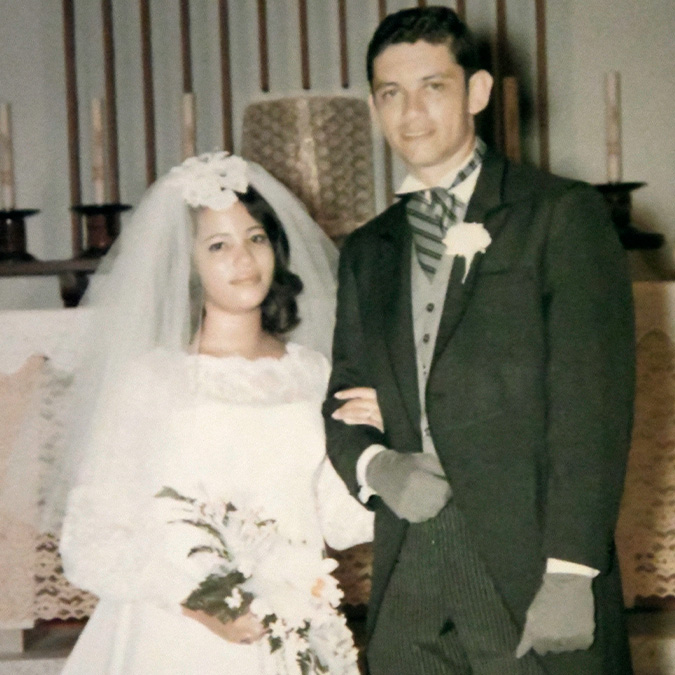
On graduating from Xavier with his degree in Business, DeCuir took a job as an accountant in at the University of Michigan. Explaining the decisions he made during that period of his life, he states, “I was getting married the summer I graduated. My wife was graduating too and she was in pre-Med, but she also got a job at the University of Michigan in medical research, so we decided to get married and moved to Michigan. I worked as an accountant for three years – two years at the University of Michigan and then one year at Xavier, and then I went to law school.”
Embarking Upon A Legal Career
As to what then motivated him to leave accounting and go to Law School, DeCuir’s reasons were as much geographical as they were career-focused: “I wanted to do something else, but I also wanted to move back to the south.” He adds, remarking without condescension on the dearth of careers open to someone from his background in rural Louisiana back then, “At the time we graduated from college in 1970, unless you wanted to be a school teacher, an undertaker or a preacher, you really were not going to find anything else. So, law was something that I knew you can employ yourself.”
As DeCuir continues, “I was interested in justice, particularly civil justice and criminal justice, so I decided to go to law school.” As is often the case with post-graduate degrees, finances played a part in his thinking. “I started applying to law schools and decided to go to LSU. I’d gotten into a number of them, but then I saw the difference between the cost of going to LSU and the cost of going to Loyola, which I had also got into.” He concludes, “The training program was three years, so I started there in 1972 and graduated from Louisiana State University Law Center in 1975.”

Working For the Attorney General
DeCuir had initially wanted to set up his own legal business with a friend whom he met in law school, but in the end it didn’t pan out. As he relates, “When I got out of law school, I ended up going to work for the Attorney General of Louisiana, William “Billy” Guste. I worked for him for 13 years, mainly in the state capital. I did mainly civil litigation and education litigation involving schools and colleges, which I still do today.” Such was the abundance of the work, he quips laconically, “I don’t think I have ever been unemployed since I was in high school.”
Explaining the exact nature of the work he did for the Attorney General, DeCuir elucidates with precision, “We were the lawyers for state colleges, doing everything for them from their contract work to dealing with disputes with their employees, be it hiring and firing professors, instruction staff, facility managers, cafeteria staff etc.. We would do the legal work for building their buildings and financing their buildings, and we would set up all of the regulations that had to be followed with regard to students.”
Against the backdrop of the end of the Civil Rights era, regulations about student rights started being introduced, and with them, litigation. As DeCuir explains, “Coming out of the Civil Rights era, there was a lot of litigation about expelling students from school, keeping students in school or what schools had to do. During the time we were doing this, Louisiana colleges were in a racial transition where they were mainly integrating for the very first time, under a decree from the federal government to integrate the schools; including the faculties and staffs.”
Highlighting the role he played as the Assistant Attorney General, Chief of Civil Division at the Attorney General’s office in resolving these litigations, and the often visceral racism underpinning these school v teacher conflicts, he continues, “We came along at the time where they were hiring staff members and faculty members, which proved to be really challenging, because although they were sometimes accepted by the administration of those who brought them in, they were often not very well accepted by their colleagues. So, Often we would find ourselves representing the schools as African American teachers were bringing charges against schools. This put us in an unenviable position, but it also put us in a position where we could immediately recognise when we thought something was unusual.”
He adds with tangible pride, “Additionally, we were able to help those teachers, even though we worked for schools. So, for instance, if there was a black professor coming up for tenure and the school was trying to deny that position to him, we would very often do our research and find out that this person was being discriminated against. So those were good things that we could do. We did a number of things like that with students, with employees, with contractors, making sure that they were fair in their bidding process.”
Setting Up his own Firm
After working for the Louisiana Attorney General for 13 years, DeCuir then left to set up his own legal firm. Cognisant of his extreme good fortune at being handed clients by his former employer, he remarks with copious gratitude, “The Attorney General was very kind to me. He said, “If you want to set up your own practice, I’ll see what I can do to make sure that you have enough clients to be able to make it work.” So when I set up, he said, “You’ve been representing these schools all along. I don’t need to do that – you go talk to them. If they’re willing to contract with you, I’ll set it up where you can get those contracts. So I did – and that’s how I got into that side of things.” He adds, “All of the schools had been familiar with me for a long time, so it wasn’t a big leap for them. That’s how I got set up. So when I started out on my own, I had a fairly built-in base of clients that I represented and who I still represent today.”
On how his firm serendipitously came to represent so many schools and universities, DeCuir is self-effacing about his talents. “The first school I represented away from the Attorney General’s office was actually the University of Louisiana, at Monroe. I started representing them and within a year I had picked up Southern University here in Baton Rouge. Then, the other schools just fell in line, as they needed things done. They picked up the phone and called me.”
Remembering the buccaneering, pioneer spirit which he had when starting out on his own, he recalls fondly, “I bought a building and an old house in downtown Baton Rouge and converted them into an office. The building that we converted was appropriated. They built a school there in 2005.”
DeCuir then vociferously applauds his wife’s central role in overseeing the house conversion. As he readily explains, “My wife was a school teacher. She took off a year from school and she was my contractor. She converted the house and she did a very good job. The building’s been in quite a few architectural magazines for its restoration. It was an old, Camelback Bungalow house, which was a type that was not tremendously common, but somewhat common here. So I stayed there until 2005 and I moved to where I am now.”
With their many successes, his firm expanded exponentially. “We grew from just me and a secretary to one time we had six or seven lawyers and staff.” DeCuir is quick to add, “We were doing pretty well. In fact, when we had seven lawyers, it was my understanding that we were probably the largest single black law firm in Louisiana, which said a lot for us, but that’s not saying much because they had law firms in Baton Rouge, they had a hundred people, so when you are seven, you’re just a small part of it.”
Clientele
DeCuir’s firm specialised in a certain type of clientele and carved out their own niche in the market. “We did the non-traditional kind of work for black lawyers. Most of our clients were white and most of our clients were commercial, like all those schools. We also represented the Housing Authority and we represented a number of other public agencies, because we were pretty skilled at the things we did with public meetings, public agencies and public employees.” He concludes, “It was like a little specialty. I guess they would call us a niche firm. We found our niche in the market and went ahead and that ran until today.”
Favourite Part of the Work
Without doubt, for DeCuir there was one part of the job which he particularly relished. “I enjoyed the employment litigation more than anything else.” Fiscal remuneration aside, it is evident that DeCuir valued most the intellectual challenge of the courtroom battle, engaged in a meeting of minds against other top lawyers, and the chance for Ciceronian forensic oratory. As he says, “I’ve had cases where faculty members were being fired for any number of things – from not properly performing to being outspoken, which meant I was always up against other good lawyers. It was fun and enjoyable and it was always a match your skills and your wits against your opponent.”
Race in the Legal Industry
When it comes to the perennial hot potato of race in the Louisiana legal industry, DeCuir is not afraid to tell it like it was in the bad old days. “Very early on, here in Louisiana, there wasn’t a lot of opportunity for black lawyers. They didn’t want you in the courtroom, but then things started slowly changing.”
Talking of his own experiences, even for someone as light-skinned as himself, he continues, “I could see from time to time that I was treated substantially differently. Then, after working with the Attorney General for all that time, and given that I had risen up very high in his organization; Chief of Civil Division; I began to develop a reputation that the legal community and the judicial system knew.” He then adds, without rancour or bitterness, and with more than a touch of pathos, “I used to tell people when I first started representing Southern, when I would go to court, there was a presumption of Southern University’s incompetence and you had to work your way up from there to show competence. That worked very well.”

His Three Sons
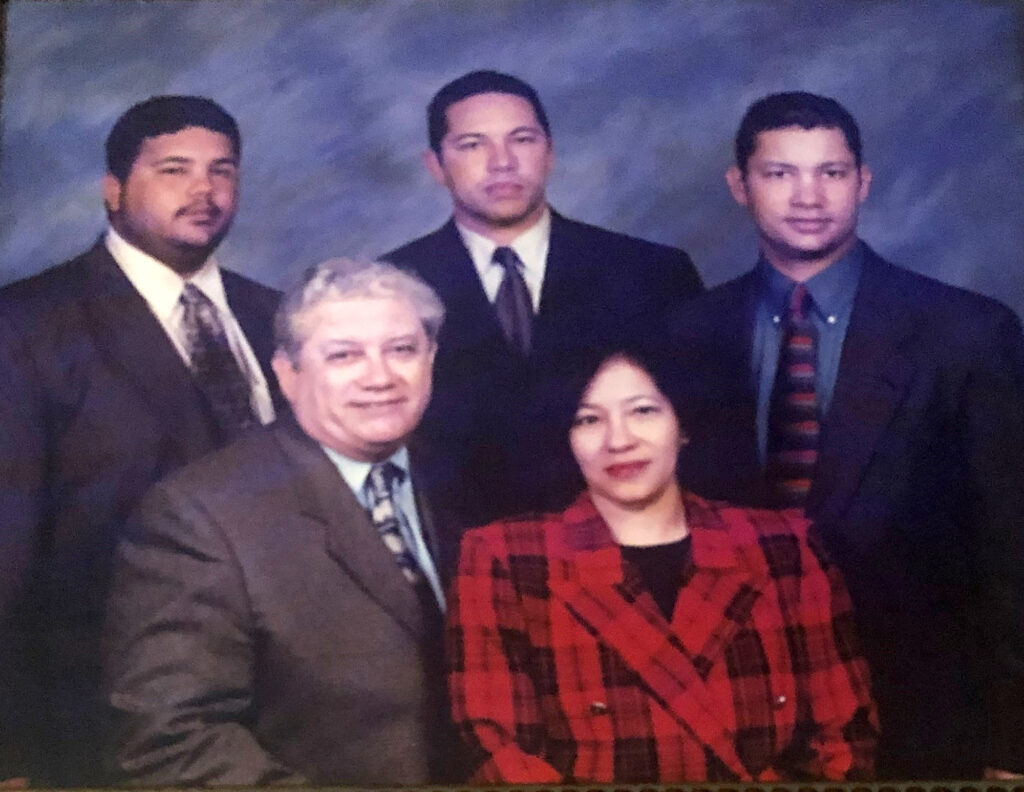
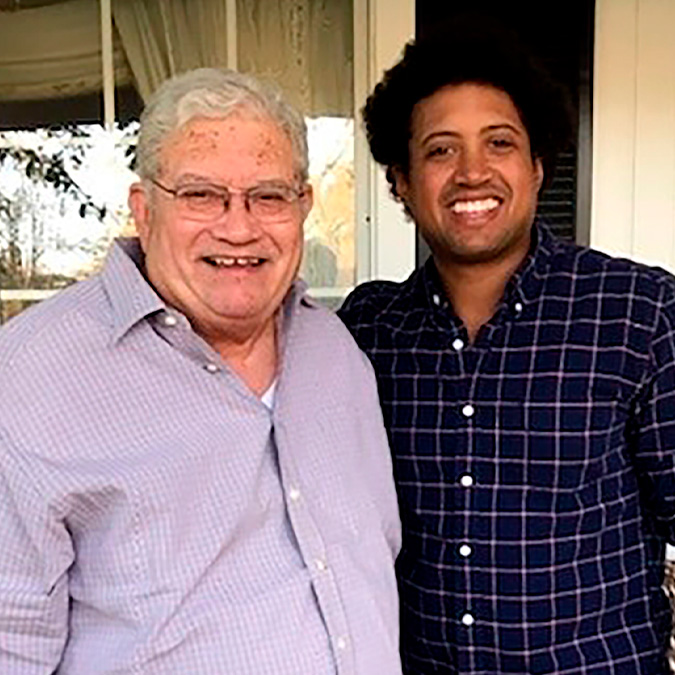
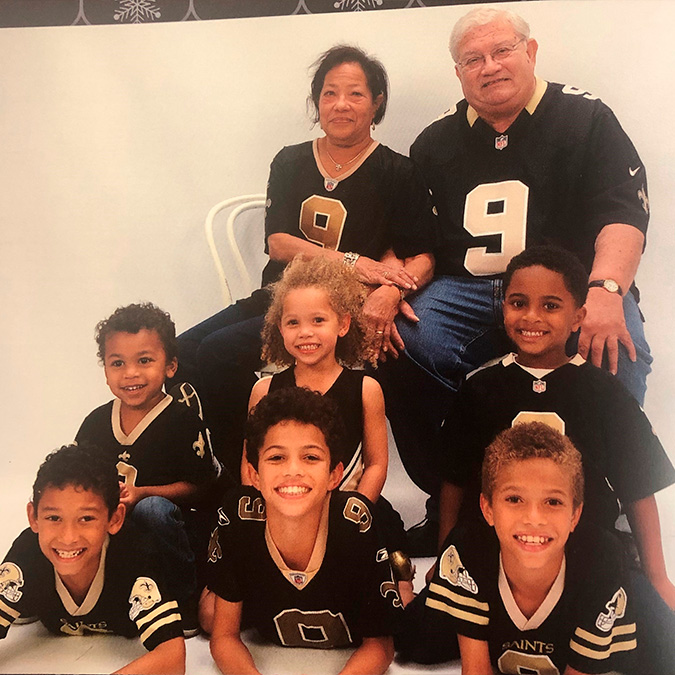
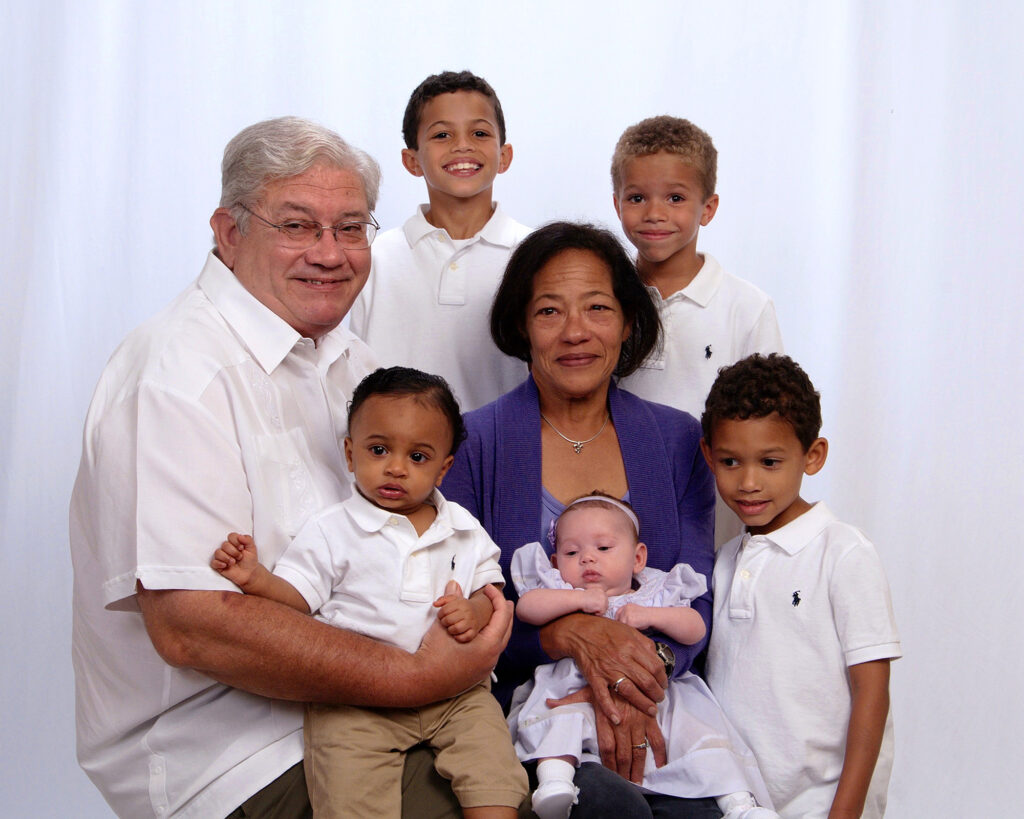
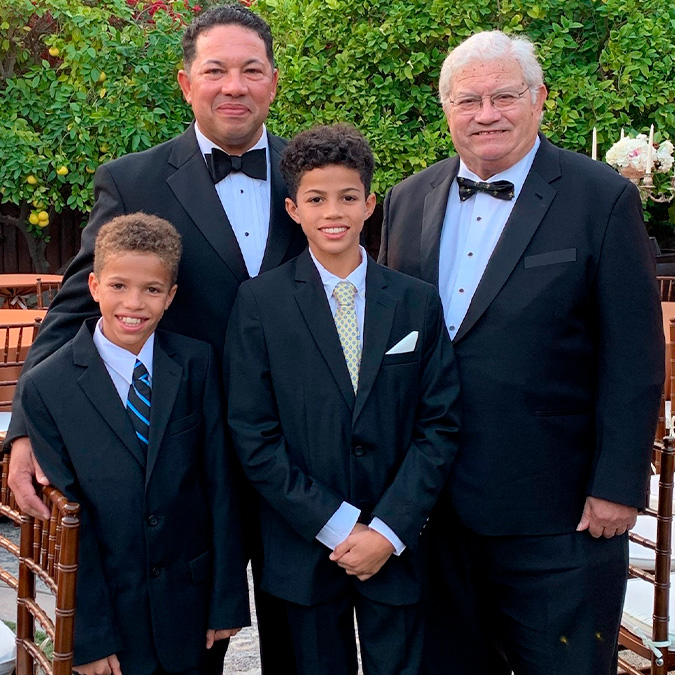
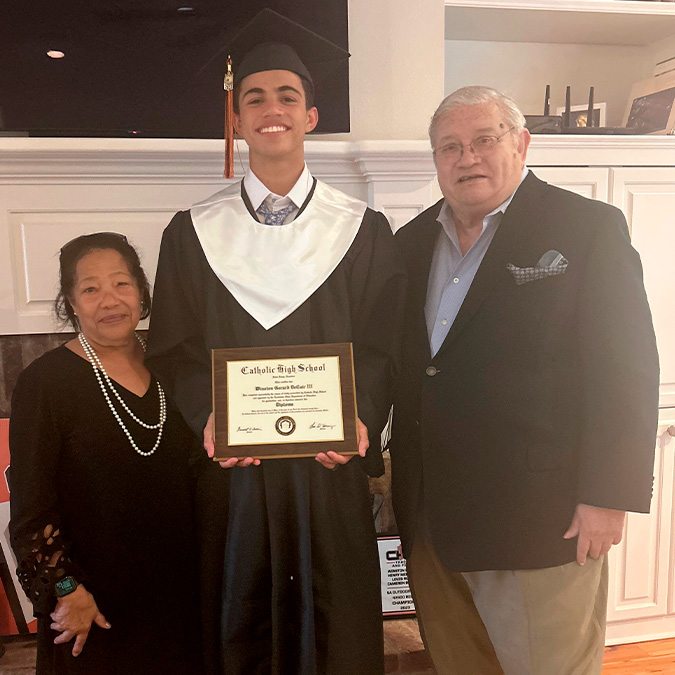
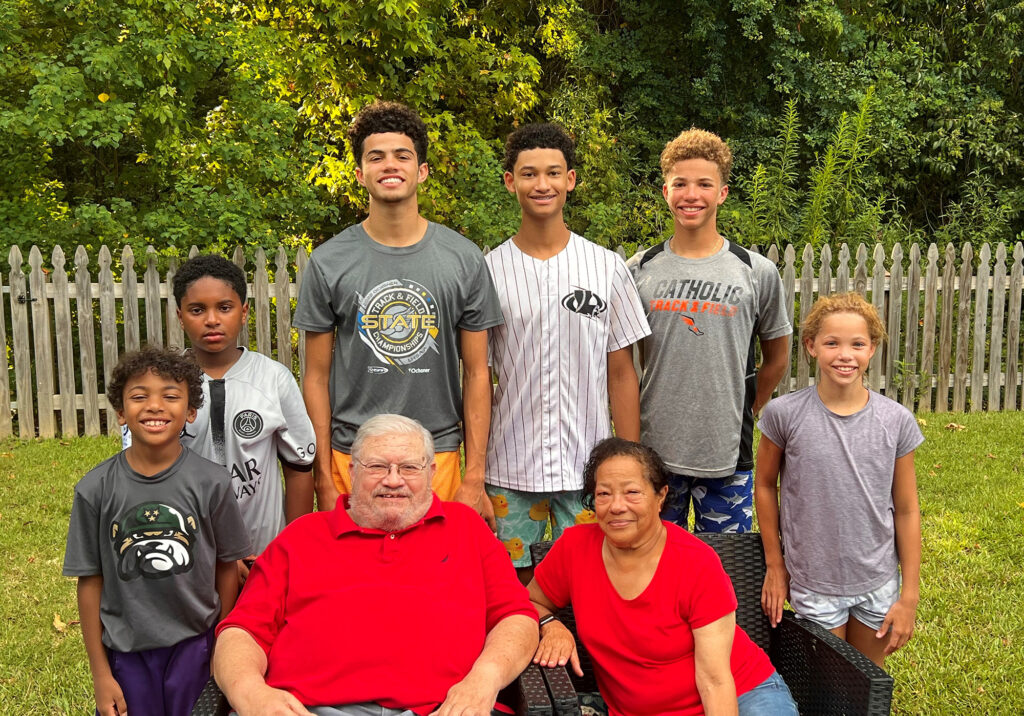
DeCuir is inestimably proud of arguably his life’s greatest achievement – his three sons Winston Jr, Brandon Sr. and Jason Sr. As he relates with a soupçon of wholly justifiable paternal amour propre in his tone, “I have three sons who all became lawyers and all three of them at one time or another worked for me.” He adds, in the endearing way a proud father would sing the praises of his children, “One is now the general counsel and vice president for LSU and the third son lives across the street from me. He’s running the firm now. Brandon has an LLM in Tax and Estate Planning from Southern Methodist University. The middle son worked for my firm for about a year, but he now has his own company called Advantous, which is a government relations company that works throughout the south. He bought that company about two years ago, and he’s done very well for himself. He has a ton of degrees. He has a law degree from LSU, an MBA from Louisiana Tech, and he has a Master’s in Tax Law from Georgetown University. So he’s probably the most schooled of us.”
DeCuir then says, with an unparalleled sagacity which Shakespeare’s King Lear would have done well to emulate, “I am very proud of all three of them.”
He is also preparing Brandon, his youngest son, who currently works for him to be his successor. “He will be the successor of the company. We’ve got some partners, so he won’t be the sole owner, but unless things change, he’s going to continue to be the manager. He really likes it. He’s a free spirit and he likes working for himself.”
Lessons Learned
In such a long, eminent and varied career, DeCuir has naturally learned a great deal. But one salient thing which has stuck with him was something he learned while working at the Attorney General’s office – the double obligation that a lawyer has. As he says, with both his integrity and the responsibility he feels when representing people evident as he speaks, “When you represent public clients, your first obligation is to the public. To make sure that they are not using their authority to do wrong.” He then adds with moral gravitas, “The second obligation is to your client, the school or the housing authority – whomever you are representing, to make sure that you gave them all the representation they need.”
Striving for racial and gender-based equality were both important to him and something which he felt he was able to achieve working in this milieu. As he explains, “So if we saw somebody was being pushed around because they were black or because they were female, we were able to tone it down and then go to the president and say, “Look, you have a problem over here, you need to sort it out, and they would very often look into it. So we feel like we made a difference there.”

The Changing Nature of the Legal Industry
DeCuir feels that there have been many changes to the legal industry since the 1970s when he first started practicing. “Things have changed a lot. Things have gone from overt to covert and this is a very competitive business. There’s no shortage of lawyers in Louisiana, in the United States even, so it’s not easy to get a client, and everybody wants the client that you have.”
When it comes to the current standing of Black and Creole lawyers in Louisiana, he is slightly more optimistic. “I think that as far as black or Creole lawyers go, it’s a little easier. At least you can get your foot in the door, you can get people to talk to you, and then it’s up to you to convince them to do business with you and then that’s a little better.”
“But,” he concedes, “it’s also very challenging because we have what we call a jury system and a judge system. So after you get a client, you’ve got to convince a whole group of people to see things your way, which sometimes is not very easy to do, because they’ve never seen it that way before. They’re not anxious to do you any good, but it becomes challenging and you learn.”
Know how the Opposition Thinks
DeCuir then explains with considerable candor the reasoning behind why he opted to attend law school at LSU – a majority white educational establishment, as opposed to an HBCU like Southern. With an impeccable rationale, he states, “I had never been in a non-black school before. So, when I was going to law school and I had the opportunity to go to all of these different schools, I said to myself, “No, I’m not going to go to Southern. I already know how people at Southern think. I need to go and find out how the other side thinks. I need to go and develop relationships with non-black folks. I need to see how they think and what’s on their mind. Because if I have to convince them to see things my way, I have got to know how they’re thinking and that’s one of the reasons that I went to LSU, instead of Southern. And it’s worked.”
In terms of a real political strategy to “know thy enemy”, it was evidently very successful. By his own admission, DeCuir is keen to stress, with genuine modesty, “I’m not the greatest lawyer in the world, but going to LSU certainly gave me a good idea of how to approach getting things done with non-black people.”
Most Memorable Cases
When it comes to memorable cases in such an eminent career, naturally DeCuir has many which figure prominently. But he chooses one which really stands out as being singular in many aspects, not least because of the strange, somewhat morbid nature of the case and subsequent trial, in which the church was put on the stand.
As he recounts with a born storyteller’s verve and eloquence, “About 25 years ago, some folks from a little town called Melville came to see me and asked me to represent them. Their father had died and had been buried in the local cemetery, but the church had put him in the wrong spot. One day the wife of the dead fellow took her grandson to the cemetery to lay some flowers on the grave. When they got to the cemetery, the grandson ran ahead and came back and said forlornly, “Grandma, grandpa has gone.”
DeCuir duly explains, “The church had actually dug him up and had moved him to another spot where he was supposed to be, but they hadn’t informed the family, because they claimed they couldn’t reach them to tell them, plus the person who owned that spot had just died and they wanted him to be buried in his spot. Suffice to say, we ended up suing the church.”
“Melville was just a small rural town, with a population of maybe even as few as 5,000 people. It was the First Baptist Church – the opposing parties were like the “First Families of Melville”. All the lawyers said, “Don’t take this on. There’s no way that these people are going to render a verdict against the church in Melville.” But I said, no, you don’t understand. So we worked on it and took it to trial.”
As DeCuir concludes, satisfaction and triumph are evident in his voice. “We had a jury, and sure enough, we were able to put into evidence that the church had an insurance policy which covered this eventuality. So it took the sting off of the jury finding against the church, and they gave up a good bit of money.”
Another seminal case which remains firmly in his memory is that of an art show at a college in Lafayette, which was accused of being semi-pornographic. As DeCuir relates, “Some argued that it was art, while others said it was merely pornography. But the real problem was that the art was hung outside next door to an elementary school. So the kids in elementary school could walk around and look at all these people doing these erotic things. The school made the artist take down the offending images, but she then sued the school, saying that they had violated all of her free speech and academic freedom rights.”
He adds with a jocular irreverence, nodding to the explicitly carnal – and therefore problematic content of the artwork, “We did that, and it was fun.” Thanks to DeCuir’s legal intervention and formal mediation, detente between the artist and the school was eventually restored. As he explains, contented with the outcome, “We got the artist to remove a couple of the most egregious pieces, and we found another place for the other exhibits to be hung.”
Career Highlights
When asked about the highlights of his career, DeCuir is quick to select two cases which he feels most proud of, including both the work he and his colleagues did and what they achieved.
Given his Creole racial heritage, the first highlight is unsurprising. As he states with discernible pride, “I participated in the racial desegregation of colleges. I actually represented the state but had a big part to play in preventing all of that. When I say preventing, I mean the closure and the dismantlement of Historical Black Universities (HBCU’s).”
His second career highlight relates to a school grading scandal which his firm managed to resolve. “The other case that I liked the most, and where I felt I did the best job, was at a school where they had a grading scandal. Someone in the registrar’s office had access to the computers and was selling the grades. It all came out – it was a big deal and there were the accrediting agencies, the state government – everybody was thinking about it.”
As DeCuir proceeds to explain his involvement in the case, it is clear that he cherishes a particularly positive memory of this case. “We were called in to investigate and defend the school. We ended up having over a thousand hearings and three or four court cases, since before you could change the grades, you had to give the student a hearing and a chance to defend themselves.”
He continues, recalling the incredibly satisfying outcome of the incident, “After about a year and a half, we got all of the grades changed back, and even managed to identify all of the students who were involved in the fixing, and also even the school faculty and staff involved it. Some of them ended up going to jail. We saved the school from losing its accreditation.”
“Everybody told us we’d never be able to do that because it was just too widespread. But we went in there and we were pretty transparent. We found 12 degrees that were awarded improperly and we revoked all of them. Not a single one of those people sued us because we had done it so precisely.”
The sense of accomplishment, integrity and good practice involved in the case all combine for him to state unequivocally, “I think that’s probably the best thing I’ve ever done in terms of actually working through things.”

A Trailblazer on Race
Another notable feather in DeCuir’s cap – and one of which he is exceedingly proud – is the composition of his law firm and the fact that his firm was a racial trail-blazer in Baton Rouge. As he says, “What I put together in Baton Rouge was the first real firm made up of black folks and it operated as a firm rather than as a lawyer with an office. There’s at least one hundred and 50 black lawyers in Baton Rouge now, but I did that back in 1986 when we first opened the office. Now lots of black lawyers have been hired by majority owned firms, but that opportunity hardly existed when I started.”
Retirement Plans
DeCuir reluctantly admits that he is “pretty much retired now, although I don’t call myself totally retired.”
When asked about his retirement plans, he confesses somewhat bashfully to nurturing authorial ambitions. However, he is at pains to stress that the book idea he has does not have anything to do with law. As he explains animatedly, with a genuine passion sweeping across his countenance, “When I retire, were I able to move around, I would have liked to have gone from community to community interviewing both young and old people about the characters in their communities and then publish a collection of essays or short stories about these interesting characters – Creole community characters.” He continues, lamenting the lack of documentation which these Creole communities often suffer from, “You hear those stories all the time, but there’s no single source that you can go to really find a large number of them. The problem I have now is that I can’t get around like that.”
He concedes, evidently thinking of the hitherto unfinished book he would have loved to have written, its unwritten pages languishing in various places, “I was in a pretty good position to collect these stories because being a lawyer, lots of your information comes from courthouse records, suit records, etc. So, when I was in law school and I started running across this stuff, I just started capping and keeping. So, I’ve actually got a lot of information on various characters, people and events. I have got some of it here, some of it at my office and some of it on my computer. But it’s just a matter of beginning to collate it and put it all together.”
Three Wishes
When it comes to the proverbial three wishes he would like where he granted them, DeCuir initially makes light of the question. “20 more years on earth,” he jokes, with a fulsome smile playing upon his lips, acknowledging the confines of human mortality. Then he answers seriously, his subsequent responses tinged with a gentle melancholy. “One of my wishes would be to do this Creole community history project I just outlined. I would talk to the characters in all communities, and I’d let a historian or a writer tie it all together.”
He then admits confessionally, conceding with an air of stoic resignation, “I’ve been happy with my life, even though I haven’t done many of the things I set out to do.”
To do more travelling is also important to DeCuir at this stage of his life. As he explains ruminatively, “I really never travelled much. I have never even been to Europe.” He continues somewhat wistfully, “I’d like to go see some things that I had a chance to go see, but just never took the time. For example, I have never been to the Holy Land. I passed up several trips to go there. I’d like to go see that because of all the things that are going on in the Middle East now.” He adds, with a rueful air of palpable regret, “I really should have taken more opportunities to go, look and see for myself. So, to do more travelling would be my biggest wish.”
Message to the World: The Importance of Saving Creol Culture
As for his “message to the world”, DeCuir addresses what he perceives as the elephant in the room – namely, the sadly moribund nature of Creole culture in Louisiana, imploring young people of Creole heritage in the state to act with alacrity to re-animate a culture which he thinks is in rapid and terminal decline. Never one to pull his punches, DeCuir is certainly not ambivalent when it comes to a topic he obviously feels very passionately about. As he states lugubriously, “The Creole culture’s dying. An anthropologist told me something twenty years ago – the main reason why it is dying. She said for a culture to exist, there has to be a place for it to exist. And in Louisiana, there’s no more of these places. We used to live in these little communities, but these communities are dying. People are leaving for any number of reasons, often economic. So, as they divide up and go away, the community is lost, the people are lost and the language is lost, with the result that the culture dies.”
DeCuir therefore wants the Creole community in America, and in particularly in Louisiana, given that Louisiana is the Creole epicentre, to be properly documented, “because,” he laments, “you’re not going to know where to go to document it in 20 years’ time.”
Unhappy at how he feels Cajun culture has surreptitiously appropriated (and thus bastardised) his beloved Creole culture in Louisiana, DeCuir opines elegiacally – and somewhat controversially, “The Cajuns are another reason why Creole culture won’t exist in 20 years. Fifty years ago, Louisiana was a Creole state, not a Cajun one. Shrimp and crawfish were the basis of Creole cuisine. The Cajuns had their own culture. What they’ve done now is they have begun to appropriate Creole culture.”

Conclusion
Winston DeCuir Sr is as rightly proud of his many achievements in an august and distinguished legal career noted for its longevity as he is of his Creole heritage. His ardent desire to preserve Creole culture in all its forms, both for posterity and for the next generation in Louisiana, is immensely laudable and one fancies, given the conviction with which he talks, will be taken up by others before it is too late.
With his son poised to take over the law firm he built up from scratch, one certainly hopes that DeCuir will now find the time to fulfil his long-cherished ambitions – namely, to write that book on the characters who animate Creole communities and to travel and see more of the world. The days of protracted courtroom battles and intellectual sparring in litigious disputations may be over for DeCuir, but be in no doubt – a man of such thought, passion and service still has plenty to contribute to the fabric of Baton Rouge life.