

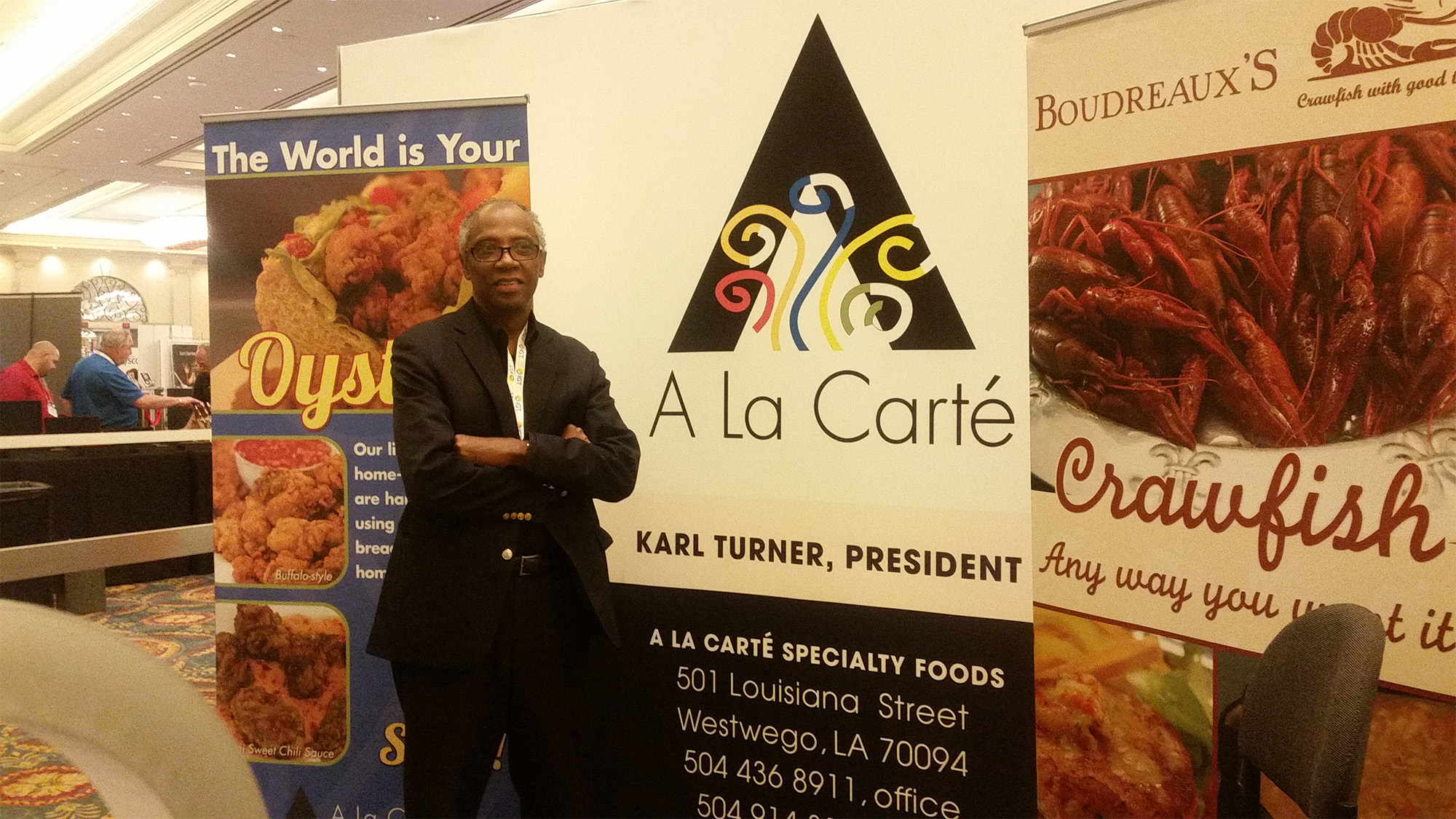
From the coal towns of Harlan County to the kitchens of New Orleans, Karl Turner has built a life on grit, curiosity, and taste. As President of À La Carte Specialty Foods, he has spent 22 years transforming seafood from commodity to cuisine—pairing Louisiana heritage with global supply chains, chef-driven recipes, and a marketer’s instinct for what delights diners.
Karl Turner’s story begins in Lynch, Kentucky, where company scrip once paid a coal miner’s wage and a moonshiner grandmother kept families laughing and fed. It arcs through Fisk and Vassar, a master’s in diplomacy and international commerce, and a formative career at Xavier University under the mentorship of Dr. Norman Francis. Then comes the leap: leaving the security of academia to build a brand that would become a quiet category leader, innovating value-added oysters and shrimp, steering through oil spills and tariffs, and pivoting from restaurants to 3,000 retail doors when the world shut down.
What endures is his philosophy: compete on quality, keep your antennas up, and never stop moving. “In life and in business,” he says, “you have to keep swimming.”
Roots in Kentucky
Karl Turner’s journey begins in the Appalachian coalfields of Harlan County, Kentucky, an unlikely starting point for a future seafood entrepreneur. He grew up in the small town of Lynch, once owned by U.S. Steel and known as the largest coal-producing town in the state. Life there was defined by the rhythm of the mines: his father worked underground, paid not in dollars but in company “scrip” redeemable only at the company store, a system immortalized in the song “I Owe My Soul to the Company Store.”
Turner’s family history is rich with character. His grandmother, with a twinkle of mischief, was known as a moonshiner, delivering jars of liquor through the surrounding hills while raising her family with love and resilience. “She was more than that,” Turner reflects. “She was a wonderful woman.”
In a place where most young men expected to follow their fathers into the mines, Karl’s parents pushed him and his siblings to pursue education as a path forward. That encouragement paid off, his brother went on to become a university president and author, while Karl himself would chart a course that carried him far beyond the mountains.
“I think it’s important to be grounded and to know our roots,” he says. “That’s where my life story starts.”

Education & Vision
From the coal towns of Kentucky, Karl Turner’s path took him into classrooms that would shape his outlook on the world. At Fisk University, the historic Black college in Nashville, he majored in philosophy, a choice his coal-miner father questioned. “Son, what are you going to do with a degree in philosophy? Go up on a mountainside and think wonderful thoughts?” Turner recalls with a smile. But philosophy gave him what he valued most: the ability to read deeply, write clearly, and think critically.
A year at Vassar College as part of an exchange program broadened his horizons further, and it was there that he met his future wife, a New Orleans native studying to become a physician. After Fisk, Turner earned a master’s degree at the University of Kentucky’s Patterson School of Diplomacy and International Commerce, one of the few programs of its kind in the country.
At Patterson, Turner studied global trade and politics during turbulent years when the Shah of Iran was overthrown and student protests swept campuses. He focused on African economies, traveling to Ghana, Sierra Leone, and Côte d’Ivoire to see how history, commerce, and culture intertwined. Guest lecturers included CIA Director Stansfield Turner and senior corporate executives, offering rare insight into the connections between governments and markets.
“What I took away,” Turner reflects, “was an appreciation for how the world is interconnected—how what we do here affects people all over the world, and vice versa.”

Career Foundations
Turner’s professional journey began in the classroom. After a brief stint teaching international business at Loyola University, he joined Xavier University of Louisiana as a young faculty member in the business department. Teaching marketing and corporate finance, he quickly rose to chair the department, honing both his academic grounding and his leadership skills.
Xavier also gave him one of the most important mentors of his life: Dr. Norman Francis, the legendary president who led the university for nearly half a century. “Dr. Francis used to say Xavier was the best-kept secret in higher education,” Turner recalls. “I’d tell him, we shouldn’t be the best-kept secret, we should be known. That was my introduction to the business of higher education.”
In time, Turner moved from teaching into institutional advancement, becoming Xavier’s Vice President for Development and helping raise more than $130 million. He learned the art of fundraising, alumni engagement, and building networks of support. “That job was about the business of higher education, building a financial platform so the university could thrive,” he explains.
In between his two stints at Xavier, Turner took a leap into a very different arena: the Louisiana Seafood Promotion and Marketing Board. As executive director, he spent 14 years shaping campaigns that redefined how the world viewed Gulf seafood. From introducing new ways to cook oysters to staging high-profile promotions with emerging chefs like Emeril Lagasse, Turner helped move Louisiana seafood from commodity to brand.
That blend of academia and industry, theory and practice, marketing and mission, laid the foundation for what would come next.

Turning Point – Building a Business
By the late 1990s, Karl Turner had already built a reputation as a sharp educator, fundraiser, and marketer. But deep down, he knew he wanted to test himself outside the security of academia. “In the game of life, you can’t play it on the sidelines, you have to be in the game,” he says.
With the encouragement of his wife, a pediatrician, Turner decided to follow his entrepreneurial instincts. Drawing on years of experience with the Louisiana Seafood Promotion and Marketing Board, he partnered with Edward Lee, a longtime seafood processor originally from Beijing. Together, they launched À La Carte Specialty Foods in 2003.
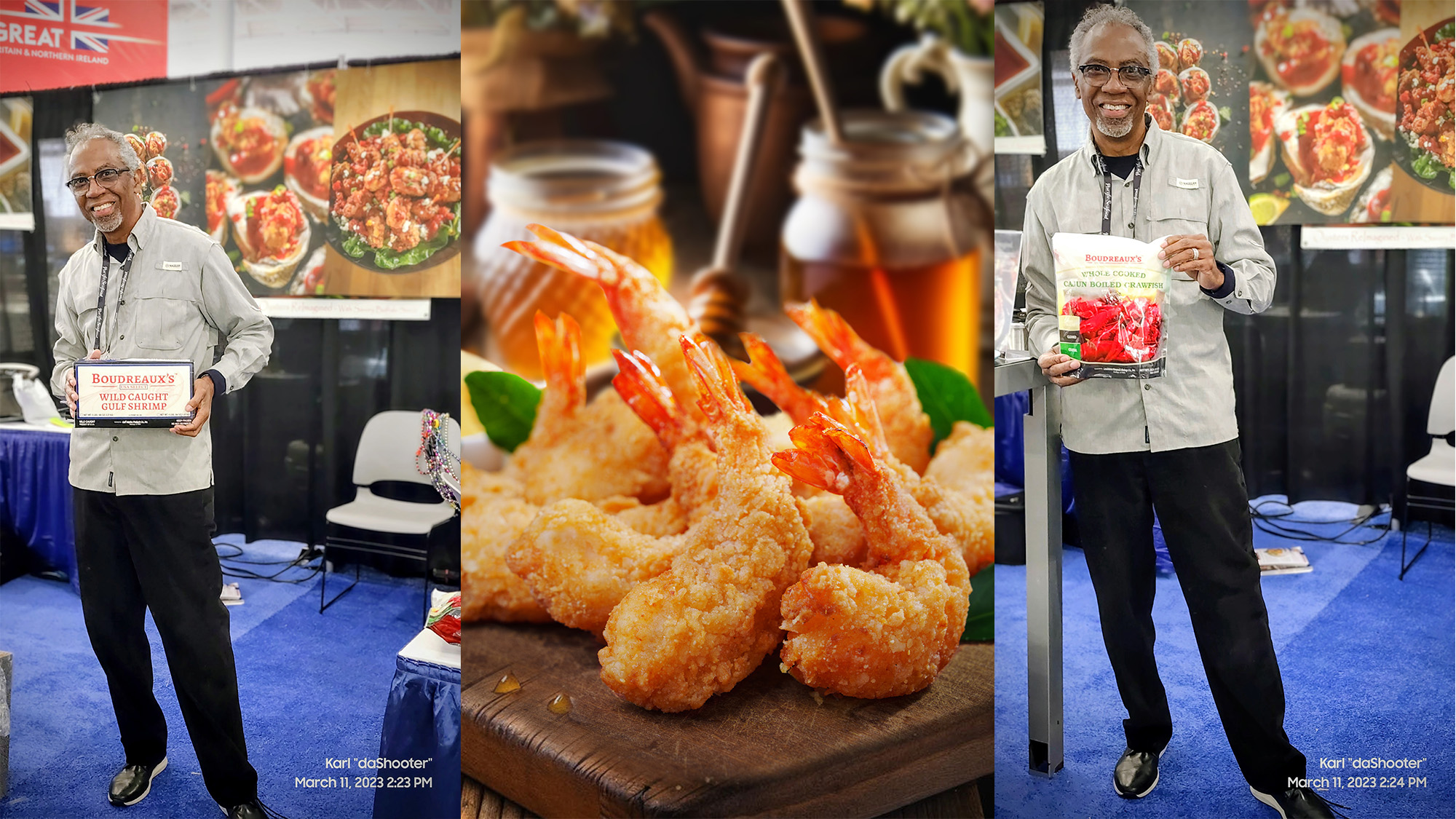
Turner’s vision was simple but bold: instead of competing in the crowded commodity seafood market, he would focus on value-added products, items that carried a brand, a recipe, and a higher margin. Working with chefs, he developed breaded oysters and shrimp products that could go from freezer to fryer to plate in minutes, offering restaurants and retailers both quality and convenience.
It was a risky leap. Leaving a stable role at Xavier meant giving up a team of 32 staff and a well-funded department to start from scratch. “When I launched the company, it felt like jumping out of a window with no parachute,” Turner says. “But I knew I had to survive.”
Twenty-two years later, À La Carte Specialty Foods has grown into a quiet leader in its niche, proving that calculated risks, rooted in experience and vision, can pay off.
Challenges & Resilience
No entrepreneurial journey is without storms, and for Karl Turner they came in waves.
The first major test arrived in 2010, when the BP oil spill devastated the Gulf seafood industry. Turner had just launched Sauté Your Way, a line of Louisiana shrimp paired with Chef Paul Prudhomme’s sauces. The product was gaining traction in 400 stores nationwide, but consumer fears about Gulf seafood after the spill caused grocery chains to cancel. “It was a crisis moment,” Turner recalls. “We had built something special, and overnight it was wiped away.” Though compensated in part by BP, the loss of momentum was a hard blow.
A decade later came Covid-19. At the time, À La Carte’s sales were largely through food service distributors who supplied restaurants. In May 2020, those sales plummeted by 80% in a single month. Rather than fold, Turner pivoted aggressively into retail, securing placement in more than 3,000 grocery stores. “It was like building a new leg on a tripod,” he says. “Now we have balance, food service, retail, and soon government contracts.”
Then came tariffs. Under the Trump administration, duties on Chinese imports, where much of Turner’s value-added oyster production was based, rose as high as 145%. For a small business, it was punishing. “Since 2020, I’ve paid nearly $5 million in tariffs,” he says. “That’s profit drained straight out of the company.” Still, Turner pressed on, exploring alternative sourcing in Asia, Brazil, and even Africa, while simultaneously developing new domestic products such as wild-caught Louisiana catfish and Gulf shrimp meal kits.
Through it all, resilience has been his hallmark. “In business, you have to expect roadblocks,” he says. “But you also have to find the workarounds.”
Innovation & Expansion
For Karl Turner, innovation has always been the way forward. He saw early that survival in the seafood business meant going beyond raw commodities and creating products with story, flavor, and value.
One of his proudest achievements was Sauté Your Way, developed with the late Chef Paul Prudhomme. Pairing Louisiana Gulf shrimp with ready-made sauces, the line allowed home cooks to serve restaurant-quality meals “their way”over pasta, rice, toast, or potatoes. “That was about giving people choice while keeping it authentically Louisiana,” Turner explains.
À La Carte’s anchor product, however, became its homestyle breaded oyster, created nearly two decades ago with a New Orleans chef and produced in China using rope-mariculture oysters. Flash-frozen and partially cooked, the product became a category leader in U.S. food service and retail. “We built a brand around quality and consistency,” Turner says, “and it has kept us at the top of the niche.”
But Turner’s vision stretches beyond Louisiana and China. He has invested in a pilot fish farm in Namibia, proving that tilapia can be raised even in arid desert conditions. Now in its growth phase, the project is attracting interest from investors. He has also explored sourcing oysters in Vietnam and crawfish in Egypt, always keeping “antennas up” for new opportunities.
More recently, Turner has begun experimenting with non-traditional uses for seafood byproducts. Carp, often overlooked in the U.S., has been reimagined as dog treats and even as a source of collagen for cosmetics and health products. “Sometimes the future isn’t about what we eat, but what else the sea can give us,” he reflects.
Whether it’s a shrimp fettuccine at Walmart, a breaded oyster in a restaurant, or pet treats made from fish byproducts, Turner’s instinct remains the same: find the niche, create the value, and lead the market.

Awards & Recognition
Recognition has followed Karl Turner at every stage of his career. While leading the Louisiana Seafood Promotion and Marketing Board, he received the National Seafood Marketing Excellence Award for his innovative approach to building demand. His team’s standout project, the tongue-in-cheek “Greatest Oyster Recipe Contest in the History of Mankind, Part One”, challenged Louisiana restaurants to invent new ways of preparing oysters. One of the entrants, Dragos, introduced a now-legendary dish: the charbroiled oyster, which has since become a staple across Louisiana.
Turner’s flair for promotion also drew national attention. In the early 1990s, he teamed with a then-up-and-coming chef named Emeril Lagasse to host the opening of Louisiana shrimp season in New York City. Invitations arrived in five-gallon gumbo pots stuffed with spices and Louisiana products, hand-delivered to top food writers. The event, staged at Gourmet Magazine’s executive dining room, brought the first harvest of Gulf shrimp to Manhattan and introduced the Food Network, at that time a fledgling channel, to the excitement of Louisiana cooking. “We were trying to show that Louisiana shrimp wasn’t just food, it was culture,” Turner recalls.
These moments didn’t just win him awards, they solidified his reputation as a creative marketer who could turn regional products into national sensations.

Family & Balance
Behind Karl Turner’s entrepreneurial drive is a partnership that has lasted nearly half a century. He met his wife, a New Orleans native, while studying at Vassar College during an exchange year from Fisk University. She went on to become a pediatrician, and together they built both a family and a life rooted in mutual support.
“When I first moved to New Orleans, it was hard to find a job,” Turner remembers. “She was always there telling me, ‘stick with it.’” That encouragement gave him the confidence years later to leave a secure position at Xavier University and take the leap into business.
The decision came only after careful timing: Turner waited until both of their sons were in college before resigning from his vice presidency. “It was important to me that we had a foundation for our family before I pursued the entrepreneurial dream,” he says.
Their marriage, now approaching 45 years, is one he describes with a metaphor: “Marriage is a yield sign, not a stop sign. A stop sign means everything halts. A yield sign means you slow down, look at things from the other person’s perspective, and then move forward together.”
It is a philosophy that has guided not only their relationship but also Turner’s approach to balancing long hours, business risks, and family life.
Philosophy & Message to Youth
For Karl Turner, entrepreneurship is more than a career path, it is a form of empowerment. Growing up in Appalachia, he saw how coal miners lived at the mercy of the company store. Later, in New Orleans, he saw how communities thrived when they owned businesses that could hire and uplift others. “Being a lawyer, a doctor, or a teacher are all great careers,” he says, “but building a business gives you economic power and the ability to create opportunities for your community.”
His advice to the next generation is simple but urgent: focus. In a world of endless distractions, social media, constant notifications, and the temptation to scroll, Turner sees focus as the rarest skill. “Don’t just consume,” he cautions. “Create. Develop your own ideas, your own products, your own vision. That’s how you build something lasting.”
He often tells young people that starting a business feels like “jumping out of a window without a parachute.” The fall is real, but survival comes through resilience, creativity, and faith. “You have to keep swimming,” he says. “Keep moving, keep your antennas up, and believe you can accomplish what you set out to do.”

Photography & Passions Beyond Business
While seafood has been his profession, photography has long been Karl Turner’s quiet passion. For more than 30 years, he has carried a camera, first a Minolta loaded with film, now a digital Sony and soon, he hopes, a Nikon mirrorless.
His lens is drawn to landscapes, trees, and the quiet poetry of nature. “My father-in-law once asked me why there aren’t people in my photos,” Turner laughs. “I told him, the tree never complains.”
Photography, for him, is both an art form and a refuge, a way to step back from the demands of business and focus on stillness, perspective, and light.
It is also a continuation of his lifelong curiosity, the same impulse that led him from Kentucky to Africa, from academia to industry, and from boardrooms to fish farms in Namibia. Whether in a seafood plant or behind a camera, Turner sees himself as a student of patterns, searching for beauty and meaning in unexpected places.
Looking Ahead
After more than two decades at the helm of À La Carte Specialty Foods, Karl Turner is not slowing down, he’s looking for the next opportunity. The challenges of tariffs and shifting supply chains have only sharpened his resolve to diversify. He is preparing to relaunch Sauté Your Way with expanded meal kits, introduce wild-caught Louisiana catfish as a premium domestic product, and explore new sources of oysters and shrimp across Asia and South America.
Beyond food service and retail, Turner sees government contracts as the “third leg of the tripod” that will give his company even greater stability. He is also exploring bold new directions, pet treats from carp, collagen from fish byproducts, even wallets made from fish skin. “Sometimes the future isn’t just on the plate,” he says. “It’s in how we reimagine what the sea provides.”
Through it all, he remains guided by the same principles that carried him from a coal town to global commerce: resilience, creativity, and faith in what comes next. “You have to keep your antennas up,” Turner says. “If you stay alert and keep moving, the opportunities will find you.”
Closing Reflection
Karl Turner’s story is one of unlikely beginnings and bold reinvention. From a coal miner’s son in Lynch, Kentucky, to a seafood innovator in New Orleans, he has built a career defined by vision, resilience, and faith. Along the way he has worn many hats, professor, fundraiser, trade association leader, entrepreneur, but the throughline has always been the same: creating value where others see only limits.
He credits mentors like Dr. Norman Francis, partners like Edward Lee, and above all his wife of 45 years for helping him stay the course. Yet much of his success rests on an instinct that is wholly his own: the ability to see the niche, focus on quality, and keep running when challenges appear.
Today, whether he is developing a new shrimp product, investing in African aquaculture, or photographing a quiet landscape, Turner remains guided by the lessons of his roots: stay grounded, work hard, and never stop moving forward. “In business and in life,” he says, “you have to keep swimming.”