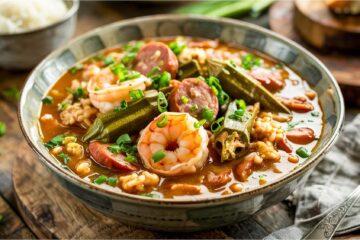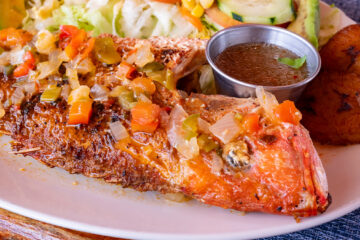
This dish reflects the everyday cooking of island households, where fresh fish from the sea is paired with vegetables grown close to home. Pumpkin adds natural sweetness and body to the dish, balancing the ric...
Jerry Prejean’s journey from a tight-knit community in Lafayette to becoming Acadiana Market President at First Horizon Bank is a testament to hard work, mentorship, and dedication to service. With a career spanning over 30 years in banking, he has played a pivotal role in economic development, financial literacy, and youth mentorship. His legacy is not just in finance but in bridging communities, fostering opportunities, and inspiring the next generation of leaders.
A Montréal musician with Acadian roots, Benoît LeBlanc spent decades tracking Kouri-Vini songs from dusty archives to studio takes—bridging Congo Square rhythms, Creole satire, and early jazz into a living language you can hear.
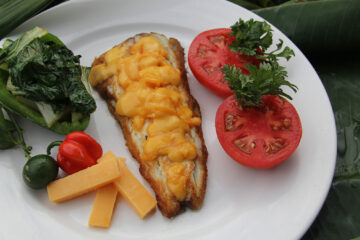
In Seychelles kitchens, dorado is prized for its delicate flesh and versatility. Traditionally grilled or simmered in Creole sauces, it also lends itself beautifully to simple, comforting preparations like this one. The addition of melted cheese reflects the subtle European influences that have woven their way into Seychellois cuisine through generations of travel, hospitality, and exchange.
Food travels more easily than people think. It crosses oceans in memory, in habit, and in instinct. Long before recipes were written down, they moved with migrants, sailors, workers, and families who carried flavors with them as they left everything else behind. In Creole cultures around the world, food has always been one of the most powerful ways identity survives displacement.
Congo’s contribution to world culture is often told through its music, the irresistible pulse of rumba, the electric energy of soukous, the legends of Papa Wemba and Koffi Olomidé. Yet there is another story, equally powerful and deeply Creole in spirit: fashion.
The Bahamas, an archipelago of almost 700 islands and cays north of Cuba, stretches over 800 km between Grand Bahama Island and Great Inagua Island. The thriving Creole community has grown due to the islands’ unique position at the gateway to the Caribbean Sea, the Gulf of Mexico, and the Central American region.
Across Creole communities, music has always been more than entertainment. It is memory, resistance, celebration, and language in motion. From Louisiana to the Indian Ocean, Creole survives most powerfully when it is sung, drummed, and danced. This article explores how music became the safest and strongest home for Creole languages worldwide.
In Creole cooking, ingredients matter more than geography. Fish, onions, garlic, peppers, herbs, and rice appear again and again across kitchens separated by oceans. What changes is not the pantry, but the hand that cooks.
In global affairs, small island nations are often portrayed as bystanders, too small to influence the tides of history. Yet Creole nations, from the Indian Ocean to the Caribbean, hold a significance that belies their size.
In Louisiana, culture is not just remembered, it’s lived. From Zydeco’s rhythms to gumbo’s aroma, the Creole spirit pulses through every street, song, and story.
The Dominican Republic, located on the island of Hispaniola, is rich in cultural diversity, shaped by centuries of interaction between African, European, and Indigenous Taíno peoples.
Few individuals have played a crucial role in shaping and preserving Haitian Creole as Pierre Vernet, a distinguished linguist, educator, and lexicographer.
Cape Verde, a stunning archipelago off the coast of West Africa, is a country where Creole culture is not just an influence; it is the foundation of national identity.