
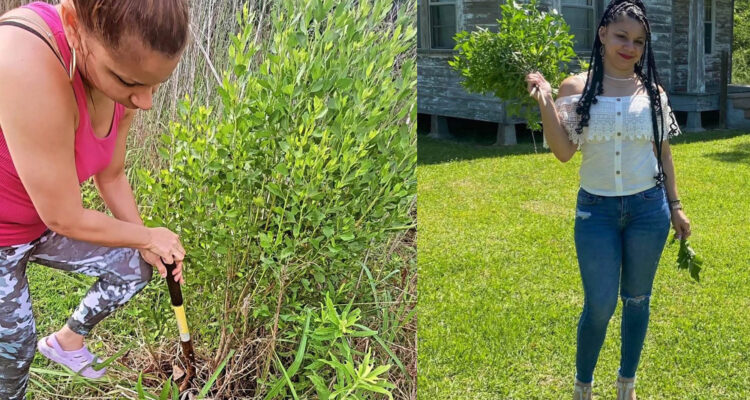
In 2020, the world stopped turning. Society continues to this day to adjust to the changes, for better or for worse of the global pandemic. Looking back, as we pick through the nebulous web of cause and effect, we can see how, in the face of tragedy, the stage was set for the re-emergence of a sleeping giant, old medicine.
“Old medicine” is what Rebecca Henry calls the herbal and folk traditions that people used for relief when medicines weren’t readily available. The daughter of a sharecropper and owner of the Creole Heritage Folklife Center in Opelousas, Louisiana, Henry is the de facto keeper of knowledge for the Creole traditions of Opelousas and the surrounding areas.
“A lot of it was word of mouth,” the 84-year-old Henry said. “One person would find out what worked for them, be it Castor Oil or Vicks Vapor Rub, and they would tell everyone else. Some of it, like manglier tea, was passed down, and it was hard to know where it all started because we all just knew where to get it, in the woods and pastures.”
“Perhaps the ones we should thank for all the things that are wild are the Indigenous,” Henry mused on the cure-all’s origins. “We knew some things, but they were more intense in knowing what’s edible.”
Not to be confused with traiteurs, who incorporate more spiritual elements in their healing, old medicine is a mixture of tradition and community that pulled from whatever sources were available. Disparities in health and health care access exist in Louisiana and have existed for a long time. When you come from a community that is historically underserved when it comes to health, and a country that does not guarantee healthcare, people will find relief where they can. Manglier tea has been one of those sources.
The manglier bush, also known as the groundsel bush or baccharis halimifolia, is a perennial shrub that makes its home along the North American coast. It can be found from Nova Scotia to eastern Mexico and even among islands like the Bahamas and Cuba. According to the University of Florida Institute of Food and Agricultural Services, manglier is resistant to salt sprays and typically found in marshes and wetlands. But it can survive well in dry soil too. All these factors make it ideal for Louisiana. From the coast to the prairielands, the groundsel bush reaches farther inland here than most other places where it is common.
In 2014, the study, “Screening native botanicals for bioactivity: An interdisciplinary approach,” concluded that the groundsel bush had anti-inflammatory qualities which could be helpful to treat symptoms of diabetes and obesity. Dr. C. Ray Brassieur, an anthropologist that helped with the interdisciplinary study, had been working on recording the medicinal plants of Native Americans, Black, Creole and Cajun communities who used the plant to combat mucus congestion. Then, in 2018, a separate study, “Groundsel Bush (Baccharis halimifolia) Extract Promotes Adipocyte Differentiation In Vitro and Increases Adiponectin Expression in Mature Adipocytes,” found that it had potential use as a dietary supplement to support metabolic health and resiliency.
When COVID spread through the world, some people of Louisiana returned to old medicine for relief, and manglier tea was one of those remedies. The tea was marketed as flu and cold relief, for those who could stand its bitter taste. Post-COVID, its popularity has continued to spread. It’s not surprising to find jars of the tea sold in local groceries throughout Louisiana. Rebecca Henry worked since the 1970s to preserve herbal lore that seemed to be disappearing at the time. Now, dried manglier leaves are only an internet search away.
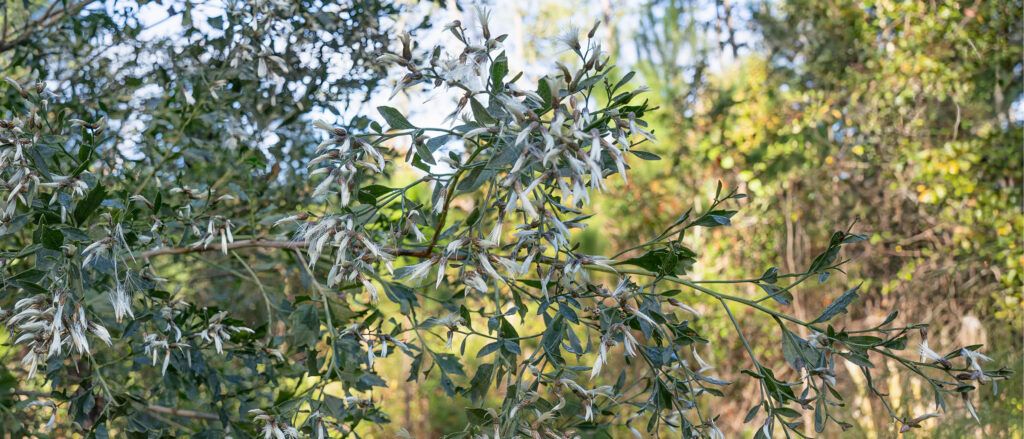
The woody bush tends to fade into the background with grayish-green leaves. It flowers in the fall with white flowers with fluffy white bristles. According to Henry, all you need to do is collect the leaves and boil them, before the shrub goes into the flowering stage. Once the manglier bush is identified, it is hard not to see the shrubs everywhere. This can present its own dangers, according to herbalist Ci Ci Savoy-Blair.
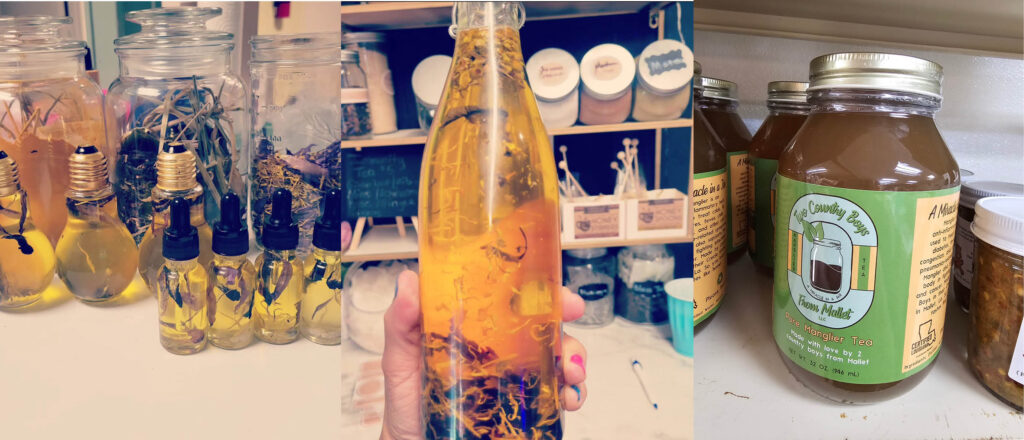
“I collect manglier for Master Peace Wellness from family land and areas not touched by pesticides,” Savoy-Blair explained about her herbal tea business. “I drink these teas myself every day, so quality is important.”
Savoy is a woman who wears many hats from CEO to event coordinator to actor. She also happens to be a licensed herbalist who studied at LSU-Eunice and is a member of the Herb Society of America.
“My grandma didn’t believe in us taking medicine,” Savoy said in an interview. “She had arthritis, and we suffered from bad allergies and sinus problems as children. Anytime we had a problem, she’d give us manglier or dandelion root tea for it.”
Most of what Savoy knows came from her grandma, Elrita Savoy, and her great aunt, Lorena Rideaux Joseph, who was from Washington, the 300-year-old steamboat town only a few minutes away from Opelousas. These two matrons taught her which berries and plants to pick and what was good for pain. She also knew old medicine tricks like putting tobacco on bee stings to help with pain and inflammation.
“Grandma would make pain oils and creams with wild lettuce,” she remembered, “teas with manglier, dandelion root, sour sop, and elderberry.”
Savoy’s family owned Savoy Cleaners located on the Hill, a historic neighborhood in Opelousas. Savoy continues this history of excellence by owning her own business, Master Peace Wellness, her Facebook page where she sells her manglier, St. John’s Wort, and detox teas. She collects herbs, including manglier, from family land along the Bayou Teche and Bayou Courtableau.
Ci Ci isn’t the only one to pull from family ties to take advantage of the manglier craze. Two Country Boys is a family-owned business by Dwight Broussard and Ahmadd Davis. According to the two, they were inspired by their grandma, Mildred Dartez, who used manglier tea to boost her immune system when COVID came around. They were inspired by her efforts and brewed tea for the whole family without anything added to it. According to them, “The more bitter, the better.”
People started getting word of their efforts, and their business blossomed from there. Now, their tea can be found in grocery stores like Russell’s Food Center in Arnaudville, Champagne’s Marché in Leonville, Benny’s Supermarket in Opelousas, and The Hive Market, a café in Grand Coteau. You can even order online at twocountryboysfrommallet.com.
There’s always been a push and pull when it comes to the interaction between folk remedies and modern medicine. Let your doctor know if you are taking any “old medicine” so you can know how it might interact with prescribed medications.
References:
- https://twocountryboysfrommallet.com/
- https://archive.ph/20221206045126/https:/drive.google.com/file/d/1IhpuJNWakbWaBjtEgH771wDh8zPlXwjO/view
- https://www.dailyworld.com/story/news/2017/11/28/good-times-rolled-bradfords-white-eagle/835959001/
- https://countryroadsmagazine.com/art-and-culture/visual-performing-arts/rebecca-henry/
- https://pubmed.ncbi.nlm.nih.gov/29587377/
- https://www.sciencedirect.com/science/article/abs/pii/S0899900714001348
- https://countryroadsmagazine.com/outdoors/gardening/Louisiana-medicinal-plants/