
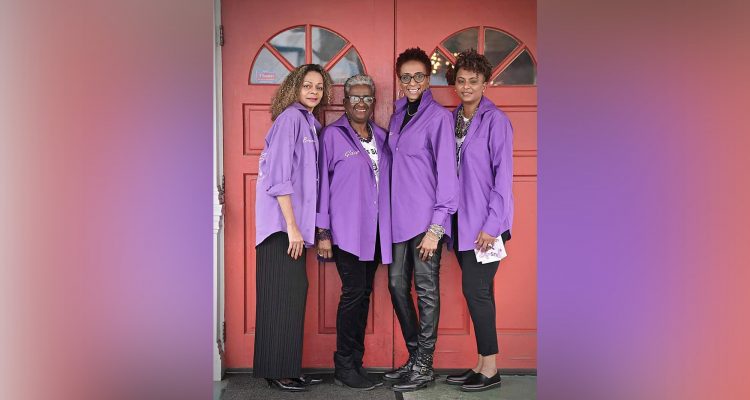
The four inspiring sisters channelling grief into action in the fight against lupus
“It’s a silent killer,” says Brenda Andrus. “We just want the public to know what it is.”
Brenda – along with three of her siblings – Anazia, Gail and Martha – is a founder of the 4-A’s Sisters Club. Established in 2011, the nonprofit organisation has a clear mission statement: to educate people about lupus and support those affected by the deadly disease.
Brenda and her sisters, Gail, Anazia and Martha, haven’t had lupus. The four of them do, however, know all too well just what lupus can do to a person and, indeed, a family.
In 1965 their young mother Dorothy died after succumbing to the condition. Then in 2007, their stepmother Leola – the birth mother of Anazia – passed away after a decade of suffering from lupus.
Two brave women died; one family felt the devastation of these losses.
Sadly, stories like these are all too common in the United States. This isn’t just a story about tragedy, though. Instead, it’s a story about justice.
It’s about four inspiring women actively working to ensure that other people don’t have to go through what their family went through – not once, but twice.
A childhood that was left tarnished
Brenda was born in 1958 and was one of six children born to John Rogers Andrus and Dorothy Andrus. While just a few short years later, she would experience the trauma of losing a parent at a young age, Brenda does have fond memories of growing up in Lafayette, Louisiana.
She can remember speaking with her relatives and hearing about her ancestors – some of whom could trace their roots back to slavery – and the traditions they held so profoundly. In particular, she can remember hearing them talking in different tongues.
“They were speaking French,” she recalls to Kreol Magazine. Brenda adds: “We were speaking English, and we learned what they were saying, but I could never hold a whole sentence.”
This French-inspired twist on language is, of course, a creole characteristic. This isn’t the only trait that Brenda associates with a creole upbringing, says:
“It’s also about the colour of your skin, the texture, the language – and of course if you know how to cook a certain kind of food!”
The ability to speak in another tongue wasn’t something that Brenda managed to take into adulthood, but, interestingly, these memories come flooding back to her when asked to reflect on this time in her life.
She also recollects how her father made living driving trucks for a big company (where he was the only black male employee) and how her mother did hotel housekeeping but was primarily a housewife. Yes, family and tradition were a big part of life for Andrus’.
Unfortunately, it’s hard for Brenda to take this walk down memory lane without confronting the emotional scars left by her mother’s death in the mid-60s.

Tragedy strikes
“We didn’t know what it was,” reflects Brenda. “All we knew when she was laying down in the bed was that she was very sick.”
Dorothy Andrus passed away at the age of just 30 in 1965. In an instant, her husband, John Rogers, became a widower, and her six young children were left without a mother. It was – in no uncertain terms – a true tragedy.
Brenda can recall her mother being ill. She can remember her being bedbound and the children needing to creep about the home to not disturb her. Brenda can also remember her mother needing to go to a hospital in New Orleans.
While it was surely devastating for the six children (three daughters and three sons at that time) to watch their mother deteriorate, another element added to their pain: they didn’t know what was causing it.
“We didn’t know what she had,” reveals Brenda. “Daddy didn’t know what she had… or he didn’t tell us.”
These unanswered questions must have only added to the anguish of the whole ordeal. The Andrus family was genuinely helpless.
“We just grew up knowing it was a secret,” Brenda remembers about the cause of her mother’s death. But, she adds: “Nobody talked about it.”
Brenda was 10 when she first heard the word ‘lupus’ used in relation to her mother’s passing. Unfortunately, this young girl – and many others who have heard of this diagnosis over the years – didn’t know what it meant at the time. It was simply the disease that had taken her mother from her and her siblings.
A devastating setback
The Andrus family had a shadow hanging over them as the years passed in the 60s. They had lost the family’s beloved matriarch, and she could not be replaced. There was, however, cause for optimism when their father remarried in 1967.
This time he took Leola, a nurse’s aide, turned teaching assistant, as his wife. She became stepmother to Brenda and her five siblings while also giving birth to a little girl: Anazia. It must have felt like the family had something to smile about for the first time in a long time.
It goes without saying that no one could ever replace Dorothy. However, it’s clear that their stepmother made a positive impression on the children and that they quickly came to see her as a strong female figure who they could look up to during their childhoods and beyond.
John Rogers and Leola had been married for over 30 years when she first fell ill. Initially, there were complications from diabetes, and she fell into a diabetic coma. In addition, she had arthritis.
The terrible memories flooded when Leola was given her third diagnosis: lupus. It was indeed a word that the family must have hoped they’d never have to hear again – not to mention an ailment that they’d hoped never again to see take its toll on a loved one.
“I took it hard,” admits the youngest sister Anazia. “It shook me real hard.”
Much like the sad events of 1965, the Andrus family had to watch as another incredible woman was snatched from them at the hands of lupus. As adults, though, they were much better able to comprehend exactly what was happening to their stepmother – but this came with its downsides.
Watching another mother figure to succumb to the illness must have been agony. The sisters witnessed some of the intense symptoms she had to suffer during this period, including kidney problems, depression and hair loss.
In the end, Leola passed away in September 2007. She had been a member of the family for more than 40 years.
Lupus: What is it?
“We just want to educate others about lupus,” explains Brenda. But, she adds: “We want to spread awareness.”
Before delving into the many admirable ways that Brenda and her sisters have been educating people about lupus, it’s important to explain exactly what lupus is. After all, many people don’t hear its name uttered until it strikes a loved one – and even then, some people struggle to fully comprehend the condition and what it does to the body.
Lupus is a long-term autoimmune disease that causes joint pain, skin rashes and tiredness. In addition, sufferers experience symptoms such as headaches, mouth sores, a high temperature, hair loss and sensitivity to light. It’s pretty common for people who have been diagnosed with lupus to suffer from kidney trouble.
“Not one person is the same,” informs Brenda. “Everybody suffers from it differently.”
Research shows that lupus disproportionally affects women. In particular, it affects black women. It’s estimated that as many as one in 250 African American women will develop lupus.
The mainstream media has been known to highlight the effects of lupus on occasions, particularly when someone high profile is diagnosed with it. One of the most famous celebrities to have fought lupus is the actress Selena Gomez; this story has been covered across the globe.
As of 2023, different forms of treatment can help sufferers to improve their symptoms and prevent further health problems. However, lupus is still a chronic illness and there is currently no cure.
Fighting for a brighter future
Brenda – along with sisters Anazia, Gail and Martha – formed the 4-A’s Sisters Club in 2011. The name was decided on because of the simple fact that there are four of them, and their maiden surname is Andrus.
“All the sisters got together and decided that we needed to start something and begin learning more,” reveals Brenda.
Thus, the 4-A’s Sisters Club was created.
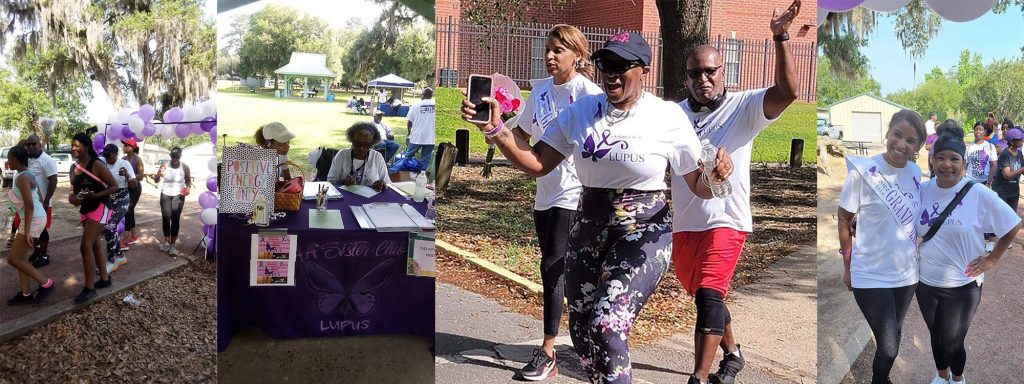
Their first meeting had attendees from Lafayette and Lake Charles, Louisiana. It gave people – those who had lupus (deemed the ‘Lupus Warriors’) and those whose loved ones had lupus – the opportunity to learn more about the condition.
Brenda says: “It’s not only the ‘Lupus Warriors’ who know that we’re here for them and that we have resources for them, but it’s for their friends and family.”
Indeed, in many ways, it was the service that the Andrus family would have benefited from themselves in 1965 and then again in 2007.
The sisters all have their roles in the organisation. Anazia is the president, Gail is the treasurer, Martha is the secretary, and Brenda is the public relations officer. With the four at the helm, they’ve seen the foundation grow, evolve, and adapt when it came to Covid.
During the pandemic, the organisation moved its helpful infrastructure online. Unsurprisingly, this extended their reach, and they found that their meetings were being attended by people in states as far away as Alaska. This is understandable, especially given the quality of the service and how good reviews can quickly spread across the world!
It’s often the case that guest speakers, including professionals such as nurses and nutritionists, join the support groups to provide expert advice. In the past spiritual leaders have even joined in to lead prayers.
“Every story is different,” reminds Brenda when talking about the diverse range of support that the organisation is known for. She adds: “They might be on the same kind of medicine, but they all live a different life, and they’re very strong.”
4-A’s Sisters Club offers a free service, and in recent years the foundation has been granted nonprofit status. The siblings are able to maintain their high standards in numerous ways, such as through sponsorships and partnerships.
Aside from monthly support and information groups, they also host events to raise awareness about lupus. In the past, this has included being joined by a sea of well-known musicians for their annual All-American Mini-Music Fest.
What’s next?
The 4-A’s Sisters Club has been operating for over ten years, but the best is yet to come. It’s clear from talking with Brenda that she’s still passionate about the cause. The sisters’ shared ambition to reach even more people could mean that there’s no limit to what they can achieve together.
“Our main goal is to reach more people,” confirms Brenda. “We’re all about supporting more people and raising more awareness.”
While the sisters are conscious that similar organisations are operating and ‘don’t want to step on anyone’s toes’, they’re now looking further afield than Lafayette. In particular, they want to host events in New Orleans – and it might not be long until we see them venturing further.
Brenda and her siblings are currently in the process of looking into getting more grants. This will allow them to do several positive things, including organising more events and holding extra workshops. In addition, it will also help them to fund the travel costs associated with inviting specialist guest speakers who live outside the area.
Yes, ambition is there, but so is motivation. As Brenda confirms, a 21-year-old who was a part of the network recently died from lupus. It’s evidence that there is still more to do – and luckily, these inspiring women are ready to do it!
Taking back control
Lupus is undoubtedly a terrible disease. But, aside from the fact that it has claimed so many lives, in many cases, it’s also left their friends, families and loved ones feeling utterly helpless.
Thankfully more and more people are taking back control when faced with a case of lupus –partly down to the incredible work of the Andrus sisters. The 4-A’s Sisters Club provides a means by which people can access valuable resources, learn more about how to fight the condition and connect with those facing the same challenge.
Brenda and her sisters should feel very proud. They are not only providing such a valuable service to so many people, but in the process, they are keeping their mothers’ memories alive.
This, of course, is just a bonus. But we hope they realise it because we imagine their two mothers would be incredibly proud of them too.