How important are cultural roots, to the digital generations?
There’s much talk about the rapid pace of change faced by Millennials and Generation Z. It all hinges on the way technology is redefining their work and lifestyles. However, it’s interesting to explore how many traditional values live on. Particularly affinity with family, and the value placed on cultural identity.
“Family are the people who are always going to be there for you no matter what. Family could be your mother, your father. It could be your siblings.”
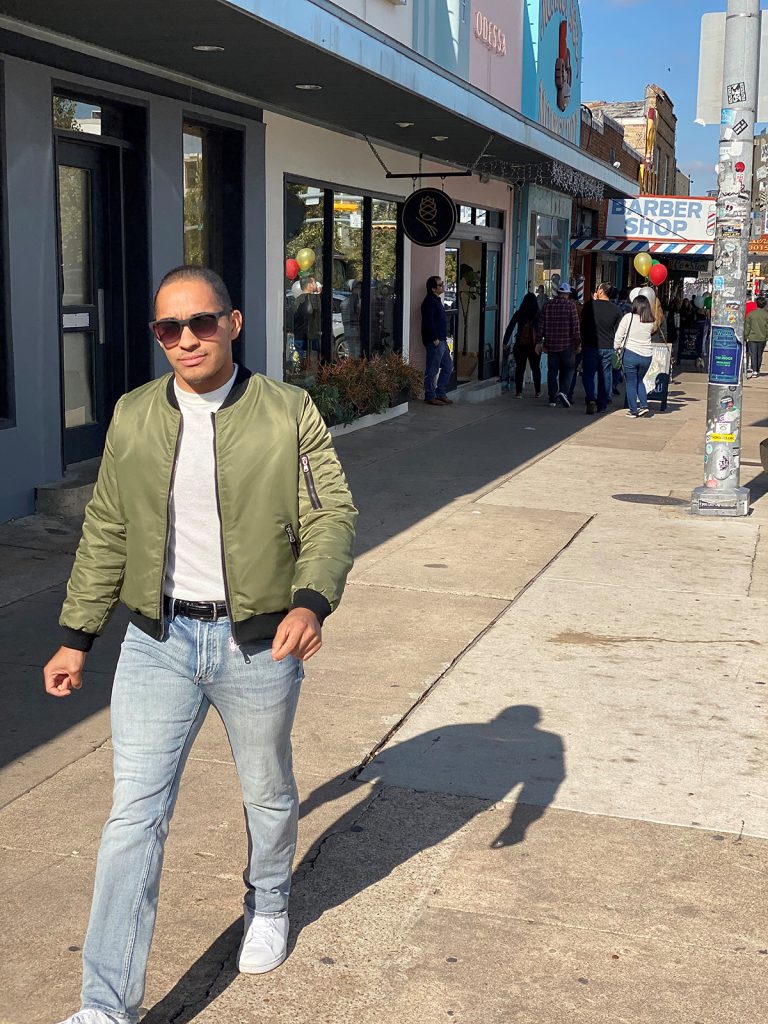
These are the words of Joshua Pierre. The descendant of well-known Louisiana business people and politicians.
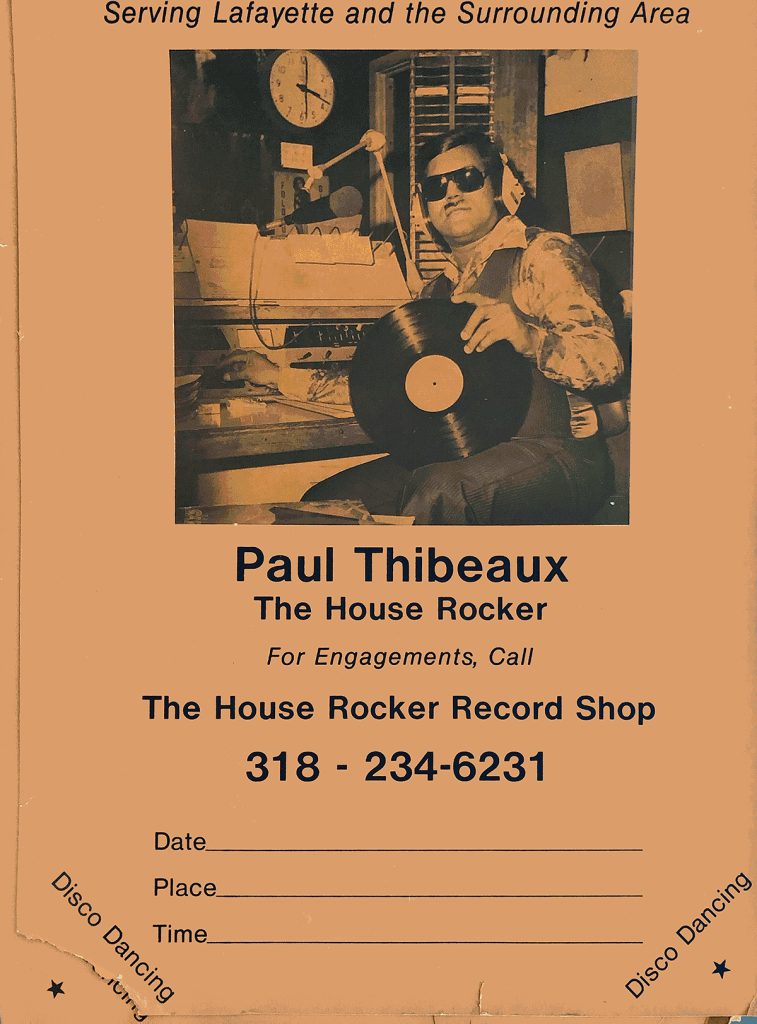
Joshua is a young man who shows great pride in his family ties, including those dating back sometime in the Lafayette area. On his maternal side, Joshua is descended from community stalwarts the Thibeauxs, who owned a popular record store. It was the place to go to for Zydeco music or any black-related genres.
The young man explained:
“My great-uncle Paul Thibeaux was the first African-American disc jockey in this area in the ’60s. He actually went all the way to Lake Charles for 30 minutes of airtime to be in Lafayette. In 1968, he opened House Rockers Records, and he was a very successful deejay.”
Joshua added: “Everywhere I ask people, they all know who Paul Thibeaux is because he was such a prominent deejay. And he was so prominent, in fact, that he was put in the hall of fame in Louisiana by the governor.
“He actually put Zydeco and Louisiana music on the map at the time. No one else pioneered that.”
His Uncle ran the store in partnership with Joshua’s maternal grandmother, Irene Thibeaux-Abear, and it was a feature of the Lafayette landscape for three decades. Towards the end of its history, Joshua’s mother also worked in the family record shop, but the digital age dried up demand for vinyl and it closed its door. “The end of an era” as Joshua rightly says.

The Pierre politicians
Meanwhile the young man’s paternal family – the Pierres – were involved in politics rather than music and retail.
Joshua explained: “It started with my Uncle Wilfred. The Pierres had eight kids and they were very hard-working, very humble people from Carencro. My grandfather actually put my uncle through college at the USL. My grandfather himself, he was a dry cleaning business person, and he worked in dry cleaners all his life up until he died.
“My Uncle Wilfred, he actually started the Pierres in Lafayette. He put them on the map. His legacy. He started on the city council, and then he went in the state legislature for I think three or four terms. And now my dad is in the state legislature, and this whole process has really cemented the Pierre name all over Lafayette because the Pierre name has been around since the 70s. Everyone knows them.”
“These were all business people as well,” Joshua added. “They owned businesses. My uncle owned 3 Frenchmen Janitorial Service. My dad owned a business. He owned two dry cleaners. They’re business people and politicians, so that was their status.”


Distinctively Creole
The dry cleaners are also now gone, but the family work ethic has impacted this modern young man. As has his creole identity.
Joshua said: “I go to other places in the United States and people mistake me for other ethnicities, so I’d like to know what I am.
“I absolutely feel Creole. I am 100% Creole. My mom is Creole, my dad is Creole. Everyone in our family is Creole and it’s funny because the older I get, the more I realise how special this culture is because there’s nowhere else I can go in the United States, that is not the same as Louisiana, especially Lafayette.”
A sense of community, as well as cultural identity, is important to Joshua. “New Orleans is not the same as Lafayette. Lafayette is its own Creole identity. So, a Creole from New Orleans is not the same as a Creole from Lafayette, and it is so, so unique.”
Much of the value he places on these definitions come from finding that people often assume all African-Americans “do one thing”. When in fact, coming from Louisiana moulds a very specific sense of identity. “It’s amazing how the more places I go, the more special this culture is to me.”
He is even keen to point out the differences in cuisine, between stereotypical Cajun dishes and the food of his heritage. “When I think of Creole, I think of sausage Creole. Anything with tomato gravy. Anything with tomato gravy will scream Creole.”
He added: “We made some white beans and rice last night. What else do we normally eat a lot? Rice and gravy. Rice and gravy is a big thing!” Joshua also makes a “really mean meatball stew.”


The youth of today; do they respect traditions?
It’s not only the food of his family’s heritage that matters to Joshua. He still holds tight to observances that hold them together as a unit.
“I respect my grandparents so much. I feel that it’s my duty to carry out the things that they do. Like on Sundays, I feel like it’s important, it’s all about family. That’s what we do on Sundays. It’s all about, ‘Everybody come get a plate to eat, everybody, let’s sit around and talk.’ And that’s what my grandparents did because they didn’t have phones, they didn’t have TVs, they just had themselves, and I feel like it’s important to go back to the roots.“

What does the future hold?
With music, retail and politics in his family history, what career path is Joshua on?
“I’m actually in school for nursing right now. I’m in school to become a registered nurse, but the end goal that I want to be, I want to be a boss. That will be my peak. I want to be a boss one day. I want to be a businessperson one day. I don’t know where, but I feel like it’s bound to happen. It’s bound to happen. Just like my dad.”
A real experience of nursing on the ‘ground floor’ is important to Joshua, as a starting point to one day having his own business.
His family track record also spurs him on. “It gives me a lot of inspiration and energy, and it sets the bar very high.”
Joshua is also influenced by another family member, who has a prestigious record. His Dad’s first cousin, Dr Sandra Brown.
“Oh my goodness. She’s in the same field as I am, and she is smart as a whip. She’s the Dean of Nursing at Southern University and if you look at her resume, it is extensive. Her career path is probably totally different than mine, but the magnitude of what she’s achieved is just wow. And that’s exactly what I want for myself, and I look up to her a lot because she has actually done some amazing things.
“She was the first black woman to get a doctorate from LSU, and those types of things. She’s really an amazing person and she’s very down to earth and very approachable, and I look up to her and I ask her about things a lot of times. She’s always available. I really appreciate her because I look up to her. Everyone in the family looks up to Dr. Brown. And she’s actually my godmother as well, so yeah.”


Respect and kindness
Clearly, his large family and Creole heritage are helping Joshua make his own way in the world. He is understandably protective of both and wishes more could be done to protect his distinctive culture, including the Creole language.
If there is one thing that blends in Joshua, learnt from both his heritage and family, it’s respect and service.
“That’s something that’s a common theme in the Creole culture, is offering up yourself. Serving others, being nice to others. Treating people nicely.”
He concluded: “Treating people with kindness is serving my culture too.”
If anyone worries about the generations growing up with technology at their fingertips, a few moments with Joshua Pierre could ease a great many of your worst concerns.