

From pioneering eco-friendly industry to promoting local art and supporting the autism community, Abdul-Gafoor Yakub blends business, culture, and philanthropy in his mission to uplift Seychelles.
Abdul-Gafoor Yakub is one of Seychelles’ most effective figures, whose multifaceted contributions span business, culture, and philanthropy. As the Chairman and CEO of Penlac Co. Ltd. and Chaka Brothers (Pty) Ltd., Yakub has spearheaded numerous green initiatives in the local manufacturing industry, transforming Penlac into a leader in sustainable practices. But his leadership goes beyond business; he is a passionate advocate for local art and an ardent supporter of community causes, including autism awareness and supporting the elderly. Born into a well-respected family with deep roots in Seychelles, Yakub embodies a spirit of giving and community engagement, consistently leveraging his resources to uplift others. His legacy is not only one of financial success but of compassion, humility, and a commitment to leaving a positive mark on his country and its people.
Family Origins: The Chaka Legacy
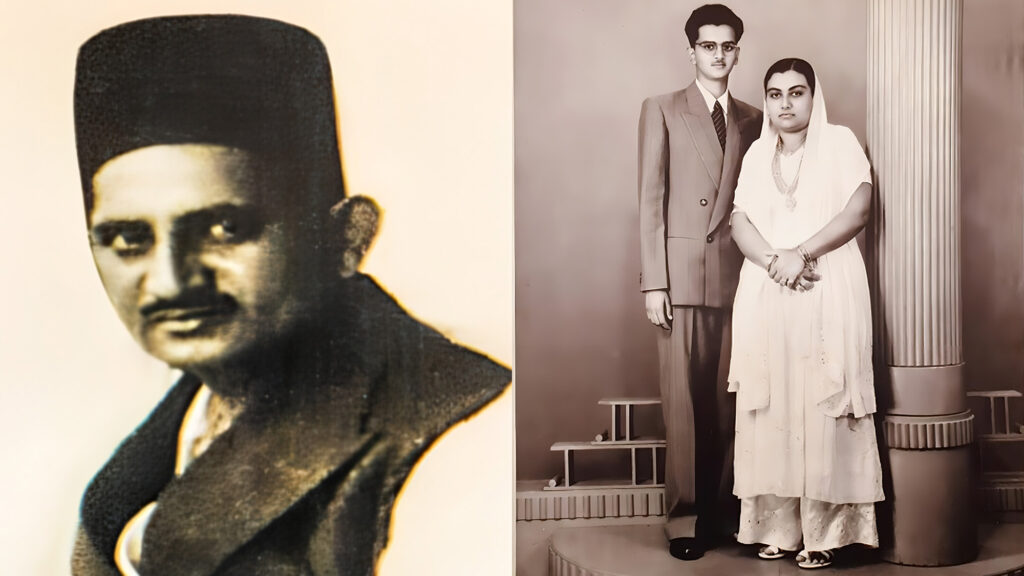
Abdul-Gafoor Yakub’s family’s roots run deep in Seychellois society’s fabric, tracing back over a century. His family’s journey to Seychelles began in 1918 when his grandparents, Mohamed Adam Chaka and Fulli Poora, emigrated from the bustling village of Valan in Gujarat, N.W. India, searching for a better life. Mohamed Adam Chaka arrived as a young man, only 16 years old, and quickly made a name for himself as a partner in one of the biggest commercial enterprises at the time, Adam Moosa & Company. His business acumen and sharp investment instincts enabled him to acquire a 25% share in the company, a strategic move that would set the foundation for his family’s prominence in Seychelles.
With its ten children, the Chaka family grew up in the iconic Chaka Building, a cultural landmark in Victoria, Seychelles. This building, now over 100 years old, is a testament to the family’s legacy and vision and is recognised as a cultural heritage site. In those early years, the family was deeply involved in trade, importing goods and exporting local produce such as copra, cinnamon, and vanilla—key exports that helped shape Seychelles’ economy before independence.
However, life was not without its challenges. When Mohamed Adam Chaka passed away unexpectedly in 1944, his wife Fulli returned to India with their children. In a time when it was uncommon for women to venture into business, Fulli displayed remarkable resilience and independence. She leased agricultural land to feed her family, a bold step that reflected the entrepreneurial spirit that runs through the Chaka bloodline.

Yakub Mohamed Adam, Abdul-Gafoor’s father, returned to Seychelles after completing only 3 years of schooling in India. Like his father before him, Yakub M Adam first worked at Adam Moosa & Company, starting as an Accounts Clerk. Eventually, he branched out on his own, establishing Chaka Brothers in 1965, a business that continues to thrive today under Abdul-Gafoor’s leadership. Yakub’s dedication to family and business was unwavering, and he ensured that his four brothers joined him in the venture while his five sisters married into respected families across Africa.
The Chaka family story is not just one of business success but of community building, resilience, and a deep connection to both their Indian heritage and their Seychellois home. Through their pioneering efforts in trade and business, the Chakas became a cornerstone of Seychelles’ economic history, laying the groundwork for future generations. Today, their legacy lives on, not just in their businesses but in the deep respect they command among the people of Seychelles.

Childhood and Educational Journey
Abdul-Gafoor Yakub was born in Seychelles on May 22, 1959, into a family with deep roots in the Indian and Seychellois communities. He spent his childhood in the heart of Victoria, growing up amidst the bustling activity of the capital city. Surrounded by the cultural vibrancy of a diverse community, he developed a deep appreciation for the island’s unique blend of traditions.
Reflecting on his early years, Yakub described his upbringing as “carefree,” filled with outdoor adventures and a sense of freedom. “I loved playing barefoot on the hard, dusty grounds,” he recalls with a smile. “We would hike through the lush forests, swim in the open seas, and run all over Victoria, which at the time was so different from what it is today.” These carefree days also involved playing five-a-side football barefoot, often using improvised balls made from breadfruit, rubber, and plastic wrapped with a banana skin. It was a time of simple joys, and the strong sense of community left a lasting imprint on him.
While his childhood was fun, his parents instilled a sense of responsibility and pride in his Indian heritage. He recalls his parents’ importance in cultural values, such as celebrating festivals from India and Seychelles. Yakub’s family valued education, and his father ensured he received a solid grounding in academics and Islamic teachings. “I consider myself lucky,” Yakub says, “because I had the opportunity to study Arabic and Islamic teachings after school until 16. It gave me a sense of discipline and purpose.”
Yakub attended Seychelles College, one of the most prestigious schools in the country, where he demonstrated an aptitude for leadership and a natural curiosity for learning. His time at Seychelles College was crucial in shaping his academic journey and his future career. Here, he developed a love for numbers and a keen interest in business, a path that would later guide him toward his professional success. His passion for music also marked his school days, and he fondly remembers playing acoustic guitar with his friends, one of whom later became the first music director at the Ministry of Education.
After schooling in Seychelles, Yakub left for London, where he enrolled in at the City University Business School, located within walking distance of the London School of Economics. He earned an Honours degree in Accounting and Finance and an MBA in International Business and Export Management. His educational journey combined practical business skills with a solid academic foundation, enabling him to approach challenges with analytical rigour and creative solutions.
“My education was more than just about acquiring degrees,” Yakub reflects. “It taught me to view problems as opportunities. If you look at every issue as a challenge that needs solving rather than a failure, you are much more likely to find a solution. I learned that from books, my upbringing, and my teachers.”
Yakub’s educational path prepared him for a successful career and deepened his connection to Seychelles. His time abroad gave him a broader perspective, but he never lost sight of his home, always intending to return to contribute to the country’s development. The lessons learned, both in the classroom and in life, have made him the leader today—a man who blends business acumen with a deep sense of responsibility toward his community.
Career: Expanding Horizons Overseas
After completing his education in London and armed with an Honours degree in Accounting and Finance and an MBA in International Business, Abdul-Gafoor Yakub embarked on a journey that would take him far beyond the shores of Seychelles. His career began in London, where he worked as an Audit and Accounts Supervisor for two years. This early role sharpened his financial skills and exposed him to the complexities of international business.
In 1985, Yakub returned to Seychelles, where he was appointed Senior Finance Officer under then-President France Albert René, who was also the Minister of Finance. This marked the beginning of a career in public service that saw him rise rapidly through the ranks. By 1989, he was promoted to Director General of Financial Planning and Control, becoming the youngest person to hold such a position at the time. During this period, he also took specialised courses at the prestigious International Monetary Fund (IMF) Institute in Washington, DC, where he honed his interest in macroeconomics.

However, his role on the international stage truly expanded his horizons. In 1996, Yakub was offered a prestigious post as a technical adviser to the Executive Director of the International Monetary Fund (IMF) in Washington, D.C. This opportunity allowed him to work on critical global financial issues, providing him with a platform to influence economic policies on a larger scale. During his time at the IMF, Yakub worked on macroeconomic stability programs in several Pacific Island states and African countries, including Rwanda, during the sensitive period following the genocide.
One of his proudest achievements at the IMF was his work in Rwanda. “It took me and my team almost three years to turn it around,” Yakub recalls, referring to the economic recovery plan he helped design for the country. “I was dealing with the aftermath of the Hutu-Tutsi conflict, and the economy was in shambles. But I believed in the power of financial stability as a foundation for peace.” Yakub was instrumental in stabilising the Rwandan franc and attracting foreign investment, helping to lay the groundwork for the country’s recovery. “We floated the currency, and within three months, it stabilised. Companies like MTN from South Africa and Airtel from India invested. It was one of my life’s most challenging yet rewarding experiences.”
Yakub also worked in other developing nations, including the Solomon Islands, Vanuatu and Samoa, helping them navigate financial crises and implement sustainable development strategies. “Each country was different, and each challenge was unique,” he explains. “But the goal was always the same: to build a stable economy that would benefit the people.”
Despite his success on the international stage, Yakub remained deeply connected to his home in Seychelles. Even while working abroad, he maintained a strong relationship with his father and the family business. “I was earning well in Washington, and my father would often call me to discuss the challenges he faced back home. Over time, my involvement in the family business grew.”

Yakub’s time abroad gave him a broader perspective on economics and governance, but it also deepened his appreciation for the challenges faced by small island states like Seychelles. “Working at the IMF made me realise that the issues we face in Seychelles are not isolated; they’re part of a global system. But the solutions have to be local. Every country has to find its path to stability and growth.”
After close to ten years of service with the IMF, Yakub settled in the UK to be closer to Seychelles. However, his journey was far from over, as his father soon asked him to return home to help with the family business and get a better quality of life. This marked the beginning of a new chapter, where his international experience would transform not only his family’s business but also contribute to the broader economic landscape of Seychelles.
Returning to Seychelles: Strengthening Local Roots
After a decade of working with the International Monetary Fund (IMF) and gaining significant international experience, Abdul-Gafoor Yakub felt the pull of home. Despite his success abroad, his heart remained in Seychelles, and when his father called upon him to return to the family business, Yakub did not hesitate. “My father needed help with the business. He had worked so hard for so many years, and it was time for me to step up and carry the legacy forward,” he recalls.
Yakub’s return to Seychelles marked a turning point for his career and the family business. Chaka Brothers, founded by his father in 1965, faced several challenges, and in 1995, the family also acquired shares in Penlac, a struggling local paint manufacturing company. “At the time, Penlac was in a precarious position,” Yakub remembers. “The company was struggling financially, and there was a lot of work to be done to turn it around. But I knew it had potential.”
With his experience in macroeconomics and financial restructuring, Yakub transformed Penlac into the largest paint manufacturer in Seychelles. “Within 18 months, we managed to turn the company around. It was hard work, but we were determined to make it a success.” Yakub’s financial understanding, combined with his father’s business instincts, helped Penlac not only recover but thrive. Today, Penlac holds a significant share of the local market and has built a reputation for producing high-quality, eco-friendly paints.
One of Yakub’s key initiatives was to focus on sustainability and innovation. “I wanted Penlac to be more than just a paint company. I wanted us to be a leader in sustainable practices and innovation in Seychelles.” Under his leadership, Penlac introduced eco-friendly, water-based paints with low VOCs (volatile organic compounds), setting a new standard for environmental responsibility in the local industry. “It’s not just about making a profit,” Yakub explains. “It’s about doing business to benefit the community and the environment.”
Yakub’s impact extended beyond Penlac. As Chairman and Managing Director of Chaka Brothers, he was crucial in revitalising the company’s operations. His father and uncles had founded the business deeply rooted in Seychelles’ commercial history, and Yakub was committed to preserving its legacy. “My father built Chaka Brothers from the ground up. It’s a part of our family’s history, but it’s also a part of Seychelles’ history. I wanted to ensure it continued growing and adapting to the changing times.”
Through the Penlac and Chaka Brothers, Yakub has created jobs and supported the local economy. His business philosophy is centred on the idea of community. “I’ve always believed that business should serve the people. Whether it’s through creating jobs, supporting local suppliers, or giving back to the community, business is responsible for making a positive impact.”
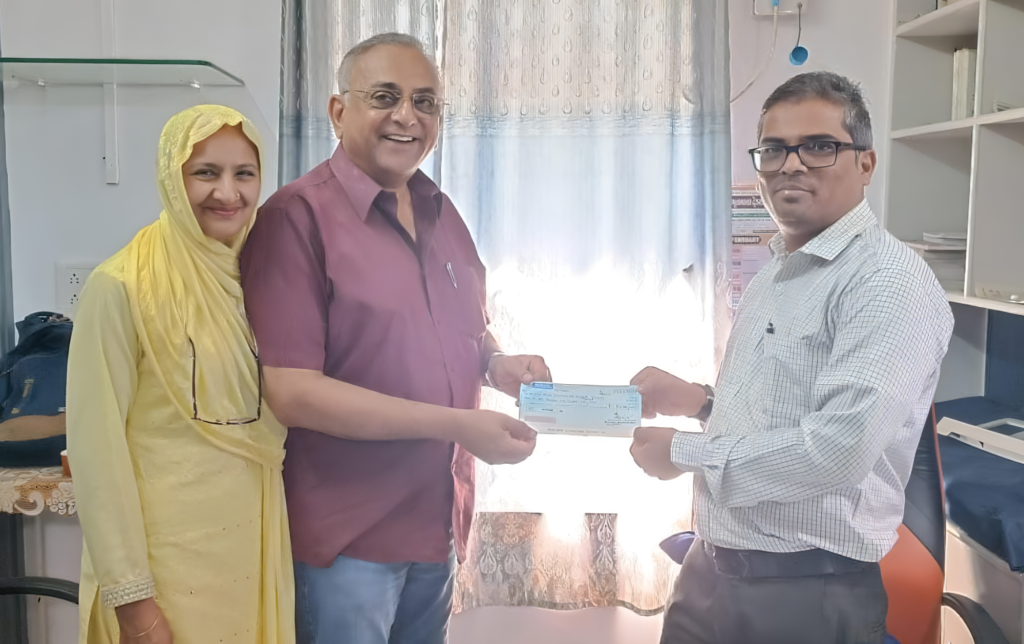
His commitment to giving back is also reflected in his philanthropic work. Yakub has been a modest but consistent supporter of local art, culture, and education. “I believe that when you’re in a position to help, you should,” he says. One of his most unpretentious contributions was purchasing several paintings from a young autistic artist, Patrick Alexis, and donating them to the Autism Support Centre at North East Point. “Art has the power to uplift, and I wanted to support Patrick while also bringing some joy to the Autism Centre. It’s a small gesture but can make a big difference.”
Yakub’s support for the arts goes beyond individual donations. Over the years, he has quietly sponsored numerous art exhibitions and community projects, often staying behind the scenes. “I don’t do it for recognition,” he insists. “I do it because it’s the right thing to do. Our culture and heritage are important, and we must support the people who preserve and promote it.”
As he reflects on his career in Seychelles, Yakub is proud of what he has accomplished, but he remains humble about his contributions. “I’ve been fortunate to have had opportunities to make a difference here and abroad. But everything I’ve done has been a team effort. Nothing happens at Penlac, Chaka Brothers, or in the community without the hard work and dedication of the people around me.”
Yakub’s return to Seychelles marked the continuation of his family’s legacy and the beginning of a new chapter in the country’s business and cultural landscape. Through his leadership, innovation, and commitment to the community, he has become a respected figure who continues to shape Seychelles’ future.
Working with the Government in Seychelles
Beyond his success in the private sector, Abdul-Gafoor Yakub has played a pivotal role in Seychelles’ public sector, particularly in the financial realm. His work with the Ministry of Finance and the two public-owned banks showcases his ability to navigate both the complexities of government operations and the needs of the private sector. His involvement in national financial policy has been instrumental in shaping the country’s economic landscape.
Yakub’s initial foray into public service came in the mid-1980s when he was appointed Senior Finance Officer in the Ministry of Finance. “It was an intense learning curve,” he recalls. “I had to balance the responsibilities of my role in government while applying the economic theories and practices I had learned overseas.”
In 1989, Yakub was promoted to Director General of Financial Planning and Control. His tenure coincided with a critical period of financial restructuring and economic reform. “I was tasked with managing the country’s national budget and ensuring that we could meet our economic objectives,” Yakub explains. It was challenging, but I was committed to ensuring we operated transparently and efficiently.”
Yakub’s expertise in financial planning proved invaluable in his public service role. One of his key initiatives was the introduction of more stringent financial controls and budgetary oversight, which helped to stabilise the country’s economy during a turbulent period. “It was about making sure the government could deliver on its promises while also being fiscally responsible,” he says. “We had to ensure that public money was being spent in the right places and that we had enough reserves to deal with economic shocks.”
In addition to his work with the Ministry of Finance, Yakub played a noticeable role in the local banking sector. In 1994, he served as the CEO of the Development Bank of Seychelles, where he undertook a transformational strategy that revamped the bank’s operations and achieved dramatic improvements in productivity and staff and customer satisfaction. In 2018, he was appointed Chairman of Nouvobanq, the largest public bank in the country. During his tenure, Yakub and his Board focused on modernising the bank’s operations and ensuring it could meet the demands of a rapidly changing financial environment.
“Running a bank is about more than just managing money,” he says. “It’s about building trust with the public and ensuring that the bank can serve the needs of all Seychellois, from small businesses to individual savers.” Under his leadership, and with the support of the Bank management, Nouvobanq expanded its services and introduced new financial products designed to promote savings and investment among the local population.
One of Yakub’s most significant pursuits was his emphasis on financial inclusion. “I wanted to make sure that everyone in Seychelles had access to banking services,” he explains. “That meant creating programs for small businesses, low-income families, and young people to help them save and invest for their future.”
His strong belief in ethical leadership also guided Yakub’s approach to banking. He frequently spoke out against corruption and prioritised ensuring the bank operated with integrity. “I believe a bank’s reputation is its most important asset. If people don’t trust you, they won’t do business with you,” he says. “That’s why we focused so much on transparency and accountability.”
His time as Chairman of Nouvobanq was marked by economic growth and financial challenges. Yakub oversaw the bank’s response to global financial crises, ensuring that Seychelles’ financial institutions remained resilient. “We had to weather the storms of global financial instability, but I was confident in our ability to adapt and remain strong,” he notes.
Yakub’s leadership at the bank extended beyond day-to-day operations. He was also instrumental in pushing for more sustainable banking practices. “We started looking at how we could incorporate environmental sustainability into our financial strategies,” he explains. “Whether it was through green financing initiatives or encouraging investments in renewable energy, we wanted to be a bank that supported both economic and environmental well-being.”
Despite his success, Yakub’s tenure at the Nouvobanq was challenging. He recalls instances when political pressures threatened to interfere with the bank’s operations. “There were occasions when people thought they could use the bank for political gain,” he says candidly. “But both the Bank management and I always believed in keeping the bank independent. It was our job to serve the people of Seychelles, not to be a tool for politicians.”
Yakub’s efforts to maintain the independence and integrity of the bank earned him the respect of his colleagues and the public. “It wasn’t always easy, but I knew that if we stayed true to our principles, we could achieve great things for Seychelles,” he says.
Looking back on his work with the government authorities and the public banks, Yakub remains proud of his role in strengthening a couple of Seychelles’ financial institutions. “I’ve always believed that good governance is the key to a strong economy,” he reflects. “If we can operate with integrity and transparency, we can create an environment where businesses can thrive, and people can prosper.”
His work with the public banks and Seychelles’ public financial sector cemented Abdul-Gafoor Yakub’s reputation as a critical figure in the country’s economic development. Through his efforts, he helped stabilise the financial system and laid the groundwork for future growth and sustainability.

Giving Back to the Community
Beyond his business and financial leadership, Abdul-Gafoor Yakub is deeply committed to giving back to the community. His philanthropy and support for various social and cultural initiatives reveal a man whose impact extends beyond boardrooms and economic strategies. For Yakub, success is measured in financial terms and by the positive contributions he can make to society.
One of the most prominent aspects of his community work is his passion for supporting the arts. Yakub has been an unsung hero in promoting and preserving local Seychellois art and culture, especially visual arts. His support has not only been financial but also deeply personal. “Art is something I love, and over time, it has become a lens through which I view life,” he once said. “You can find art in the smallest of ordinary things.”
Through his company Penlac, Yakub has sponsored numerous art exhibitions, including the Carrefour des Arts, and has supported the Arterial Network Seychelles. Artists such as Egbert Marday, Martin Kennedy, and Michelle Griffiths publicly acknowledged Yakub’s unwavering support. As Marday noted, “Gafoor’s passion for art has made him one of the key figures in sustaining the visual arts community in Seychelles. His sponsorships, purchases of artworks, and overall encouragement have helped many young artists to thrive in an often-challenging environment.”
Yakub’s love for art is not just about promoting established artists; he also takes a personal interest in emerging talent. At a recent art exhibition, Yakub purchased paintings from a young artist and offered encouragement, highlighting his dedication to nurturing the next generation of creatives. He believes art can transform lives and uplift spirits, so he continues supporting initiatives that bring visibility and opportunities to local artists.
In addition to his work with the arts, Yakub has significantly contributed to supporting individuals with autism. His philanthropic efforts have mainly focused on raising awareness and providing practical support for those with autism in Seychelles. In 2021, he purchased several paintings by Patrick Alexis, a young autistic artist, and donated them to the Autism Support Centre at North East Point. This gesture was about acquiring art and giving Patrick a platform to showcase his talent while enhancing the Centre’s environment with vibrant, meaningful artwork.
For Yakub, this act of kindness resonated deeply. “It’s a win-win situation,” he said at the time. “The young artist gains confidence and encouragement, while the Autism Support Centre is brightened with colourful, cheerful paintings that help make the space more welcoming.” His approach to philanthropy is underpinned by a belief in the “Law of Reciprocity,” a principle he lives by in his personal and professional life. He once said, “The more you give, the more you get. When giving is done without expecting anything in return, it becomes a true act of kindness.”
Yakub’s commitment to the community extends beyond the arts and autism. He has been involved in several charitable activities, offering financial support and his time. Whether contributing to disaster relief efforts or funding community development projects, his philanthropy is far-reaching. A notable example is his involvement in helping those affected by the 2006 tsunami in Sri Lanka. He regularly sent funds to assist in the rebuilding of lives and livelihoods, working through local contacts to ensure that his contributions reached those who needed them most.
His philosophy of giving is not limited to monetary donations. Yakub believes that time and personal involvement are equally valuable. He has often taken on mentorship roles, advising young entrepreneurs and sharing his vast knowledge in business and finance. “Giving is not just about money,” he says. “It’s about giving your time, energy, and support. That’s how real change happens.”
Yakub’s efforts to give back to the community reflect his desire to preserve and protect Seychelles’ cultural heritage. His ongoing work to maintain and promote the legacy of his family’s historic building, La Maison Chaka, is one example of this. He sees preserving colonial architecture and promoting Seychellois culture as vital to ensuring that future generations can appreciate their roots. “We have to hold on to our past while also looking forward,” he once said. “Our culture and heritage define us, and it’s up to us to ensure they survive for future generations.”
His charitable work has not gone unnoticed; many in the community regard him as a quiet yet powerful force for good. As a local artisan, Michelle Griffiths noted, “Gafoor is not someone who seeks recognition. He does what he does because he believes in it. He’s a true philanthropist who gives because it’s the right thing to do, not because he wants to be noticed.”
In many ways, Yakub’s approach to giving back mirrors his approach to business—thoughtful, strategic, and focused on long-term impact. Whether promoting the arts, supporting autism awareness, or preserving the cultural heritage of Seychelles, he continues to make a difference in ways that enrich the lives of others.
He often says, “Success is not measured by material wealth but inner fulfilment and happiness. And that happiness comes from giving back to the community that has given me so much.”
Family, Values, and Messages to the Future
For Abdul-Gafoor Yakub, family is at the core of everything he does. Despite his numerous business ventures, achievements, and philanthropic activities, his family is his most significant source of strength and fulfilment. Yakub is married to Hava Yakub, a woman who shares his passion for community and voluntary work. A postgraduate in Youth and Community Studies, Hava has served as an Administrative Manager for an NGO, where she focused on improving the lives of others, aligning with the values that are so important to her husband. Together, they have nurtured a deep connection to their shared commitment to uplifting society.
One of Yakub’s proudest moments came when he became a father. In 1989, while he was enjoying a flourishing career with the government of Seychelles, his daughter, Hana Hasina Yakub, was born. He recalls this event as a turning point in his life, describing it as a moment of clarity and joy. Hana is now pursuing a career in medicine with a keen interest in management. Yakub takes pride in watching his daughter embody the values of perseverance and dedication that he has worked so hard to instil in her.
“My family is my strength,” Yakub says with conviction. “They are the reason I keep striving to be better, to give more, and never to stop pushing forward.” His commitment to family is also evident in his decision to return to Seychelles from overseas to care for his ageing parents and to help run the family business. This move reflects his deep respect and love for his roots and heritage, underscoring the values that have shaped his life: loyalty, integrity, and family responsibility.
Yakub believes that success in life is not defined solely by career achievements or material wealth. Instead, he measures success by the quality of relationships and the fulfilment of one’s inner purpose. His daily interactions, whether in business or philanthropy, reflect this belief. “Success is not just about financial gain,” he explains. “It’s about the impact you have on others, the legacy you leave, and how you stay true to your values.”
His values are simple but powerful: integrity, diligence, perseverance, discipline, and the ability to listen. These principles have guided his professional life and shaped how he approaches personal relationships and community work. Yakub leads by example, believing that actions speak louder than words. His employees, business partners, and family members have all spoken of his tireless work ethic and unwavering commitment to doing what is right, even when difficult.
As a message to future generations, Yakub encourages the youth to be resilient and open-minded. “You can become whatever you wish if you set your mind to it,” he often says. His philosophy is one of optimism and perseverance, particularly important in today’s fast-changing world. “There’s a solution to every problem,” he insists, emphasising the importance of seeing challenges as opportunities for growth and innovation.
His advice is straightforward for those following his footsteps: “Stay passionate, be proactive, and remain open to learning. Success comes from hard work, dedication, and a willingness to adapt.” Yakub’s journey—from a carefree child in Seychelles to a respected businessman and philanthropist—is a testament to the power of determination and the value of staying grounded in one’s principles.
As he looks to the future, Yakub plans to pass on his businesses and legacy to his daughter, nephews, and nieces, if they choose to follow in his footsteps, thus ensuring that the next generation continues to uphold the family’s values of honesty, hard work, and community service. His vision for the future is not just about continuing his family’s success in business but also about instilling in them the importance of giving back to society.
He says, “We must always remember where we come from and never forget to give back. Our success is not just for ourselves—it is for our family, our community, and the generations to come.”
