How has Creole culture embedded itself into Angola?
Portuguese Creoles are credited with having drawn Africa into the international trading systems of the Indian and Atlantic oceans in the 16th century. When the Portuguese Empire colonised the nation of Angola in 1575, a distinctive Creole culture began to emerge.
The resulting Creole policies became influential in African politics and provided a base for coastal traders who connected the African interior with the global economy. The elite of some Angolan communities adopted numerous aspects of Creole culture, including Christianity, weapons, dress style, language and consumer goods.
More than 400 years later, the population of Angola is of mixed culture, with aspects of both Creole and African lifestyles blending to create the nation’s rich heritage.
History of Creoles in Angola
First inhabited around 25,000 BC, Angola has a long and rich history. The nation’s modern-day identity was established after people from the Kongo kingdom, around the Congo River, moved into northern Angola in the 14th century. They founded Mbanza Kongo as their capital city.
Portuguese ships arrived at Kongo in 1483 and began diplomatic relations with the king. Subsequently, the royal family converted to Christianity, and missionaries began spreading the word. The religion is still practised in Angola today.
The explorers also taught locals to speak Portuguese and introduced them to European customs. However, the initially friendly relationship faltered due to trade disputes, so the Portuguese tried to win new allies, spreading throughout the Ndongo kingdom.
In 1575, the Portuguese Empire established a colony in Luanda, despite fierce opposition from local people. The invaders used military force to conquer extensive territories for Portugal. They created their mainland state, and Angola was declared a captaincy.
Subsequent wars with Ndongo won the Portuguese significantly more territory, mainly after 1617. Opposition from the troops of Queen Njinga Mbande of Ndongo and Matamba failed to repel the invading forces. By 1670, the Portuguese expansion was complete, although conflict continued over trade and taxes.
Creole culture in Angola
Some of the elite African families in the region adopted aspects of Creole culture more readily, importing European weapons, consumer goods and clothing and embracing Christianity. Some even took European names. The aristocracy gradually opened the way for many Portuguese to enter the kingdom, including those of Creole heritage.
Although they became influential in trade, religion and politics, with Creole culture penetrating every aspect of life, there were still challenges for the ordinary people integrating into the local community. The sense of African nationalism often prevailed.
There was resentment towards the Portuguese Empire because of the colonial activity of trading enslaved people. Even though ordinary people weren’t responsible, some stigma was attached to their heritage by association.
During one of the darkest periods in world history, from the late 17th century, Portugal was actively involved in acquiring and transporting enslaved people taken from the Angolan communities.
The population loss was considerable, and the nation’s demography was distorted. The census from the late 18th century showed twice as many adult females as males. Finally, the export of enslaved people from Angola was banned in 1836.
The kingdom established by the Portuguese around Luanda and the Cuanza valley was a mixture of indigenous Africans, immigrants from Portugal – including those of Creole heritage – Brazilians, soldiers and exiles.
Creole became the dominant culture in parts of Angola. This new mixed culture extended south to Benguela and across the southern highlands, becoming a significant military power in the region.
Over time, the Portuguese presence in Angola became dependent on the Creole elites, many of whom maintained private armies that supported the Portuguese military campaigns. Some raised the Portuguese flag over newly occupied territories.
Challenges and hardships
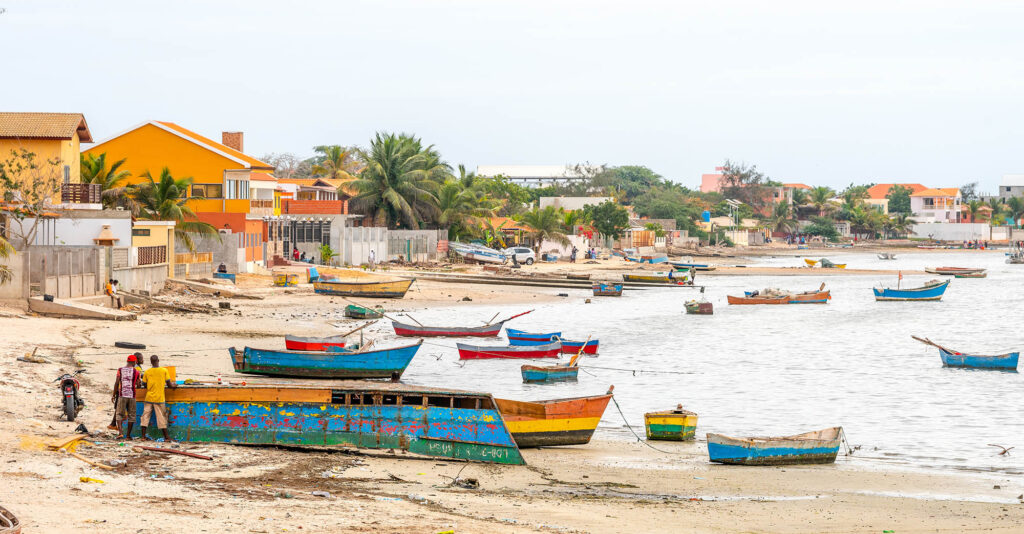
Most of the poorer people living in the colony suffered hardships, whether they were Angolan or Creole. The lure of commercial farming, including sugar cane and cocoa, diamond mining and rubber plantations, spurred the Portuguese into expanding their colony, moving further inland from the coast.
The Portuguese administered areas with plantations and railways and needed workers to carry out complex manual labour. They also introduced taxation of Africans. Forced labour was expected, even during the early 1900s. Life was hard and short for ordinary people.
The colonial authorities used violence and intimidation to conscript people into working on various projects. Plantation workers were rarely paid. Even if they received a wage, it was minimal, inconsistent and often could be spent only at the local plantation shop.
Workers were often beaten, and journalists dubbed it an “economy of terror”, noting the similarities between the slavery of previous years and the forced labour system of the late 19th and early 20th centuries. Angolan Creoles were accepted as full Portuguese citizens over time and were given positions in the colonial administration.

Creole heritage and language in Angola
A complex process of cultural interaction gradually transformed the lives of the people of Angola. Some regions had limited cultural exchange, incorporating only a few Creole words, while others adopted a new language and culture.
Today, Portuguese is the official language of Angola, but 46 other languages, including some Creole and hybrid dialects, are spoken there.
The Angolar Creole language spread across other parts of Africa, including the island of São Tomé, Santa Catarina on the west coast, São João dos Angolares and Ribeira Peixe on the east coast. Today, it is described as a “minority Portuguese-based Creole language” spoken by around 5,000 people.
A Creole language with some Portuguese words, it combines a dialect of Kimbundu, a Bantu language originating in inland Angola, where many of the poorer communities had historically lived. Kikongo ya leta, a Creole language based on Kikongo, is mainly spoken in north Angola.
In the 2014 census, 85% of the urban population spoke Portuguese at home, compared with 49% of rural residents. Many people also speak French, a hybrid language known as Angolan Portuguese.
Recently, there have been calls to develop a cohesive national language policy to preserve Angola’s disappearing languages and associated cultural histories. As well as trying to save indigenous languages, a growing community of enthusiasts is reawakening interest in Creole with various online learning resources.
Creolisation has left its legacy on the architecture of Angola. Frontal porches became common across coastal West Africa, stretching from northern Angola to northern Senegambia during the 18th century. Historians describe “detached kitchens, wrap-around porches and a lack of interior hallways” as Creole.
The architecture developed due to combining European and African building styles. Angola is often described as feeling like a Latin American country rather than an African one. It remained an overseas territory of Portugal until 1975.
Creole music and dance
Kizomba is a popular genre of music and dance originating in Angola in the 20th century. Characterised by a slow, romantic, sensuous rhythm, it emerged as a fusion of various music genres, including Semba, Kilapanga and Merengue, a piece of Creole dance music.
The word “Kizomba” means “party” in the Bantu language. Eduardo Paim, a musician from the Congo, is dubbed the “father of Kizomba music”. He and his band have played a significant role in developing the genre.
Kizomba songs are sung in Portuguese, Creole, or a dialect from Angola’s many Portuguese-speaking African cultures and beyond. Its influence is felt in most Portuguese-speaking African countries where Kizomba clubs have been established. It is danced with a partner smoothly, slowly and sensuously.
Creole food in Angola
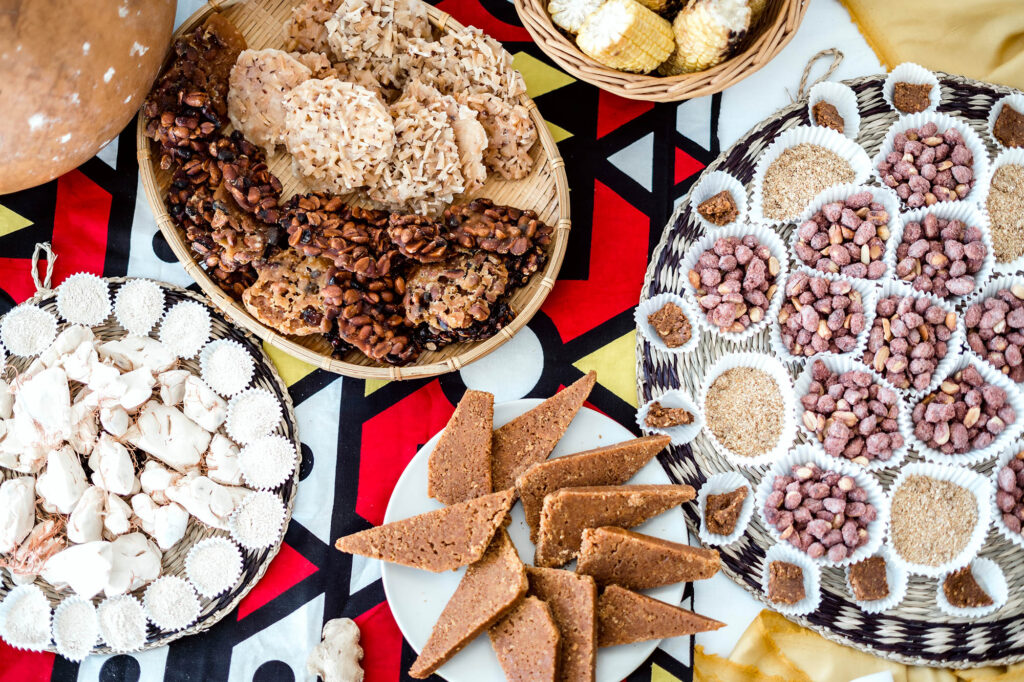
Creole recipes, such as the famous Creole stew, gumbo, have become part of Angolan cuisine. It has become a Portuguese dish known as quingomboname in Angola, derived from the Angolan word quillobo. Numerous Creole restaurants all over Angola serve dishes such as Angola Gumbo Ya-Ya.
Another popular meal, with Angolan and Creole elements, is mufete, made from grilled fish, sweet potato, plantain, cassava and gari. Chicken, marinated in Creole spices and grilled over charcoal, is another African dish. Creole cooking is usually spicy and often uses coconut milk, elements that complement African food perfectly.
How many Creoles live in Angola today?
In a nation with a population of more than 32.8 million, Creoles have developed a strong sense of identity and formed their political parties, influencing the country’s affairs.
Today, Angola’s main Creole population live near the coast, tracing their origins to a mixed cultural heritage, including Brazilian and African ancestors. The Creole influence is vital in the Angolan cities of Luanda and Benguela.
The largest ethnic group in Angola are of Ovimbundu heritage, a Bantu group making up 38% of the total population. The Creole community is part of a demographic of mixed culture groups, making up 13% of the population.
Fall of the Creole Elite in Angola
Sociologists have recently discussed the Euro-African urban community’s decline and the Creole elite’s fall. There is a widespread belief that this section of society is disappearing in Angola. In the 19th century, the Angolan organisation included a sizeable administrative elite of Portuguese-speaking Creole families.
Based mainly in the larger coastal towns, their wealth was derived from their role in the colonial commercial and administrative sectors. Their European-influenced culture and lifestyle set them apart from the main population of land workers and peasants.
The Portuguese needed the support of this Creole elite to retain control over Angola. The Creole bourgeoisie lived in style off the profits of overseas trade, wearing European clothes and enjoying a privileged lifestyle.
However, over time, their economic and social position weakened. Social researchers have blamed an influx of smaller merchants and bureaucrats from Portugal over several decades during the 20th century.
These new generations of traders and administrators desired to hold onto Angola’s commercial and employment opportunities for themselves. This has led to the role of the Angolan Creole elite being “watered down” and their wealth being redistributed.
Although the nation of Angola was born out of turmoil following the Portuguese’s arrival, the Creoles’ heritage must never be lost. As the ancestors of today’s and future generations of Angolan people, they have cemented their place in history and modern-day society.