
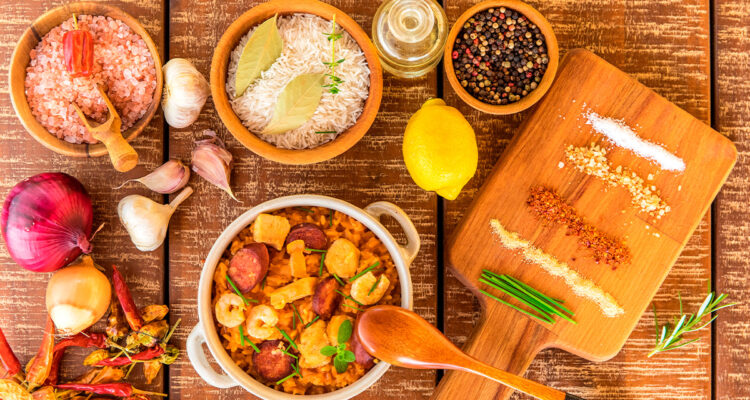
In Creole cooking, ingredients matter more than geography. Fish, onions, garlic, peppers, herbs, and rice appear again and again across kitchens separated by oceans. What changes is not the pantry, but the hand that cooks.
Creole food has never relied on rarity. It is built on what is available, affordable, and familiar. A firm fish that holds together in a pan. Onions form the base of countless dishes. Garlic and chili for warmth. Acid to lift richness. These elements travel easily because they are practical, not precious.
What defines Creole cooking is how ingredients are treated. Fish may be fried, simmered, or grilled, but it is always seasoned with confidence. Sauces are adjusted by taste, not measurement. Substitution is expected, not apologized for. If one ingredient is missing, another takes its place without ceremony.
This approach creates continuity across regions without requiring uniformity. A dish cooked in one place may look different elsewhere, yet the logic remains intact. Balance matters more than exactness. Intention matters more than instruction.
In many Creole kitchens, recipes are learned by observation rather than reading. Knowledge is passed through repetition, memory, and shared meals. Ingredients become a common language, understood instinctively even when names and techniques vary.
When ingredients speak louder than borders, food becomes both adaptable and enduring. It changes shape as it moves, but it does not lose its meaning. That is the quiet strength of Creole cooking: rooted in simplicity, sustained by practice, and always meant to be shared.