
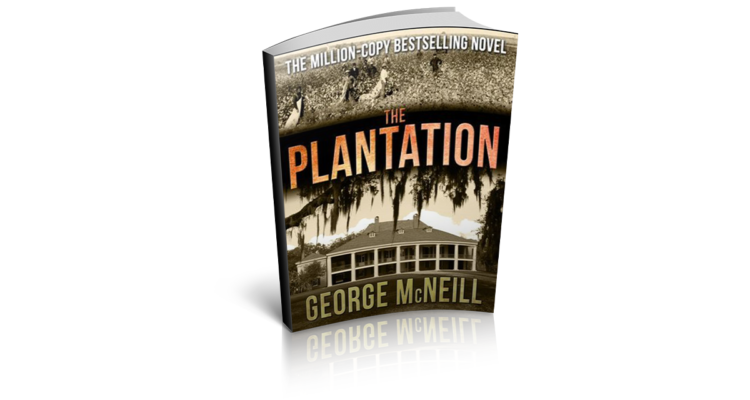
(The Plantation Series Book 1)
By George McNeill
Kindle Edition: 408 pages
Publisher: Crossroad Press (April 23rd 2014)
Language: English
ASIN: B00JW8A31M
About the Author
George McNeill, an author from Mississippi, has had a prolific writing career, authoring over 40 novels. His most famous works include “The Plantation,” which sold a million copies, and its sequel, “Rafaella,” which sold 850,000 copies. McNeill’s literary contributions also include titles like “Night of the Hellebore” and “Mama’s Little Girl.” His novels often delve into historical and social themes, particularly in the context of the American South.
Beyond his novels, McNeill has been recognized for his newspaper columns, which have won awards from West Virginia, Arkansas, and Louisiana press associations. He lived in various places, including New York City, Rome, and Tangier, which might have influenced his diverse writing style and perspectives.
George McNeill’s “The Plantation” is a riveting historical novel that transports readers to the antebellum South, where the echoes of slavery and the complexities of human relationships serve as the backdrop for a haunting and evocative narrative. McNeill’s storytelling prowess shines through as he navigates the turbulent waters of race, power, and the enduring legacy of the plantation era.
Set in the deep South of the 1800s, the novel revolves around the lives of the plantation’s inhabitants, master and slave alike. The story unfolds through multiple perspectives, offering readers a panoramic view of the plantation’s social hierarchy and the intricacies of daily life. McNeill’s vivid descriptions and well-crafted characters make it easy to immerse oneself in this bygone world.
One of the novel’s most compelling aspects is its exploration of the dynamics between the enslaved individuals and their masters. McNeill delves into the complexities of these relationships, revealing the inherent tensions and contradictions of a society built on the institution of slavery. Through his characters, he paints a nuanced picture of both resistance and acquiescence, highlighting the various ways in which individuals navigated the harsh realities of their existence.
“The Plantation” also excels in its portrayal of the physical and emotional landscapes of the South. McNeill’s prose captures the sultry, oppressive atmosphere of the region, immersing readers in the sights, sounds, and sensations of the plantation. This attention to detail adds depth to the storytelling and enhances the overall reading experience.
As the novel unfolds, it becomes clear that “The Plantation” is not merely a historical narrative but a meditation on the enduring consequences of the past. McNeill skillfully weaves the threads of history into a contemporary narrative, demonstrating how the legacy of slavery continues to shape the lives of the characters and their descendants.
While “The Plantation” is a thought-provoking and well-crafted novel, it does contain elements of graphic violence and harsh truths about the brutality of slavery. These aspects may be distressing for some readers but are essential to the novel’s historical accuracy and its exploration of the human condition.
In conclusion, George McNeill’s “The Plantation” is a compelling work of historical fiction that transports readers to a time and place marked by profound social and moral complexities. Through rich character development and vivid storytelling, McNeill delves into the enduring legacy of slavery and its impact on generations of Americans. This novel is a thought-provoking exploration of history and human nature, reminding us that the past is never truly past, and its echoes continue to shape our present and future.