
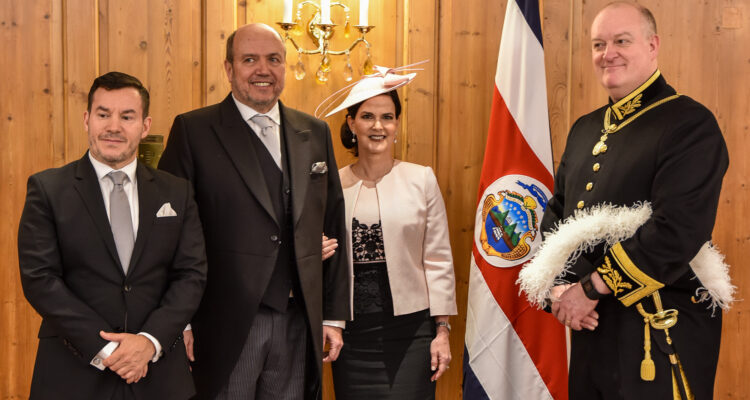
From embassy receptions and cultural celebrations to international partnerships and personal introductions, International Kreol Magazine continues to build bridges across countries, institutions and communities.
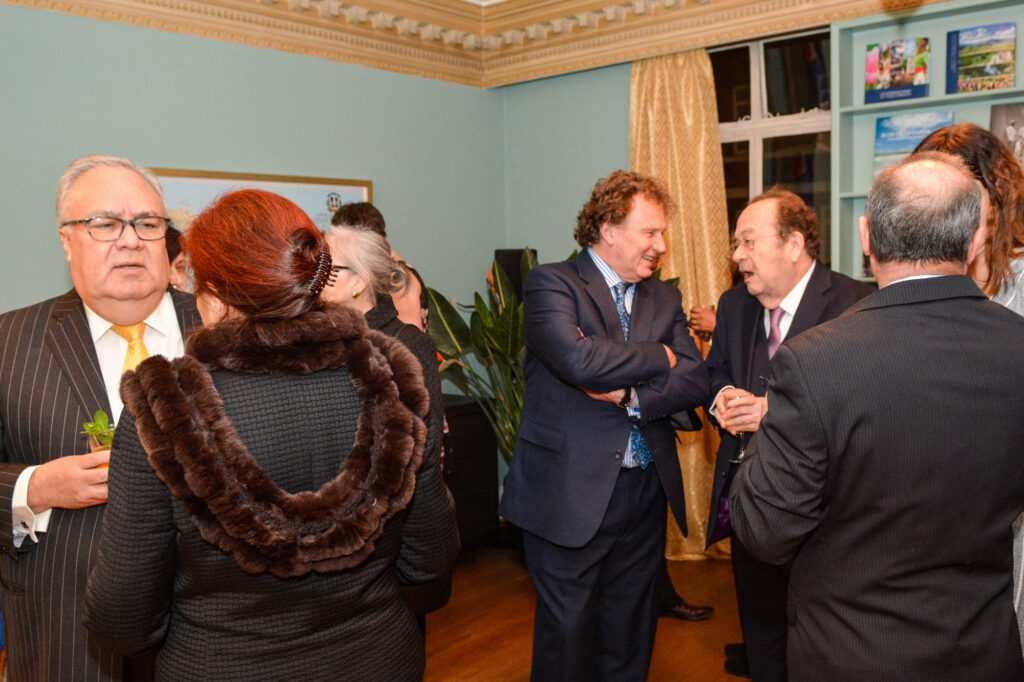
The room is full before the speeches begin. Somewhere near the window, two women exchange greetings in French and then in English, laughing at how naturally the switch happens. A diplomat in national dress stands beside a London gallerist, comparing notes on an exhibition neither has seen yet but both intend to visit. A string quartet tunes quietly in the corner while waiters move through the crowd with trays of small, careful food, the kind designed to be eaten while shaking hands. Flags rest on stands near the entrance, and somewhere among the murmur of a dozen languages, a name is mentioned that will, in six months, become the subject of a magazine feature, an academic partnership, or a friendship that outlasts the evening itself.
This is London on an ordinary week. A capital where diplomacy does not announce itself with fanfare but simply happens, quietly, in reception rooms and gallery foyers and university halls, again and again, until it becomes part of the city’s rhythm.
International Kreol Magazine has spent years working inside rooms like this one. Not observing from the edges, but present, engaged, and increasingly trusted as a publication that understands what happens when cultures meet.
The World meets in London
London has long carried a reputation as one of the world’s great meeting points. Embassies and high commissions line its garden squares. Universities host students from every continent. Cultural institutions programme exhibitions and concerts that draw diplomats, academics, artists and community leaders into the same rooms, often on the same evening. It is a city where a Commonwealth reception might be followed, an hour later, by a gallery opening across town, and where the same faces, though rarely, tend to reappear.
For a magazine built around Kreol identity, this environment is not incidental. It is exactly the kind of setting in which the publication has grown, because the questions London asks of its visitors, where are you from, what brought you here, what do you hope to build, are the same questions that sit at the heart of Kreol culture itself.
International Kreol Magazine has learned to move through this world with purpose. Editorial teams attend receptions not simply to be seen, but to listen. They follow up conversations begun over canapés with proper interviews weeks later. They treat a five minute introduction at a cultural evening as the beginning of a relationship rather than the end of an encounter. Over time, this patient approach has built a reputation. Embassies and cultural bodies have come to know the magazine as a publication that tells stories with care, that checks its facts, and that treats every nation and every community it covers with dignity.
London does not simply host diplomacy. It practises it, quietly, in every room where two cultures are willing to speak to one another.
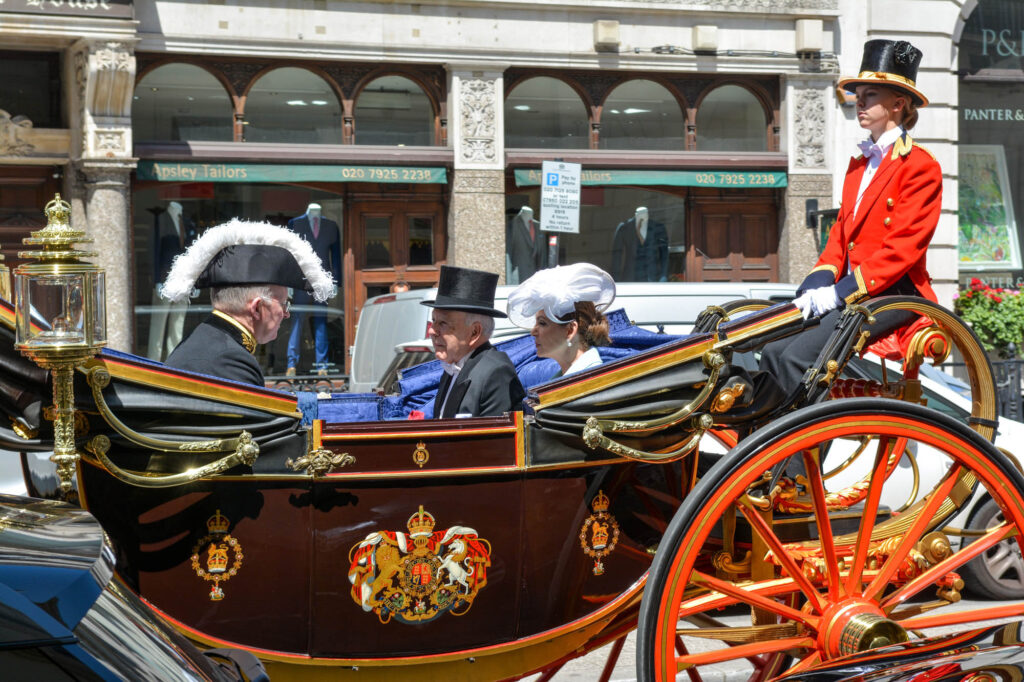
Kreol Identity:
Born from Connection
To understand why International Kreol Magazine feels so at home in this world of embassies and international gatherings, it helps to understand what Kreol identity actually is. It was never a single origin. It was formed at the meeting point of different peoples, languages, faiths and histories, in the Seychelles, in Louisiana, across the Caribbean, and in communities scattered further still. Kreol culture carries within it the memory of encounter. Its music blends rhythms from more than one continent. Its food combines ingredients and techniques that arrived from different shores and were made, over generations, into something new and entirely its own.
A magazine that exists to celebrate this identity cannot be inward looking. It must, by its very nature, be a publication of connection. Every feature about Seychellois heritage, every profile of a Louisiana Creole family, every story about a Caribbean celebration, carries within it the same underlying truth. Kreol identity was built by people who crossed distances, who learned each other’s languages, who found common ground in unfamiliar places. International Kreol Magazine simply continues that work, in print and in person, one relationship at a time.
Editor in Chief and Publisher Georgina Dhillon has often described the magazine’s mission in exactly these terms. Her own roots in the Seychelles, combined with decades spent working across education, culture, publishing and the arts, have positioned her as something rarer than an editor. She has become a connector, a figure who moves comfortably between a diplomatic reception in London, a university partnership meeting, a gallery opening, and a community celebration on the other side of the Atlantic, carrying with her the same instinct for finding what different people and institutions might offer one another.
Beyond the Embassy Doors
It would be easy to imagine diplomacy as something that happens only behind closed doors, in formal rooms with flags and long tables. International Kreol Magazine’s experience tells a different story. Diplomacy, in its truest sense, happens wherever people from different nations choose to understand each other a little better. It happens at a cultural celebration where a high commissioner speaks warmly about their country’s traditions to a room of strangers who leave as something closer to friends. It happens when a university opens its doors to a delegation and, over the course of an afternoon, discovers a shared research interest. It happens at a charitable dinner where two organisations, previously unaware of one another, realise they are working towards the same goal from opposite sides of the world.
Over the years, International Kreol Magazine has been present for exactly these kinds of moments. The magazine’s team has attended diplomatic receptions and national day celebrations, sat down for interviews with government representatives and cultural officials, covered exhibition openings that brought artists and institutions together, and supported charitable and community events that quietly built goodwill between nations. Each of these engagements has added another thread to a growing, informal network, one built not through official channels but through genuine curiosity and consistent presence.
A significant milestone in this journey came in November 2025, when Georgina Dhillon attended the Commonwealth Heads of Government Meeting in Antigua and Barbuda. To stand in a room where leaders and representatives from across the Commonwealth had gathered, and to do so as the editor of a magazine built around Kreol identity, was to witness diplomacy at its most concentrated. It was also a reminder of how far a publication rooted in culture and community storytelling can travel, and how naturally it belongs in such company, because the Commonwealth itself is, in many ways, a family of nations shaped by the same forces of migration, exchange and shared history that shaped Kreol identity.
A magazine does not need a seat at the negotiating table to take part in diplomacy. It needs curiosity, patience, and a genuine respect for every culture it meets.
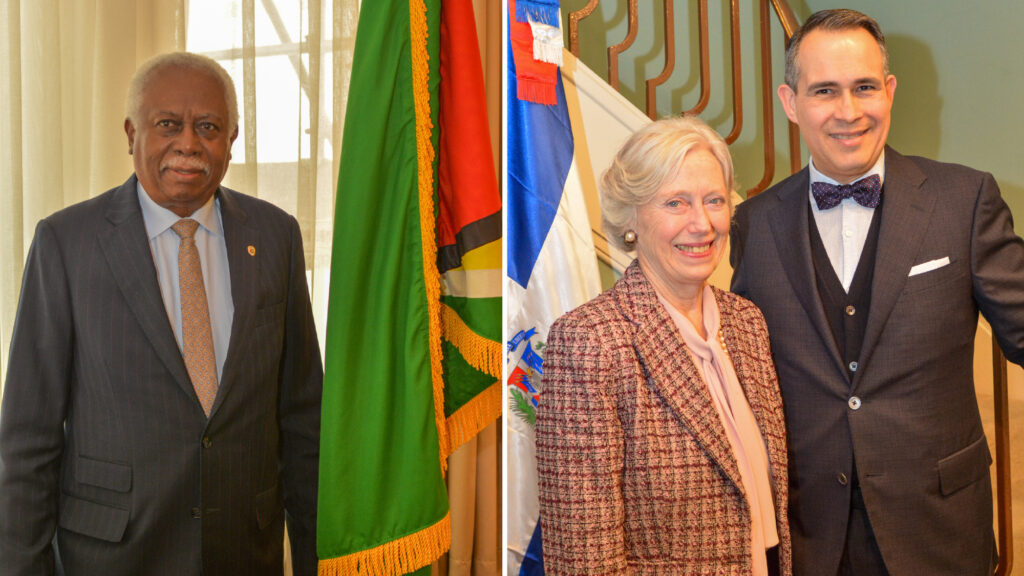
Culture as a Language of Diplomacy
Formal diplomacy relies on negotiation and protocol. Cultural diplomacy relies on something gentler but no less powerful, the willingness of one community to share its story with another and to be received with genuine interest. Food carries this kind of diplomacy in every dish that crosses a border and finds new admirers. Music carries it in every rhythm that travels from one continent to another and is embraced somewhere entirely unfamiliar. Art carries it in every exhibition that draws visitors who arrive as strangers to a culture and leave with a new appreciation for it. Publishing carries it too, in every page that introduces a reader to a place, a people, or a tradition they had never previously encountered.
International Kreol Magazine has always understood itself as a participant in this quieter form of diplomacy. A feature on Seychellois cuisine, read by someone who has never visited the islands, becomes a small act of cultural exchange. A profile of a Louisiana Creole family, encountered by a reader thousands of miles away, becomes an introduction to a history many will never have studied in school. A travel feature on a Caribbean nation, paired with vivid photography and careful research, becomes an invitation rather than merely an article.
This is why the magazine takes such care with the way it presents every country and community it covers. Dignity matters. Accuracy matters. The magazine’s editorial principle, established across years of feature writing, insists that Kreol identity must always be treated as a subject in its own right, never as a footnote to someone else’s story. That same principle extends outward into every cultural relationship the magazine builds. A nation’s traditions are never simplified for convenience. A community’s history is never flattened into a single narrative. This care is, in itself, a form of diplomacy, because respect, consistently shown, is what allows trust to grow between a publication and the institutions it works alongside.
Building Bridges Through Publishing
Publishing has always been, at its best, an act of bridge building. A well told story can carry a reader across an ocean they will never physically cross. A well researched profile can introduce two organisations who had never previously known of each other’s existence. A single magazine feature, shared at the right moment with the right person, can become the opening line of a much longer conversation between institutions.
International Kreol Magazine has seen this happen repeatedly. A feature on a historic institution can lead, months later, to a formal partnership discussion. A profile of a community leader can result in an introduction to a university programme interested in similar work. A travel feature celebrating a nation’s culture can catch the attention of a tourism board or cultural office eager to collaborate further. None of this happens by accident. It happens because the magazine treats every story as more than content. Each feature is understood as a potential doorway, one that might, with the right follow up, lead somewhere entirely unexpected.
This philosophy has shaped collaborations spanning universities, galleries, cultural bodies and community organisations across several continents. A proposed collaboration linking a United States university, International Kreol Magazine and Zari Gallery reflects exactly this approach, an attempt to connect academic research, cultural publishing and the visual arts into a single, mutually beneficial partnership. It is a small example of a much larger pattern, one repeated quietly across the magazine’s history, of stories becoming introductions, and introductions becoming collaborations.
Every feature we publish is a door left open. We never know, when we close an issue, which reader on the other side of the world might walk through it.
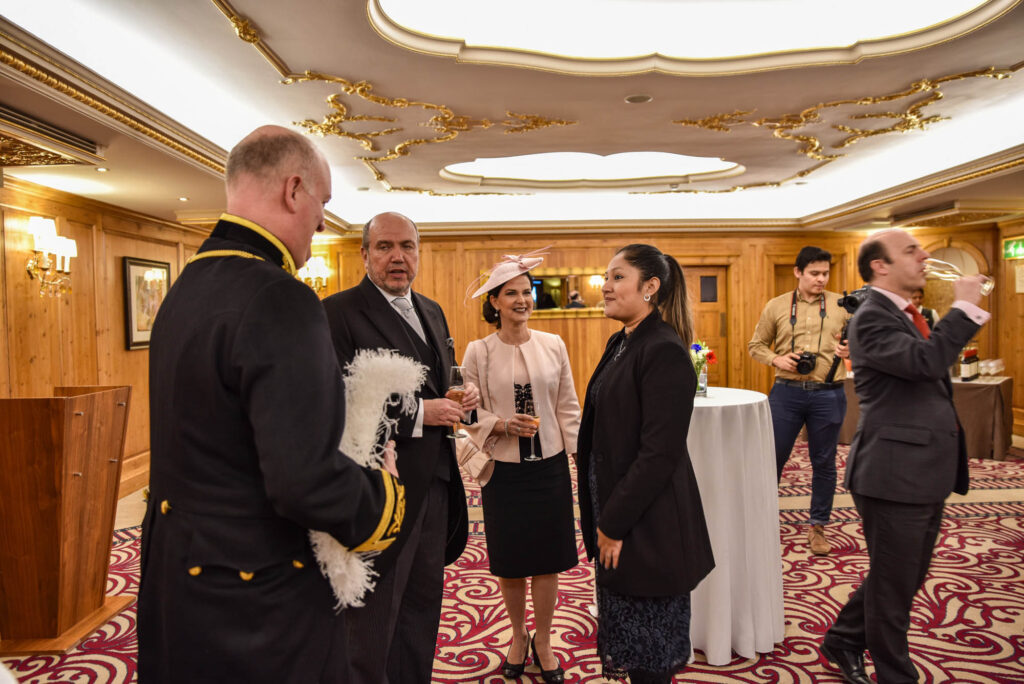
Public Relations with Purpose
There is a tendency to think of public relations as something concerned primarily with visibility, with being photographed at the right event or mentioned in the right circle. International Kreol Magazine’s experience suggests something more substantial. Meaningful public relations work is built on trust, and trust is built slowly, through consistency rather than spectacle.
This means showing up not only for the headline event but for the follow up meeting that comes weeks later. It means remembering a conversation from a reception and returning to it with a genuine proposal rather than a polite formality. It means introducing two people who have never met but clearly should, without expecting anything in return beyond the possibility that something good might come of it. It means supporting partners quietly, sharing their stories accurately, and being present again the following year, and the year after that, so that relationships built at a single event are given the chance to mature into something lasting.
Georgina Dhillon has approached this work with the instincts of someone who understands that diplomacy and publishing rest on the same foundation, the patient cultivation of relationships over time. Her background across education, culture, the arts and community development has given her a wide vocabulary for finding common ground, whether she is speaking with a diplomat about cultural exchange, a university about academic partnership, or a community leader about a shared celebration. This is public relations understood not as performance but as service, the quiet work of making sure that good ideas find the people who can help them grow.
From Introductions to Lasting Partnerships
The most meaningful diplomatic and cultural relationships rarely begin with a formal proposal. They begin with a conversation at a reception, a chance meeting at an exhibition, a mutual friend who says, you two should really speak. International Kreol Magazine has come to see itself as a natural home for exactly this kind of introduction, because its work already brings it into contact with such a wide range of people, diplomats and academics, artists and entrepreneurs, charity leaders and government officials, all of whom share an interest in culture, community and connection.
An introduction made at a diplomatic reception can, with the right care, become an academic partnership. A conversation at a gallery opening can become an artistic exchange between institutions on different continents. A shared interest discovered at a charitable event can grow into a genuine collaboration between organisations that might otherwise never have found one another. What begins as a few minutes of polite conversation can, months or years later, become something with real and lasting value, a scholarship programme, a touring exhibition, a business partnership, a cultural festival, a friendship between communities that endures long after the original introduction is forgotten.
International Kreol Magazine’s role in this process is rarely dramatic. It is patient, attentive, and largely unseen. The magazine listens for common interests. It remembers who is working on what. It makes the quiet suggestion that two parties might benefit from speaking, and then it steps back and allows the relationship to develop in its own time. This is diplomacy practised not through declarations but through small, careful acts of connection, repeated often enough that they eventually add up to something significant.
We are not simply telling people’s stories. We are, quite often, introducing them to each other.
A Magazine Without Borders
International Kreol Magazine has never been content to document international connection from a distance. It has chosen, instead, to participate in it. Every diplomatic reception attended, every cultural celebration covered, every exhibition supported, every introduction quietly made, is evidence of a publication that understands its role extends beyond the page. The magazine exists within a living network of embassies, high commissions, universities, galleries, charities and community organisations, and it treats that network not as a resource to be used but as a community to be nurtured.
This is, in the end, what Kreol identity has always represented. A culture born from connection, sustained by encounter, and strengthened by every new relationship it welcomes. International Kreol Magazine simply continues that tradition in a modern form, carrying it from the reception rooms of London to the classrooms of Louisiana, from the galleries of Seychelles to the Commonwealth gatherings of the Caribbean, building, one conversation at a time, a genuinely borderless publication.
The magazine’s invitation remains open. Embassies and high commissions, universities and cultural organisations, businesses, artists, charities and community leaders are all warmly encouraged to continue sharing their diplomatic, cultural and collaborative stories with International Kreol Magazine. Every conversation begun in a crowded reception room, every quiet introduction made at an exhibition, every partnership still waiting to be discovered, has a place in these pages. The world is smaller than it once was, and International Kreol Magazine intends to keep proving, issue after issue, just how much richer that closeness can make us all.