
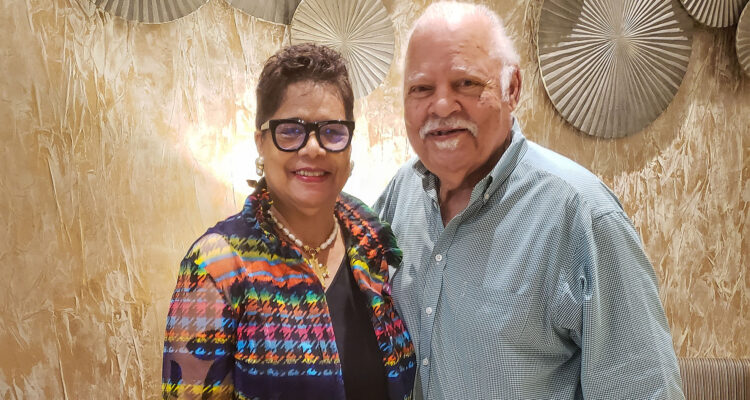
There are families in Lafayette whose names carry more weight than the people who hold them realize, until someone sits down and asks the right questions. Lyle and Phyllis Mouton are one of those families. Their story begins separately, decades apart in childhood but only a few miles apart in geography, in a Lafayette built around oilfield money and Catholic tradition and the quiet machinery of who belonged where.
Lyle’s road runs through a grandfather who survived his own burial money, a father who closed his grocery store every afternoon to fight for women the welfare system had abandoned, and a broken finger that kept him out of a war his classmates did not all come home from. Phyllis’s road runs through a computer science enrollment desk that told her no, and a career spent walking into rooms that had not planned on her arrival and staying until the room adjusted around her.
In 1972, those two roads became one business. Circle M Supply Company opened its doors in an industry built to keep people like them out. It did not.
What follows is not a story about two careers running in parallel. It is a story about inheritance, the kind that is never written down, passed instead through habit and presence and the simple refusal to wait for an invitation. Lyle is in his eighties now. Phyllis is still building. Neither of them has stopped.
Lafayette, Louisiana, sits at the center of Acadiana like a hinge, the place where bayou culture, Creole heritage, Catholic tradition, and oilfield money all press against one another and hold. The city grew up around what came out of the ground, and for decades, the families that serviced that industry built something close to a permanent order: who belonged in certain rooms, who got the contract, whose son would inherit the relationships his father spent a lifetime cultivating. That order was enforced not by law alone but by the far more durable machinery of custom.
Into that world, two children were born in the 1940s, a few miles apart, both Creole, both Catholic, both shaped by the particular south Louisiana inheritance that tells you exactly how far you are allowed to go and leaves it to you to decide whether you believe it. One was a boy who grew up cleaning office floors at night and carrying his disabled brother to church on Sunday mornings. The other was a girl who would be told, to her face, that she could not enroll in the class she had chosen. Both of them ignored what they were told. Both of them are still at it.
The Boy With The Wrong Name
The name itself was an accident.
Lyle Joseph Mouton Sr. was supposed to be Michael. His mother had decided. But her baby sister was visiting from Baton Rouge the day he arrived, and the sister had a boyfriend in medical school named Lyle Suder, and she lobbied hard for the name. Lyle’s mother, twelve pounds into a home delivery with no patience left for negotiation, said, “Name him anything and make it stop.” So, Lyle, it was.
Growing up Creole in Lafayette in the 1940s and 50s, the name was a small daily puzzle. Nobody recognized it, nobody could hold onto it. The only Lyle he ever found was a credit line scrolling at the end of movies: Lyle Wheeler, art director. He would sit in the dark after the crowd had gone and read his name on the screen, because that was the only place he could find it.
When his own son was born, he named him Lyle Jr. without hesitation. Somebody else, he said, is going to have to suffer through this too. That son would eventually play major league baseball. The story behind that goes back further than either of them.
Lyle’s grandfather came into the world by accident. His mother, deciding the rural stretch between Lafayette and Pont Breaux offered her children nothing, left with what money she had, paying a neighbor to bury both her boys when they died. One was already sick. The other, left behind in the rough country they called Coonville, recovered without her knowing. He grew up in the woods, raised himself into a man, and eventually fathered six boys, no girls, all of them raised on the same code: you work, you carry what you are given, you do not stop.
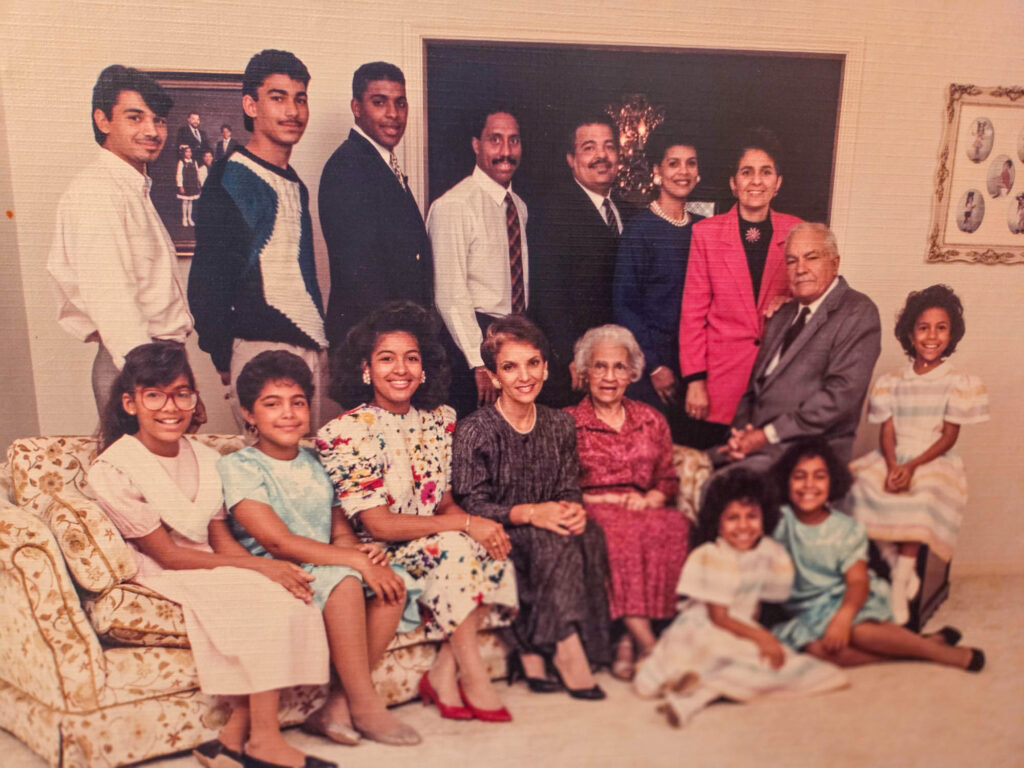
Five of those six sons went to war simultaneously. World War II pulled them in all directions: one to the Army, one to the Air Force, and one to the Navy. Every morning during those years, Lyle’s grandfather walked to church, bought five candles, put money in the collection, and prayed. All five came home.
Lyle’s father, Wallace Mouton, was the oldest of the six and already had a family, so he stayed behind. He ran five or six jobs at once: photography, insurance, American Optical making eyeglasses, and a cleaning operation he ran like a military exercise. He would load his children into the car, drop two at the IRS office and two at the dentist’s, and work the third building himself, rotating through all three in a single evening. The children had a basketball court next to their house, visible from their bedroom windows. They had almost no time to use it.
When his oldest son, Wallace Jr., the boy everyone called Wawa, died of cancer at fourteen, Wallace Sr. built a grocery store in Lafayette’s Truman neighborhood and put Wawa’s name above the door. The store sat in a poverty-stricken area, serving women on welfare and families with no other options. When the welfare office cut a woman off, Wallace closed the store from noon to two every day and drove downtown to lobby for her. You cannot punish children, he would say, for their mother’s misfortunes. The neighborhood knew his door was open for any problem: legal, medical, domestic, or financial. People came, and he found someone who could help.
He also brought the baseball world to Lafayette. His brothers starred on the semi-pro teams he managed and promoted, and he would write game previews for the Daily Advertiser, drumming up crowds for the barnstorming Black players who had nowhere else to go because the major leagues were closed to them. Jackie Robinson came through. Satchel Paige. Roy Campanella. They played at Brahman Stadium, normally a quiet facility, and Wallace had to get on the radio and ask people to stop coming because the stands were full and the buses were still arriving.
He also spotted something in a boy of eleven or twelve who spent his days at the store, picking up the small instruments from the Christmas stock and making them sound like something else entirely. Wallace bought him his first organ and gave him a nickname: Buckwheat. Stanley Dural Jr., later known as Buckwheat Zydeco, one of the defining voices of Louisiana music, got his start at a grocery counter in the Truman neighborhood because Wallace Mouton was paying attention.
Lyle grew up watching all of this. He played baseball in college, caught for the team, and one afternoon in the gymnasium, warming up a football recruit who could throw, the ball hit the floor short, and the bounce broke his finger at an angle it never fully recovered from. He thought his career was over. He was wrong about what it turned out to be.
When Lyle graduated, the Army called. He was in ROTC, hunted regularly, was in excellent physical condition, and expected to go. The last doctor in his physical asked about broken bones. Lyle mentioned the finger. The doctor called in two more physicians. The verdict: your trigger finger must be one hundred percent operable. This one is not. We cannot accept you.
The football recruit who threw that ball was Vida Blue, who went on to become one of the most celebrated pitchers in major league baseball history. A wild short-hop in a gymnasium saved Lyle Mouton’s life. Not all classmates who went to Vietnam came back. Lyle stayed in Lafayette, finished his marketing degree, and started building.
In another part of the same city, a few years later, someone else was being told something she couldn’t do. She was making a similar decision.
The Girl Who Wasn’t Supposed To Make It
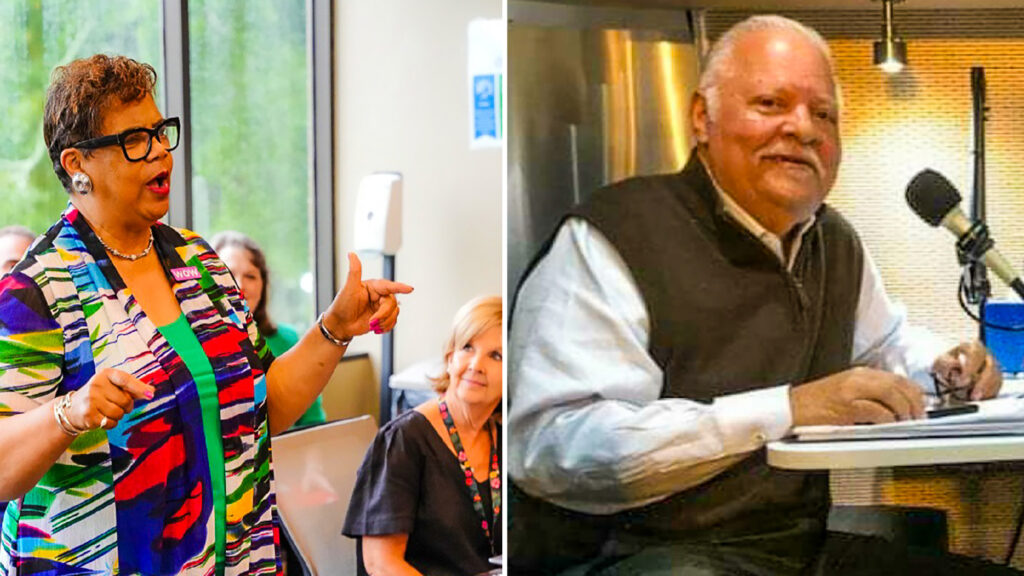
Phyllis Coleman grew up in Lafayette, too, in Catholic schools, Paul Breaux High School, the same Acadiana air. She loved mathematics the way some children love a sport, competitively, almost physically. She grew up in a neighborhood full of boys, and they had a contest most days, informal, no prizes. She won often enough that losing meant something.
When she arrived at the University of Louisiana at Lafayette, she knew what she wanted: computer science. The person she spoke to about enrollment told her no. Her scores, she was informed, suggested she would not make it. The message was delivered as fact, as a service almost, as if they were doing her a favor by explaining the limits. Phyllis Coleman smiled, enrolled anyway, and graduated in the first class, in four years.
She became the first African American computer analyst at Martin Marietta Aerospace in Orlando. She came back to Louisiana. By thirty-five, she was the first African American and the first woman to serve as president of the Lafayette Chamber of Commerce. Two years later, the first African American woman was appointed Secretary of the Louisiana Department of Labor. The first African American woman president of the Rotary Club of Baton Rouge. The first African American interim CEO of the Capital Area United Way. The only woman and the only African American on international economic development trips taken by regional governors on behalf of the state.
She would sit at a table with men who had not expected her, and she would listen, carefully, to everything said and everything not said. She noted who addressed her directly and who spoke past her to someone else. She remembered it. Her mother’s lesson, carried everywhere: it is not what you say, it is how you say it. Phyllis always knew what she was going to say. She spent the meeting deciding.
She watched. She asked questions she already knew the answers to,s to see what people revealed in their answers. She filed the information and later used it.
After eighteen years as Vice President of Workforce and Economic Development at Baton Rouge Community College, Phyllis retired in 2017 and came home to Lafayette. She started looking at the city’s boards, commissions, and civic organizations. She started asking friends on the south side a simple question: “Do you have any Black friends?” This was 2017. The answers were what she expected. She began building something.
On June 14, 2018, she invited eighteen Black women to help organize Women of Wisdom. She told the founding members three things in that first meeting: they needed to become a 501(c)(3), grow, and look around the room. They were all Black women. That was going to have to change.
Her method was as deliberate as anything she had done in corporate life. She began bringing women from different parts of Lafayette to the same events, seating them throughout the room, not clustered, not announced, so that anyone moving through the space would encounter them without quite knowing who had invited whom or how long they had been coming. She watched how people responded. She watched who introduced themselves and who did not. She noted who left early and who stayed to talk.
The last event before the pandemic was March 7, 2020. Six days later, Louisiana closed. When it reopened, Women of Wisdom introduced new requirements: prospective members had to express interest rather than wait to be invited, and they were listened to for potential biases before joining. The organization that emerged was larger and more deliberate than the one that had gone in, with neurosurgeons, attorneys, financial executives, and five women who shared a house in a low-income neighborhood and held, as Phyllis put it, a PhD in their community.
By 2025, it was attending library board meetings and Innocence Project fundraisers, running ACT prep programs at local schools, and stocking care closets with uniforms and toiletries. Twenty-four new members were pinned in January alone. It was not, Phyllis would remind anyone who asked, a talking organization.
Circle M
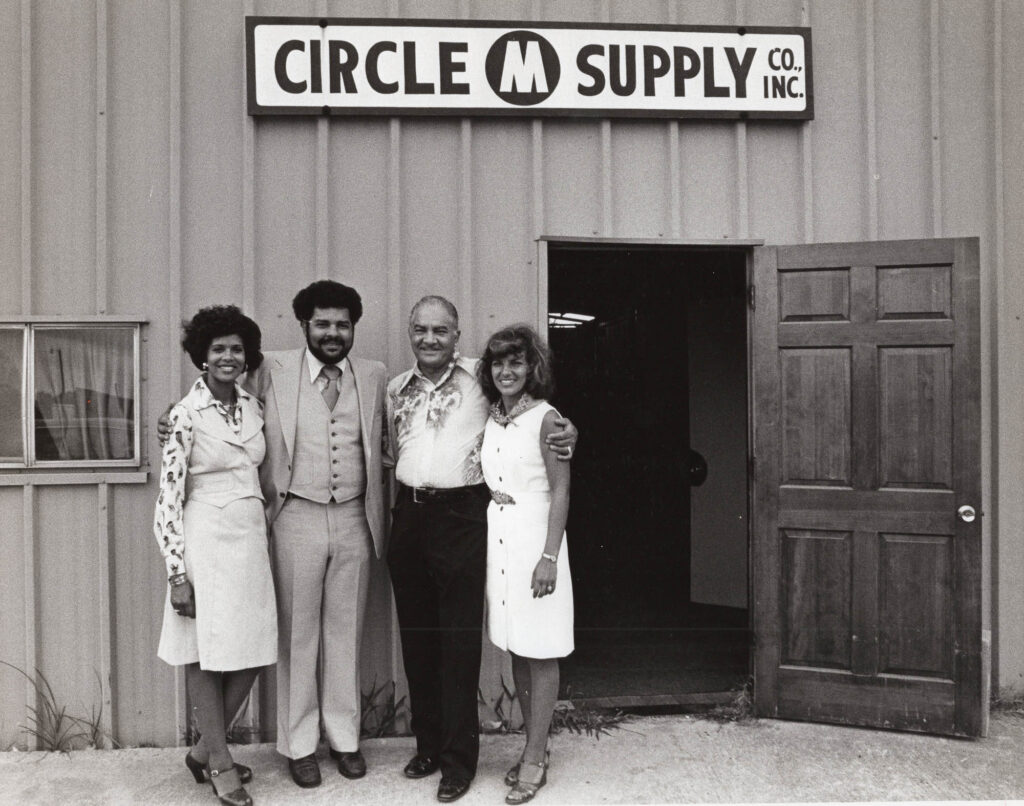
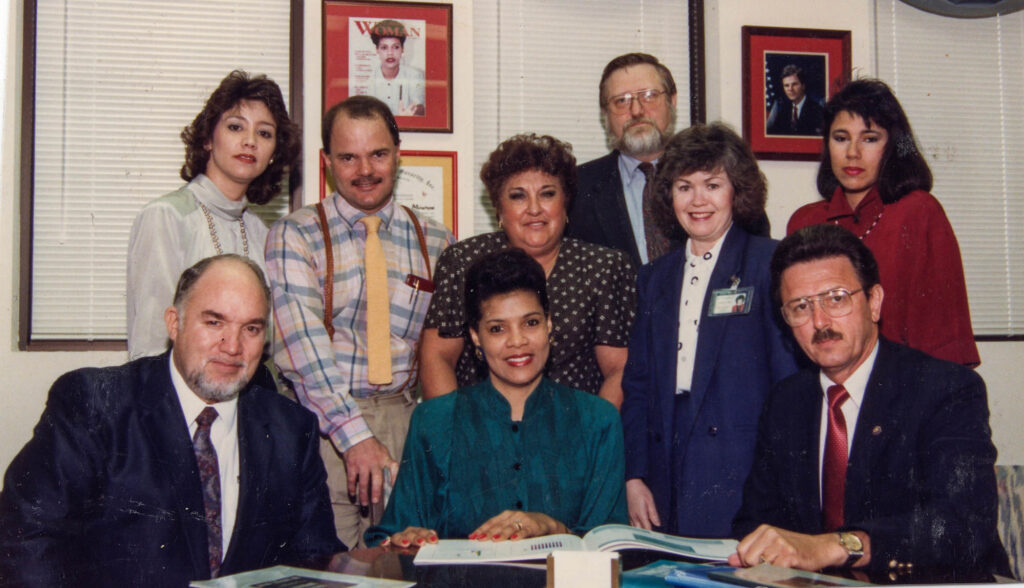
In 1972, Phyllis Coleman and Lyle Mouton opened Circle M Supply Company Inc. in Broussard, Louisiana, an oilfield drilling supply firm in the same industry, the same parishes, the same networks that had spent decades building walls around themselves.
They knew what those walls looked like from the inside. Lyle had grown up watching his father drive downtown to fight for women the system had decided to abandon. Phyllis had spent her career walking into rooms that had not planned on her presence and staying until the room adjusted. They went into oilfield supply not because it was welcoming but because it was where the work was, and because neither of them had ever been stopped by a closed door for long.
The oilfield supply world in south Louisiana in the early 1970s operated on relationship networks that predated most of the people in them. Contracts moved through handshakes at the right clubs. Quotes went to men who looked familiar. Credit required collateral that Black families, locked out of generational wealth for generations, rarely held on equal terms. A Black-owned firm entering that industry did not simply compete against other companies. The structure itself was a competitor.
Phyllis co-owned and ran Circle M. She also, in those same years, was breaking into the Lafayette Chamber of Commerce, the Louisiana Department of Labor, and the Rotary Club. She was operating on multiple fronts simultaneously, doing it quietly, doing it with a precision her mother had taught her: it is not what you say, it is how you say it. The work at Circle M was part of the same argument she was making everywhere else. We are here. We are staying. Adjust.
They have three children together, Lyle Jr., Lynn, and Leah, and seven grandchildren. Lyle Jr., the top high school basketball player in Louisiana, went to LSU, played with Shaquille O’Neal and Chris Jackson, then switched to baseball, won a College World Series championship, and played for several major league teams before retiring. He carried the name all the way to the majors, as his father had promised that someone in the family would.
What Remains
The grocery store Wallace Mouton built and named for his dead son still stands on its corner in the Truman neighborhood, a mile and a half from where Lyle grew up. It was sold in 1988. The building remains. People in that part of Lafayette still know what it was.
The family that a great-grandmother accidentally left alive when she paid a neighbor to bury her sons is still in Lafayette. Five generations now, each one carrying the same things forward in a different form: the code that says you do not stop, the habit of showing up where you are not expected and staying until the room rearranges itself, the understanding that presence is its own argument.
Phyllis Coleman Mouton, who retired in 2017 and has not paused since, runs Women of Wisdom with the same quality of attention she brought to every room that told her she did not belong there. The organization is in its seventh year. It is still adding members, still walking into meetings no one asked it to attend, still stocking school care closets and sitting with the Innocence Project, and asking questions at library board sessions. It does not wait to be invited. It never has.
Lyle Mouton Sr. is in his eighties now. A son who made the major leagues. A wife who became the first of just about everything Lafayette had to offer. A company they built together in an industry that did not want them. A name so unusual that the only place he found it as a child was scrolling past in the dark at the end of a movie.
He named his son Lyle anyway. Not just the name. The whole thing: the code his grandfather lived by, the habit his father practiced every day from noon to two, the particular quality of attention his wife brought into every room that tried to close before she could enter. The instruction was never written down. It did not need to be.
It is still being followed.