
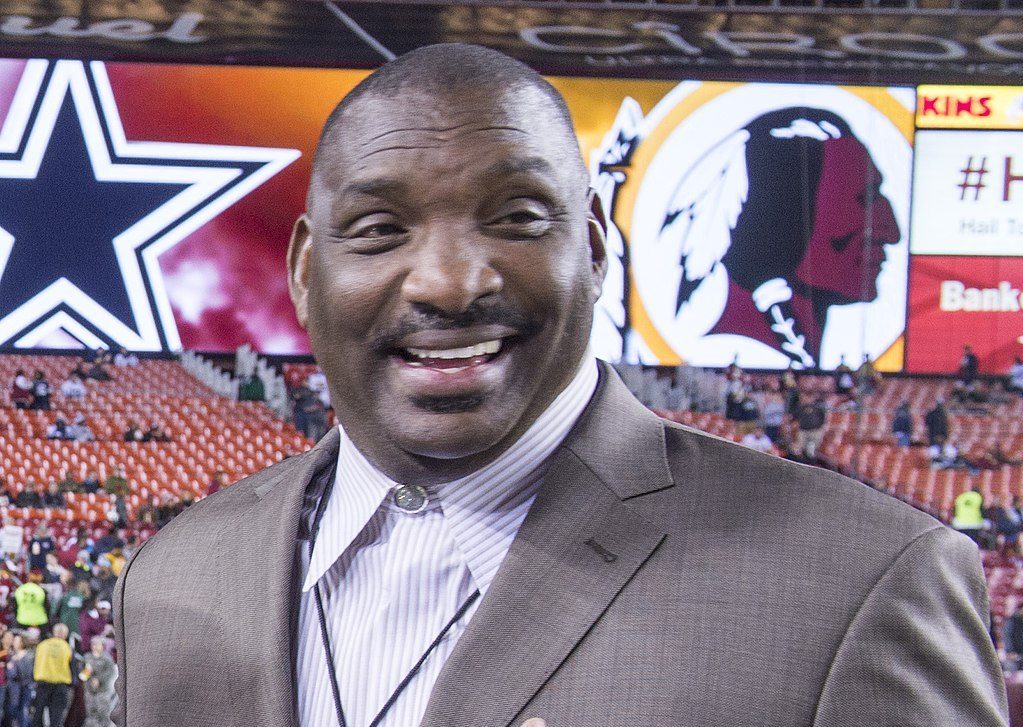
More than 80 million people watched Super Bowl XXII back in 1988. The game saw the Washington Redskins defeat the Denver Broncos at the Jack Murphy Stadium in San Diego, California. History was made that day – in more ways than one.
This is because the clash marked the first time that a black quarterback started in a competing team since the sporting extravaganza first began 21 years earlier. Doug Williams was the man that made history that day when he stormed onto the field along with his teammates.
That in itself was monumental, but Williams seized the opportunity in front of him with both hands – becoming the first African American quarterback to win a Super Bowl and to be named the coveted MVP.
If you want to understand the impact that Williams has had, not just the sport but also the world as a whole, you need look no further than the most recent season of the National Football League. Ahead of the Pro Bowl, four of the six quarterbacks who had advanced were black.
When asked about paving the way for the likes of Lamar Jackson, Patrick Mahomes, Russell Wilson and Deshaun Watson, Williams said during an appearance on Get Up in 2019: “It’s very delightful. When I think back, the adjective that was used for me was ‘black quarterback’. Today we don’t need that adjective. That’s why we’ve come a long way.”
For Williams, it wasn’t all smooth sailing on his way to championship glory. Born in 1955, he was raised during one of the most tense periods for race relations in the history of the United States.
While it’s true that there had been huge advancements for African Americans during this period thanks to the Civil Rights Movement, there was also a huge backlash against black people as segregation and discriminatory laws began to crumble following years of protest.
Williams was born in Zachery, Louisiana. During his childhood it seemed almost impossible that he would one day even be treated as an equal – never mind rise to such triumphs as winning the NFL’s Super Bowl.
Earlier this year, he reflected on some of the unsettling moments of his childhood when he sat down for an interview with ESPN. He said: “I remember stopping at a red light and the KKK was passing out pamphlets in their hoods. That was a scare tactic to black folks, to keep them in their place.”
This, fortunately, didn’t deter Williams. In fact, it was around this time when he took his first steps to making history – albeit unbeknownst to him at the time.
Williams started his journey when he first began to play football at the age of 7. He was the sixth of eight children and it never occurred to him or his family that this sport wouldn’t just help him to open doors, but also to kick down barriers.
There isn’t, of course, any denying talent. As a football player Williams shined during his senior year at Chaneyville High School. He eventually caught the eye of the coaches at Grambling State University, where he started in 1973.
Unfortunately, it wasn’t the best first year for Williams. He was pulled from competition while he honed his skills, watched his grades begin to suffer, and even battled with his father about whether or not he was meant for university life.
Thankfully his big break was on the horizon when the team’s first-string quarterback became injured and Williams was called up to play. It was an opportunity to show exactly what he was capable of and he quickly proved himself to be a man who could overcome adversity and rise through the ranks.
The NFL followed, first with a stint with the Tampa Bay Buccaneers before moving to the Washington Redskins. It would ultimately lead to the career-defining moment in which he’s best remembered for at Super Bowl XXII. During this event Williams clinched victory for his team over the Denver Broncos, passing for 340 yards and scoring four touchdowns to win the game.
Expectedly, it’s a moment that he’s asked about regularly – both by fans and the media. In 2018, he was happy to reflect upon that glorious occasion once again during an interview with the Duluth News Tribune.
He said: “People always say to me, ‘I remember that day’. The moment that stands out for me the most that day was walking off the field as champions. That’s the biggest moment.”
The moment made Williams a champion of football. However, he’s now become much more than that. He’s a leader, a coach and the subject of an upcoming movie biopic. This all comes with great responsibility – and he’s clearly used this wisely since shooting to stardom.
He’s one of the founders of the Shack Harris & Doug Williams Foundation, an organisation that supports economically and physically challenged youth. Since its inception back in 2005, it’s already given out more than $300,000 in financial support.
In addition, he’s also a calm and rational voice for the black community. Most recently, he spoke out against the police brutality that led to the death of George Floyd. He told NBC Washington: “It shows you how important race relations are, because so many came out upon this situation.
“That says a lot about a lot of people in this country, how important changing the culture is in the United States, which is supposed to be the strongest and the biggest. Everyone should look up to the United States and now people are looking down on us.”
It would be all too easy to pigeonhole Williams to just one moment. After all, that one moment saw him blaze a trail for people of colour – as well as other minorities – to achieve beyond what other people believe possible.
While during Super Bowl XXII there were more than 80 million people watching his every move, it’s clear that Williams’ impact stretches far beyond just one single appearance and to this day he still carries a lot of influence.