

“Knowledge didn’t agree with slavery ’Twould make us all too wise.”
How one inspiring woman used poetry, writing and teaching to fight for abolition and suffrage. An orphan from Baltimore, Frances Ellen Watkins Harper became one of the most important black women in history.
In 1825, Frances Harper was born to free black parents in Baltimore, Maryland. At the time, the state was still one dominated by tobacco plantations worked by slaves.
Though her family was middle class and free, this did not necessarily mean protection from the appalling treatment of black people. In Maryland, a fugitive slave law meant that free African Americans, such as Frances and her family, could be arrested and sold into slavery. It was this injustice that inspired her to later write “To the Cleveland Union Savers”, a poem which condemned the law and focused on Sara Lucy Bagby, the last person to be enslaved under the law.
The movement to abolish this law and slavery altogether gained strength from the 1830s to the 1860s, and Frances Ellen Watkins Harper fearlessly championed the cause.
Early life and influences
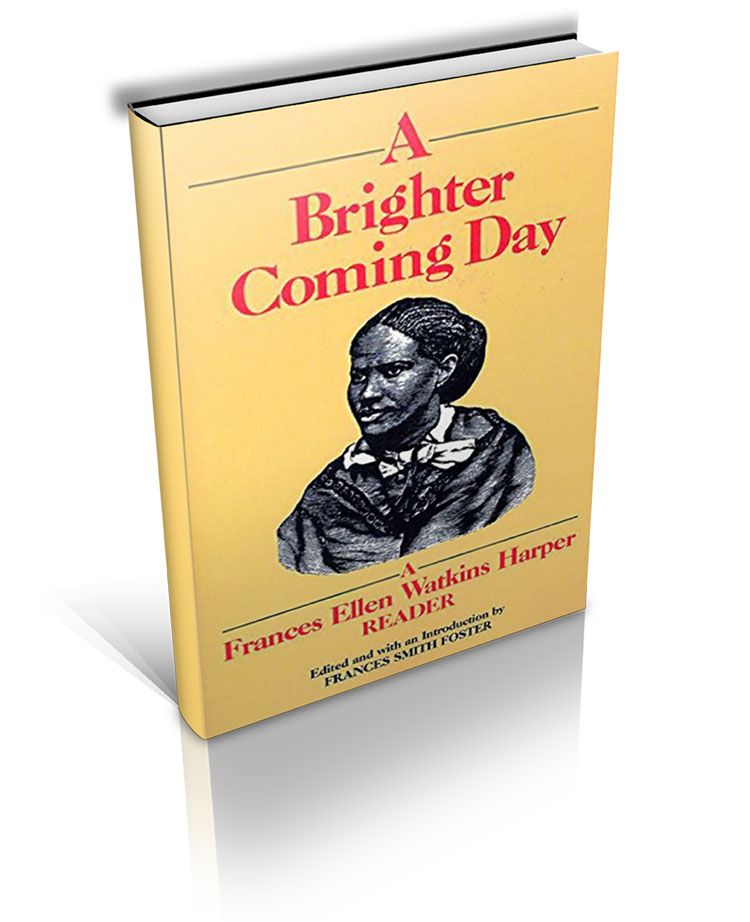
At just three years old, Frances was orphaned, leaving her in the care of her aunt and uncle Henrietta and Reverend William J. Watkins. Her uncle was particularly influential in her early life; as the minister at the local Methodist Episcopal Church and founder of Watkins Academy for Negro Youth where Frances was educated. He laid the groundwork for her religious belief and strong sense of social justice. The stated mission of the school (“ensure that ALL children, especially those in under-served and under-resourced communities, receive the BEST education possible”) exemplifies the qualities Watkins inspired in his niece, emphasising the abolition of slavery and the power of education.
As a young woman, Frances was also heavily influenced by her time living at an Underground Railroad station, a safe house for people escaping slavery and making their journey north to freedom. The painful and inspirational stories she heard as she helped people to freedom had a profound effect on her. When writing to an acquaintance describing her experiences, she said, “upon that grave I pledged myself to the anti-slavery cause.”
The power of knowledge
Though Frances began working at the age of 13, her uncle’s influence on the value of knowledge and education persisted, and, after toiling as a seamstress, she began work for a white family who owned a bookshop. Able to read the wealth of books there in her spare time, she also began to write, publishing some of her works in periodicals such as Frederick Douglass’ Paper. By the astonishingly young age of 20, she published her first collection of poetry, Forest Leaves.
She had already had several pieces printed in anti-slavery journals, her political belief heavily influencing her eloquent and profound writing, but it was not until her second collection of poems, Poems on Miscellaneous Subjects (1854), that she reached commercial success. With themes of Christianity, slavery and women, the collection was so popular that it was reprinted 20 times within her lifetime and established Frances as one of the most well-known poets of the day. In the same year, she gave a public address on the “Education and the Elevation of the Colored Race”, and was able to tour with the Anti-Slavery Society.
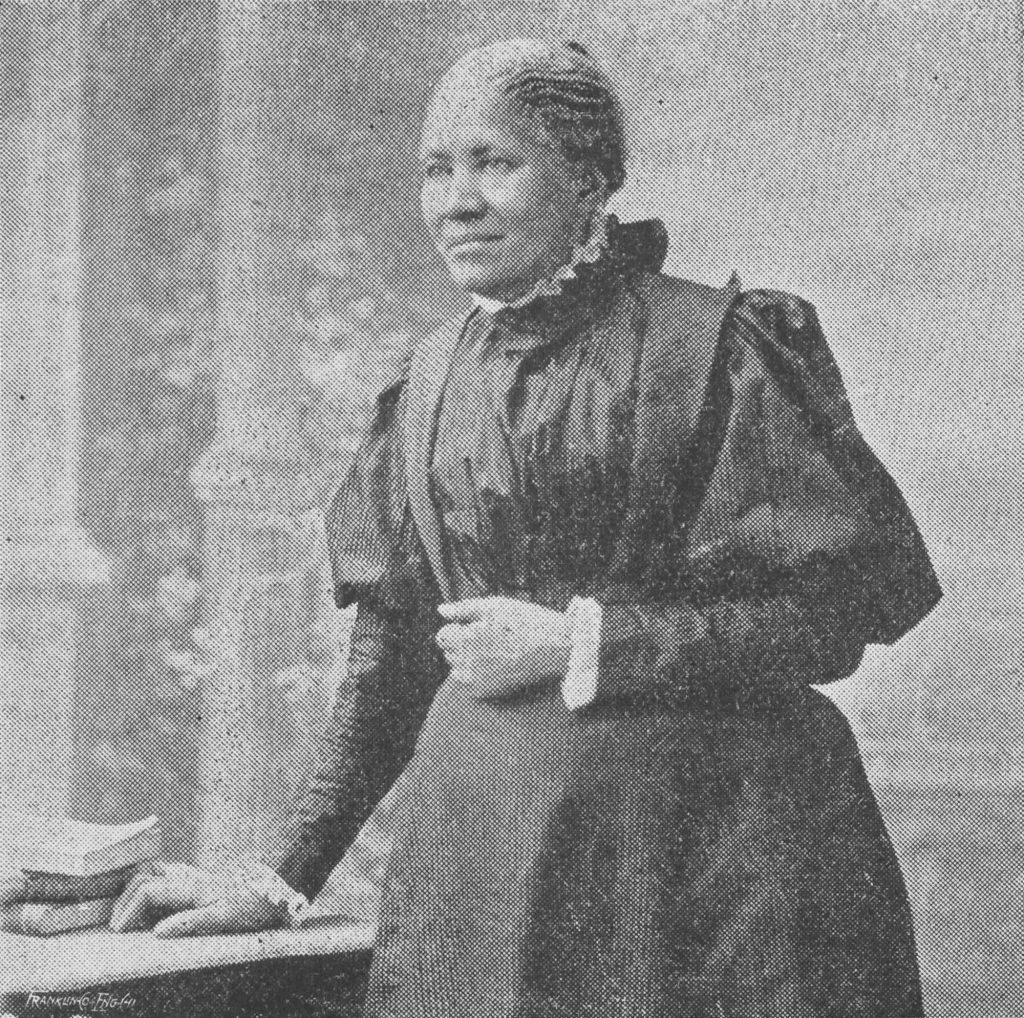
Just two years later, and nearly a hundred years before Rosa Parks, Frances bravely refused to give up her seat in the “colored” section of a segregated trolley in Philadelphia. It was this experience that went on to fuel her campaign for women’s suffrage, highlighting, in particular, the experiences of black women yet also stressing the need for equality for all. In one famous speech on the subject, titled ‘We Are All Bound Up Together’, she said:
“We are all bound up together in one great bundle of humanity, and society cannot trample on the weakest and feeblest of its members without receiving the curse in its own soul.”
Her prolific writing and impassioned speeches established her as a powerful influence in the abolitionist and suffrage movements, and she is often remembered as the mother of African American journalism.
Legacy
At the age of 67, Frances became the first black woman to publish a novel, for her groundbreaking work Iola Leroy, or Shadows Uplifted. It follows the fictionalised account of a free woman, initially unaware of her black heritage, sold into slavery, and is thought to have been inspired by Harriet Jacobs’s 1861 autobiography Incidents in the Life of a Slave Girl. The widely praised novel, as well as her numerous other poetry collections, short stories and speeches, is thought to have gone on to influence major abolitionist and civil rights writings.
In later life, she went on to found the National Association for Colored Women (NACW). She was also a leader at organisations such as the Colored Section of the Philadelphia and Pennsylvania Women’s Christian Temperance Union, the American Women’s Suffrage Association and the American Association of Colored Youth. Taking such roles allowed her to educate and inspire future activists during Reconstruction and paved the way for the continued liberation and civil rights for all.

This intersectional approach stood out among the mostly white progressive reformers of the day or those who campaigned for abolition without suffrage.
That real, direct action which went alongside her writing is probably what made her words so powerful. She died in 1911 at the age of 85, just nine years before women were granted the right to vote.
In perhaps her most famous poem, ‘Bury Me in a Free Land’, she wrote vividly of how she wished to be remembered after her death. The passage is now inscribed on a wall in the Smithsonian’s National Museum of African American History and Culture.
“I ask no monument, proud and high.
To arrest the gaze of the passers-by;
All that my yearning spirit craves.
Is bury me not in a land of slaves.”