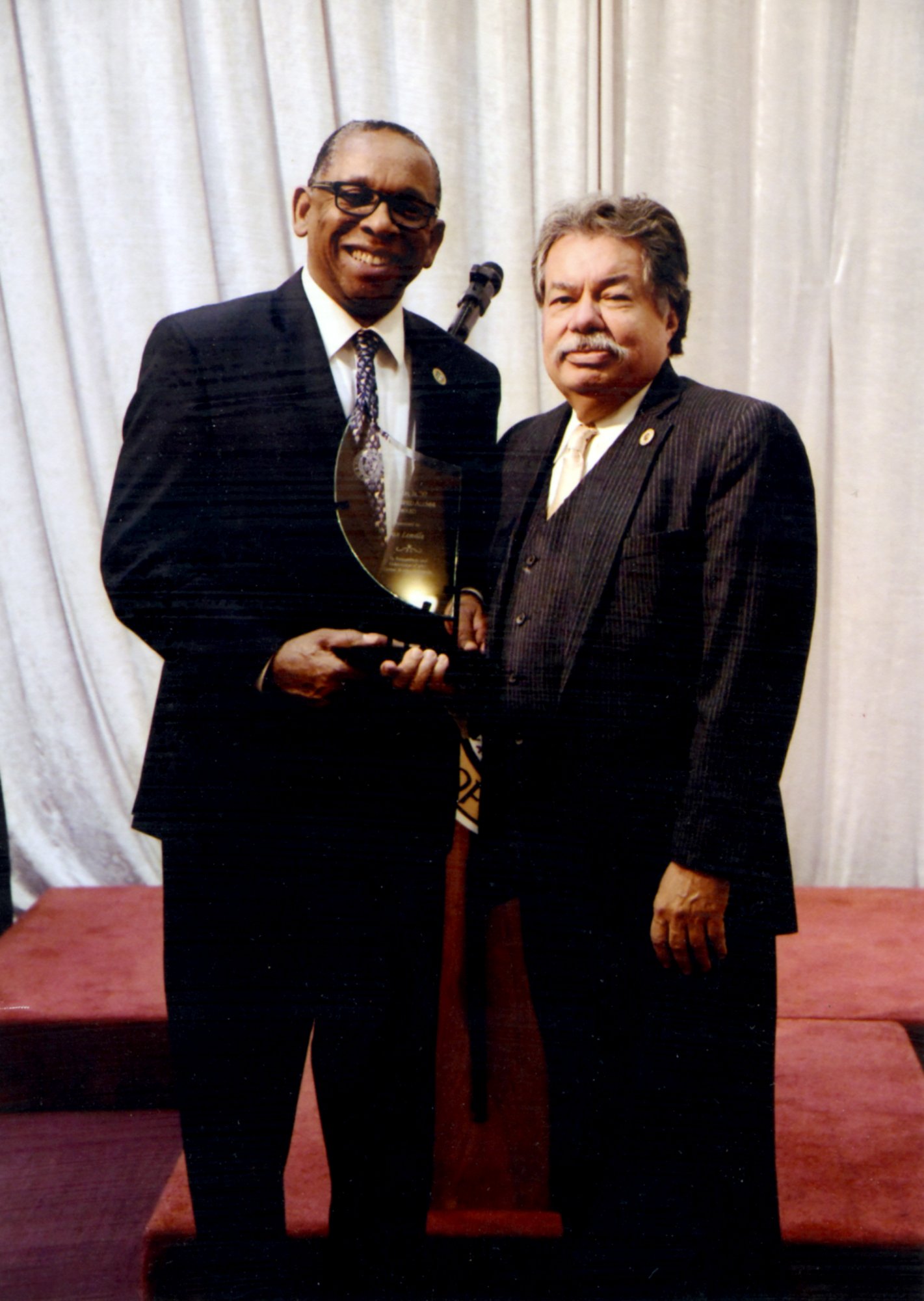
Judge Ivan Lemelle’s career in Louisiana’s judiciary is marked by his unwavering commitment to justice, particularly for marginalized communities. Appointed as a U.S. District Judge in 1998 after nearly four decades of service, Lemelle’s work emphasizes fairness and equity, reflecting his deep-rooted principles. His life story, enriched by a diverse Creole heritage and an upbringing filled with educational and cultural influences, underscores his approachable and compassionate demeanour. Lemelle’s legacy in the legal realm showcases his dedication to creating a just society for all.
It’s not an exaggeration to say that Judge Ivan Lemelle is important in Louisiana’s legal world. This comparison from Shakespeare’s play Julius Caesar is very fitting because it reminds us of two significant figures from history: Colossus of Rhodes, a giant bronze statue of Apollo, which was one of the Seven Wonders of the ancient world, and Caesar, a famous Roman leader known for his success and good leadership.
However, unlike Caesar, Judge Lemelle is certainly no despot, but instead, a kindly, humane and intensely principled man who has devoted his entire working life to seeking justice, often for those from marginalised and disenfranchised communities, and to using the law, and thus any legal powers at his disposal, to create a fairer, more equitable and just society, one in which everyone can benefit and thrive in, no matter their race, religion or class.
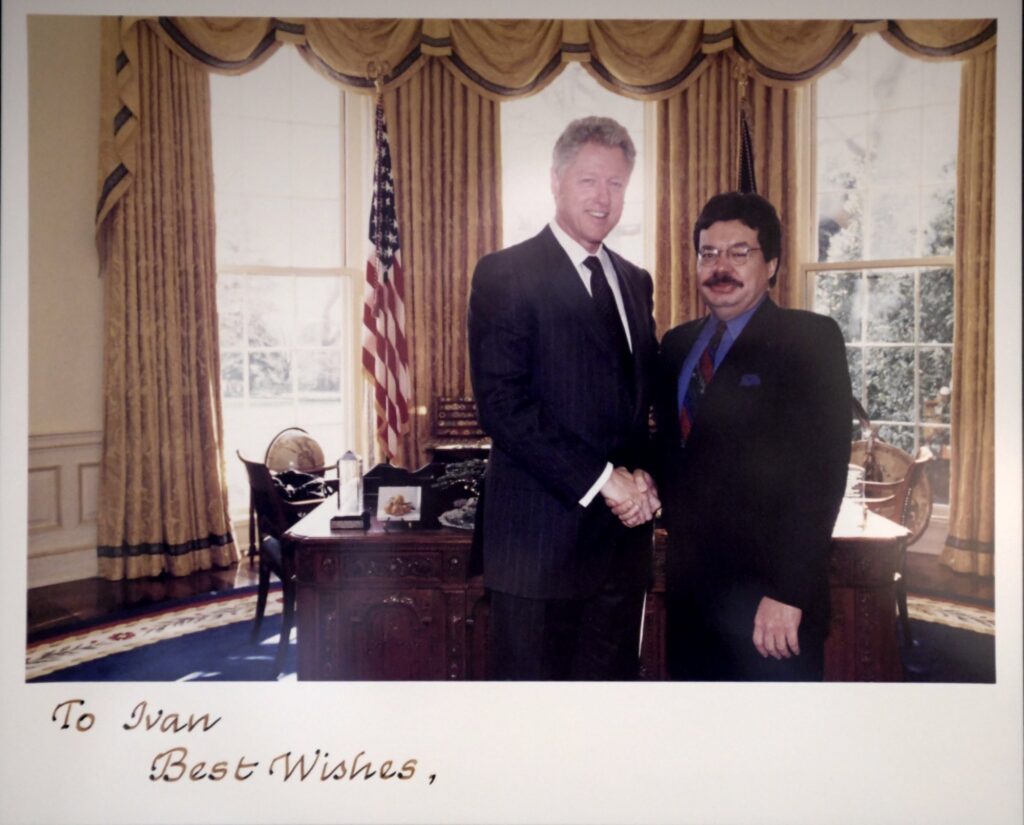
A legal trailblazer and (federal) Magistrate Judge for almost forty years since 1984 and one appointed as a US District Judge by former President Clinton in 1998 (a lifetime appointment), Lemelle assumed Senior Judge status in 2015 and continues to try cases as befits his commanding position at the pinnacle of the judiciary, both at a state and national level.
Judge Lemelle is an imposing figure. His presence commands respect, and his keen legal insight reflects his immense experience. Yet, despite his remarkable career achievements and esteemed position within the judiciary, he remains approachable and down-to-earth. His warm, pleasant demeanour, confident handshake, and calm voice immediately put you at ease, creating an atmosphere of genuine connection.

Parents
Judge Lemelle proudly explains how his parents met and how their union (and, with it, he) came about. “My dad was in the Army in World War II. He came out of the army and went to Xavier University. After being raised by nuns, my mother went to school at St. Mary’s Academy in the French Quarter, graduated from that high school, and then got into Straight Business School and earned her certificate there. She was then one of the early employees of Standard Life Insurance Company, which was probably one of the country’s first African-American-owned and operated insurance companies. My parents met when my dad was still at Xavier and my mum was at St. Mary’s. They eventually married, and about a year and a half later, I was born on June 29th.”
Upbringing
An only child, Judge Lemelle spent the first few years of his life being brought up on his grandparents’ farm between Washington, Louisiana and Opelousas. As he fondly recalls, “Grandma Dolia, other people called her Lee-Lee, but we did not dare call her Lee-Lee as kids. We called her Grandma. She might have only been four feet tall, but she was the strictest disciplinarian of any family member I recall. You did not upset Grandma.”
Both of his parents were educators. His father, Clifford, was one of the first African-American supervisors for the St. Andrew Parish Public School system in Opelousas. His mother was a teacher in the Catholic school and, later, the public school system.
Judge Ivan Lemelle on His Creole Heritage and Identity
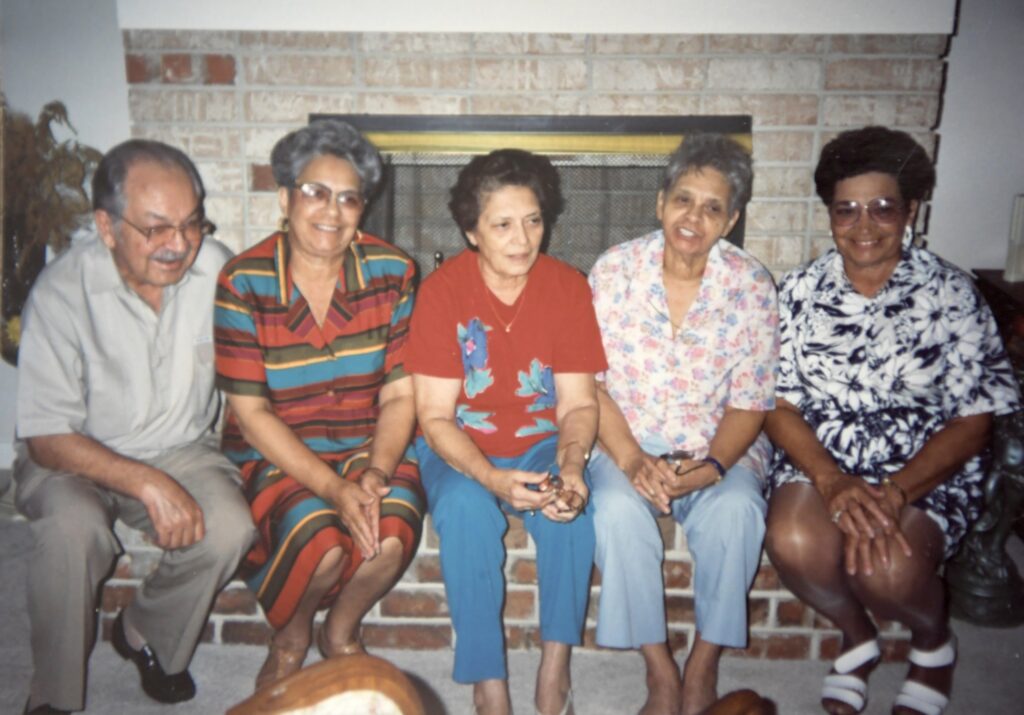
Of strong Creole heritage on both sides, Judge Lemelle’s family history is, perhaps unsurprisingly, a veritable racial and genealogical gumbo, reflecting the plethora of ethnicities and nationalities who have inhabited Louisiana over the last 400 years.
Judge Lemelle has a very diverse family background. His great-grandfather from his mom’s side had African, French, Spanish, and Native American heritage. His grandmother on his dad’s side was Native American, African-American, and Spanish-American. Finally, his grandfather had African-American, Spanish, Italian, and French roots. Judge Lemelle is proud of this mix of different races and cultures, including African, Native American, and European, contributing to his Creole heritage.
Education
Given that both his parents were teachers and Catholic, it was inevitable that Judge Lemelle would be encouraged to excel academically. But, as he states, “They both knew that this only child was going to get more than just a high school education. So I had to go further and beyond that.”
By his own admission, perhaps somewhat surprisingly for someone now an exceedingly eminent and distinguished judge, since we tend to assume that they have always been respectable pillars of society, Judge Lemelle’s behaviour at school was not always beyond reproach. He states with disarming honesty, “I was a terrible kid in school. I had good academic grades throughout, but my conduct wasn’t all that great.”
It is often said that one never forgets a good teacher. Judge Lemelle is undoubtedly no exception. As he recalls with genuine affection, “For the first two years of my education, I was in the public school system at North Elementary. Ms Shirley Charter was my teacher. I’ll never forget that lady because she taught me a lot.”
Then, after finishing the second grade, the Judge’s parents enrolled him in Holy Ghost Elementary School in Opelousas, the only African-American Catholic school in the town, except for one year in his sophomore year of high school, when he attended St. Augustine Seminary in Bay St. Louis, Mississippi.
As he explains, the seminary was instrumental in improving his behaviour. “St. Augustine Seminary settled me down. Before the seminary, I hated doing homework. I got good academic grades, but my conduct grades were terrible.”
In an attempt to rationalise the reasons for his conduct, Judge Lemelle proffers a psychological explanation, “I guess as an only child, I felt rebellious in a way. I thought I was entitled to everything, so my conduct grades weren’t all that great. Maybe that’s why I went to the seminary.”
His year in the seminary was deeply formative and left a tangible impression on his teenage psyche. But, as he explains, “I think what influenced me to go to the seminary more than anything else was that we had a number of my family members who went to the seminary and who eventually became priests, and I liked what they were doing.”
The Judge both enjoyed and benefited from the strict, almost draconian regimentation. “It was like being in the army, almost. You had a regime that you had to adhere to when you had to get up, when you ate, when you studied, when you went to class and when you went to bed.”
This far on, Judge Lemelle is clear about the educational and learning outcomes from his time in the seminary: “As a result of my experiences there, I learned quite quickly that we don’t reach the levels of whatever success people may say we’ve reached without the help of others. I learned that primarily in the seminary.”
Having been there for only one year, the Judge did not return after the summer vacation and subsequently got a call from the head of the seminary, Father Oliver (who eventually became the first Black bishop in Washington DC). As Judge Lemelle recounts it,
“He told me, “I hear you’re not coming back. Do you mind telling me why?” “Father, you probably shouldn’t send seminarians home for the summer.” And he laughed.”
Returning to Holy Ghost in Opelousas in his junior year, the Judge finished high school in 1967 as class salutatorian. Yet, ironically, it still irks him to this day that he was not his class valedictorian.
Xavier University
Judge Lemelle then proceeded to Xavier University for an undergraduate degree in 1967, principally because his father, an aunt and several of his cousins had all gone there. Reflecting on the valuable nature of the experience at Xavier, Lemelle is grateful that he got to encounter differences there.
“As a result of that experience, I met people quite different from those I grew up with in Opelousas. All my years of education, be it in elementary school, high school, the seminary and the public school I attended, were with African-Americans of all hues, tones and colours.”
However, Xavier played a crucial role in developing Lemelle’s growing understanding of the nuanced complexities of racial pigmentocracy and the longstanding discord among black individuals of varying skin shades.
At Xavier, in his early weeks as a dorm student, he felt a discernible “tension for the first time in my life over the differences between our people, based upon our colour, light-skinned blacks like me and darker-skinned blacks.”
He continues, addressing the thorny old chestnut of light-skinned versus dark-skinned privilege, “It wasn’t an animosity per se, but it was like, “Yeah, you always kept us back”, that kind of stuff. I had never experienced that in Opelousas, in the Rainbow Coalition, as I call it, we all were together, family and students, classmates.”
The Judge also met his future wife Patricia, a New Orleanian, at Xavier. Their relationship with his future in-laws was also subtly influenced by the distasteful spectre of pigmentocracy, which effectively governed New Orleans society then.

Passing the Brown Bag Test
He relates, “Back then, light-skinned black people like my wife tended to hang with each other, whereas the darker-skinned black people from the Lower Ninth Ward and parts of Central City hung together in their neighbourhoods.”
Recalling a memorable and highly revealing conversation with his father-in-law Joe Waddell, a “hardworking, dark-skinned black man” who had married a lighter-skinned black woman – a chat gravely illustrative of how important the gradations in pigment would allow for social mobility and elevation in New Orleans society, Lemelle states, “Papa Joe told me one day he said, “Have you ever heard of the Autocrat Club?” I said, “No, what is that?” He said, “That’s a club right down near Clairborne.” He said, “You could probably become a member. You’re light-skinned. You could pass the brown bag test, and you’d be a member. You ought to think about that.”
Change from Accountancy to Law
Surprisingly, Judge Lemelle did not study law at Xavier but had initially intended to be an accountant. As he recalls with a grin, perhaps fleetingly contemplating the path not taken, “I was supposed to be an accountant, as I had a job lined up in my senior year at Xavier before I graduated in 1971. I was going to be an auditor with the United States Department of Labour Headquarters in Washington DC, right by the White House. I just thought, “Oh, this is going to be great. I was amazed at the amount of money they were giving me.”
Then, fortuitously for the legal profession, a conversation with Dr. Francis (the first lay president of Xavier University and the first Black law graduate from Loyola Law School) and Ashton Phelps Jr. (a Political Science professor and Tulane graduate whose family were the owners and publishers of the Times-Picayune newspaper) changed their minds.
That seminal conversation drastically changed the course of Judge Lemelle’s professional life. Recalling the day it occurred as if it were yesterday, so vivid and fresh is the impression in his mind of that defining moment, Lemelle recounts, “Dr Francis came to fourteen of us who were in that Political Science class and said, “You ought to think about law.” And he started rattling off to me reasons why. Finally, he told me, “Your cousin, Trudy Lemelle – she’s the first black female graduate of Loyola Law School. Call your cousin. She’ll tell you about law school and why you should go.”
So the Judge did precisely that. He spoke to his cousin, and with her and Dr Francis’ words still ringing, he duly applied and got accepted into law school. Yet his underlying motivation for changing career paths so abruptly and now wanting to become a lawyer was a profound and passionate desire to help pursue and promote the cause of racial justice. As he explains, “I knew that Dr Francis, for a certain period before he became president of Xavier, was counsel for a law firm – Collins, Douglas, and Elie – that represented CORE (the Congress of Racial Equality), the Freedom Riders and did a lot of Civil Rights work.”
Lemelle recalls Dr Francis’s impactful and decisive words, “This is an era of the Civil Rights struggle where we were starting to see legal gains and Supreme Court decisions, including the federal courts in New Orleans where I sit now. He gave us the example of Judge J. Skelly Wright – one of the first federal judges in the Deep South to desegregate public institutions and transportation – and said, “You see how much of a difference the law can make in society?”
Won over by Dr Francis’ eloquent exhortation and passionate pleas, Judge Lemelle duly proceeded with pride to Loyola Law School, Dr Francis’ alma mater.

Loyola Law School
Lemelle is quick to praise both the quality of the teaching he received at Loyola and the professors’ liberal-minded nature. “I had excellent professors when I went to law school (from 1971 to 1974). I had progressive professors. I had professors who did not look at my race, religion, or gender – professors who really made me feel welcome.”
Dr Francis – effectively Lemelle’s mentor and significant inspiration to join the legal world – is still a figure of prodigious importance for the Judge. He speaks of him with a touching and poignant mixture of the utmost respect and admiration, akin to reverential tones, and always with profound humility and appreciation for Dr Francis’s sacrifices so that subsequent generations of black students could study law.
He readily acknowledges, “I didn’t have the challenges Dr Francis had when attending law school. I think it’s probably because he smoothed the way for us. His intellect, personality, kindness, and love impressed his professors. People say the way you conquer hate is with love.”
As Judge Lemelle recalls, “Dr Francis told us, the mission of Xavier University is to promote diversity, and in doing so, to make this world better, in promoting diversity and peace.” Then, with palpable gratitude, Judge Lemelle adds, “Dr Francis truly made us feel that we can make a difference.”

Career
After doing a summer clerkship after his first year at Loyola Law School with New Orleans Legal Assistance Corporation (NOLAC) (now known as the Southeast Legal Association (SELA) – a non-profit which provided legal services to people who could not ordinarily afford a lawyer, he prevented an old lady from being evicted in a housing law case and thus got a taste for litigation.
Recalling his first-ever case, he humbly says, “I lost it. It was a non-jury trial. I was a young assistant DA. I was sworn into the Louisiana State Bar Association on October 3rd, 1974, in the morning, and I had a trial that afternoon. I was sworn in as the assistant DA that afternoon under Harry Connick. I had this case assigned to me before the Judge. It was the simple battery case of an individual being prosecuted for resisting arrest. I didn’t accept the charges. I was given it to try it when he refused to plead guilty, and the police accused him of creating a disturbance at a football stadium in City Park.”
Despite losing his first case, Judge Lemelle found the experience inordinately valuable and learned much from it. “After that, I said, “I’m going to do a better job at discovering the other side’s case before trial, and after that, I didn’t lose anything in maybe two years as an assistant DA, where I had well over 50 jury trials. Again, better preparation taught me a lot from that first loss because I probably would have dismissed the case if I had known certain things about my client. You learn from those mistakes.”
In 1977, Lemelle worked for the Douglas, Nabonne and Wilkerson (the largest African-American law firm in Louisiana) and served part-time as Assistant City Attorney for New Orleans. From 1980 to 1984, Lemelle was the Assistant Attorney General for the Louisiana Department of Justice. In 1984, Lemelle was appointed a US Magistrate Judge (for the Eastern District of Louisiana), the first African-American magistrate judge in the state and the sixth to have achieved that rank in the country.
From there, Judge Lemelle’s career progressed rapidly and exponentially. As he describes it, “I was promoted rather quickly, and I got to the point where I can decide who’s going to be prosecuted and who’s not going to be prosecuted. So at an early stage, when I’m in the screening process, as we call it, to decide who’s going to be prosecuted or not, I had that decision-making authority given to me.”
He readily admits to his decision to become a federal magistrate judge: “I wasn’t even thinking about being a federal magistrate judge, but one of my law partners who had applied to be a federal magistrate judge was rejected. The founding member of the firm, Judge Collins, who I had clerked for, told me, “This other member of the firm didn’t make it. You ought to apply.” He adds, somewhat portentously, “They told me that we’ve never had an African American federal magistrate judge in the state. And that I’d be the first. They said, “You can make a difference.”
Despite competing against 80 other applicants for the position, he was selected, and on becoming a Federal Magistrate Judge, he finally realised the true import and historical significance of what he had achieved as a black man. “I was the first in the state and only the sixth in the nation, the sixth African-American appointed to the position of a federal magistrate.”

When under consideration to move up from being a trial judge to a District Judge, Lemelle’s affirmance rate (the number of times where they agreed with his verdicts) was approaching 99%. He then quips self-deprecatingly, “which is, I’m told, pretty good.”
When asked if his decision-making as a Judge has ever been influenced by emotions (as opposed to reason and legal propriety), the fundamental decency in his voice is audible as he says, “I made a decision where I wanted to give every displaced citizen in the aftermath of Hurricane Katrina the opportunity to vote wherever they were, like in Texas, Mississippi, New York, California. That was my personal feeling, but the Voting Rights Act and the cases interpreting the Voting Rights Act talked about a reasonable process. It doesn’t have to be a perfect process, a reasonable process. I was convinced that my personal desire in that regard was for a perfect process.”
On his various promotions up the judicial ladder, the Judge says, “The Article III position where I’m now as a federal district judge was the most challenging. Don’t let any federal judge tell you they were selected solely based on merit. That has a lot to do with it, but it’s also based upon (nepotism) – a friend of theirs who knew a US Senator, the President or White House council.”
The Judge then uses a morbid and painful but telling metaphor to describe the selection process he underwent. “One of my classmates in law school, who also became a federal judge, said, “Going through that process was like going through a living autopsy. You didn’t know who was cutting on you. You’re just lying there. You can do nothing about it.”
The Judge continues, “You had no election date ahead of you. You didn’t know when they would be finished with this autopsy and whether or not you would survive it, and he was right. That process is nerve-wracking.”

A Judge’s Caseload
Judge Lemelle’s answer is informative when asked about the division of his time. Explaining with revealing clarity about the inner workings of the judiciary and the minutiae of a Judge’s caseload, he says, “90% of my docket is civil, such as Civil Rights cases, employment discrimination cases, constitutional law cases. We don’t get as many voting rights cases now because it’s hampered now by Supreme Court decisions that restrict the discretion that I used to have. On the other hand, 10% is criminal, and the criminal docket is probably the most difficult when sentencing people. To my knowledge, I don’t think any federal judge likes that part of the obligation and duty.”

Prisons
The conversation then turns to prisons and those who are incarcerated. As Judge Lemelle expresses with notable compassion, “I’ve visited prisons before, and even the prisons in the federal system that are supposed to be the nicest, the cleanest and well-staffed ones, I wouldn’t want to stay there overnight.”
He continues, emphasising the strong correlation he has observed over the years between those who are detained in the penal system and a lack of education. He states forcefully, “80% of the people that we are putting in prison are there because of a lack of education.” He then goes further, expounding his point to fully bring home the severity of the stark statistic, “Think about that, over 80%. I don’t recall any who did (have an education), except white-collar criminals stealing money. But for the drug offenders, the violent offenders, the big dealers, the murderers, 80% are not educated.” He rightly concludes with sadness and world-weariness, “We’ve lost a generation of kids because kids are raising them.”
The Most Enjoyable Part of Being a Judge
When asked what the most enjoyable part of his job as a judge is, Lemelle’s altruistic motivation and disposition are evident by the speed of his response, without the need to dwell or contemplate at length.
“Helping people. When you give people hope, it’s very satisfying. I consider myself almost like a fireman – I’m always putting out fires and trying to put them out before they even become fire. That’s the most satisfying thing, giving people hope, even people you eventually rule against who could say that at least they got an opportunity to be heard.”

Activism Today
Judge Lemelle then addresses the nature of today’s political, social and racial activism. He perceives it – and human behaviour in general – as fundamentally reactionary. “It’s sporadic. When something like the George Floyd incident occurs, people come together to react.” He adds, “Humanity has always been reactionary instead of proactive. We get comfortable in our zones.”
He addresses society’s inclination to effectively pass the buck and their fundamental reticence to act, “We don’t want to speak out sometimes because we all say, “Oh, it’s not my problem. It’s my neighbour’s.” Well, my neighbour’s problem is my problem. We’ve got to start thinking like that again.”
Then, with an abundance of peerless wisdom and palpable Humanity, he adds, invoking the words of a famous 1967 song and Civil Rights and feminist anthem, “Remember, Aretha Franklin always talked about respect, “R-E-S-P-E-C-T” – to respect each other more and respect our differences. That doesn’t mean we’re going to always agree with each other, but at least we must be able to respect our differences.”

Challenges Faced on his Career Journey
Judge Lemelle has indubitably faced many challenges, not to mention “micro-aggressions” on his trail-blazing legal journey to becoming one of the highest judges in the state and country, including hearing colleagues indiscriminately use the vilest and most emotive of racial slurs in the work place.
Race
For Judge Lemelle, race in America is still the biggest, most ubiquitous and most pressing problem that society has to face. “To me, in America today and worldwide, race is the number one problem we still face. The racial tensions caused by not understanding each other or our willingness to understand each other create the divisions between us.”
Adding an intelligent, important, and necessary caveat, he states, “Look, when I talk about racism, I’m talking about racism across the board, not just black versus white, or brown versus whatever, but even within our own groups and communities.”
Reflecting back on the Obama years, the Judge articulates the initial sense of optimism felt by many at the election of the first black president. “When President Obama was elected president, we had a real sense that things are going to get better now in terms of racial issues. Yet sadly, I think that the reaction to that by not just Black people, who perhaps overestimated the impact of that, but also by the other folks who saw that success by this African-American as something threatening to them.”
Lemelle is at least partially optimistic about the future of race relations in America and also more globally. As he says,“Eventually that wall between the races will be eliminated, but maybe not in my lifetime.” He adds, with profound humanistic concern, “Until we understand and respect the humanity of everybody, no matter what their race, gender or religion might be, we are going to be self-defeating.”

Why Diversity Matters
Throughout his remarkable almost half century of dedicated legal service, Judge Lemelle has always sought to promote diversity and inclusion, especially for hitherto marginalised groups, and has actively supported educational mentoring programmes in his field, be it for young attorneys, legal clerks and even new judges.
When asked why the concept of diversity is so important, be it in the judiciary or in business or commercial spheres, Judge Lemelle posits the following explanation:
“Diversity matters because, to me, when you have people coming in with diverse opinions about things, you educate each other.”
He adds, almost with a slight incredulity, “I learned more about white people in law school than at any other time prior. Now, why did it take me until I went to law school to learn about white people? Well, it’s because of the way things were set up back then – and even to some extent, now still are.”
The Judge then asks an inadvertently provocative or contentious question, “Why do we have a majority Black public institution of higher learning like Southern University and a majority white public institution like LSU? Why don’t we merge the two?”
Obviously fully cognisant of the history of egregious racial discrimination in Louisiana, which directly led to the creation of Southern University in the first place, he states, “I know why Southern was created. It was created to give us a chance to have an education.” But he adds, somewhat ruefully and nevertheless optimistically, “I think there’s something to be gained by bringing people together.”

Furthering Female Advancement
In addition to achieving racial equality, helping to further the cause of female equality in the workplace is another cause very close to Judge Lemelle’s heart. As he says with conviction and passion, “I think every aspect of our society – whether it’s sport, intellectual discussions, schools, clubs or professions – needs to be more egalitarian and inclusive of women.”
He adds sagely, giving an apposite example from New Orleans’ carnival history, “I remember when the Rex organisation (the carnival crew) would not allow black people in it. In part, that may be a reason why Zulu (the black carnival crew) was formed. But even among Zulu and Rex that now admit members of different races, guess who cannot be a member of either crew? Women.”
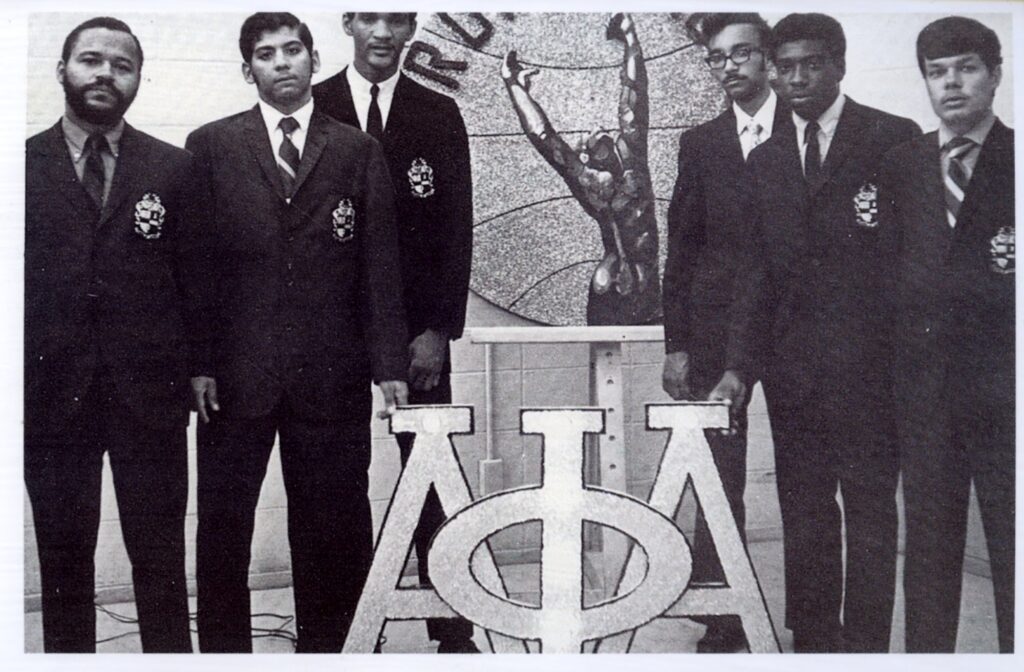
He proffers another example, again one close to home. “My own fraternities, Alpha Phi Alpha and Sigma Pi Phi, both majority Black, but with some white members in each, have no women.”
Judge Lemelle is thus conscious that, despite the best intentions and possessing the correct, forward-looking mindset regarding female equality in the workplace, perhaps his membership of some all-male institutions and clubs does not make him one of the good guys after all. As he relates, “I was just invited to be on the Good Guys Panel of the National Women Lawyers Bar Associations organisation because they said that I’m one of those guys who promote gender diversity.” I said, “Okay, and what am I supposed to talk about?” They said, “Just talk about what you’ve seen regarding gender discrimination.” I said, “I may be part of it. You do realise I’m a part of organisations that don’t let women in it, right? Am I a good guy?”

Three Wishes
Regarding the proverbial three wishes he would like were he granted them, Judge Lemelle speaks slowly and deliberately, with clarity, insight and force, as befits someone who knows what it takes to make a better, fairer and more just world.
“The first one is I wish that we could eliminate racism, and the second one, which I think is related to it, is a wish that we would have a society that had no violence. I think a lot of our violence stems from lack of education, environment and accessibility to things that should be more restricted, like guns and weapons.”
Speaking candidly of his formative years and development, he says, “Luckily, I had a good education, and I had a good environment, so it didn’t affect me looking at violent cartoons and Bugs Bunny being shot at by Elmer Fudd, but I do think that it has an influence. If you don’t have an education and if you don’t have a good environment, and you’re exposed to that thing all the time, it is, I think, a factor.”
Lamenting the recent technological advancements in society, which have the potential to turn young people into myopic enslaved people to their phones, laptops and devices, he says passionately, “These mobile devices that we have. The internet, with its access to information. It has a lot of good things to it, but it also has some negative things to it.”
“The third wish should have been my first wish because I want my kids and my grandkids to grow up in a society that has the elimination of those first two things.”
When asked if he thinks these three wishes will ever come to pass, he is philosophical, pragmatic and realistic, and yet also quietly optimistic for the future.“Not in our lifetimes. It’s a utopian thought, but at least some things could mitigate and minimise racism and violence. Unfortunately, I think that we’re heading down a path where bigotry and distrust – which are most of the time based upon racist attitudes, seem to be taking hold in this country, and that’s frightening. But I still have hope, and I still hope I give people hope.”
With a humanistic impulse worthy of luminaries like Montaigne, Martin Luther King or Camus, Judge Lemelle adds, “As Thurgood Marshall said, “If you don’t address it, who else will?” So we’ve got to promote things that respect Humanity.”
Family
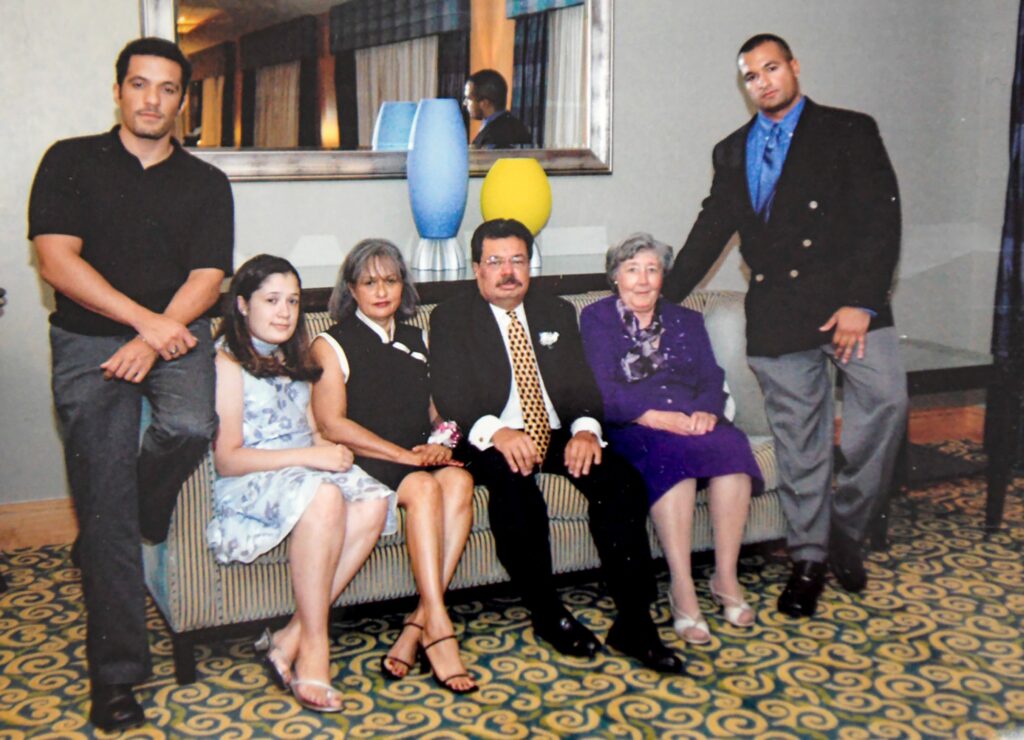
Judge Ivan Lemelle cherishes his close-knit family. He is married to Patricia Lemelle, a retired public-school educator. They have two accomplished sons, Christopher Lemelle, MD, and Marc Lemelle, Pharm. D., as well as a daughter, Tricia Lemelle, MD. His daughters-in-law, Marcia Williams Lemelle (wife of Marc), who serves as Comptroller at the Louisiana Division of Administration, and Christina Milkowski Lemelle (wife of Christopher), an Investment Counselor and Broker, are integral parts of his life. Judge Lemelle is a proud grandfather to two delightful granddaughters, Madison Grace Lemelle and Mariah Elizabeth Lemelle. The family is completed by their beloved dogs, Max the Yorkie and Peppa the Shih Tzu.

Conclusion
After a sparkling career spanning almost fifty years, Judge Lemelle is indeed “full of wise saws and modern instances” and, like Shakespeare’s justice, uses his experience of life and the knowledge he has gained to offer wise counsel, sound advice and good decisions for society to function fairly, as well as the uplift and betterment of his fellow man.
With an abundance of wisdom, trenchant insights into human nature and reservoirs of compassion, Judge Lemelle has famously delivered some truly inspirational bon mots and aphorisms, advice which is fitting to repeat here, given how positively poetic and Shakespearean they are in their power to elevate and enlighten. “Consult not your fears but your hopes and dreams. Think not about your frustrations but about your unfulfilled potential. Concern yourself not with what you tried and failed in, but with what is still possible for you to do.”
The American justice system – not to mention the law-abiding people of Louisiana – must be exceedingly glad that Judge Lemelle heeded Dr Francis’ exhortation to become a lawyer and turned his back on becoming an accountant. But, equally, miscreants and those who abuse the law for their gain or misuse it to disenfranchise others, both in Louisiana and across the nation, must be rueing that auspicious day. The rest, as they say, is (legal) history.