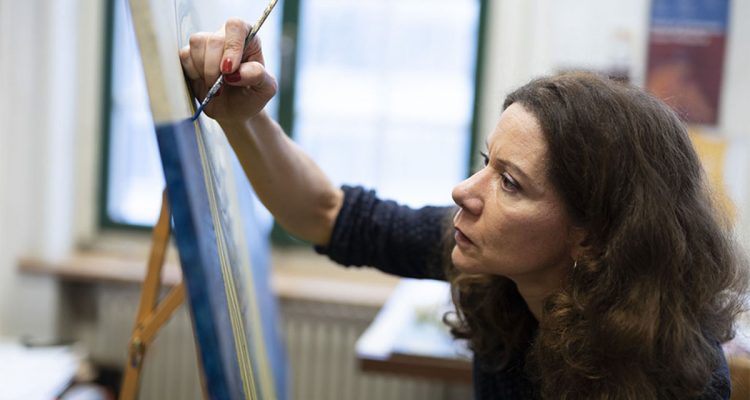
Susan Mézquita is a visual artist. You might ask: what does this entail exactly? It is, of course, about much more than just making art, exhibiting it to the public and selling it to those who most admire it. While on the surface this is how Mézquita makes her living, she’ll be the first to tell you that there’s so much more going on below the surface.
She explains: “Artists have the role of awakening, arousing, attracting attention, shaking, irritating, provoking, but, above all, communicating.”
This isn’t something that she’s come to understand overnight. Instead, this is the realisation that comes from having lived a life that’s been fused with art almost every step of the way. In fact, it’s her relationship with art that best teaches us about the ways in which she sees her heritage, her class and indeed her family.
Take, for instance, her supportive mother. She enrolled a young Mézquita in painting and piano lessons at the Elementary School of Music – in the process of nurturing a passion that would one day make her daughter such a reputable name in the art world.
“Education was the one thing my mother didn’t skimp on,” Mézquita remembers, “I come from a working-class background where there were never any luxuries. In fact, all my clothes and shoes were inherited from my cousins.”
This was, of course, a well-made investment in her daughter’s future. While Mézquita’s interest in music would begin to wane by the time she was a teenager, she only became more passionate about art over the years. She was learning to draw, use colours and develop skills that can still be seen in her work to this very day.
This experience didn’t just shape Mézquita’s talent for art, but also her appreciation for education. After 40 years of painting, she reveals: “I have never stopped learning and studying.”
If you’re looking for evidence that Mézquita was born to thrive in education, you need only examine the path she took following her time at the Elementary School of Music. The first big milestone happened when she was 14 and – under the guidance of Dominican painter Nidia Serra – she enrolled at the National School of Fine Arts.
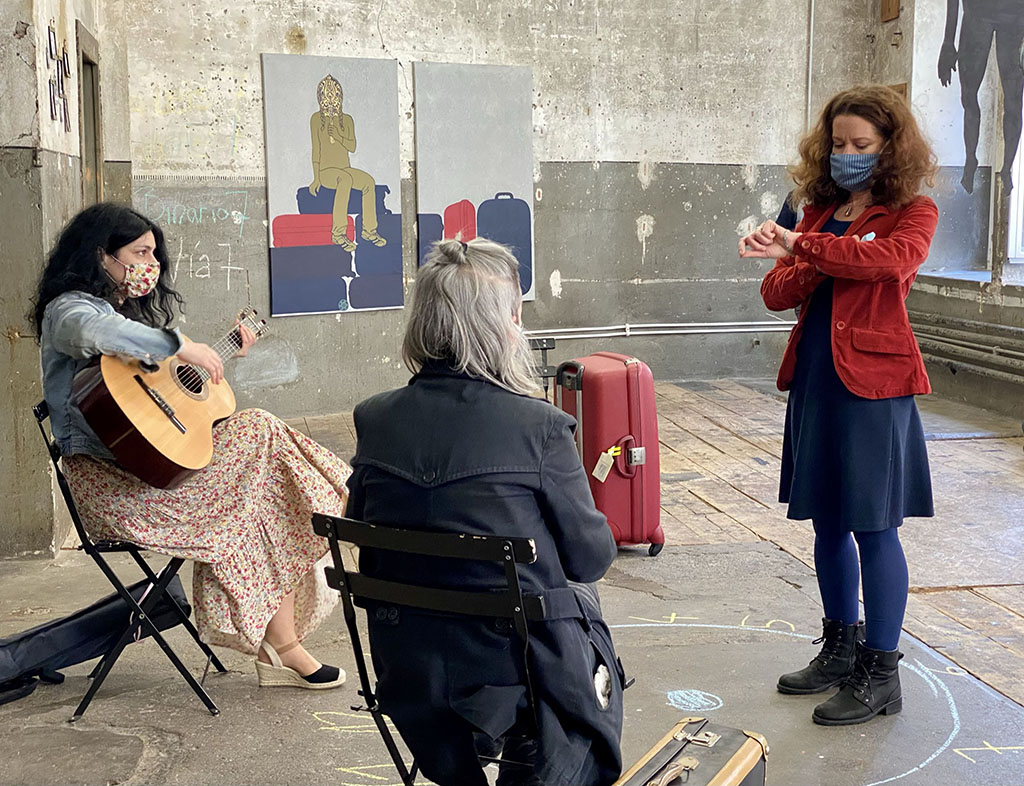
She never missed an opportunity to prove herself along the way. In her own words, she was always a ‘good student’. This can be seen when post-university she earned a scholarship for a Masters in Conservation of Monuments and Cultural Heritage.
It sounds like a whirlwind few years for Mézquita. She was perfecting her craft, understanding her motivations, growing as a person and ultimately working towards becoming the celebrated visual artist that we see today. There was, however, one thing that eluded her: an opportunity to specialise in Architecture and Ephemeral Art in Barcelona, Spain.
Thankfully – and rather deservedly – this finally happened in 2001. Even now, Mézquita fondly still recalls this as the moment she finally got to ‘realise her dream’.
She reminisces: “[In Barcelona] I studied and worked. But above all I lived and grew as a person and as an artist. It has been one of the greatest enrichments in my life.”
As Mézquita’s family grew, it added another element to her relationship with art. It created a circumstance in which she compares to walking a tightrope. The task since then has been how to manage her career and her passion alongside her family. It’s not always easy – something which Mézquita isn’t afraid to admit.
“My artistic work is not totally separate from my personal life, although sometimes, due to the intensity of the projects, I abandon my personal life for a long time,” she reveals.
Mézquita adds: “I move from one side to the other like a tightrope walker and sometimes I have fallen off the rope, I don’t deny it.”
While Mézquita tackles the challenge faced by so many mothers around the world, she’s also happy to let her family seep into her work. If you ask her which artists, she most admires, she’ll reel off a who’s who of recognisable names such as Ada Balcácer, Leonora Carrington, Remedios Varo, Louise Bourgeois and Ruby Onyinyechi Amanze.
However, she’ll tell you that her relatives have also had a big impact on her as an artist.
She reveals: “The people around me, in my family, all have different colours and characteristics. We are a great mixture that is projected in everything: in the way we walk, the way we dress, the way we talk, the way we decorate.”
Reflecting on her Caribbean heritage, she says: “Intense colours have been around me for as long as I can remember and have always been with me.”
The process of creating art is one that astounds and mesmerises many people. This is certainly the case when it comes to an acclaimed artist like Mézquita. She seems to rise to the occasion with such ease and never appears to have trouble making her work resonate with so many people. The best evidence of this can be seen when looking at the sheer number of galleries in which her work has been exhibited.
Mézquita can proudly lay claim to having had her work exhibited across the globe – from the Centro Cultural de España in her home country, Dominican Republic, to the Galerie Etage in the country where she currently resides, Switzerland.

That’s without even mentioning cities like Tokyo, Japan and Sofia, Bulgaria where her work has also been on display.
She explains: “It takes me a total of five to six months, depending on the format, to make the work, do colour tests, change it and work on it.”
This is one of the ways in which we see the double-edged sword of being an artist. While creating the work and having people observe it must be extremely rewarding, it takes huge amounts of time to bring something to fruition.
Indeed, this sounds like it could be a very lonely experience – but it’s something that Mézquita accepts as simply being a part of being an artist.
“It is definitely a solitary life,” she says, “From the conception of the work, the creative process and its development is a work of the artist with himself and the work, alone.”
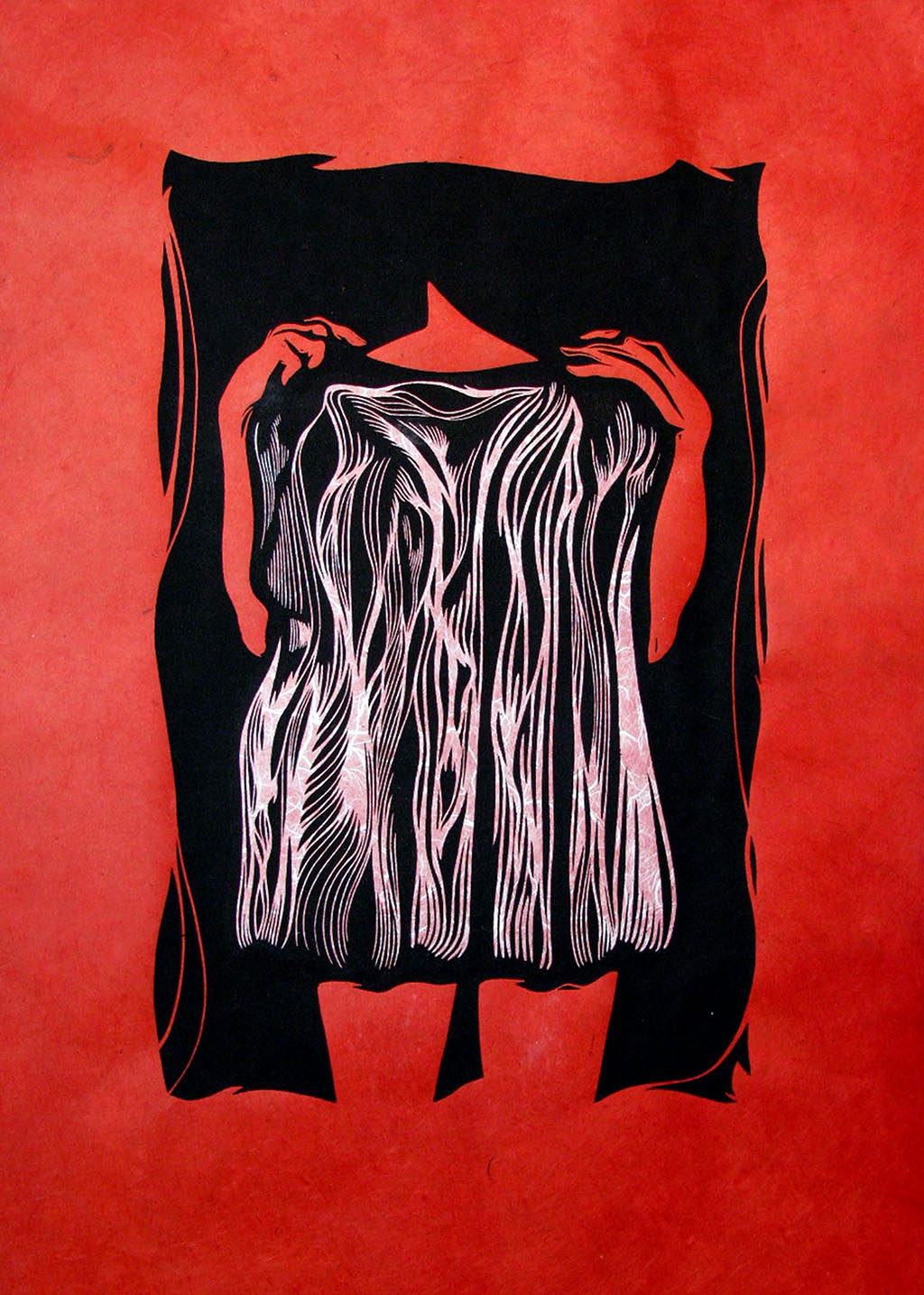
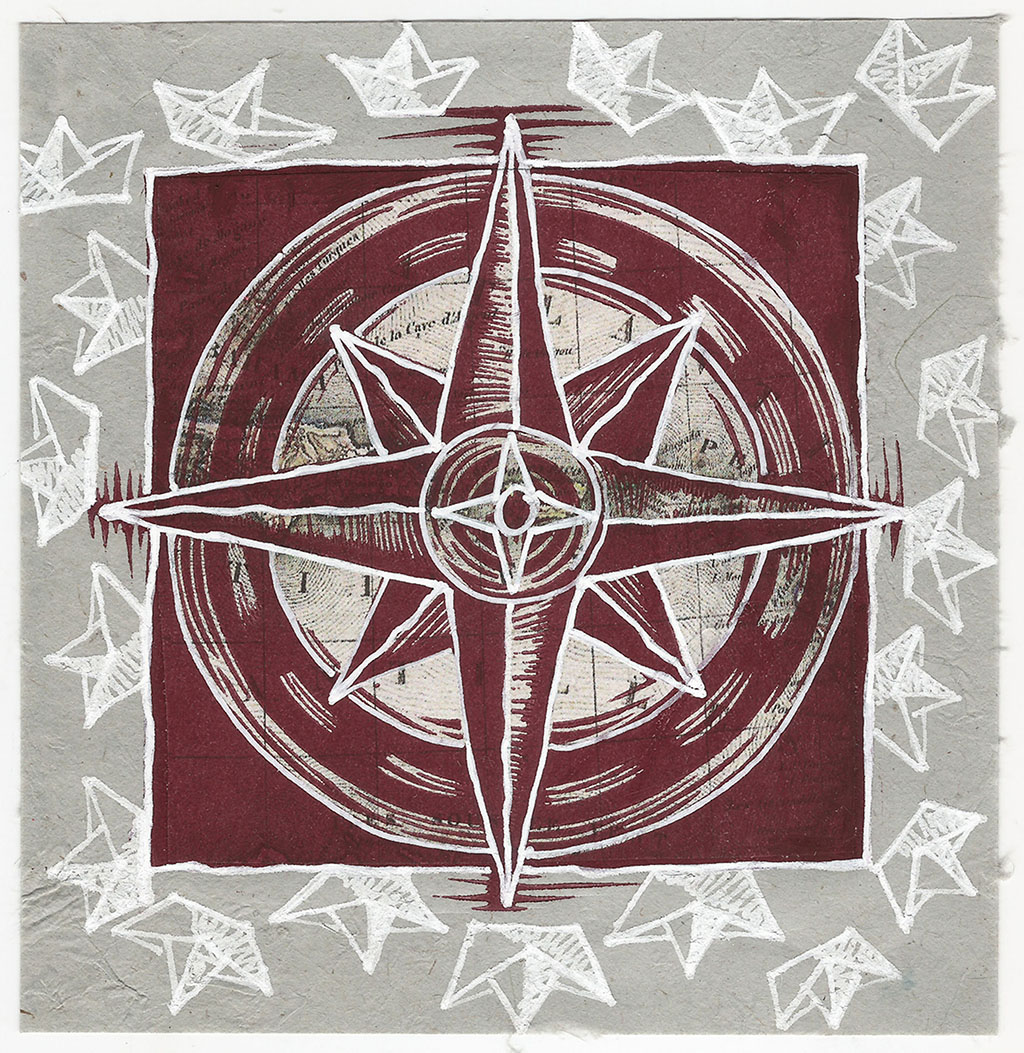
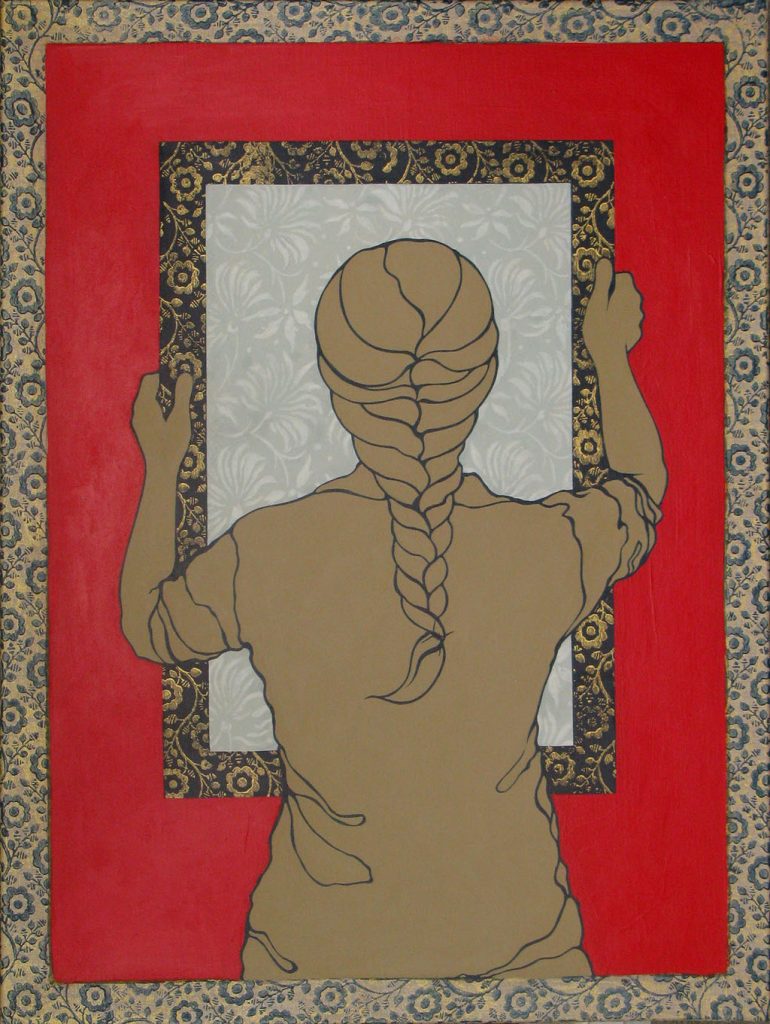
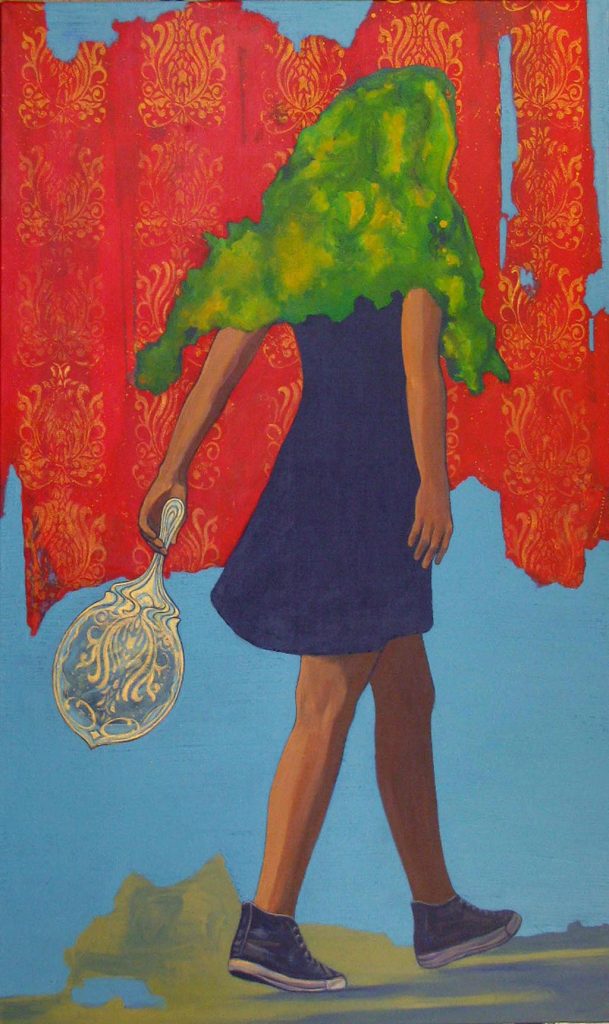
Mézquita’s work can be characterised in a number of ways. She’s known to work with acrylic paint and acrylic mediums on linen, but also uses graphite and mixed media, as well as watercolour and charcoal for paper and etching inks for woodcuts and linocuts.
In much of the work you can see an appreciation of physical spaces, something she’s inspired by due to her architectural training. In addition, textures, colour, the forms of nature and the human body are other identifiable elements present in her art.
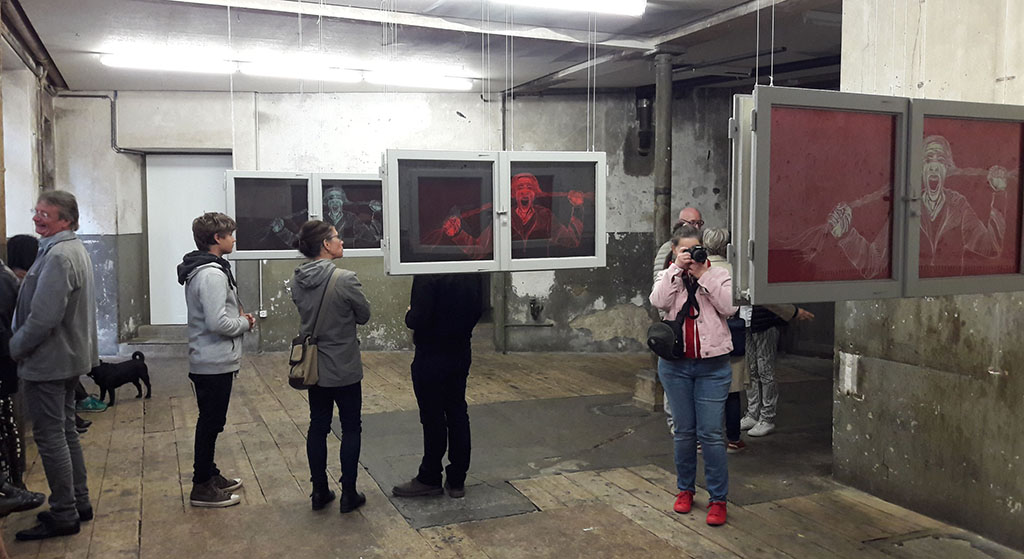
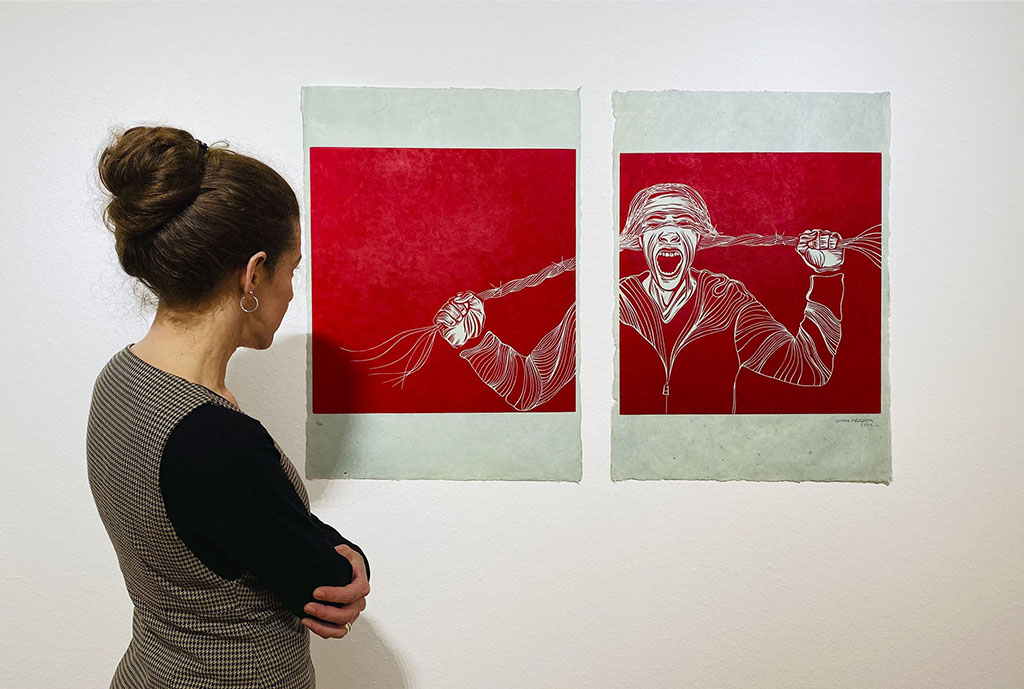
Mézquita’s recent work includes a series called Frustration, which involved drawing and woodcut that became large linoleum formats.
She explains: “As I developed the work it became clear to me that the viewer’s gaze was as important as the work itself: the audience was the mirror. The work also had two sides: a front and a back which were joined together, framed and hung from the ceiling so that both sides could be seen.”

The series was a success, with people staying for hours to witness what she’d created. Mézquita also received positive comments and a very good reception, which hopefully will have given her the confirmation that those long hours have been worth it in the end.
In terms of what inspired this particular series, Mézquita will tell you that it’s the emotion of frustration – something she rightly points out is felt by everyone at times throughout their lives. This, of course, includes the artist herself.
She opens up: “I have experienced many moments of frustration and anger throughout my career, so at that moment I knew that I wanted to work on the theme from beginning to end, aware that the theme could provoke rejection in the audience.”
You might instantly presume that the ‘frustration’ to which Mézquita alludes to is a result of COVID-19. After all, the pandemic has caused disruption across the globe – and the art world hasn’t been immune to its impact.
Interestingly, Mézquita believes that elements of lockdown actually had a positive effect on her life. In particular, she points out that she was forced to ‘slow down’ – something she believes was long overdue for her health.
“I was going at a very fast pace and I was involved in too many projects,” she says. “COVID forced me to slow down and take a break.”
Yes, the real world has changed since the pandemic – but has the art world? Mézquita is conscious about the fact that many galleries are beginning to disappear, while the larger institutions – such as museums and art centres – are still being heavily invested in.
She’s now concerned that the public is losing its ‘mediator’ to art and that the community is at risk of seeming inaccessible to the masses.

“I am annoyed by the elitist image that art continues to have and to be presented with,” argues Mézquita. She adds: “The role of the galleries is fundamental for Art, they are the mediators between the public and the artist, they connect local or regional art projects to the rest of the world.”
This is definitely something that people should keep an eye on when it comes to her Mézquita. She’s clearly a woman of conviction and likes to accomplish what she sets out to achieve. It will be interesting to see how her work tackles this ‘elitism’, along with whether others in the art community will rally behind the same goal.
In the meantime, there’s much more to be curious about when it comes to Mézquita. She’s a woman who’s both an eternal student and a passionate artist – meaning there’s plenty of reason to keep expecting a bright future from her.
Mézquita’s words, however, are just one part of her story. In fact, they might not even be the best way to understand who she is and what she’s about. If you’re looking for this, then you need look no further than her work.
“My biography is in the work,” she admits. “But everyone’s biography will influence their interpretation of it. I want the spectator to receive part of my experience through my work and make it their own from their own point of view.”