In the Caribbean Sea, a handful of islands twist together into one location, creating the distinctive, butterfly-like shape of one of the region’s most beautiful departments. This is Guadeloupe, a French archipelago of six inhabited islands.
Travellers who don’t want to compromise on their vacation don’t have to be here. The Guadeloupe island’s varied ecological makeup ranges from sun-drenched, sandy white beaches stretching for miles to swathes of jungle and towering peaks of a mountainous hillside.
About
South of the Dominican Republic and Haiti, Guadeloupe is officially a French territory made up of six inhabited islands, where the official languages are French and Antillean Creole. Crossing just 1,628 kilometres squared of the French Antilles, its two central islands, Grande-Terre and Basse-Terre, are connected by a mangrove swamp and a handful of bridges.
Grande-Terre to the East is beachy and tranquil, with a relaxed vibe that matches the easy-going atmosphere the white sands and turquoise waters promise. Much of the island is covered in sugar cane plantations and is considered one of the French-Creole cooking homes.
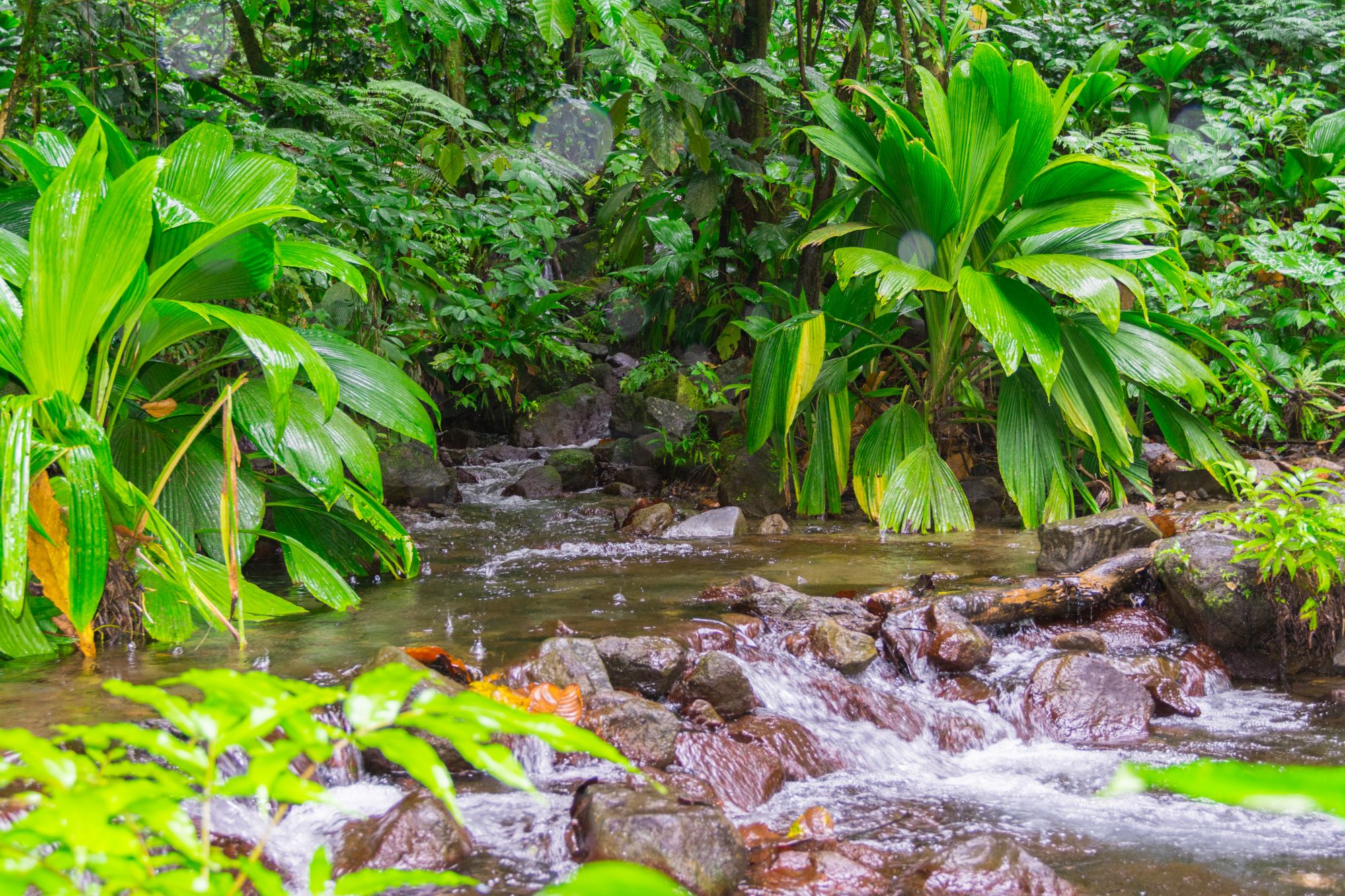
To the West, Basse-Terre is more mountainous and home to lush swathes of jungle and parkland. It’s overlooked by the La Soufrière volcano, which is home to natural, cascading waterfalls and the hectares of the Parc National de la Guadeloupe. Here, you’ll find a natural, lush ecosystem bordered by pebbled beaches and home to thousands of species of animals.
The smaller but beautiful islands include La Désirade (the tropical paradise), Marie-Galante (flat, but famous for its rum) and Les Saintes, which is made up of nine different islands, though only two are inhabited.

Things to do in Guadeloupe
Guadeloupe is one of the most protected environmental overseas areas, so there are plenty of gorgeous places to visit and explore.
Reserve Cousteau
A protected underwater park surrounding Pigeon Island, Reserve Cousteau is renowned for its marine biodiversity. Beside the secluded natural beauty of 400 hectares of the Malendure Beach, divers and snorkelers can see coral reefs, turtle shoals, eels, seahorses and crayfish.
La Grande Soufrière
An active stratovolcano on Basse-Terre, La Grande Soufrière marks the highest point in the Lesser Antilles Mountain range. Standing at 1,467m high, the volcano is surrounded by rich vegetation – including multiple orchid species. Expert hikers can join the four-hour trail, passing the Bains Jaunes hydrothermal springs.
Jardin Botanique de Deshaies
Covering seven hectares of land with over 1,000 species of flora and fauna, this botanical garden was first opened to the public in 2001. Promising gorgeous panoramic views over the Caribbean Sea, here you’ll find avocado trees, royal palms, a man-made waterfall and an aviary of native parakeets.
Parc National de la Guadeloupe
Opened in 1989, this national park was designated a UNESCO Biosphere Reserve and shelters thousands of species of fauna and flora native to the Caribbean. Centred by the La Soufrière, other natural spots of interest include the Grand-Étang, Moreau Falls and the L’Îlet Caret in the Grand Cul-de-sac Marin.

Zoo de Guadeloupe
One of the nation’s most popular tourist attractions, the Guadeloupe Zoo is found high up in the mountains. Combining animal enclosures with a jungle adventure, a designated boardwalk will take you through lush vegetation and a variety of animals, including toucans, monkeys, parrots and anacondas.

Pointe des Chateaux
A peninsula of Grande-Terre, this wide coastal strip is a popular spot for hikers. Covered with cliffs and hillsides, experienced hikers can make the trek up to the very top of the island and see the “Grand Cross”. The walk is very much worth it – you’ll get to experience unrivalled panoramic views over the other islands.
Carnival
If you’re visiting Guadeloupe in the winter months, you’ll get to embrace the tradition of Carnival, a two-month-long celebration. Dancers and musicians parade through the street with the distinctive rhythm of the Caribbean. A melange of colour, movement and light, the party goes until Ash Wednesday, where the locals burn King Vaval – a symbolic figurine that marks the beginning of Lent.

What to eat in Guadeloupe?
Seafood
The local waters are packed with incredibly delicious fish, so it’s no wonder they make up a significant part of Guadeloupe’s national menu. The most popular include marlin, shrimp, and shark – which is best enjoyed barbecued and served with lime juice – dorado, langoustines and even octopus.
Bokit
Best enjoyed from a beachside food truck, freshly fried and piping hot, Bokit is something of a national snack for Guadeloupe. The ingredients are simple; bread that’s stuffed with chicken, codfish, ham and cheese or vegetables, then deep-fried.
Rum
The Caribbean is the home of rum – and Guadeloupe has nine separate distilleries on the island alone. If you’re visiting the seafront of Pointe-a-Pitre, you’ll want to stop by one of the many rum vendors who sell hand-painted bottles of the spirit. It’ll make a great souvenir.
Colombo
A popular dish on Guadeloupe and many of the nearby French islands, Colombo is found on the menu of every restaurant on the island. Usually made with chicken or goat – and less commonly beef or fish – the meat is stewed with vegetables and served with white rice. This flavourful dish is packed with aromatic spices and is remarkably similar to Indian curry.
Tourment d’amour
Here, the Gallic influence is clear. French cooking is often interwoven with Caribbean flavours, and it’s no more present than in the Tourment d’amour, a flaky pastry. Starting with a layer of sponge cake, a layer of sweet coconut is added, then topped with pastry. Depending on where you visit, some varieties will include tropical fruits like banana or pineapple.
Guadeloupe is a charming vacation destination where no one has to compromise. The sun-seekers can lounge on stretches of white sand beaches, soaking in the lively atmosphere of the islands while savouring a cool rum cocktail. And the adventure seekers can ascend into the mountains, coming close to the volcanoes and mountains that thousands of species call home. French-inspired Caribbean living thrives in this natural paradise, from the turquoise waters to the tip of La Soufrière.