
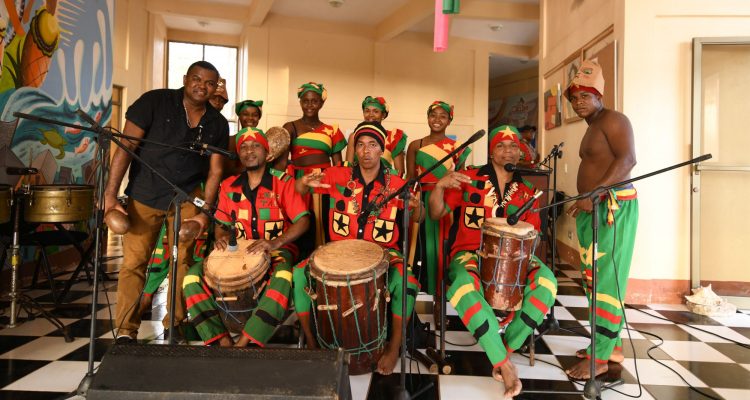
Every nation on this planet has a distinctive, diverse history that has undergone various periods of upheaval and change. Nicaragua is one such nation. While most outsiders don’t know much about the history of this region prior to the arrival of Christopher Columbus in 1502, indigenous peoples have occupied Nicaragua and broader Central America for thousands of years. Their lives collided with the British, Portuguese, Dutch, Spanish, and marauding pirates starting in the 16th century and it reshaped the Caribbean Coast region.
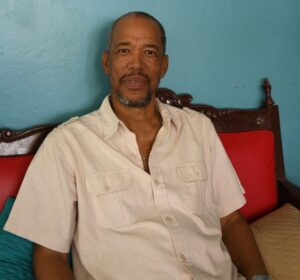
While much of the world looks at Central America and focuses only on its history of Spanish colonisation, Nicaragua is a land with vast differences between its Pacific and Caribbean coasts. This difference doesn’t just exist in the history of these areas but also in the modern autonomous nature of the region. If you sit down with Johny Hodson, you will gain even greater insight into the true nature of the national and regional history of Nicaragua. Fortunately, Kreol Magazine sat down with him to get an insider’s take on the history of this beautiful corner of the world.
Understanding the Broader Cultural Background
The indigenous people of Nicaragua, from the Pacific to Caribbean coasts, belong in large part to three different ethnic backgrounds. Before Europeans and enslaved Africans arrived, Nicaragua’s indigenous people inhabited both shores. These included the Miskitos, Sumus, and Ramas. Other cultural backgrounds have arisen in the years since that time as a result of the arrival of Europeans.
While multiple outside nations, empires, and cultures came to Nicaragua, the impacts were felt differently on either coast. The Spanish largely stuck to the Pacific Coast. Modern-day Nicaraguans along the Pacific Coast are mostly Mestizo people. These are people whose cultural background arises from the intermarriage of various indigenous peoples and the colonising Spanish. Along the Caribbean coast, cultural backgrounds are more diverse. The British exercised control over the Caribbean coast of Nicaragua for more than a century and a half. With the arrival of the British came voluntary settlers looking for new land and opportunities in the New World, as well as enslaved Africans who were brought by force.
As a result of British influence and the arrival of slaves, the culture of the Caribbean coast includes the indigenous Miskitos, Sumus, and Ramas, as well as the Creole people who come from Afro-Caribbean backgrounds. Not only are the cultural backgrounds of these two regions different, but so too are the languages. While Spanish is the only language spoken by most people on the Pacific Coast, Nicaraguans on the Caribbean coast speak English, Miskito, Ulwa, Twaka, Rama, Creole-English, Creole-Rama, and Garifuna.

European Influences and Lasting Impact
Nicaragua’s position in Central America made it a fascinating place for European colonising forces. In addition to Dutch traders, Portuguese traders, and pirates sailing through the Caribbean, the Spanish were rapidly expanding their influence in the Western Hemisphere. Christopher Columbus was the first outside explorer to set foot on what is now Nicaraguan soil. He landed along the Caribbean coast in 1502, but because of the existing influence in the region from other European nations and the presence of pirates, the Spanish didn’t focus too heavily on the Caribbean coast at that time.
The Spanish Crown funded expeditions and authorized explorers to conquer lands throughout Central and South America in its name. The Spanish led the way in colonising the Pacific Coast of Nicaragua, resulting in the rather homogenous culture that now exists in Managua and other parts of the Pacific Coast. For example, 96% of Nicaraguans in this part of the country have the same Mestizo cultural background and all of them speak Spanish as a first language.
The arrival of the British was much different. As Johny Hodson points out:
“Before the existence of the Nicaraguan state, we had these people living and exercising self-government, then in 1500 came the Europeans and the Africans. They came together. It’s just that the Europeans came by their own will, and the Africans came against their will as enslaved people, and when these people came here, you had eight different groups of people living in our territory.”
When the Spanish colonized the Pacific Coast, much of their focus was on suppressing the indigenous population, exploiting the riches of the land, and establishing a colony that could support the Crown back in Spain. The British arrived to cultivate the land as well but brought with them a different approach to control Nicaragua. While the Spanish were very hands-on in their approach to controlling Nicaragua on one coast, the British created an alliance with the Miskito people on the Caribbean coast and largely exercised a hands-off approach to the region. Rather than making it a colony, the British established a protectorate zone known as the Mosquito Coast.
Britain not only governed the protectorate with a hands-off approach, it actually granted the indigenous and Creole people their first form of autonomous rule. The 1687 alliance between Britain and the Miskito people created a Miskito king, a system of rule that did not previously exist in the area. However, it was successful in that it ensured indirect rule and autonomous governance for the people of this region, while also providing an umbrella of defence against any Spanish aggression in the region.
For nearly 200 years, the people of the Caribbean coast learned to live with self-governance as the accepted practice with little day-to-day interference from the British. This ran counter to the situation on the Pacific Coast and in Managua. By 1821, Nicaragua’s Pacific Coast gained independence from Spain, and the modern state was established in 1838. Between 1860 and 1894, that autonomy would come under threat and eventually be lost for nearly a century before the Creole and indigenous people of the region got their autonomy back.
Europeans Begin to Exit Nicaragua
Nicaragua may have been formally established in 1838, but the road to the formation of the modern state stretches back before that and was drawn out for several decades after 1838 as well. Johny Hodson pins the starting date for change in Nicaragua, including its impact on the Caribbean coast, to 1783:
“In 1783, England and Spain signed a treaty in France; it’s called the Treaty of Versailles, to put an end to the war between those two countries. Those two countries were fighting to have control of most of what was in this new world. So the deal that they speak Spanish and the British was signed. The deal established that the territory what we call the Caribbean Coast of Nicaragua would be a property of Spain and Belize would be a property of the British.”
Treaties signed on a piece of paper thousands of miles away on the European continent did little to change the situation on the ground in Nicaragua. The British settlers, with their slaves in two, didn’t want to leave Nicaragua. They believed they had a good life in the New World and were reticent to give it up just like that. It wasn’t until 1786 that the treaty was ratified and a timetable was established. British settlers on the Caribbean coast of Nicaragua had until 10 June 1787 to leave Nicaragua or face a forceful removal by the Spanish.

Overnight Changes in the Nation
As Mr. Hodson puts it, many of the British waited until the last possible moment to leave the Caribbean coast of Nicaragua. He explained a scenario in which many British settlers in the area up and left almost overnight. The British landowners and settlers were so hurried to leave that everything was left behind, from land, homes, cattle, and businesses, to enslaved people. In the blink of an eye, the enslaved Africans brought to the Caribbean coast of Nicaragua by the British went from being servants to European masters to being free individuals with authority to govern themselves. Mr. Hodson puts it in this context:
“Those black people that were slaves, overnight became wealthy. They stayed back in the houses, on the farms, and on the plantation with the cattle. What the British, their masters, couldn’t carry, they kept. So they have these properties and speak an international language, the language of the masters, English. And they begin to send their children to study in Jamaica to the best schools you had in the area.”
The system of autonomy that the British had established continued in the immediate aftermath of the British departure from the region. The Afro-Caribbean slaves the British had brought with them and then abandoned in a rush to leave gave rise to the Creole culture along Nicaragua’s Caribbean coast. For example, many of the now-free slaves married Cacaopera women from an indigenous tribe. The Creole people built their own villages, anchored on the Corn Islands, Pearl Lagoon, and Bluefields.
For most of the next 100 years, life along the Mosquito Coast was good for indigenous and Creole peoples. Mr. Hodson refers to it as one of the best times in history for the region. It was one of the only places in the world where indigenous, Afro-Caribbean, and Creole people lived in freedom and did not have to submit to any colonial power. However, change was on the horizon for the nation and the region.

Evolution of the Caribbean Coast
As just mentioned, the region known as Nicaragua gained its independence from Spain in 1821. It was part of the United Provinces of Central America from 1821 until the dissolution of that union in 1838. At this point in time, the modern state of Nicaragua was established. These changes had a greater impact on the Pacific Coast, where the Spanish had controlled Nicaragua, than they did on the Caribbean coast. For much of the period from the British exit to 1894, the Mosquito Coast was left alone by the Spanish and allowed to continue its autonomous self-governance.
The evolution of self-governance took a sour turn for indigenous and Creole people in 1860. This is the year that Britain signed the Treaty of Managua which recognized the Caribbean coast as part of the state of Nicaragua. This was the opening the central government would eventually exploit to exercise control over the region. In 1894, two things occurred that led to unfortunate and violent changes along the Caribbean coast. First, the government of President Jose Santos Zelaya signed an alliance with the United States government. This put American approval on the Nicaraguan annexation, through violence, of the Caribbean coast and allowed the United States access to the region for military logistical purposes.
Today’s Creole and indigenous people on the Caribbean coast consider President Zelaya’s “Declaration of the Reincorporation of Mosquitia” a violent overthrow of their autonomy and self-governance. Once again, the lives of people here were changed overnight. Randomly drawn lines on a map now defined the region and where people could and could not live and plant crops. For example, the River Coco became a new border overnight between what was considered Nicaragua and what was Honduras. But indigenous and Creole people in the region were already living and planting crops on either side of the river. Now, they had to submit to Spanish rule and law.
Though these changes were negative for the people of the Caribbean coast, hope springs eternal. After decades of struggle, autonomous self-rule would return to the Caribbean coast of Nicaragua not long after another revolution rocked the country.
Modern-Day Autonomy of the Caribbean Coast
The loss of autonomy in the early 20th century represented a significant change in everyday life of people on the Caribbean coast and it almost resulted in their culture being erased from history by the central government of Nicaragua. For example, Mr. Hodson highlights the following woes that arose during this period:
“Our autonomy reached an end. You know we have no more self-government. All the authorities and governors were imposed from Managua. Only generals of the army were sent as governors. Judges, all of the authorities were sent from Managua. They declare all the land we used to have as communal land as national land. The system that we used to have, our communal system, the institutions, everything changed. I will tell you that we, the indigenous Afro-descendant, weren’t physically exterminated during that time, but culturally, we practically disappeared. We became invisible because all the authorities, all the decisions, everything was imposed by Managua. The Constitution of Nicaragua established that Nicaragua was a mono-ethnic nation and Nicaragua had one language, that is Spanish.”
Through much of the 20th century, the Creole and indigenous people of the Caribbean side had to bide their time, waiting for a chance to reclaim autonomy. The rise of the Sandinistas appeared, at first to be that opportunity. While the home-grown revolution of the Sandinistas would eventually result in self-governance and autonomy for the Caribbean coast, it would not happen overnight this time.
The Sandinistas largely ignored the Caribbean coast in their manifestos, writings, and beliefs. What the Sandinistas wanted was to raise the social, economic, and cultural status of the Mestizo people. When the revolution proved successful, some Caribbean coast inhabitants were glad as it was believed things might change for the better. As Mr. Hodson notes:
“So people, especially where people wouldn’t even dream that Sandinista could have overcome Somoza, Sandinista had on their programme that if they overcome Somoza that they will build conditions on the Caribbean Coast so that the people form the Caribbean Coast could participate on equal basis with the rest of the Nicaraguan people in the construction of a new Nicaragua and Nicaragua could be multi-ethnic, multi-lingual and, multi-cultural.”
Others simply saw the revolution for what it was: just another change of government. Another group of outsiders was telling them how to live. In fact, the Sandinistas believed the indigenous and Creole people would fall in line and support the new government. The Sandinistas did reach out to the people of the Caribbean coast and its regional leaders after the revolution seeking input on a new state. The first thing they would hear was the desire for autonomy to return to the Caribbean coast.
The process would take time. The Sandinistas were unsure of granting the region autonomy, but did allow for a proposal on the matter to be developed and submitted. It took leaders in the region time to determine what form of autonomy was in the best interest of the people on the Caribbean side of Nicaragua. As Mr. Hodson put it “there were 1,000 different concepts of autonomy. Our challenge was to boil it down to one single proposal for the Caribbean Coast of Nicaragua.”

Mr. Hodson was part of the group that worked to develop a sense of self-autonomy for the proposal that could be broadly accepted in the region. As he tells it, the process was not easy:
“A group of people selected me to coordinate that voluntary team. I mention this because I was very young, in my 20s. That group of men and some women used to meet every day to do what they call brainstorming. Brainstorming to define, to propose what our autonomy could be. This was a group of about 30 to 50 people here in the South and the same in the North. So we worked, did that consultation, tried to make one single definition of our autonomy, and tried to boil down that 1000 different concepts or definitions to one. We managed to get it down to two. So we had two big concepts of our autonomy.”
What emerged in the immediate aftermath was a vision for the Caribbean region that was built on indigenous autonomy and a competing one that sought to do what the central government could or would not, promote multi-culturalism. Remember, the Spanish side of Nicaragua is largely homogenous with Spanish-speaking Mestizo people. The Caribbean is a rich stew of people from Creole backgrounds, Miskito, Sumus, and Ramas indigenous groups. The people of the region fought amongst themselves, but eventually, an idea for autonomy emerged that focused on three aspects.
First, the autonomy and self-governance of the region had to recognize the historical rights of indigenous people and long-standing Creole people. Next, it had to be based in constitutional principles that could be turned to in difficult times to guide decision-making in the region.
Finally, autonomy for the Caribbean coast had to promote a sense of national unity among the multi-cultural people.
By September 1987, the people of the Caribbean coast had their long-coveted autonomy back. It would take time for a new normal to develop, but when it did, a renewed sense of pride emerged in the region. Mr. Hodson says that everything, even the songs of the people, changed and reflected the newfound optimism:
“When we get the autonomy, we begin to change. We sang the same song, but we changed the word. We begin to say, pretty black girl, let’s build a free country, pretty black girl, let’s build a free country, a place where you and our little baby can live and love and dance in this free country.”
Today, thousands of people from European nations, the United States, Canada, Mexico, Guatemala, and other locations come to the Caribbean coast of Nicaragua to see the transformation taking place in this autonomous region. They come to see what the recognition of historical rights, what the restitution of rights to this region looks like, and how national unity can be built while recognising differences.
