
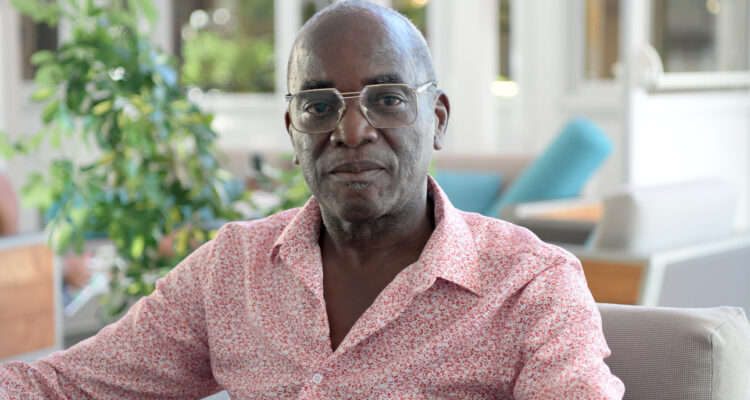
Discover the story of Alcide Savinien Donnat, a visionary leader whose dedication to the youth and culture of Guadeloupe shapes the island’s future amid its historical and contemporary challenges.
Alcide Savinien Donnat, a lively and confident man in his early sixties, possesses extensive knowledge of Caribbean history and has a strong sense of self. Full of practical wisdom, he leads the Ligue de l’enseignement Fédération départementale de la Guadeloupe (Education League for Schools in Guadeloupe), known as La Folg. Guadeloupe is a vibrant French Caribbean island celebrated for its stunning beaches and rich cultural heritage.
Mr. Donnat grew up in Sainte-Anne, located in the southeast of Grande-Terre, the eastern part of Guadeloupe, which resembles a butterfly from above. He has served as the Association of Popular Education President for eighteen years, overseeing an organisation with 10,000 members. This role remains a commitment he values deeply and has truly made his own.
As President, he has shared his thoughtful and well-informed opinions on topics such as the French colonial impact on the island and the fading of local Creole culture. He uses his position to focus on young people’s well-being and integration and address Guadeloupe’s significant cultural and identity challenges today.

Family & Upbringing
Donnat is the product of a humble blue-collar farm in the French Caribbean. He proudly recalls his parents’ occupations, saying, “My father was a farmer, and my mother was a seamstress.” Donnat clearly states that he inherited his desire to help others primarily from his father. “My father was a municipal councillor and deputy mayor for 47 years, from October 1948 to March 1995. He participated in many initiatives to build a fraternal and benevolent local community.” His father visited the sick and assisted the community with daily administrative procedures.
With immense humility and filial gratitude, Donnat explains, “From the age of eleven, I was part of a collective to defend children’s rights. I coordinated recreational afternoons for the benefit of children. I received this motivation from my father, who was also militant, categorical, and benevolent, like myself, in guiding others through darkness.” He adds, with introspective lucidity, “I always try to maintain a firm, upright stance, but never aggressive – again, a gift inherited from my father.”
Donnat has held many positions during a long and distinguished career, spanning education, research of flavours and scents, and cultural leadership on the island. With a warm and engaging smile, he recounts his extensive experience and his unwavering commitment to the betterment of the community. He has been President of several sports and cultural associations and was appointed by the prefect to the Council of Culture, Education, and the Environment in 2005, a consultative body of the regional council. He has also served as an administrator at the Tourist Office of Sainte-Anne, overseeing tourism, and as an administrator of the Regional Chamber of the Social and Solidarity Economy.
“I advocate for universal fraternity and educate in international solidarity,” Donnat affirms. Reflecting on his success, he fervently declares, “What has led me to where I am is my love for people and all living things.”
Current Role as Head of Education League
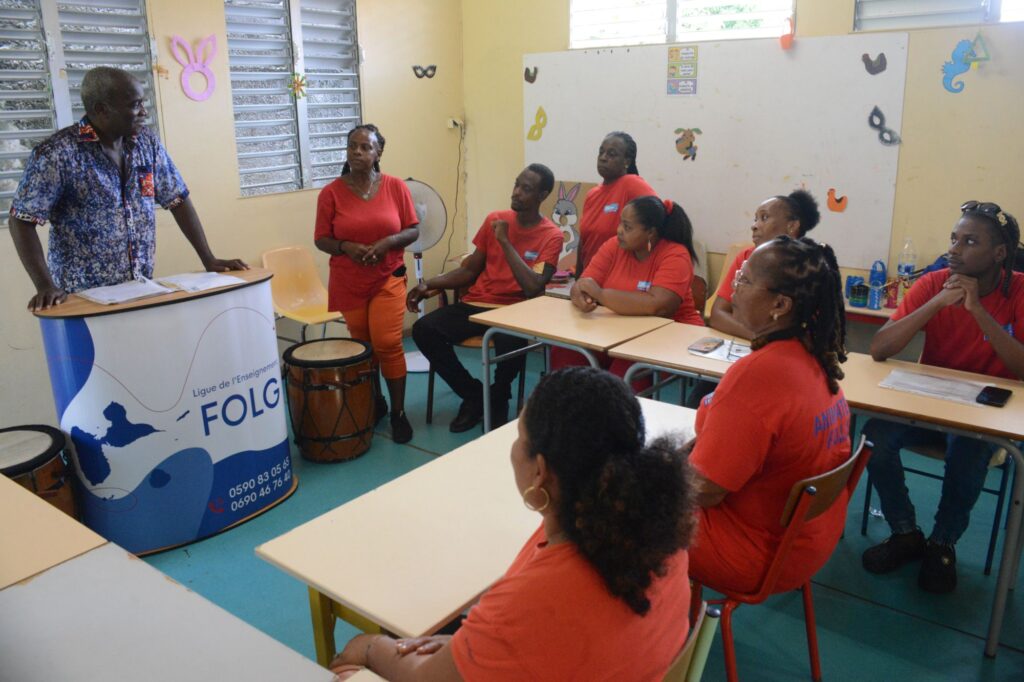
Speaking about his current position and his accomplishments since taking office, Donnat says: “I am now the President of the Ligue de l’Enseignement de Guadeloupe. Previously, I served as an administrator of the national confederation of Ligue de l’Enseignement based in the 7th arrondissement in Paris.”
Rather than lamenting the job’s demands, Donnat focuses on the trust he has engendered in the people around him. “It’s hard work, and it’s not easy to get everything done on time, but I have the trust of my peers. I am not afraid to ask questions about work, to inquire about what is going on, or to stop a dangerous action. My colleagues have faith and confidence in me because of that.”
Donnat also recognises the importance of operating on multiple levels to effect real change. “I work at the departmental and regional levels, and I also know that we need to express our opinions and concerns at the national and international levels.”
Maintaining His Professionalism
Despite the variety of his roles over the years, one thing has remained constant for Donnat – his unwavering sense of professionalism, cultivated over many decades. “What is certain is that today, there is a significant difference between my associations and others. I prefer to remain on the margins of the Commons rather than compromise the trust and loyalty of my peers.”
Rather than lamenting the job’s demands, Donnat focuses on the trust he has built with those around him. “It’s hard work, but I have the trust of my peers. There is a huge difference in approach between the associations I support and those in the territory. To sustain activities, we need to professionalise and digitise them.”
A Global Creole Culture
A proud Guadeloupean steeped in the island’s history and culture since birth, Donnat emphasises that he carries with him “the importance and value of Creole” wherever he goes and in all his roles.
Indelibly shaped by his Creole heritage, Donnat advocates for a global Creole culture and identity. He stresses the need for solidarity, stating, “We must remain united because we share a common language, customs, history, and traditions.” Radiating infectious enthusiasm, he is fully committed to promoting and advancing the Creole cause. “We must remain united to share and express our thoughts and the vitality of our Creole heritage, full of love and brotherhood.”
Guadeloupe’s Over-Reliance on France
Donnat addresses the oft-debated paradox that Guadeloupe is legally and constitutionally French (a Dom-Tom or overseas department) despite being physically located in the Caribbean, thousands of miles from France. He believes that French assimilation has been harmful, making Guadeloupe too dependent on the motherland. He does not doubt how this has negatively affected the Guadeloupean psyche and the island’s collective sense of identity. “We lack patriotism,” he states.
A staunch advocate of self-determination, Donnat presents his case calmly and rationally, without undue emotion, making his points even more compelling. “What is certain is a feeling of dependence on the French state, which dictates what we should do and behave. Such censorship makes us question what it means to be Guadeloupean. We are so different from the West that good decisions can only come from within. We must demand more autonomy and power to orient our future better and preserve our authenticity and Creole identity.”
He adds with genuine authority, “Very often, decisions come to us from outside and are out of step with our local reality. Creole is not just a language; it is a state of mind above all. It encompasses eating, drinking, loving, sharing, counting, celebrating, being fraternal, and living one’s spirituality.”
Retaining Guadeloupean Culture and Identity
Regarding development, particularly the aesthetic development of youth and education, Donnat encourages a unique approach. “We are far from continental France, and we have our own identity,” he asserts.
In today’s world, identity can often be a loaded term, but Donnat continues with admirable clarity of purpose. “This is very important because we need to know what it means to be Guadeloupean.” He adds forcefully, with the tone of someone deeply invested in the self-esteem of his fellow islanders, “We must love our people, our culture, and our heritage, and we must promote the transmission of Creole knowledge. Without transmitting ancestral practices and culture, we will be left with a skin of sorrow. We must practice non-stop to perpetuate the achievements of our culture and encourage endogenous development.”
With palpable sadness etched on his face, he says, “We must remain confident despite the important work to be done to safeguard our Creole identity.”
The Need to Find Teachers
Warming up to his theme, Donnat addresses the urgent need to save the next generation from what he sees as deplorable cultural amnesia. “We need to give more importance and value to our culture. Otherwise, we will lose it without passing it on to the new generations. Education is a sharp weapon that polishes the roughest stones,” he asserts.
He emphasises the critical shortage of teachers willing to engage in the cultural formation of Guadeloupeans. “Vocations are disappearing. The transmission and respect of the Creole reality are a source of life and give depth to our practices. Without militant and committed educators, relationships will be complicated, conflicts will spread, and education in benevolence and solidarity will be impossible.”
Expressing his desire for his compatriots to find the existential anchorage they both desire and deserve, he adds, “The island’s inhabitants need to know who they are, or they will be lost and have no message to convey in the future. Young people need to be heard and know the past to be part of the culture. If we abandon our culture, we need to ensure people still know it.”
Message to the Youth
Regarding his message to young people, Donnat is fundamentally optimistic. He recognises the wealth of talent and potential among young Guadeloupeans. Still, he remains cautious, possessing an incisive understanding of the island’s colonial history and how its tumultuous and often bloody past, mired in the horrors of slavery, continues to influence the present.
“We have much potential, and we can shine globally,” he says. “The colonial past is a visceral flaw. French colonisation was finely conducted. The natives are cut off from their descendants and think and act as a Frenchman from Versailles would do.”
Problems Currently Facing Guadeloupe
Regarding the plethora of social problems and challenges currently facing his beloved Guadeloupe, Donnat is both eloquent and outspoken. “The public policies put in place have not considered the population’s needs. Guadeloupe has inherited decisions too often made in Paris,” he asserts. Like many men of his generation, Donnat has a detailed understanding of the issues arising from being both Caribbean and French, as well as the tensions inherent in being Black, Creole, and technically European at the same time.
A Decreasing Population
“There is a problem in Guadeloupe concerning the decrease in population due to the high rate of emigration and the exodus of the young population,” Donnat states authoritatively. “Young people tend to flee the island, and the replacement rate of the elderly population is not assured. Guadeloupe’s population is ageing.”
He regrets, “Today, many young people from the island do not return because of the island’s lack of attractiveness. Some resistance fighters strive to maintain our habits and customs at arm’s length. The Haitian community infiltrates and settles in all areas of activity.” As he speaks, one can detect a hint of melancholy in his tone, reflecting his deep attachment to traditional Guadeloupean culture.
Disappearance of Guadeloupean Culture
With regret, Donnat laments the ongoing fight against the disappearance of local culture due to the growing number of non-natives on the island. He highlights the apparent decline of Guadeloupe’s gastronomic heritage: “In terms of cuisine, Guadeloupean culture is only kept alive at home and when we organise large parties and events.” In a sombre and discouraged tone, he adds, “We are at a point where the security of our cultural heritage is a constant struggle.” Volunteers committed on all fronts are inventing multi-year actions for Guadeloupe’s tangible and intangible heritage.
Preservation of Guadeloupean Heritage
Donnat stresses the urgent need to preserve the culture and support vulnerable people, warning that failure will lead to complicated lives and widespread social conflicts. Expressing a deep desire for his compatriots to find the existential anchorage they both desire and deserve, he adds, “The people of the island need to know who they are, or they will be lost with no challenges and no prospects for the future. Young people need to be heard and know the past to claim their true place in society.”
He underscores the complex identity of the island’s inhabitants: “They are Caribs by geography, Creoles by culture, and French by nationality.” This multifaceted identity, he believes, must be understood and embraced to ensure a cohesive and thriving community.
The Importance of the Creole Garden
Donnat emphasises the importance of the Creole Garden and its relationship with Guadeloupean culture. With his infectious love of nature conveyed through his pronounced Creole cadences, he passionately explains: “The Creole Garden is unique. It originates from the time when enslaved people were given a plot of land by their masters to grow food and support their needs. This is our heritage, and it has stayed with us in Guadeloupe. In rural communities, you can still see houses built with small community Creole gardens. These gardens contain everything – fruits, vegetables, and animals.”
Donnat believes in the potential of the Creole Garden to reduce social inequalities and strengthen community bonds. “These gardens help those who cannot stock up at the city night market to have something on their table. Even for those better off, it provides a sense of community and a connection to the land where their food comes from.” He stresses the importance of trading garden produce, adding, “It also helps people exchange and share what they have planted. The Creole garden creates social links. Vegetables and spices are exchanged for starchy foods. One with bananas can exchange them for pigeon peas, giromon (pumpkin), or anything else.”
He describes an island delicacy that can be made from garden produce, highlighting the intrinsic ingenuity of Creole culinary culture. “There’s nothing like it. All the raw surplus food of the week is combined with salted meat to make a soup we call Congo soup. Congo soup is Guadeloupe’s national dish. It is a supreme delicacy.”
Love of Nature
Donnat credits his passion for the natural world and his appreciation for the joys of nature as significant inspirations for his work and his positive attitude towards life. “I love nature, and my greatest passion is discovering all the shades of green. I enjoy things in a way that others don’t, which brings me happiness and joy. On an island as rich in stunning natural beauty as Guadeloupe, it’s not hard to see why.”
Family
Proud of his three adult children and their respective accomplishments, Donnat exudes endearing paternal affection as he recounts their achievements. “My children all have their university degrees. My eldest daughter works in international finance. My other daughter works in management and digital security, and my son works in construction, specifically in project management. He was trained in Île-de-France and has returned to Guadeloupe to contribute to its construction. Commitment is part of our DNA.”
Conclusion
As the leader of the Education League in Guadeloupe, Donnat is an authoritative, passionate, and influential voice in defending the island’s identity and promoting Creole culture. His voice must be considered if the current problems are to be mitigated, let alone solved.
Well-placed to address the increasing challenges facing the island’s youth and unafraid to speak his mind, Donnat is a resolute and dignified Guadeloupean who cares deeply about the physical and emotional well-being of the island’s inhabitants and the preservation of their Creole heritage and identity.
Like its neighbour Martinique, Guadeloupe is a French Caribbean island historically, economically, and politically linked to France, but geographically much closer to Bridgetown (Barbados) and Kingston (Jamaica) than Paris. Due to a confluence of factors, there are fears that Guadeloupe is in danger of losing its rich Creole culture and once-strong identity. Yet, through the advocacy and actions of courageous community pillars like Donnat, there is hope that these potential losses can be mitigated and that the Guadeloupean Creole culture can continue to flourish for decades or even centuries.