
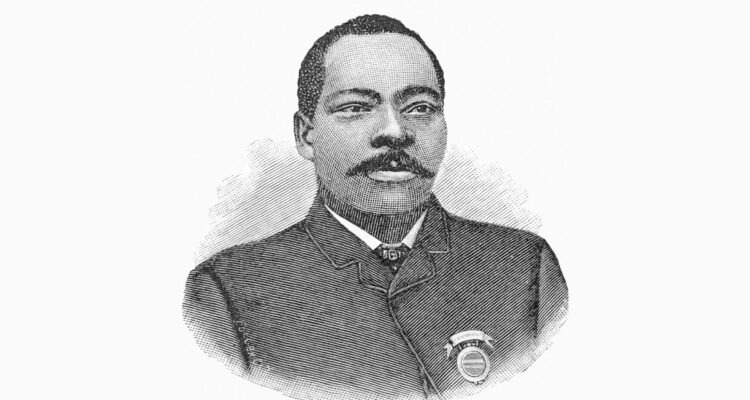
Granville T. Woods was a pioneering African American inventor whose innovations in electrical engineering and rail systems laid the groundwork for modern transportation. Despite the racial barriers of his time, Woods secured over 60 patents and helped change how we move and communicate.
Born in 1856 in Columbus, Ohio, to free African American parents, Granville Tailer Woods grew up in a society that offered few opportunities to Black Americans. With limited access to formal education, Woods pursued learning independently — attending night school, studying engineering books, and gaining hands-on experience through demanding jobs. From an early age, he displayed a remarkable ability to understand machines and solve practical problems.
His early work as a machinist, blacksmith, and steam engine operator prepared him for a life of invention. Despite the deep social injustices of the post-Civil War era, Woods refused to be constrained by his time.

The Railway Telegraph: A Breakthrough in Safety
Woods’ most celebrated invention was the Synchronous Multiplex Railway Telegraph, patented in 1887. This device allowed communication between moving trains and railway stations, a revolutionary advancement that reduced accidents, improved scheduling, and transformed railway logistics.
Until this point, trains relied heavily on signals and human timing. Woods’ telegraph brought wireless communication into the railway world. In a dramatic twist, Thomas Edison attempted to claim the invention, leading to a legal battle. Woods prevailed, earning him the nickname: “The Black Edison.”
Granville T. Woods – Paving the Way for Electric Transit
One of Wood’s lesser-known but profoundly influential contributions was his work on the third rail system, which delivered electric power to trains. His improvements made it more efficient and safer, and his designs remain essential to subway and tram systems used worldwide today.
He also worked on automatic air brakes, building on earlier work by George Westinghouse. His refined versions provided greater responsiveness and reliability, which were vital in reducing railway collisions.
Everyday Innovations
Woods wasn’t limited to transport. He also patented:
- A telephone transmitter that improved sound quality.
- An incubator for hatching poultry.
- A device that automatically opens and closes railway car doors.
- An improved phonograph, adding clarity and durability to recordings.
These inventions were either licensed or sold to major companies, including American Bell Telephone Company, General Electric, and Westinghouse Electric.
Facing Barriers, Building Legacy
Although widely respected for his work, Woods never received the fame or wealth that other inventors of his era enjoyed. As a Black man in the 19th century, he faced systemic discrimination, economic exclusion, and the constant threat of having his work stolen or overlooked.
Nevertheless, he persisted. Woods established the Woods Electric Company in Cincinnati and later moved to New York, where he continued to invent until he died in 1910.
His life is a testament to brilliance, resilience, and vision, and his story reminds us of the many forgotten figures of colour who shaped the world.
Recognition at Last
In recent decades, Granville T. Woods has received greater attention:
- He was inducted into the National Inventors Hall of Fame.
- Schools and public buildings across the U.S. have been named in his honour.
- His work is now studied in engineering and Black history curricula.
Yet, his name is still unfamiliar to many outside specialist circles, a gap that articles like this one aim to help close.
Conclusion: A Legacy Wired into History
Granville T. Woods was more than just an inventor; he was a trailblazer. Working at a time when Black Americans were expected to stay silent and unseen, he electrified history with ingenuity that continues to shape modern life.
His story is not only one of invention but also of perseverance, courage, and cultural pride, values deeply embedded in the wider Creole and African diasporic experience. In celebrating his legacy, we honour a man who rewired the future and earned his rightful place in it.