Guinea-Bissau is a tropical West African country located on the Atlantic coast with a rich and diverse cultural history. Once part of the Kaabu Empire and later a colony of Portugal, Guinea-Bissau has developed a unique Creole culture blending African and European elements. This article explores the Creole people’s origins, challenges, and cultural contributions, who emerged during Portugal’s maritime expansion in the 15th century.
Located on the Atlantic coast, Guinea Bissau is a tropical West African country renowned for its diverse wildlife and lush national parks. It was once part of the Kaabu Empire, a Mandinka kingdom, and a Mali Empire province. During this time, Portugal established several trading posts for buying and exporting captive Africans as part of the Atlantic slave trade, and in the 19th century, it colonised the country.
By the time it achieved independence in the 70s, a mixed culture had developed in Guinea-Bissau, forming a people with European and African heritage known as Creoles. In this article, we’ll study the Creole people in Guinea-Bissau, looking at their origins, challenges, and how their culture and language have become a distinctive feature of this West African nation in the Atlantic.
A short history of Creoles in Guinea-Bissau
The emergence of the Creole culture and its identity in Guinea-Bissau dates back to Portugal’s maritime expansion in the 15th century. The country’s riverine and coastal areas attracted individuals of different social, geographical, and professional backgrounds, including adventurers, seafarers, merchants, fugitives, exiles, clergymen, soldiers, castaways from Europe and Cape Verde and slaves of African origins.
Over decades, people of heterogeneous descent began to settle and act as middlemen between European business people and Africans. The Portuguese developed several isolated trading posts that became trading hubs for commodities and locations for African-European cultural encounters. Within these posts, substantial intermarriages and interethnic mixing resulted in brand-new cultural representations and a new shared culture and identity known as the Creole.
In the 19th century, Portugal colonised the whole country and named it Portuguese Guinea; however, by the mid-20th century, the African Party for the Independence of Guinea and Cape Verde (PAIGC) consolidated its hold on the country, and during a period of guerrilla warfare the Creole people and other inhabitants of Guinea-Bissau faced many hardships. However, by 1973, Guinea-Bissau was declared independent from Portuguese rule.
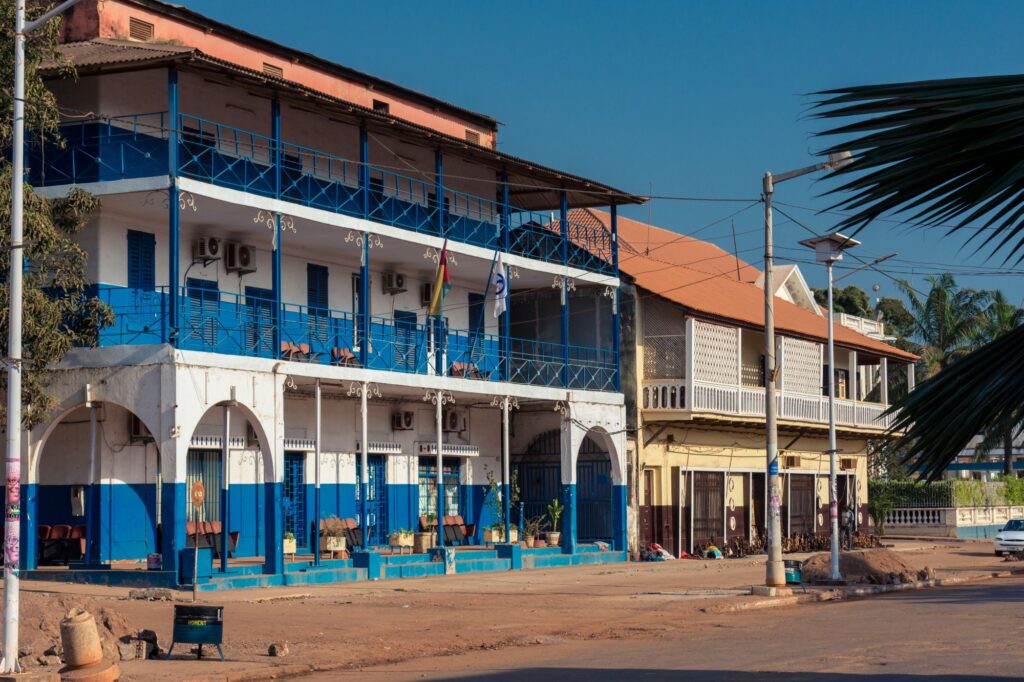
Creole lifestyles and challenges faced under Portuguese control
Under colonial rule, the Portuguese pretended to enable and integrate Creole people, allowing them to believe they were deemed civilised in society despite their African origin. However, the Creoles were ultimately being used by the Portuguese and faced discrimination and inequality. They were made to act as intermediaries for the Portuguese and their slave workforce, and later, after the Atlantic slave trade had declined, with their labour force. Despite these hardships, Creoles continued to share their language and culture with other ethnic groups in Guinea-Bissau.
The Creole language of Guinea-Bissau
Portuguese is still the official language of Guinea-Bissau and is used in news media, public services, parliament, and educational programming. Still, only a minority use it as their first language. As an emigrant nation, many people from different African countries live in Guinea-Bissau speaking their native tongue; as such, there are over 22 languages and dialects used in the country. However, the most widely used language or lingua franca is Guinea-Bissau Creole (Creole, Crioulo or Kiriol for short). Creole is considered the language of independence but is also used in trade, entertainment, and informal literature.
The lexicon of Creole is derived mainly from the Portuguese language but uses original grammar, making it impossible for many native Portuguese speakers to comprehend it. Today, over 50 per cent of people in Guinea-Bissau speak Creole as their first language, and 40 per cent speak it as their second language.

Creole culture and population in Guinea-Bissau
While it may have started in port cities like Bissau and Cacheu, Creole culture soon swept inland to the riverine areas as the country’s waterways connected the Portuguese trading posts throughout the archipelago. Over time, and after the decline of the slave trade, they established settlements of their own.
The Creole people in Guinea-Bissau began as a tiny minority living mostly in a limited number of settlements. To this day, the majority of the country’s inhabitants are African. Creoles comprise only one per cent of a population of nearly two million. As a result, the number of Creoles with mixed Portuguese and African descent in Guinea-Bissau is approximately 20,000. The percentage of Creole people in Guinea-Bissau has decreased over time due to Creole emigration and an influx of immigrant Cape Verdeans and Kristons (Portuguese-speaking Catholics). Consequently, the number of Creoles speaking the Guinea-Bissau Creole language is less than that of fluent speakers from Cape Verde.
Despite this, the influence of Creole heritage has risen to become a significant force in Guinea-Bissau. The spread of the Creole language since the country’s independence is an outstanding example.
The 1979 census found that 4 per cent of Bissau-Guineans spoke Creole compared to 11 per cent who spoke fluent Portuguese, and by 2009, this figure had soared dramatically to 90.4 per cent compared to 27.1 per cent of Portuguese speakers. As such, while it is not the official language in Guinea-Bissau, it is recognised as the most important one, making the Creole culture one of the country’s defining characteristics.
Despite the use of Portuguese in critical channels like television and education and the migration of many African speakers to urban areas where Guinea-Bissau Creole is most prevalent, the use of the language continues to expand in Guinea-Bissau.
Creole cuisine in Guinea-Bissau
Combining African and European elements is a common theme in Creole cookery in Guinea-Bissau. The Portuguese introduced peanut plantations to the country during their occupancy, giving Guinea-Bissau’s most famous dish its vital ingredient.
Caldo de Mancarra, or Mancarra Stew, is a traditional chicken dish in peanut sauce. While on the coast, this dish is served with rice; further inland, they use millet. Conventional African produce like yams, cassava, and plantain combined with European onions and tomatoes are common ingredients in Creole recipes, as well as peppers, spices, and chilis.
The Creole influence in Guinea-Bissau
Guinea-Bissau’s Creole culture has fortified its position over the years. The country’s world-renowned filmmaker, Flora Gomes, whose work has screened at famous festivals like Cannes, makes his movies in Creole with English subtitles. Popular music is also almost always written and performed in the popular language and often revolves around important political and social issues with a humorous slant.
The nation’s Gumbe music genre combines ten folk music styles nationwide. It is considered Guinea-Bissau’s primary musical export. While traditional African instruments like the Calabash are played, all lyrics are in Guinea-Bissau Creole.
Blending African and European influences, the culture of Guinea-Bissau Creole has developed into a community of open and inclusive people who actively share their heritage with fellow inhabitants. The widespread use of the Creole language and its status as a symbol of independence have firmly established it as a core aspect of Guinea-Bissau’s national identity. Despite enduring historical traumas such as slavery and colonisation, as well as modern-day wars and political turmoil, the Creole community in West Africa remains a resilient and flourishing minority with a continually growing impact.