
A total of 26,623 people crammed into Ebbets Field in Brooklyn, New York to watch a baseball game on April 15th 1947. Those in attendance had no idea that this date – which until that point held no significance – would one day become known as ‘Jackie Robinson Day’.
The Major League Baseball game featured the Brooklyn Dodgers defeating the Boston Braves. The big story, however, was a first baseman by the name of Jackie Robinson. In stepping on to the field, Robinson made his big league debut – and in the process broke the so-called ‘colour barrier’ that had been in place for decades.
Robinson was born 28 years earlier on January 31st 1919. The first years of his life were spent in Cairo, Georgia before him and his family moved to Pasadena, California when he was a young boy. Opportunities were limited at this time for the Robinsons, with his mother Mallie forced to work long hours as a housekeeper.
So, how did Jackie go from growing up in an impoverished household to becoming a history-making athlete who would enter the Baseball Hall of Fame in 1962?
Robinson had a clear talent for sports and was a notable standout in his class at John Muir High School in the 1930s. He continued to pursue his interest in the likes of basketball, football, track and, of course, baseball when he attended Pasadena Junior College and UCLA.
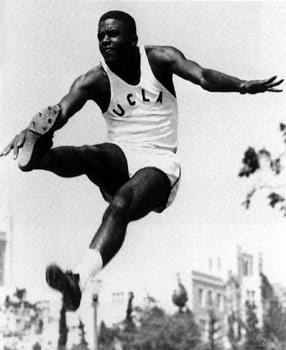
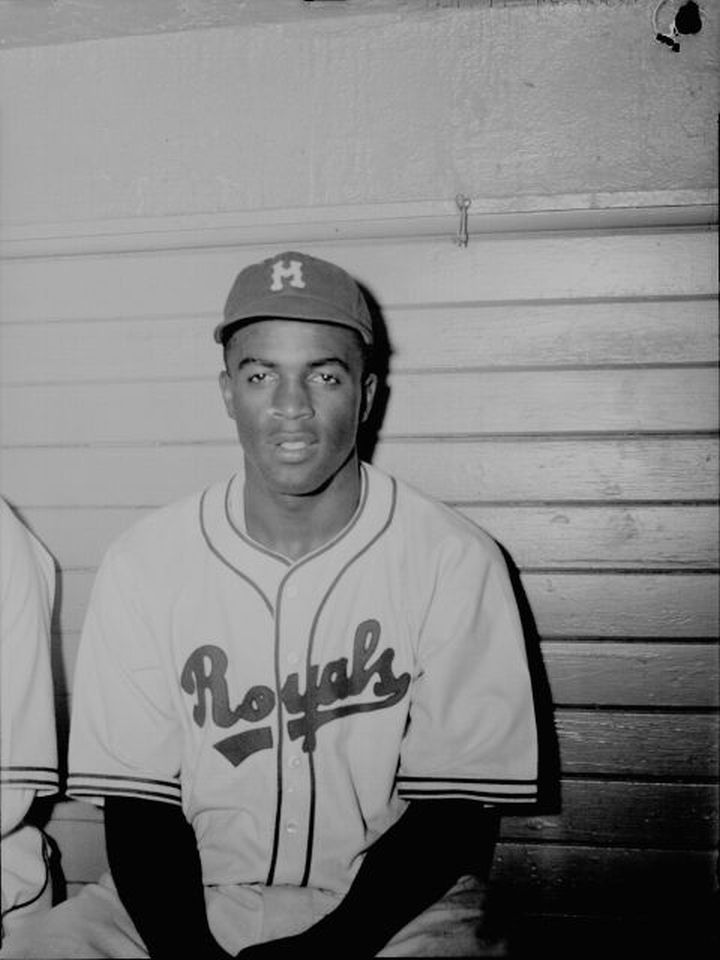
The sky would typically be the limit for an athlete of the calibre of Robinson, but – after deciding to focus solely on baseball – he was initially bound to the ‘Negro Leagues’. While this league did experience a degree of success, it was limited compared to the world-renowned Major League Baseball league. Jackie, however, persevered.
The ‘colour barrier’ was real across the country at this time – but thanks to Robinson it showed some of its first initial cracks when he caught the eye of a scout for the Brooklyn Dodgers. Amongst the 26,623 spectators crammed into Ebbets Field to watch his debut as a first baseman were 14,000 African Americans. Robinson had made a huge step for himself, but an even bigger leap for his race.
The Dodgers would clinch a 5 – 3 victory and Robinson made a name for himself that day. He had more history left to make though. This included being named the inaugural ‘Rookie of the Year’ in 1947 and becoming the first black player to win the National League ‘Most Valuable Player’ Award in 1949. He also contributed to helping the Dodgers win the World Series in 1955.
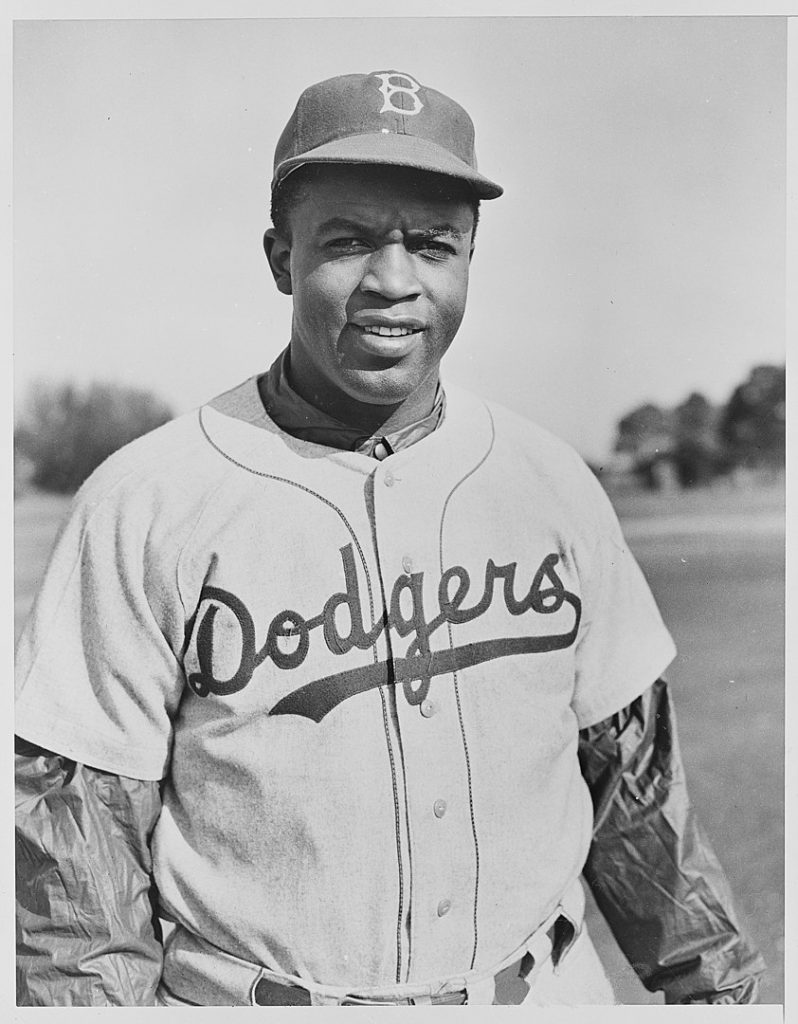
Sadly, Robinson’s journey from humble beginnings to superstardom wasn’t without its challenges. Due to his race, he was often subjected to taunts and jeers while playing in front of thousands. Rather inspiringly, Jackie generally managed to keep his cool as he focused on the bigger picture.
He discussed this during an interview on The Dick Cavett Show in 1972, revealing:
“It wasn’t going to upset me. There was really too much to be done at that particular time – in terms of breaking the baseball colour barrier – to allow name calling to bother me.”
It surely helped that Jackie had the support of his race, his fans and his family. He married his wife, Rachel, in 1942 and the couple had three children together. Long after her husband passed away, Rachel reflected on Jackie’s attitude when she appeared for an interview on Metro Focus in 2014.
Discussing the challenges that Jackie faced after breaking through the colour barrier, Rachel detailed: “He could come home angry about something that had happened but instead of coming into the house and yelling at everybody he’d go and play golf at the golf range. It was hard to control your emotions but it was important to control them.”
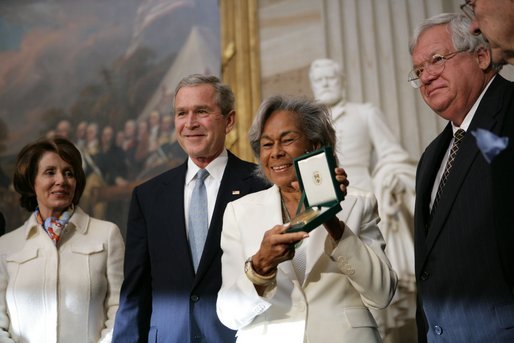
Jackie passed away from a heart attack at the age of 53 in 1972. By that point he’d clearly left his mark on the world of baseball and was a proud member of the Baseball Hall of Fame. However, he’d also become a much wider-reaching role model. This was acknowledged when he was awarded the Congressional Gold Medal and the Presidential Medal of Freedom.
By that point Robinson had lent his name to the Civil Rights Movement and started to play an active role in increasing the rights of African Americans. In 2014, wife Rachel would explain how Jackie always had one eye of segregation – and the ending of it – even though he’d directly led to the integration of Major League Baseball.
She said: ‘[Segregation] was a part of the era. For us it was a challenge and it was an important challenge. We had to be together to understand that we had to meet this challenge and it was a goal set for us.”
It’s for this reason – as well as many others – why Robinson remains such a prominent figure in the history of the United States. He paved the way for esteemed names like Hank Aaron and Barry Bonds. The baseball world keeps Jackie’s memory alive in multiple ways, such as by retiring his jersey number 42 and holding ‘Jackie Robinson Day’ each year on the anniversary of his debut.
If there’s one way to remember Jackie, it’s best done by recalling how humbly he considered his role in breaking down the colour barrier – despite the fact that he acknowledged that Major League Baseball had changed so dramatically since he first made his debut.
During an interview with Lawrence E. Spivak in 1957, Robinson was asked whether a person’s race still stands in the way of them making it in baseball. Just 10 years after his first appearance, he said:
“Not today. Not in baseball.”
“I think if a person has the ability to make the Major League, he will be able to get there on ability alone. I think that is what nine out of ten of the Major League owners are looking for: ability and ability alone.”