
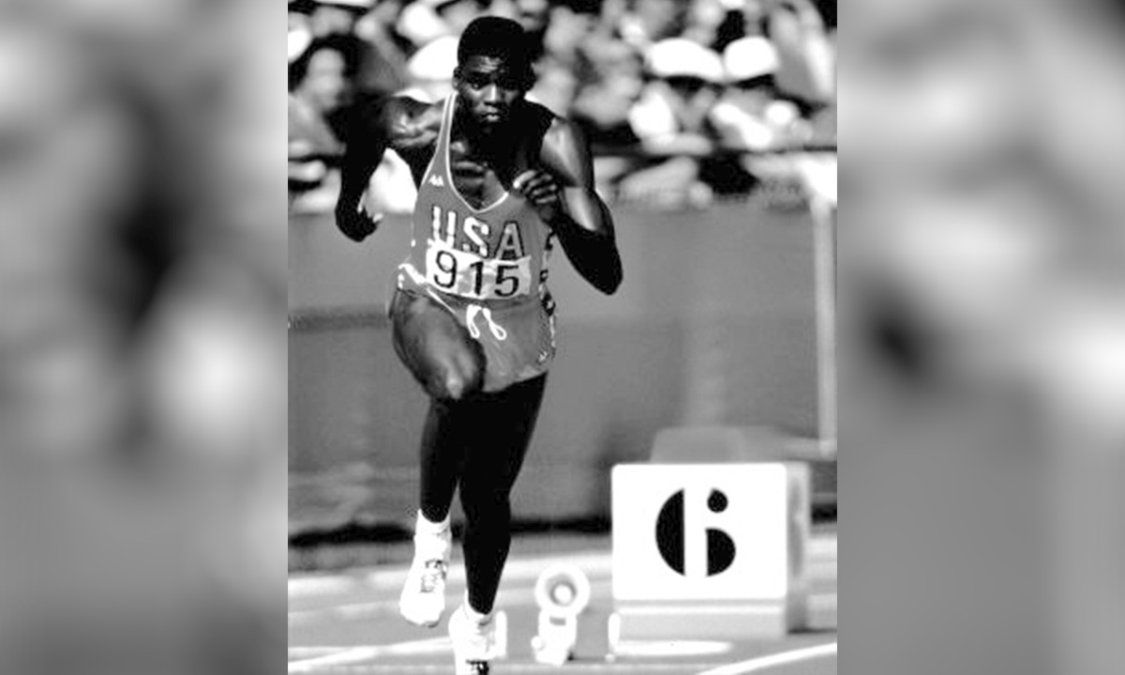
In 1987 a grieving Carl Lewis laid his father Bill to rest. Lewis was fresh off winning four gold medals at the previous Olympic Games in 1984 and – in a poignant gesture – presented one of these medals to his dad before saying his final goodbye. He then made a promise to win another in his name – and it’s fair to say that he made good on this promise.
Lewis would go on to compete at the next three Olympics held in 1988, 1992 and 1996. In each event he would win gold, ultimately cementing himself as one of the most decorated athletes in the history of the world. How did he make this happen? Well, that’s a story that started way back in the thick of the Civil Right Movement.
Lewis was born in Birmingham, Alabama in 1961. At the time of his birth the city was at the heart of a national move towards racial equality and a young Lewis was able to experience this first-hand. In an interview with Spare Change News in 2010, Lewis reflected on how his parents were friends with the late Martin Luther King.
He told the publication:
“When I was being raised my parents were heavily involved in the Civil Rights Movement. They marched down the streets and they were involved in the hosing. Fortunately for them they had a car during the bus strike, so they were drivers, not walkers. They also had friends there, Dr. King was a family friend.”
Lewis was blessed with an athletic pedigree. For example, his mother had represented the United States as a hurdler at the 1951 Pan-American Games. Meanwhile, his father had an accomplished history in playing track and football. It wasn’t, however, a foregone conclusion that Lewis would be able to reach the incredible heights that he eventually did.

Even when the family moved to New Jersey and more emphasis was put on training Lewis in different sports, the youngster never envisioned that the hard work would amount to much success – never mind the nine gold medals that he would go on to win at the Olympics!
Lewis admitted this fact during an interview with the Houston Chronicle. Despite beliefs that he was destined for greatness, he insisted that he always felt limitations growing up. Lewis explained:
“I’m from a small town in New Jersey and there’s zero per cent chance that I could have ever thought my career would be what it was. Even the dreams that I had, I exceeded it tenfold.”
Nevertheless, Lewis was a standout athlete by the time he graduated high school in 1979. On the cusp of becoming a world-class sportsman in track and field, he accepted an athletic scholarship at the University of Houston. The 1980 Olympics were immediately within his sights – only for the United States to boycott the Games because they were being held in the Soviet Union.
Lewis proceeded to wait an agonising four more years for his chance to compete in the world’s biggest sporting contest. Then – by the time the next instalment came in 1984 – he boldly proclaimed that he would win all four events he was entered in. This would have made him match the track records set by the great Jesse Owens during the Games in 1936.
While it might have seemed a brash – almost arrogant – statement to make, it sums up the confidence that the goal-driven Lewis had in his abilities. Once he retired, Lewis would elaborate on this mind-set that eventually led him to an overall nine gold medals.
In an interview with the Healthy Times, he said:
“Set your goals and figure out the simplest, most non-complicated way to accomplish them. You have enough time to accomplish whatever is important enough to you.”
Lewis easily backed up his promise, taking first place in the 100-metre sprint, the 200-metre race, the 400-metre contest and the long jump. As well as winning gold and shattering records, Lewis also had the distinct honour of taking the top prize in his home country since the Games were held in Los Angeles, California.
It was an incredible performance – and it wouldn’t be the last. Lewis would return to win gold once again at the Olympic Games in 1988, before making it a trifecta in 1992. The most unlikely of victories later came during the Olympic Games held in Atlanta, Georgia in 1996.
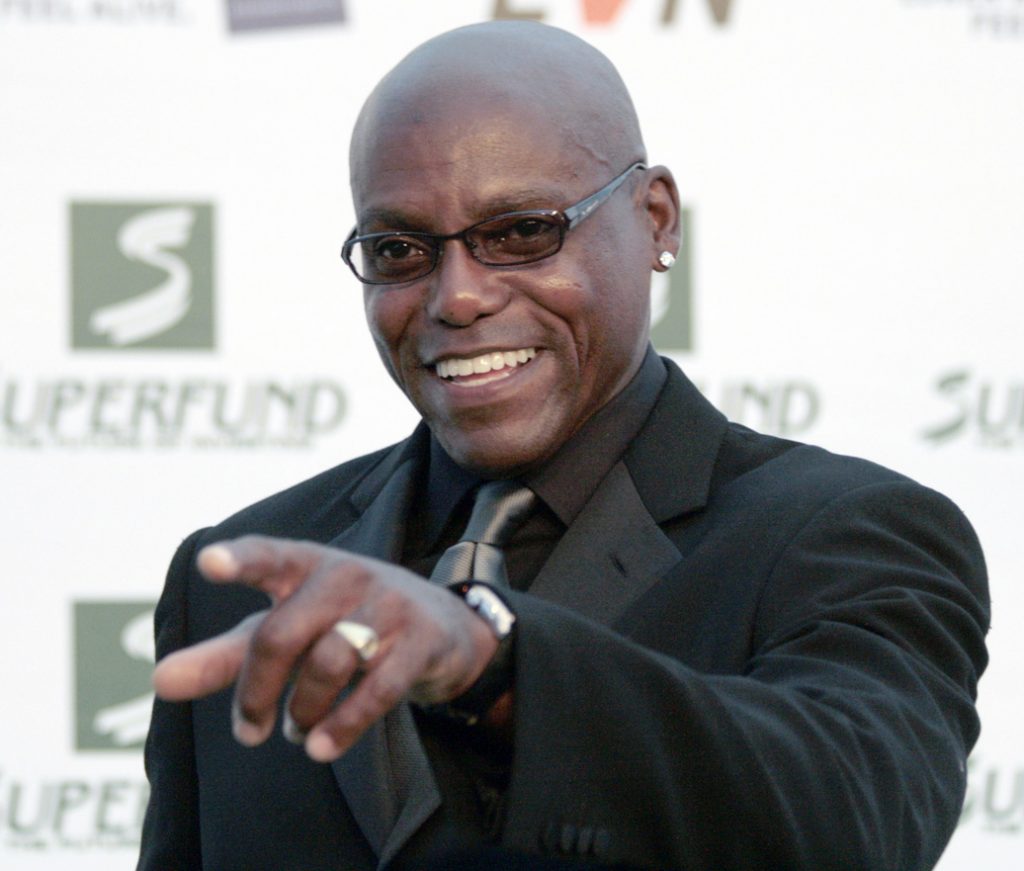
At the age of 35, Lewis was a surprise qualifier to compete in the long jump event. He shocked the world by winning gold once again – in the process making him the first Olympian since discus thrower Al Oerter to win the same event four times.
Lewis was officially in the record books when he retired from competition in 1997. With nine gold medals to his name, it was almost a foregone conclusion that he would be inducted into the National Track and Field Hall of Fame – a feat he achieved in 2001. He still receives similar degrees of recognition to this day, including an induction into the Houston Sports Hall of Fame in January 2020.
These days Lewis is outspoken about issues such as hunger and inequality. Using his name and influence to create awareness, he doesn’t shy away from joining debates and trying to usher in change. This could be seen in 2019 when he spoke out in favour of equal pay for women in the world of sports.
He publically argued:
“The reality is that there’s a lot of prejudice, and a lot of prejudice is fear. We’re afraid to give the same opportunity because it gives us a leg up … the reality is that it’s no different than another athlete on another team. So, yes, I support that.”
Now 59, Lewis is still remembered as one of the greatest athletes in the history of America. Over the space of four Olympic Games there really is no telling how many people of different generations he managed to inspire – and because of that his influence is almost immeasurable.