
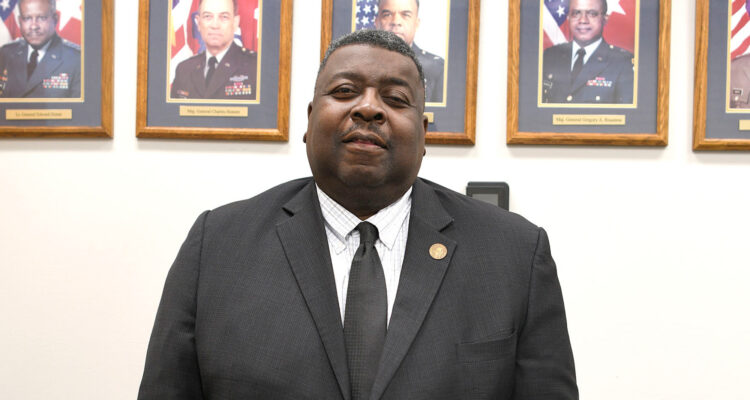
Chancellor John K. Pierre’s life is a powerful testament to resilience, education, and purpose-driven leadership. From humble beginnings in rural Louisiana to leading Southern University into a future defined by innovation and access, he has remained unwavering in his belief that nurturing human potential can transform communities. His vision for Southern is to educate and empower generations to lead with wisdom, courage, and compassion.
There’s a quiet gravity about John K. Pierre — the kind that doesn’t demand a room’s attention, but earns it when he begins to speak. As Chancellor of Southern University and A&M College, Pierre occupies a seat of considerable influence. Yet, his sense of purpose is deeply rooted not in prestige, but in service.
“I consider what I do here mission work,” he says with the calm clarity of someone who knows why he’s here.
Throughout a life marked by hardship and hope, Pierre has come to embody a leadership style that is as deeply personal as it is visionary. His journey began in rural Louisiana, where he was born the 13th child in a family where literacy was once a privilege, not a guarantee. He was the only one of his siblings to be born in a hospital. “That alone,” he reflects, “felt like a sign of something different-a new beginning.”
But the story of John K. Pierre isn’t about a single man’s rise. It’s about legacy, about the enduring power of family, faith, and education to lift entire communities. And it’s about an unwavering and contagious belief that institutions like Southern University are not simply places of learning, but engines of transformation.
As he speaks, you get the sense that every decision he makes as chancellor is informed by lived experience — his own and the countless students who, like him, were never meant to have an easy path. And yet, here they are.

A Foundation Built on Faith and Family
Long before he led one of Louisiana’s most historic universities, John K. Pierre was a barefoot boy running down a country road in rural Iberia Parish, racing to meet his sister Dorothy’s car as she returned from teaching. “I’d hop in her lap and help steer as she eased us down the gravel drive,” he recalls with a warm laugh. “That was my first driving lesson — and probably my first real lesson in leadership.”
Pierre was born in 1959, the youngest of thirteen children. His father, Clarence, was a sugarcane farmer; his mother, Ell, was a formidable woman with a quiet resilience. “Neither of my parents could read or write,” he says. “But they knew the power of education, especially my mother. She was determined we would have access to what they were denied.”
That determination would become the bedrock of Pierre’s life. Of the thirteen children born to his parents, only seven survived infancy. “The child before me passed just two days after being born,” he says quietly. “So I’ve always known that being here—even being born in a hospital—was a kind of miracle.”
Dorothy, the eldest, first cracked open the world of possibility. She was the first in the family who could read, and by age five, she was already keeping meticulous records for local farmers to prevent them from being cheated by the mills. “She was my North Star,” Pierre says. “She earned three degrees, taught high school, became a biology professor, and later pursued a PhD. Her drive shaped us all.”
Each sibling had a story etched in grit. His sister Liz joined the Air Force and rose to the rank of captain — after persuading their father to sign enlistment papers he couldn’t read. His brother Joseph, a gifted sprinter, ran against Olympic legends before being drafted to Vietnam and becoming an educator. “He died too young,” Pierre reflects. “Agent Orange. But he made sure I knew what education could do.”
Faith, too, ran deep. Another sister joined the convent, while his brother Hippolyte spent his teenage years in a seminary in Connecticut. “We were a family full of strong minds and stronger convictions,” Pierre says. “And as the youngest, I had the gift of their example — and the weight of carrying it forward.”
It wasn’t just what his siblings achieved — it was how they rallied around their ageing mother, ensuring she was cared for until she passed at 91. “We were raised to look out for each other,” he says. “That’s the foundation I carry into everything I do.”
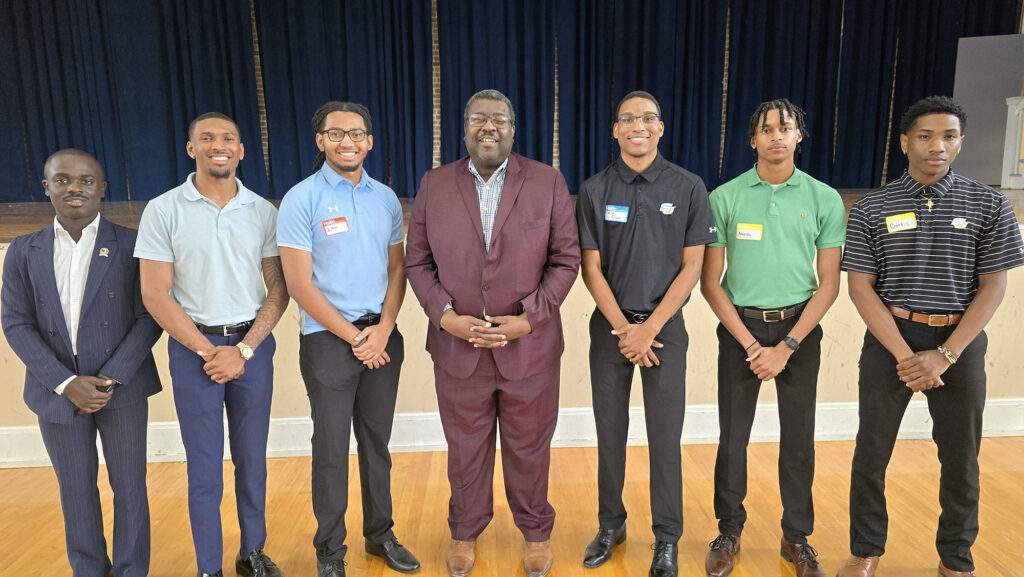
The Turning Point: Education as Liberation
For John K. Pierre, the path to higher education wasn’t a rite of passage but a calculated escape route. “I was ready to leave high school before it ended,” he says. “Not because I didn’t value it, but because I was hungry to move forward.”
He graduated early from Louisville High School and enrolled at Southern University in Baton Rouge, becoming his home and the crucible of his transformation.
His father had died when he was just eleven, leaving his mother to raise him alone. “We didn’t have money. I had no fallback,” Pierre recalls. “I was ready to enlist in the Marines just to pay for college.” But his older brother stepped in with a $500 gift, just enough to bridge the gap between financial aid and housing costs. “He called it the best investment he ever made.”
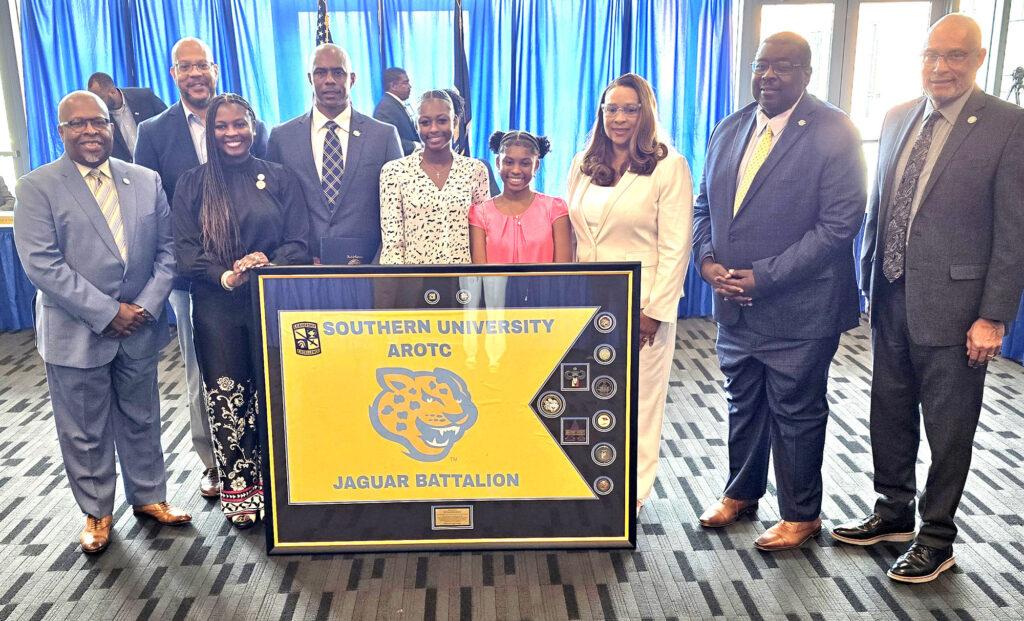
Once on campus, a chance meeting would change his life. “Captain Julius Caesar Coates — I’ll never forget him — saw something in me,” Pierre says. “He came to the freshman dorm and recruited me for Army ROTC.” It wasn’t mandatory anymore, but Pierre saw the opportunity and took it. The ROTC scholarship that followed covered tuition, books, fees, and gave him $100 a month, which, in 1977, went a long way. “That money? That was freedom. That was stability. It meant I could focus.”
It wasn’t just the money — it was the company he kept. He lived among high-achieving Southern University Laboratory School students, many with highly educated parents. “I couldn’t be the weak link in that suite,” he says. “I had to rise to their level.”
His early academic success was no accident. Pierre soaked up every lesson, mentored by exceptional professors like Muhammad Issa in accounting and Dorothy Meese in literature. “They didn’t just teach,” he says. “They challenged me to think deeply, critically, responsibly.”
During this time, he met Dr. Jesse Stone, then president of Southern University, a formidable lawyer and visionary. Stone had lost his son in a tragic accident and created a scholarship in his memory. “Being chosen for that scholarship felt personal,” Pierre recalls. “He looked at me and saw the son he lost. That responsibility — I’ve never forgotten it.”
College, for Pierre, wasn’t a stepping stone. It was emancipation. “That was the moment I understood — education wasn’t just about a better job. It was about a better life. It was the key that opened every door.”
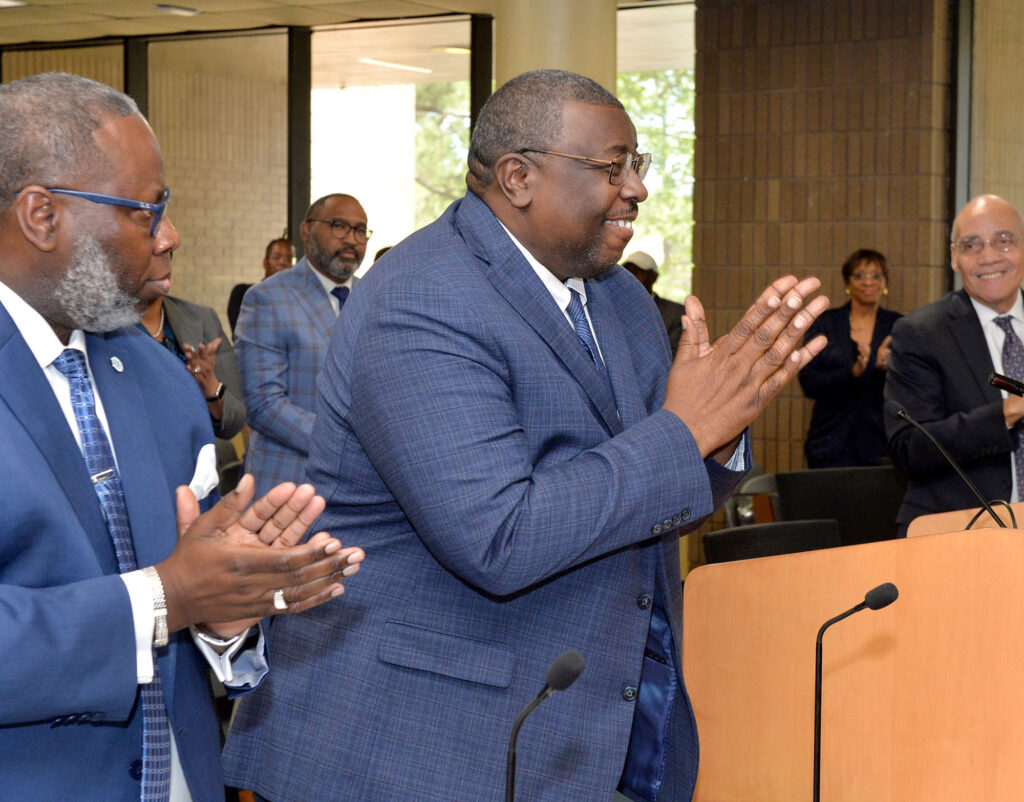
John K. Pierre – Building the Scholar-Leader
When John K. Pierre left Southern University with his degree and Army commission, the boy who once ran barefoot in Louisiana cane fields had become a young man with purpose and poise. But he wasn’t done.
“I wasn’t sure I was ready for law school,” he admits. “So I decided to test myself first.” That test came in the form of a master’s degree in tax accounting from Texas Tech University. As a graduate assistant there, Pierre discovered a second calling — teaching. “I was thrown into classrooms. Graduate students taught the undergraduate courses. I loved it.”
When he finally enrolled in law school at Southern Methodist University in Dallas, it was thanks to a call that changed everything. “Professor Paul Rogers called and asked if I’d come to SMU,” Pierre recalls. “I told him I couldn’t afford it. He said, ‘Can you afford it if it’s free?’” With a full scholarship covering tuition, housing, and books, Pierre had everything he needed — and nothing holding him back.
At SMU, he again found himself immersed in a world of complexity, not just academically, but socially. He tutored star athletes on a team that would later become the focus of a national scandal for NCAA violations. “That was before NIL,” he says. “Those guys were being paid under the table. The school eventually got the death penalty — two years with no football.”
It was an eye-opening experience. “I saw up close how power and money influence even something as sacred as education,” he says. “But it also taught me how vital it is to stand on principle.”
After graduating, Pierre fulfilled his Army commitment as a JAG officer — a role that would shape his view of law, leadership, and discipline. “Being an Army lawyer taught me how to make decisions when they’re not easy,” he says. “It gave me confidence — not just in what I knew, but in how to carry it forward.”
Even while serving, Pierre kept teaching. At night, he lectured at universities near the base. “It was my way of staying connected to the classroom,” he says. “Even in uniform, I was an educator at heart.”
The transition from military service to academia was almost seamless. Students he tutored — including his then-wife’s law school classmates — began recommending him to their professors. “Word got around,” he says. “Eventually, the chancellor invited me to join the law faculty at Southern. I didn’t need a second invitation.”
It was 1990. He was 31 years old. And he was finally home.
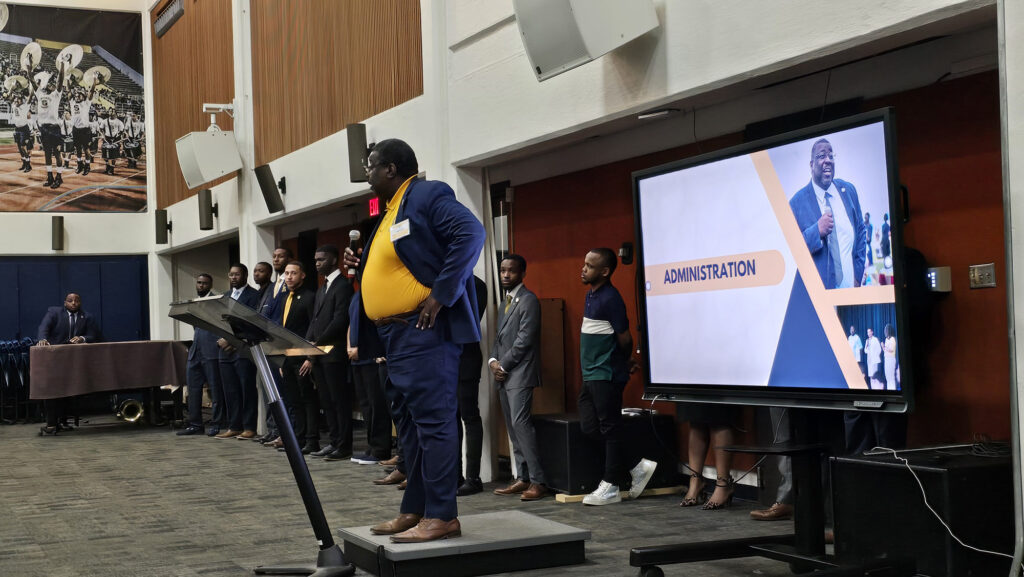
A Lifelong Educator and Advocate
When John K. Pierre returned to Southern University in 1990, he wasn’t just stepping into a new job — he was stepping into his purpose.
“I was only 31,” he says, “and some of my students were older than me. Some were classmates from undergrad. They joked about how long I’d last.” He laughs. “But I fooled them.”
They quickly discovered that Pierre wasn’t just another young professor trying to earn stripes — he already had them. Years of teaching in graduate school, at military bases, and one-on-one with law students had given him more than technical knowledge. He had presence. And more importantly, he had empathy.
“I understood what they were juggling,” he says. “Some were working full-time, raising kids. I’d lived that kind of pressure. I wasn’t there to make life harder. I was there to help them succeed.”
Pierre’s teaching style was grounded, rigorous, and human. He made it a point to be accessible, blending academic expectations with personal encouragement. “If they knew I cared, they’d rise to the challenge. That’s how you build trust — and excellence.”
Eventually, he took a sabbatical and headed west to California, teaching at Cal State and Loyola University. It was there that his vision began to expand.
“California was ahead of its time. They were already doing distance learning, integrating technology into the classroom in ways we hadn’t even imagined in Louisiana,” he recalls. “I saw where higher education was going — and I knew we had to catch up.”
When Pierre returned to Southern University, he wasn’t just more seasoned. He was more visionary. He had seen what was possible and was ready to build it back home.
What followed was more than a career. It was a calling.
Chancellor with a Vision
By the time John K. Pierre became Chancellor of Southern University and A&M College, he had already transformed its Law Center into one of the most accessible and innovative legal institutions in the country. However, leading the flagship of the Southern University System — a land-grant, historically Black university serving thousands across Louisiana — came with new weight and purpose.
“My vision,” he says, “has always been to prepare students for the world they’re going to walk into — not the one we remember.”
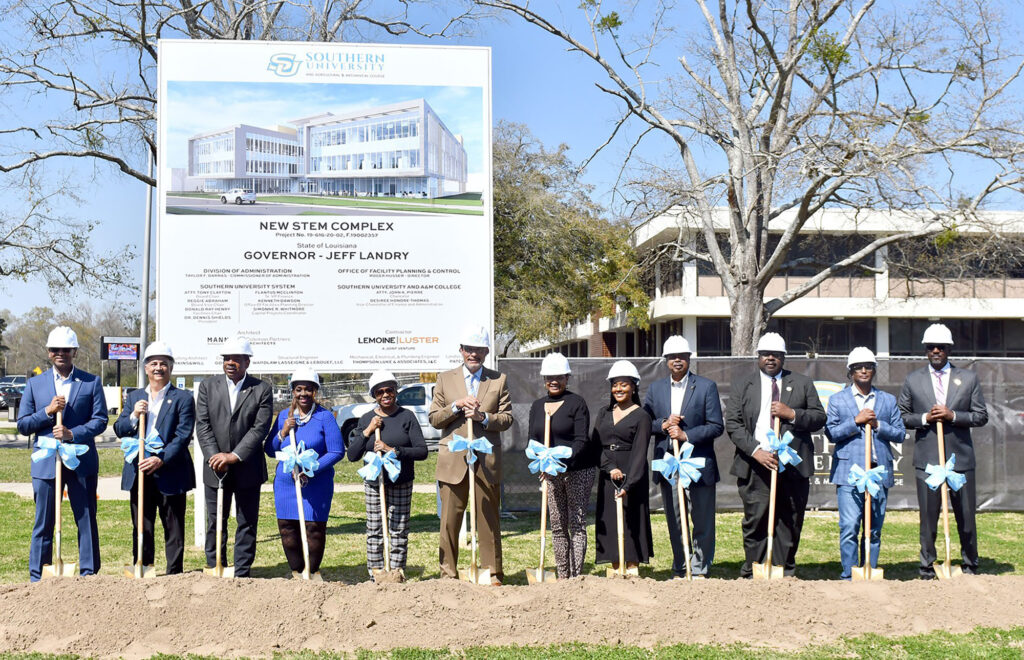
Pierre isn’t interested in maintaining traditions for their own sake. His focus is forward. Under his leadership, Southern has launched new programs in high-demand fields: computer and chemical engineering, construction management, and music technology. He’s incredibly proud of the university’s new esports lab—not just because it speaks to the interests of today’s students but also because it’s a doorway into disciplines like cybersecurity, coding, and content development.
“Some students won’t come through the front door of calculus,” he explains. “But they’ll come through the back door of gaming — and we’ll meet them there.”
He sees Southern as a place of radical possibility, especially for students who are often the first in their families to pursue higher education. “That’s who we’ve always served,” he says. “But serving them today means something different than decades ago.” With rising tuition, mounting debt, and shifting perceptions of higher education’s value, Pierre believes universities must do more than open doors — they must walk students through them, equipping them to thrive in a complex world.
But the table, he believes, must also be reimagined.
“Our students are taking on more debt. State support for higher ed has declined. That means we must create an environment where they can succeed — quickly, affordably, and with the right tools,” he says.
To do that, Pierre is leveraging Southern’s land-grant status and building partnerships that serve not just students but entire communities. One example is expanding broadband access and 5G infrastructure to underserved neighborhoods around Baton Rouge.
“We have to be an economic engine,” he says. “For North Baton Rouge, for the region, for the state. Education alone isn’t enough. It has to be education with impact.”
That ethos is reflected in Southern’s agricultural extension programs, which now reach all 64 parishes in Louisiana, and its mission to develop what Pierre calls “lawyer-leaders, scientist-leaders, artist-leaders” — graduates who are equipped not just to get jobs, but to change systems.
“There’s a responsibility that comes with this seat,” he says, pausing for a beat. “But I’ve been preparing for it my whole life.”
Diversity, Inclusion, and the Creole Experience
If you ask Chancellor Pierre about diversity, he doesn’t rattle off statistics. He talks about stories — about lived experience. He quickly reminds you that inclusion isn’t a trend at Southern University. It’s its foundation.
“We’ve always served the underserved,” he says. “But we’ve never excluded anyone. That’s who we are.”
Under Pierre’s leadership, Southern continues to be one of the most accessible public HBCUs in the country, especially in its high-demand programs like nursing and allied health. These programs, he notes, naturally draw students from different racial and cultural backgrounds — not just because of job prospects, but because healthcare is one of the few spaces in America that reflects its people.
But, Pierre says, diversity cannot be measured solely by enrolment numbers. It must be reflected in the mindset and in how institutions evaluate potential. “If we judge people only by ACT or SAT scores, we’re missing the point,” he says. “Standardized tests do not measure resilience, intelligence, or determination. Especially not for people of color.”
For Pierre, diversity is personal. He comes from southwest Louisiana, a region shaped by centuries of cultural intermingling. “People hear ‘Creole’ and think of food,” he says, smiling. “But Creole is more than cuisine. It’s a cultural mix — African, French, Spanish, Native — a lived diversity that predates any modern definition.”
He sees Southern University as a reflection of that Creole ethos: complex, layered, and inclusive.
“In Louisiana, you’ll find Germans in Eunice, Italians in Independence, Irish and French in pockets across the state,” he explains. “It was the systems — the laws — that separated us. But the people? The people found ways to come together. Through music. Through language. Through food. That’s diversity.”
At Southern, Pierre ensures that this philosophy is baked into how students are recruited, faculty are supported, and the community is engaged. For him, inclusion is not about optics; it’s about outcomes.
“You don’t need to be the smartest person in the room,” he says. “You need to be the one who listens to everyone in the room.”
Leadership and Mentorship
For John K. Pierre, leadership isn’t about titles or corner offices but trust, humility, and authenticity.
“No one cares how much you know,” he says, “until they know how much you care.”
In his view, mentorship is less about formal arrangements and more about presence — showing up, setting the tone, and offering quiet guidance. “I never had a big sponsor,” he reflects. “But I had people who showed me how to lead by example — sometimes in ways they didn’t even realize.”
Pierre believes leadership is earned, not granted. “Power has to be used judiciously,” he says. “You can have positional power, but it’s meaningless if you don’t earn respect. And respect comes from listening, lifting others, and doing the work.”
His leadership style is grounded in observation and emotional intelligence. He discusses placing people where they can thrive, not just where they’ve landed. “Sometimes, someone isn’t underperforming — they’re just in the wrong role,” he says. “Great leaders figure that out.”
At the heart of his approach is a refusal to lead with ego. “When you walk into a room,” he says, “never assume you’re the smartest person there. Instead, listen. Watch. You’ll learn more than you ever could by talking.”
He’s especially wary of the arrogance that can come with academic status. “You don’t measure wisdom by degrees,” he says. “Some of the most insightful people I’ve learned from never set foot in a university.”
This humility and high standards blend defines Pierre’s mentorship legacy for students and colleagues. He pushes those around him to aim higher, but never forgets the human being behind the goal.
“If I won’t do it,” he says, “I’ll never ask someone else to. That’s how you build trust. That’s how you build a team.”
Balancing Life and Leadership
Balance can feel like a luxury in a role as consuming as Chancellor. But for John K. Pierre, it’s a non-negotiable.
“I don’t worry about what I can’t control,” he says. “That’s how I sleep at night.”
Leadership, in his view, doesn’t have to come with burnout. It comes with boundaries — and with people who help enforce them. Chief among them is his wife, Antoinette. “She’ll say, ‘It’s time to come home now,’” Pierre says with a smile. “And I listen.”
Despite the long days and weighty decisions, he insists that stress doesn’t define him. “When you see this work as mission work, not just a job, it shifts your mindset. You feel fulfilled, not drained.”
That doesn’t mean he minimizes the sacrifices. He’s candid about the time leadership takes away from family, and the importance of a strong support system that understands the calling. “They have to believe in the mission, too,” he says. “Because they’re part of it.”
His secret to balance is deceptively simple: perspective. He draws strength from knowing that his work — building opportunities for others — has a generational impact. “When I go home, I rest. I don’t carry the weight of what didn’t get done. I focus on what I did.”
And he never loses sight of what matters most.
“There are moments that remind you to stop,” he says. “To recognize what’s truly important — family, health, presence. Those are the things that keep you grounded.”
Vision, Legacy, and the Power of Human Potential
When Chancellor Pierre talks about the future, his tone is measured, but his vision is bold. He doesn’t speak in slogans — he says in strategy.
“Our goal,” he says, “is for Southern University to be recognized as a transformational institution — not just for this generation, but for generations to come.”
That transformation begins with infrastructure: rebuilding the physical campus, modernizing facilities, and forging partnerships with private and public sectors. But it doesn’t end there. Pierre is focused on growing programs that align with real-world needs — from chemical engineering and environmental toxicology to nursing, music tech, and entrepreneurship.
“Students today face different challenges than we did 30 or 40 years ago,” he explains. “They’re more connected, but often more isolated. More in debt. More anxious about the future. So we have to be more than a university — we have to be a launchpad.”
For Pierre, Southern’s legacy is not measured solely by academic accolades or enrollment numbers, but by the lives it changes, especially those of first-generation college students. “If we help someone rise above what their circumstances say they should be,” he says, “then we’ve done something powerful.”
He often speaks of “human assets,” a phrase reflecting his core belief: that people, not programs, are the currency of change.
“Too often we talk about physical assets, cash flow, buildings,” he says. “But the most valuable investment we can make is in people. When you develop a human asset — someone who goes back to their community as a leader, a mentor, a healer — that changes everything.”
That, he says, is the legacy he hopes to leave.
“A place where people were nurtured. Where they had access, where they were challenged, loved, and believed in, that’s what I want Southern to be.”
When asked for the proverbial three wishes, he doesn’t hesitate.
“Health — physical and mental. Wisdom — to make sound decisions. And faith — to keep going, even when things don’t go your way.”
And if he were stranded on a desert island? He grins. “Give me some Zydeco and cool air. I’ll be just fine.”
Toward the Horizon
As Southern University marches into a new era, John K. Pierre stands at the helm with quiet conviction and a clear sense of purpose. His path — from the sugarcane fields of rural Louisiana to the chancellorship of a storied institution — isn’t just remarkable. It’s instructive.
It teaches us that resilience can be inherited, that education can be a form of liberation, and that leadership is most potent when rooted in compassion.
What Pierre sees on the horizon is not just growth—it’s transformation—for students, families, and entire communities.
“We’re not just preparing students for careers,” he says. “We’re preparing them to lead, innovate, and lift others as they rise. That’s what this place has always stood for.”
Southern University continues to be more than a university in his steady hands. It’s a promise — once whispered by his mother, written into the lives of his siblings, and now spoken aloud by the thousands of students who walk its campus each year.
And that promise is this: You will be nurtured if you commit yourself to excellence. You will be seen. You will matter.