

Journey of Judge Darrel James Papillion from a rural Creole upbringing in St. Landry Parish to the federal bench is a testament to perseverance, integrity, and a deep commitment to justice. Rooted in his heritage, he has built a distinguished legal career while remaining dedicated to mentorship, community, and the values that shaped him.
Judge Darrel James Papillion is a highly respected figure in Louisiana’s legal community, recognised for his integrity, legal expertise, and unwavering commitment to justice. His journey from a humble Creole upbringing in St. Landry Parish to his current role as a judge of the United States District Court for the Eastern District of Louisiana is a testament to his dedication, perseverance, and deep sense of public service. Throughout his distinguished career, he has exemplified fairness, professionalism, and a steadfast commitment to upholding the rule of law. Known for his eloquence and deep understanding of the legal system, Judge Papillion continues to significantly impact the judiciary and the community he serves.
Upbringing
Judge Darrel Papillion was born and raised in the small rural community of Swords, nestled between Opelousas and Eunice in St. Landry Parish, Louisiana. His Creole heritage and tight-knit community shaped his values and outlook on life.
His parents met in Lafayette while visiting sick relatives at a hospital. They married in 1965 and settled in St. Landry Parish, where they built a life rooted in family, hard work, and tradition. Reflecting on his family’s deep history in the region, Papillion proudly shares, “My family was among the free people of colour farming in St. Landry Parish long before the Civil War.”
Growing up, he was surrounded by close family members, with many of his childhood friends being his cousins. His community was small and close-knit, and as he recalls with a smile, “We grew up in a very insular little community. It wasn’t until I was in high school that I visited a friend’s home who wasn’t a relative.”
His upbringing, shaped by strong family ties and a deep sense of tradition, remains a guiding force in his life today.

Creole Heritage and Family Roots
Judge Darrel Papillion’s upbringing in St. Landry Parish was shaped by the deep cultural traditions of his Creole heritage and the strong values passed down through generations. His family had been among Louisiana’s free people of colour long before the Civil War, and their resilience, faith, and sense of identity played a pivotal role in his early life.
With many relatives living nearby, the family was at the heart of his childhood. His grandparents, who lived next door, spoke only French, making the language an essential part of his daily life. “If I wanted to communicate with them, it had to be in French,” he recalls. Their home was a place of tradition and discipline, where faith and hard work were non-negotiable. His grandfather maintained a small farm, raising livestock and growing crops, while his grandmother, despite being unable to read or write English, skilfully managed household responsibilities, including sorting mail by recognising letters in people’s names.
Reflecting on their way of life, Papillion notes, “They lived in a world that felt almost from another time. Their faith, customs, and work ethic defined who they were.” These principles—dedication to family, perseverance, and pride in their Creole identity—became the foundation of his character.
It was only later in life that he fully appreciated the uniqueness of his upbringing. “Over time, I realised that where I was from was special, something to be proud of,” he says. “In many ways, it was like growing up in an immigrant community. My grandparents were deeply rooted in their heritage, even as they embraced being American.”
Parental Influence on Education
His parents instilled Judge Darrel Papillion’s deep appreciation for education from a young age, which he viewed as the key to opportunity and advancement. Growing up in a Creole household, he was surrounded by a strong work ethic and a belief in the transformative power of learning. “It’s an understatement to say my parents valued education,” he recalls. “They were almost fanatical about it. There was never a question that my two sisters and I would finish high school and go to college and pursue professional careers.”
His parents’ unwavering expectations drove him to excel academically. “When I went to school, my goal wasn’t just to pass—I was aiming for straight A’s because I genuinely believed that was the only way forward,” he explains. His father, a school bus driver, reinforced this discipline by ensuring that school and behaviour were non-negotiable. “I remember in second grade, my dad parked outside the school every afternoon. The last thing I wanted was for my teacher to walk outside and tell him anything negative about my behaviour.”
Beyond academic pressure, his parents also instilled a sense of historical awareness, reminding him of the opportunities denied to previous generations. “They constantly reinforced the idea that I was fortunate to be growing up at a time when more doors were open,” he reflects. “They reminded me that my grandparents, due to discrimination, had not been allowed or able to do certain things. But they made it clear that I had the chance to achieve what had once been impossible for them.”
This strong foundation shaped Papillion’s relentless pursuit of excellence and fuelled his determination to make the most of every opportunity. “Looking back, I see how right they were,” he says. “Their insistence on education wasn’t just about personal success—it was about breaking barriers and ensuring that we had choices they never had.“
Radio Show Host
Despite being an academic high-flyer with an aptitude for learning, Papillion also nurtured a penchant for traditional Creole music, so much so that he even hosted a show on a local radio station for a while. Fondly recalling his youthful musical passion, he says, “So we started a radio show called Jambalaya. My mother had a good little collection of Zydeco LPs on vinyl. We had Buckwheat, Rockin’ Sidney, Clifton Chenier, and other things. And so, we only had to fill maybe an hour or two in those days, and we would talk, and people would call in. We would start with our theme song at the show’s beginning each week. It was on Sunday mornings. Then, we would play music and talk to callers.”
Papillon’s radio gig with Charles Cravens was a predecessor to the show later hosted by Donald and Charles Cravens. The Cravens brothers went on to have illustrious careers. “I started a Zydeco show with Charles Cravens on KFXZ in Lafayette. Then, I quit to go to college and went out to LSU. But the great thing is, it worked out fine for me. It’s funny because Charles Cravens is a judge today. We’re both judges, but we were two guys at a radio station 30 years ago. And it worked out great for them because they got tremendous name recognition. Don Cravens became a senator and the mayor of Opelousas, and Charles was the district attorney for a while and then became a judge.” With a loving laugh, he adds, “And, of course, my mother never got her records back.”
The decision to go into Law
Judge Papillion’s journey into the legal profession was driven less by destiny and more by a practical realisation—he wanted a career with minimal mathematics. “I have to admit, while I was an excellent student in most subjects, math was a challenge for me,” he says with a laugh. “I gravitated toward a field where it wasn’t a primary focus.”
However, his interest in law was far from accidental. Even in middle school, he was drawn to the legal profession and actively sought opportunities to learn more about it. “By the time I was in middle school, I knew I wanted to be a lawyer more than anything,” he recalls. “I immersed myself in anything I thought might help me prepare for that path.”
One of his early influences came from a family connection. “I had a cousin who married a lawyer—he still practices in Baton Rouge today,” Papillion shares. “I probably drove him crazy because every time I visited, all I did was ask him questions about his work.” His cousin’s experiences at LSU Law School cemented Papillion’s aspirations. “That shaped my thinking. If you had asked me what I wanted to do in eighth grade, I would have told you—I want to go to LSU Law School and become a lawyer.”

LSU
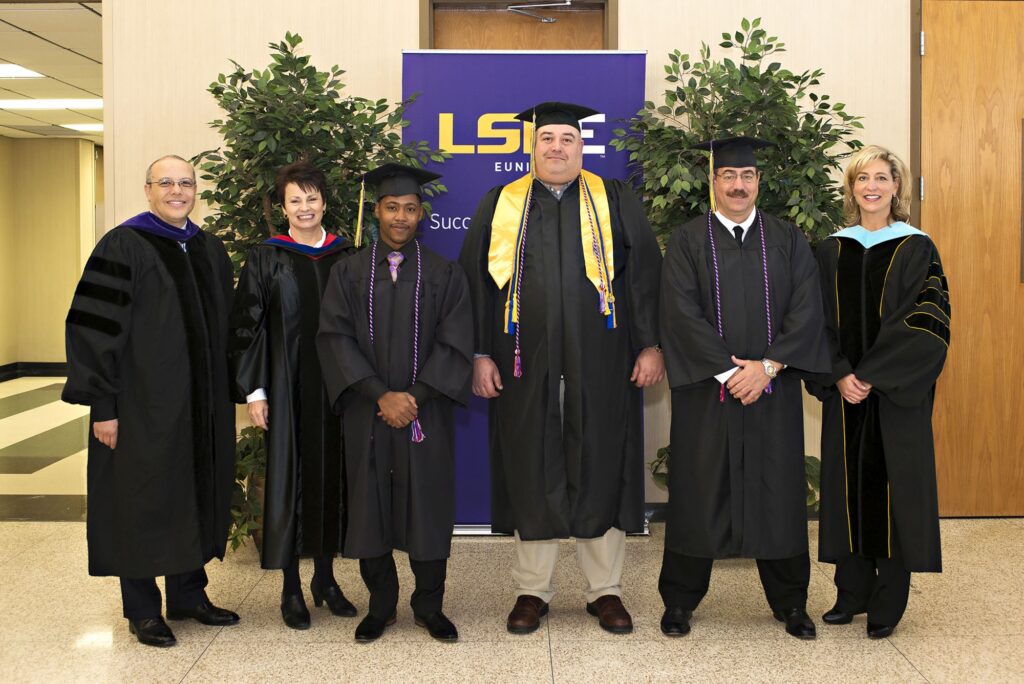
After spending two years at LSU Eunice, Papillion earned a full scholarship to Louisiana State University in Baton Rouge, where he completed both his undergraduate and law degrees. He graduated with a Bachelor of Arts from Louisiana State University & A&M College in 1990 and went on to earn his Juris Doctor from the Paul M. Hebert Law Center at LSU in 1994.
Fully committed to his academic goals, Papillion embraced the demands of his studies with discipline and focus. “At LSU, I spent most of my time studying and working,” he admits. “I was so focused on my education that I have to confess—I didn’t have much of a social life.” His dedication, however, laid the foundation for his future success in the legal profession.
Legal Career, Mentorship, and the Next Generation
Judge Darrel Papillion’s legal journey has been one of dedication, perseverance, and a commitment to uplifting the next generation of lawyers. After earning his Juris Doctor from the Paul M. Hebert Law Center at Louisiana State University in 1994, he clerked for a justice on the Louisiana Supreme Court before joining a prestigious New Orleans law firm. Despite his early success in corporate litigation, his career turned pivotal when one of his former professors, Ed Walters, offered him a position at a smaller firm in Baton Rouge.
“Leaving a large firm for a smaller practice was one of the best decisions I ever made,” he reflects. “It allowed me to work on high-impact cases and develop as a trial lawyer.” Over time, he co-founded Walters, Papillion, Thomas, Cullens, LLC, where he practised for nearly 15 years before his judicial appointment. His experience in trial law built his reputation and instilled in him a strong belief in mentorship and diversity within the legal field.
Papillion recognises that the legal profession has evolved significantly, presenting more opportunities for minority lawyers than in the past. However, he emphasises that success requires active participation in the broader legal community. “The legal industry doesn’t operate in silos,” he explains. “Young lawyers, especially those from underrepresented backgrounds, need to network beyond their immediate communities and engage with the larger legal system.” He believes joining professional organisations and building relationships across different sectors is key to advancement.
His commitment to mentorship extends beyond informal guidance—he has served as President of both the Baton Rouge Bar Association (2013-2014) and the Louisiana State Bar Association (2016-2017), using these platforms to support aspiring lawyers. As a federal judge, mentorship remains at the core of his role. “One of the most rewarding aspects of this job is working with young law clerks,” he says. “I see it as an opportunity to shape the next generation of legal minds.”
Papillion is a firm believer in preparation and seizing opportunities. “Good things come to those who work hard and position themselves for success,” he says. “There is no shortage of opportunities in law, but the question is—are we truly ready for them when they come?”
Significant Cases and Legal Contributions
Before his appointment to the federal bench, Judge Papillion built a distinguished career as a trial lawyer, handling complex litigation cases involving civil rights, wrongful death, and personal injury. His work demonstrated his legal expertise and reflected his deep commitment to justice and advocacy for individuals seeking fair representation.
One of his notable cases, English v. Ardoin, involved a constitutional challenge to Louisiana’s congressional districts. Representing a group of registered voters, Papillion argued that the state’s districts were malapportioned due to population shifts, potentially violating the principle of “one person, one vote.” This case underscored his dedication to protecting voting rights and fair representation.
In Daigrepont v. Exxon Mobil Corp., Papillion represented a worker who suffered severe burns in an explosion at an Exxon Mobil refinery. The lawsuit alleged that Exxon Mobil knowingly created hazardous conditions, leading to the accident. After a complicated legal process, the case settled confidentially.
Another high-profile case, Mays v. Chevron Pipeline Co., involved a wrongful death lawsuit against Chevron after an explosion on an offshore natural gas platform. Papillion co-represented the family of a contract worker killed in the accident. Despite Chevron’s attempt to claim immunity under federal maritime law, the court rejected their defence, and a federal jury ruled in favour of the plaintiffs. The verdict was later upheld on appeal.
Papillion also played a significant role in several catholic school abuse cases, representing multiple families affected by the sexual abuse scandal within Louisiana’s Catholic institutions. His advocacy contributed to many settlements that sought justice for the victims.
These cases highlight Papillion’s legal acumen, willingness to take on powerful institutions, and steadfast commitment to ensuring fairness under the law. His extensive experience in high-stakes litigation ultimately paved the way for his transition to the federal judiciary, where he now brings the same dedication to upholding justice from the bench.

An Appointment for Life
Papillion proudly explains that a federal judgeship is a lifetime appointment—a responsibility he embraces. “Federal judges serve under what is known as ‘good behaviour’ tenure, which has been interpreted to mean a lifetime appointment under the law. However, once a federal judge reaches age 65 and has served for at least 10 years, they become eligible for what’s called ‘senior status.’ This applies if their age, combined with their years of service, totals at least 80. For example, Judge Lemelle opted for senior status, which allows the president to appoint a new judge to fill the seat while the senior judge continues to serve in a reduced capacity for as long as they choose.”
As a federal judge, Papillion now hears many constitutional law cases. “In the federal courts, we sit on cases involving the constitution and laws of the United States, as well as disputes between citizens of different states. So, we have limited jurisdiction. Most of the legal business in Louisiana is handled in state court, but disputes between citizens of different states and disputes arising under the constitution, or if there’s an issue of federal law, it brings you to federal court.”
Young People, Technology and Jobs
Judge Papillion has observed how technology, while offering many advantages, can sometimes hinder young professionals in the workplace. He expresses genuine concern about the shift from face-to-face interaction, stating, “Some young people are so immersed in technology that they miss out on the value of direct social engagement. Remote work, distance learning, and other digital tools can be useful but also create barriers to building relationships and career opportunities.”
As a strong advocate for in-person collaboration, he encourages young professionals, particularly those from underrepresented backgrounds, to be physically present whenever possible. “Opportunities often come from visibility,” he explains. “If someone is looking to fill a position, promote an employee, or offer new responsibilities, they are more likely to choose the person they see and interact with regularly. Someone who does an excellent job but is only seen on Zoom may not come to mind as quickly as the person they engage with daily.”
He warns that while technology has transformed how people work, it can also disadvantage those trying to establish themselves. “The younger generation’s reliance on digital communication and remote work can sometimes work against them, especially if they don’t have other avenues to break into their chosen field,” he notes. “Being present, building in-person connections, and engaging beyond screens still matter—sometimes more than people realise.”
Role Models
Papillion strongly believes in the influence of positive role models and acknowledges their impact on his journey. He deeply appreciates those who inspired him and reflects, “I was fortunate to have many role models. In school, I worked for the district attorney in St. Landry Parish, Morgan J. Goudeau, III. He was a well-respected figure, deeply connected to the African American and Creole communities. A devout Catholic and a Georgetown Law School graduate, he became a significant mentor to me as I was growing up.”
He continues, “There were also individuals I admired from a distance, even if I didn’t know them personally. Dr. Norman Francis was someone I looked up to, a person whose way of being I sought to emulate. Similarly, Judge Lemelle has always been a figure of great respect for me, as has Judge Brian Jackson in Baton Rouge, and, of course, my long time law partner, Ed Walters.”
Judge Darrel James Papillion – Mentoring
Likewise, Judge Papillion is committed to “paying it forward” and is himself a role model for many young people taking their first tentative steps in the legal profession, whom he currently mentors. Mentoring is one of the reasons he treasures his current role so much. As he says, with a staunch conviction of the importance of those who are older, wiser and more experienced making time for those starting, “In my work at the bar as state bar president, and as a practising lawyer, I work to try and be available to mentor young lawyers or aspiring lawyers. That’s one of the things that excites me about being a federal judge – that every federal judge has anywhere from two to three young law clerks. Now, I’m in my second year as a judge. I’ve only had a few law clerks, but I hope in the coming years to have the opportunity to develop a lot of lawyers that way.”
“One of the things I hope to do (as a judge) is to inspire and mentor young people. I hope to be an example of someone born into a home where my grandparents lived next door, where they spoke no English, and where they couldn’t read or write, but of someone who could get an education and advance and become a federal judge.”
He adds, with sincerity and a surfeit of human decency, “I would like to do this job very well, and try and be an honest, fair and diligent judge, and someone who can inspire young people maybe to try and look to doing the same thing.”
Family
Papillion, who is Catholic, met his future wife, Shirley, while they were both students at LSU. Recalling their courtship, he says fondly, “Shirley was “a young woman from a family very much like mine. When I visited her in the early days of our dating, all her grandparents were still alive. They all spoke French. It was a great advantage for me to be liked by her family, and I could speak to all her grandparents in French. They liked that a lot.”
Having duly married in 1991, they were together for 27 years and had two children before she tragically succumbed to cancer in 2018.
Following Shirley’s passing in 2018, Papillion faced the challenge of balancing personal loss with the demands of his legal career. He credits his strong family ties and his children’s support for helping him navigate this difficult time. “My work gave me purpose, but my family gave me strength,” he reflects.
Despite his professional commitments, he remained actively involved in his children’s lives, ensuring they carried forward the values he and Shirley instilled in them. As luck would have it, he would find love again. He married his current wife, Lauren, who is also a lawyer and LSU graduate, and they now have a blended family of five children.
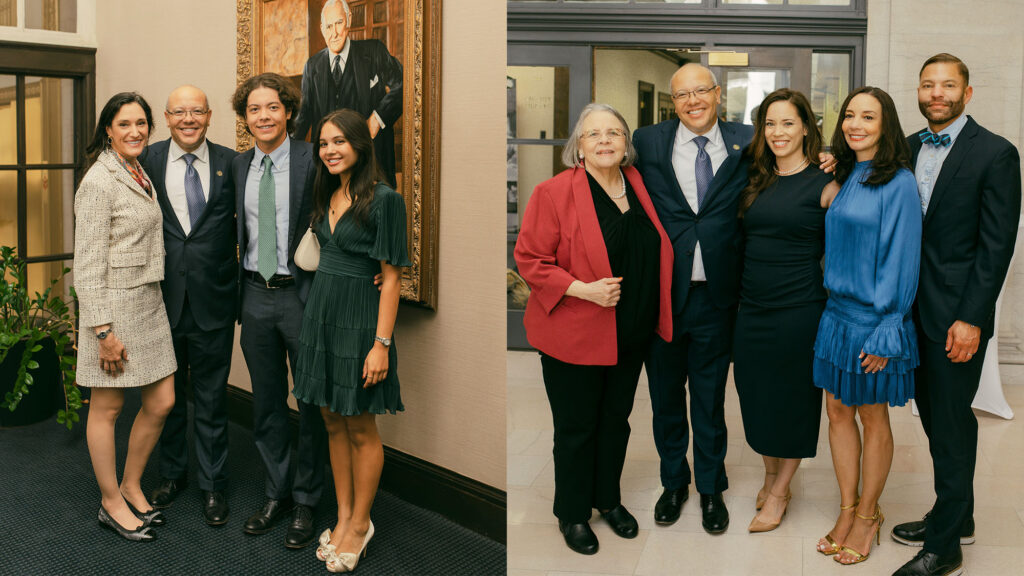
Relaxation and Free Time
Despite a demanding work schedule, Papillion still finds time to relax, unwind, and put aside his professional duties. “I relax by spending time with my family. I love to read – I like history and read a lot of non-fiction. I’m also a big fan of LSU Sports and the New Orleans Saints.”
He reflects with a warm smile and an unmistakable sense of gratitude for his career, “This may sound crazy, but I love what I do so much that it never feels like work. I’m always relaxed, even when I’m working. I often wake up at three in the morning, and Saturday and Sunday are just like any other day—I don’t count down to the weekend or dread Mondays. Every day is the same because I truly enjoy what I do. I’ve been incredibly fortunate to feel this way throughout my career as a lawyer and judge.”
He adds philosophically, expressing an understanding of the correct work/life balance that few get right: “If you work 99% of the time, you see the people you’re working with more than you see your family. And if you do a job you’re not happy with, it’s just not good. I always chose to enjoy what I do, even if at times it was hard.”
Creole Culinary Tastes
Despite what one might expect from a man in a distinguished judicial role with a refined appreciation for gastronomy, Judge Papillion remains deeply connected to his culinary roots. Rather than indulging in elaborate, high-end cuisine, he actively prefers the simple, hearty Creole dishes he grew up with.
His love for cooking was passed down from his parents, particularly his father, a renowned Creole cook and frequent winner of cooking competitions. “I’ve been the main cook at home for many years,” he shares. “I make rice, gravy, and gumbo and cook red beans and rice every week. I also love to barbecue, just like my dad.”
Proud of his Creole heritage and the unpretentious, home-cooked meals of his rural upbringing, Papillion makes no apologies for his preference. “I cook Creole food—the kind working people ate. It’s not haute cuisine, and I don’t try to make it that way. I enjoy fine dining, but I prepare the meals my grandparents would have made at home on their small farm in St. Landry Parish.”
Three Wishes
Judge Papillion responds with his characteristic wisdom and deep sense of humanity when asked about the proverbial three wishes he would make if granted the opportunity.
“On a humanitarian level, one of the great strengths of Creole culture is its openness to diversity. If I had a wish for the future, it would be for people to recognise and appreciate individuals’ unique strengths, talents, and gifts, regardless of their background or ancestry. I wish for a world where people see the value in one another. I truly believe that one of the greatest challenges we face is a lack of cultural understanding—the failure to see that, at our core, most people share the same fundamental desires. They want a better life for themselves and their children. Creole people often have a deep understanding of this, recognising that despite outward differences, people are more alike than they realise. So, one of my wishes would be a greater understanding among people.”
He continues, “Beyond that, I wish for people always to strive to put their best foot forward and do the right thing.”
Finally, he reflects, “I believe that good things generally come to those who work hard and prepare themselves. Opportunities arise—but the question is, are we truly ready for them when they do?”
Desert Island Castaway Item
When asked the classic Desert Island Discs question—what one luxury item he would choose if stranded on a deserted island—Judge Papillion’s response is steeped in nostalgia, reflecting the profound influence of his formative years.
“If I could have a self-replenishing coffee pot, that would be my choice,” he says with a smile. “For music, I’d take a collection of the greatest Zydeco artists of the 20th century—so I’d have a whole lineup of them. But I’d take a coffee maker if I had to sacrifice all other genres for just one item. That’s tied to the memory of my grandparents—coffee and all the warmth that came with it.”
Continuing the Journey
Judge Darrel Papillion’s life and career reflect a deep commitment to justice, mentorship, and preserving Creole heritage. From his humble beginnings in St. Landry Parish to his role as a federal judge, he has remained steadfast in his dedication to service, education, and the law. His journey has been shaped by the values instilled in him by his family—hard work, integrity, and the importance of uplifting others.
Yet, for Papillion, the work is never finished. Whether through his role on the bench, mentoring young lawyers, or championing diversity in the legal field, he continues to influence the next generation. His story is not just one of personal achievement but of paving the way for others to succeed. As he looks to the future, his guiding philosophy remains clear: seize every opportunity, stay true to your roots, and never stop striving for excellence.