

“The Neutral Strip” or “No Man’s Land”… the disputed territory between the United States and Spain along Louisiana’s western border after the Louisiana Purchase became a haven for outlaws, pioneers and diverse cultural groups, such as Native Americans, African Americans, Scot-Irish settlers, and remnants of Spanish colonies. Since the 50s, you can add to the mix the German, Korean, Vietnamese and other nationalities that came with the establishment of Fort Polk through active and retired military, and it is a cultural mix like no other in the state.
Many of the original settlers of this “Neutral Strip” were looking for a life without government interference. To some of these, it meant a life of unbridled crime, and to others, it was seeking the promised land where one could raise their families without any oversight or control. For three years, the land offered just that, bordered by Spain on the West, America on the East and North, and access to the Gulf of Mexico in the South, it was a rough, lawless and primitive area.
Today, it is the cultural poor stepchild of Louisiana…not Acadian, not French, not New Orleans, and not wholly Catholic. “Where Collards and Crawfish Meet.” The economic opportunities are sparse. Once the largest sawmills in the nation operated here, but when the native pines were cut and processed, the mills moved on, leaving ghost towns and abandoned cities in the forest. Then the Army realized that the land was perfect for mass training exercises and ran the Louisiana Maneuvers here as a precursor to entering World War II. This established Camp (now Fort) Polk in Vernon Parish. Although the army base is the largest single payroll in the state today (except for the State payroll), intermittent closings of the base have hampered invested growth and development in the surrounding towns.
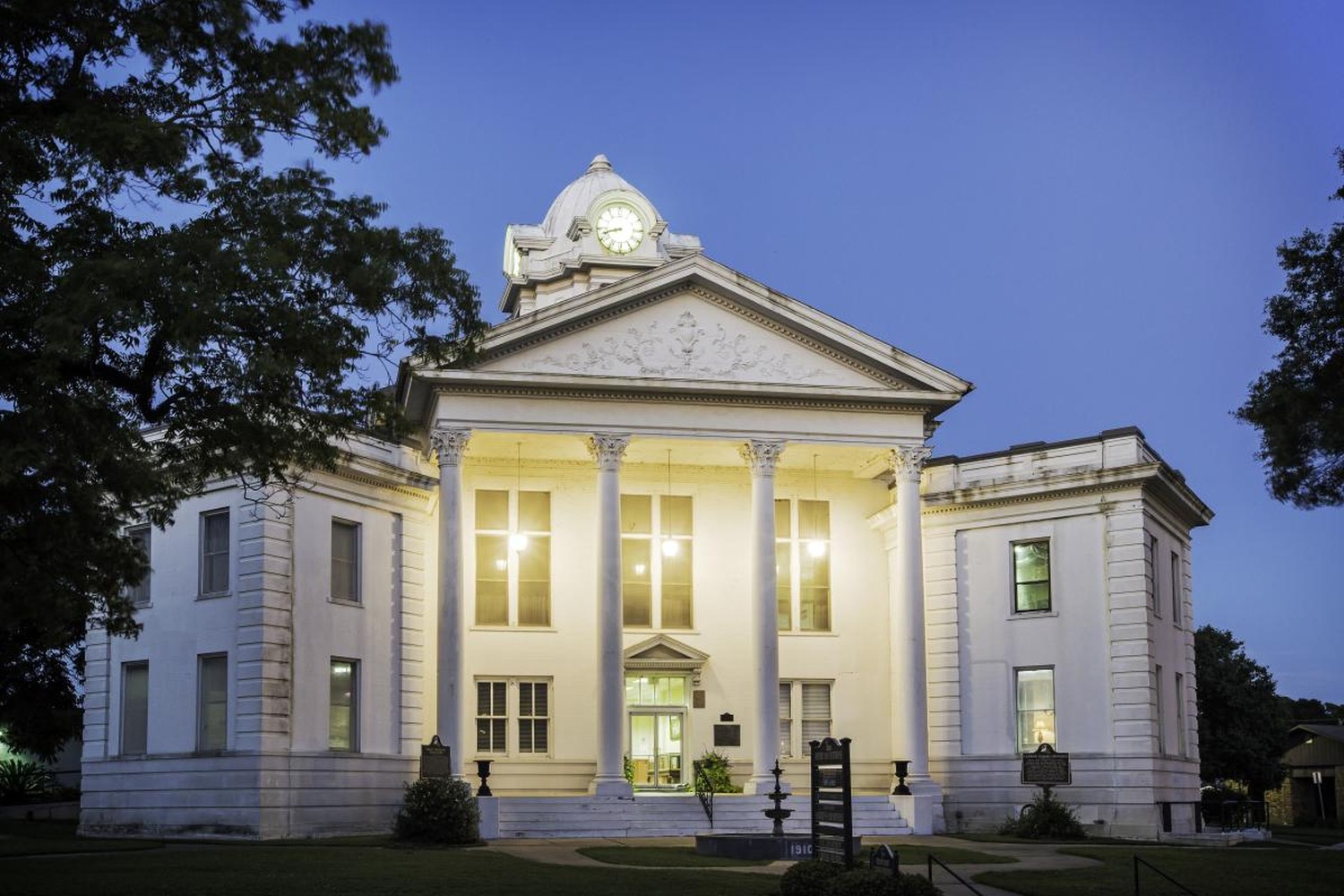
Living in this part of Louisiana is sometimes difficult and being an artist in an area that is economically depressed with minimal cultural activity is a real challenge. However, there are several wonderful examples of local artists feeding on the landscape, the cultures and the challenges of being a creative person in The Neutral Strip.
Twelve years ago, an idea was born to establish a non-profit artist space in the Leesville Main Street District. Leesville is the home of Fort Polk and is in the heart of the Neutral Strip. Leesville has been a boom town with the lumber industry, a boom town as the gateway to Vietnam for soldiers in the 60’s and 70’s and has been a burnt-out town when the base closed after World War II, only to open again years later. The Leesville area has always had a fear of BREC (Base Realignment and Closures) shutting down the base again and has not grown like other towns with more stable industries.
But a few local artists were undaunted and knew of the need for a space to display, teach, and discuss Art. Through the patronage of a few and the hard work of many, GALLERY ONE EIIIEVEN has become the centre for visual arts and artists in West Central Louisiana. One great thing about many military families is that they have toured the world and have been exposed to the art and cultures of Europe, Asia and the Middle East. Support for the gallery has been overwhelming and positive in every aspect from both active military, retirees, and heritage residents.
This year, on the 200th Anniversary of The Neutral Strip, four artists that live in this interestingly different part of Louisiana banded together and pitched an exhibit of their work to the city of le Grau du Roi in the south of France. Geographically this part of France mimics the lowland landscape of coastal Louisiana in Calcasieu Parish. Dunes bordering the sea give way to marshlands populated by wild horses, birds and other wildlife. According to the travel information, we even have a lot in common with the quantity and size of mosquitoes there!
Quatre artistes du coeur de la bandeneutre (Four Artists From the Neutral Strip) exhibited the work of Isabelle Massart-Bursh, Tony McDonald, Rickie Smith and Joey Governale at the Carrefour 2000 Hall, le Grau du Roi, France, from July 23 to August 13, 2022. The artists in this project hope to not only expose their work to a new international audience but to bring the largely unknown history of the Neutral Strip to those attending the exhibit in France.
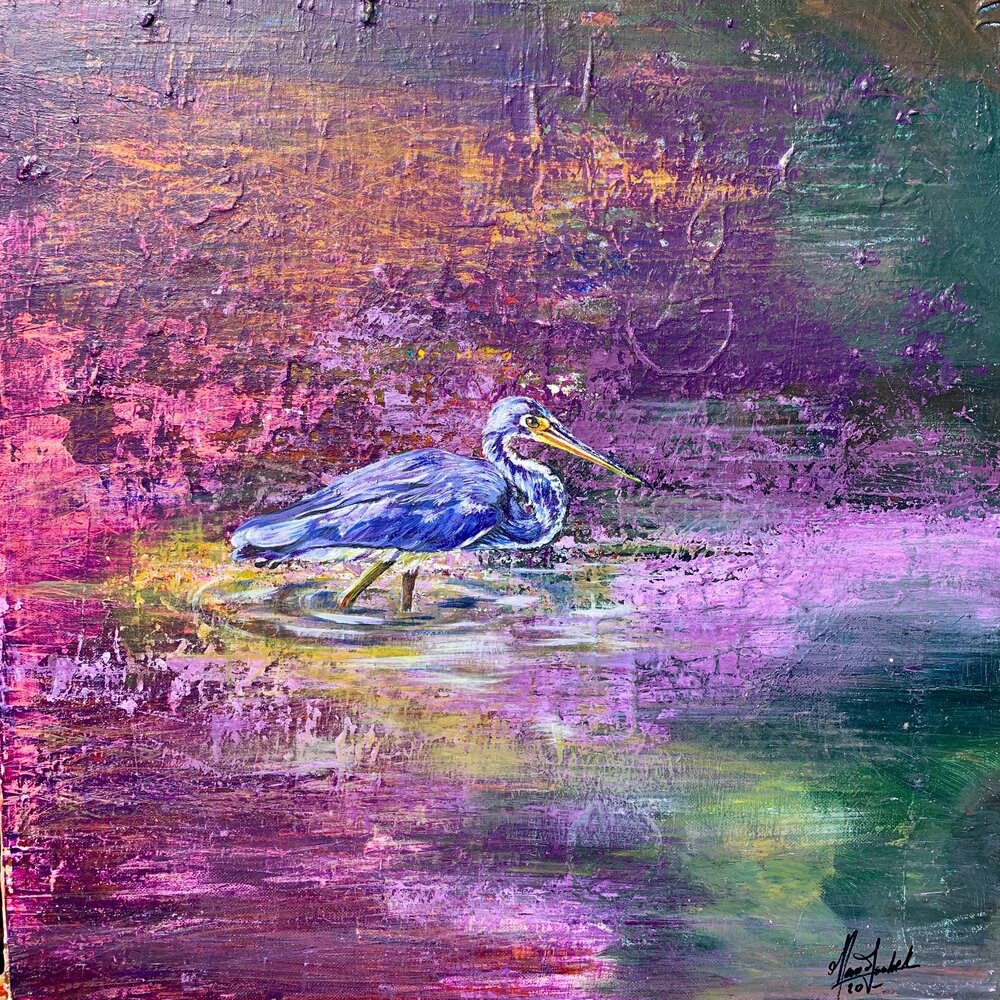
The artists in this exhibit are very diverse in their backgrounds and their work. Isabelle Massart-Bursh is from Belgium and came to Louisiana in the CODIFIL program, teaching French in Louisiana schools. She has a studio in Leesville and teaches art at Leesville Middle School. Isabelle’s work for this exhibit will feature landscape and abstract paintings.
Tony McDonald also has a studio in Leesville, has exhibited his work at museums and exhibitions across the south, and was one of the first American artists to participate in the Havana Arts Biennial in Cuba in 2015. His take on the Louisiana landscape has been featured at the “Louisiana Contemporary” exhibit at the Ogden Museum of Southern Art, and his work for the exhibit in France will be recent works on paper of regionally inspired landscapes.
Rickie Smith is an award-winning photographer that has captured the essence and feel of performers behind the scenes at the Louisiana Jazz and Heritage Festival and at the le Cour de Mardi Gras in the Cajun Prairie. His work has been exhibited in museum and gallery shows across the state.
Joey Governale is a graduate of Louisiana Tech School of Design, and his work has been featured at many festivals and events across the state. A DeRidder native, Joey has cultivated a large following of his whimsical Louisiana-themed hand-painted signs for years. He has recently returned to more graphic bird and landscape fine art images painted on aluminium and will feature these in the show at le Grau du Roi.
Representatives from Natchitoches and DeSoto Parishes accompanied the exhibit to the south of France to assist in promoting the No Man’s Land area in Louisiana.
To learn more about No Man’s Land, visit www.visitnomansland.com.