

Consciously striving to make a difference to the African-American community in Louisiana.
Ruben Henderson III – to give him his full appellation – cuts an undeniably dapper figure wherever he goes. Impeccably attired in a fitted, pastel-coloured suit, offset with a decorous red bow tie, pocket square and black spectacles, this debonair young man exudes style, panache and positivity in abundance, not to mention an intensely likeable charm and charisma. In fact, one is reminded of a light-skinned Louisiana Beau Brummell (minus the cane).
With an Instagram page exhibiting a cornucopia of photos paying testament to his undoubted sartorial elegance, not to mention artistic facial topiary (a funky beard style), Henderson’s striking visual ensemble is a veritable ocular feast, worthy of comparison to an Italian Renaissance painter’s masterpiece.
But make no mistake, Henderson is by no means merely intent on cultivating his aesthetic appeal. Au contraire, he may readily embrace style, but he also embodies genuine substance. And whilst he might dress like a sapeur, there is a philosophy which underpins his discerning choice of apparel.
Moreover, as the Associate Director of Undergraduate Recruitment at the University of Louisiana, Lafayette, with both undergraduate and Masters degrees to his name, cultivated the intellect and actively wanted to encourage young people into higher education, and then, once in, to engage, inspire and uplift them to flourish in academia and beyond, are integral to both his persona and his entire outlook on life.
Achievements & Involvement
In addition to his undergraduate admissions day job at UL, Lafayette, Henderson is the current President of the Black Faculty Staff Association there, President of the Christiana Smith African American Alumni Chapter, and President of the Louisiana Association of College and University Student Personnel Administrators.
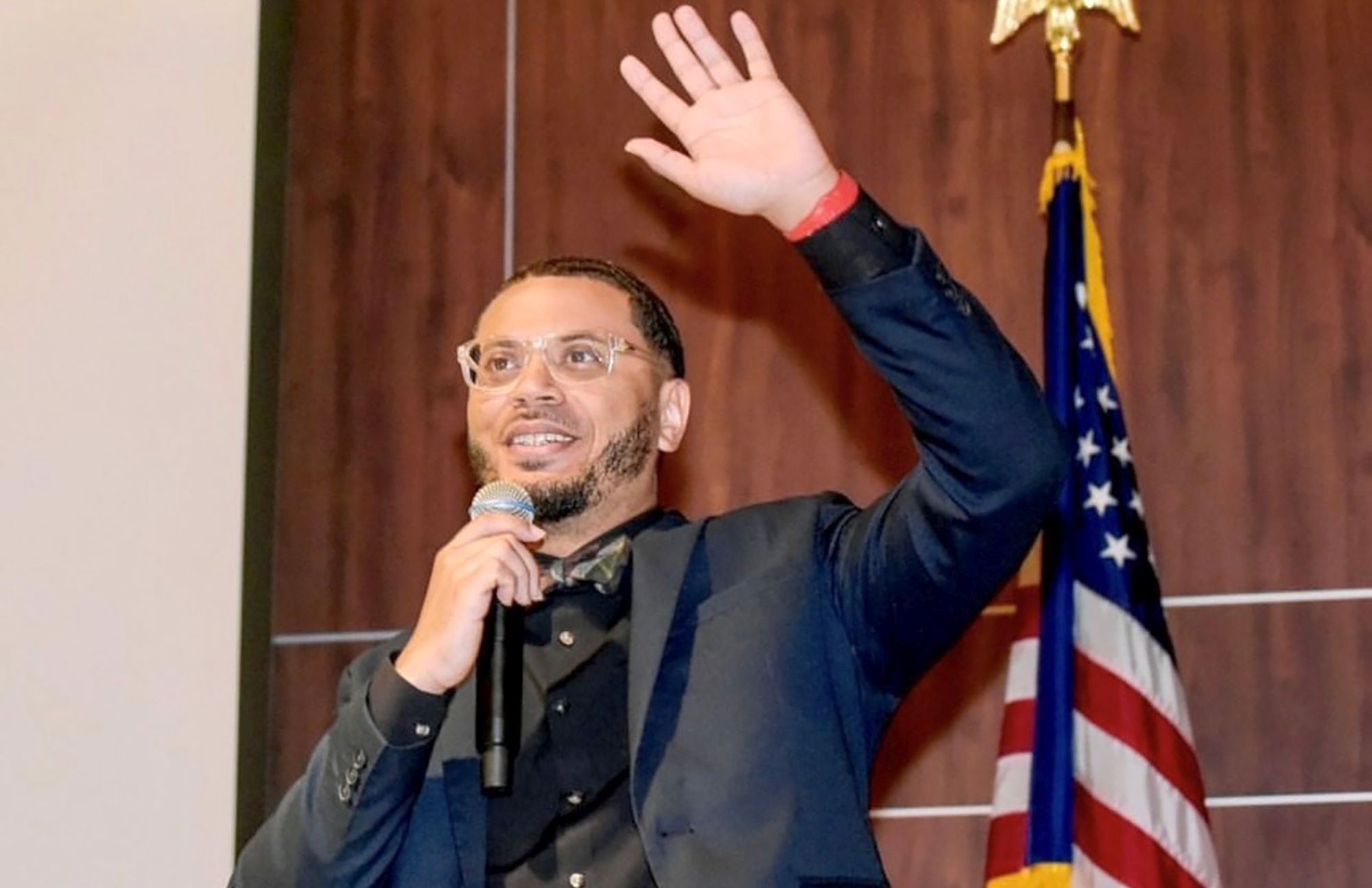
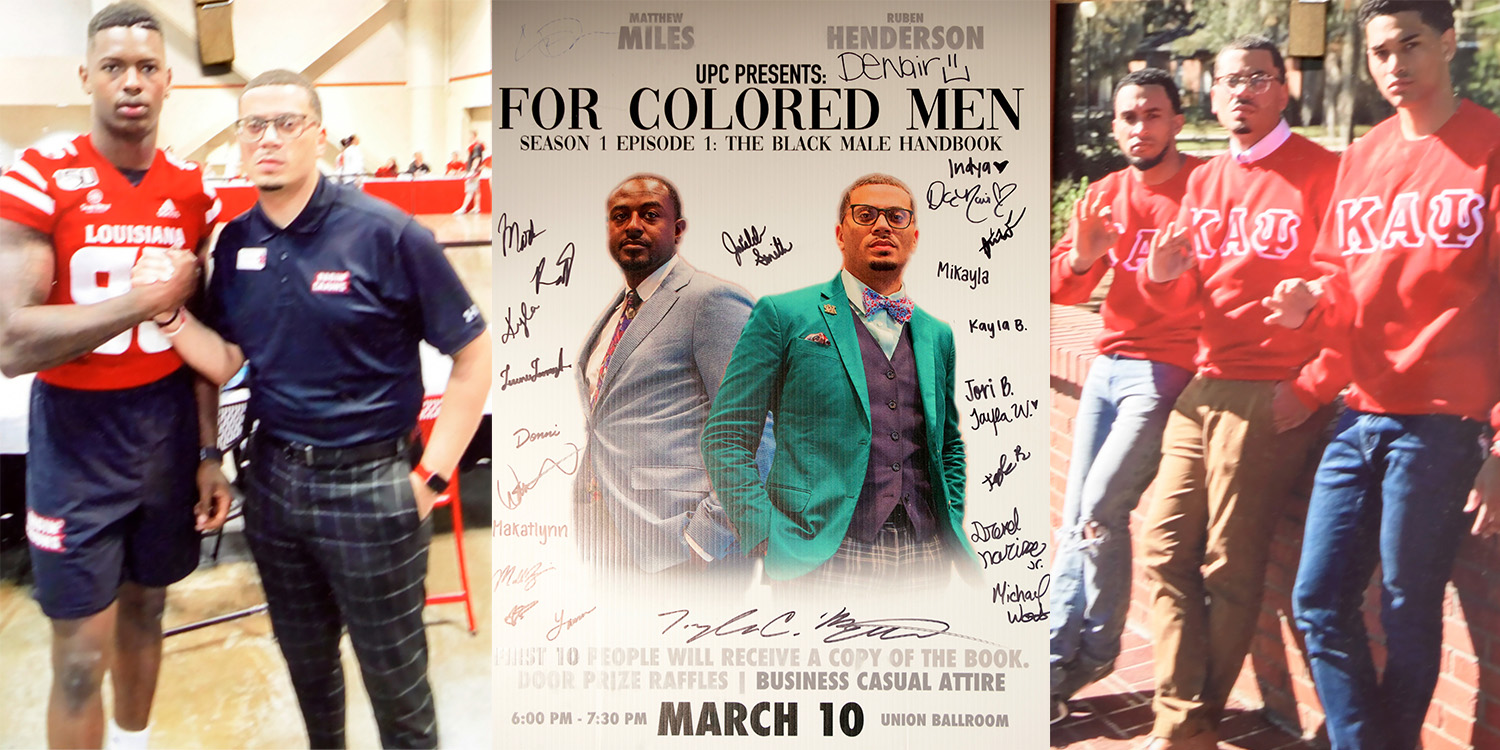
He also proudly serves as the advisor of the Black Male Leadership Association at UL (which mentors black students, providing leadership development) and has also served as an adjunct faculty member, teaching a freshman seminar course titled Black Male Leadership. He is a loyal member of Kappa Alpha Psi Fraternity, Incorporated and recently served with Phi Delta Theta’s Kleberg Emerging Leaders Institute Faculty.
Furthermore, he serves as a campus facilitator and mentors at UL for the UL System’s Reginald F. Lewis Scholars Program, in which eighteen black male scholars are selected each year from the UL System’s nine-member institutions to receive mentoring, bursaries, and personal development.
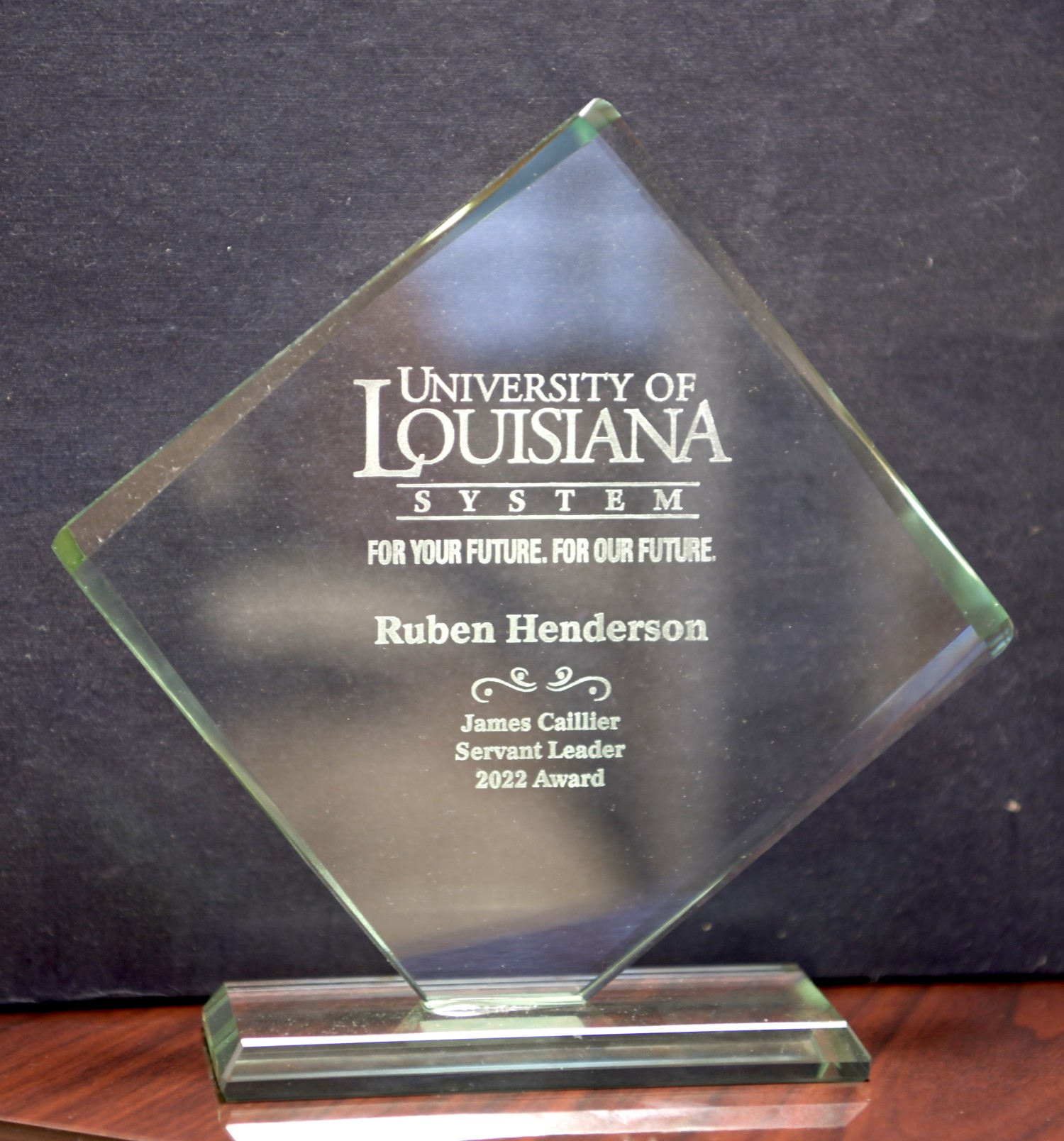
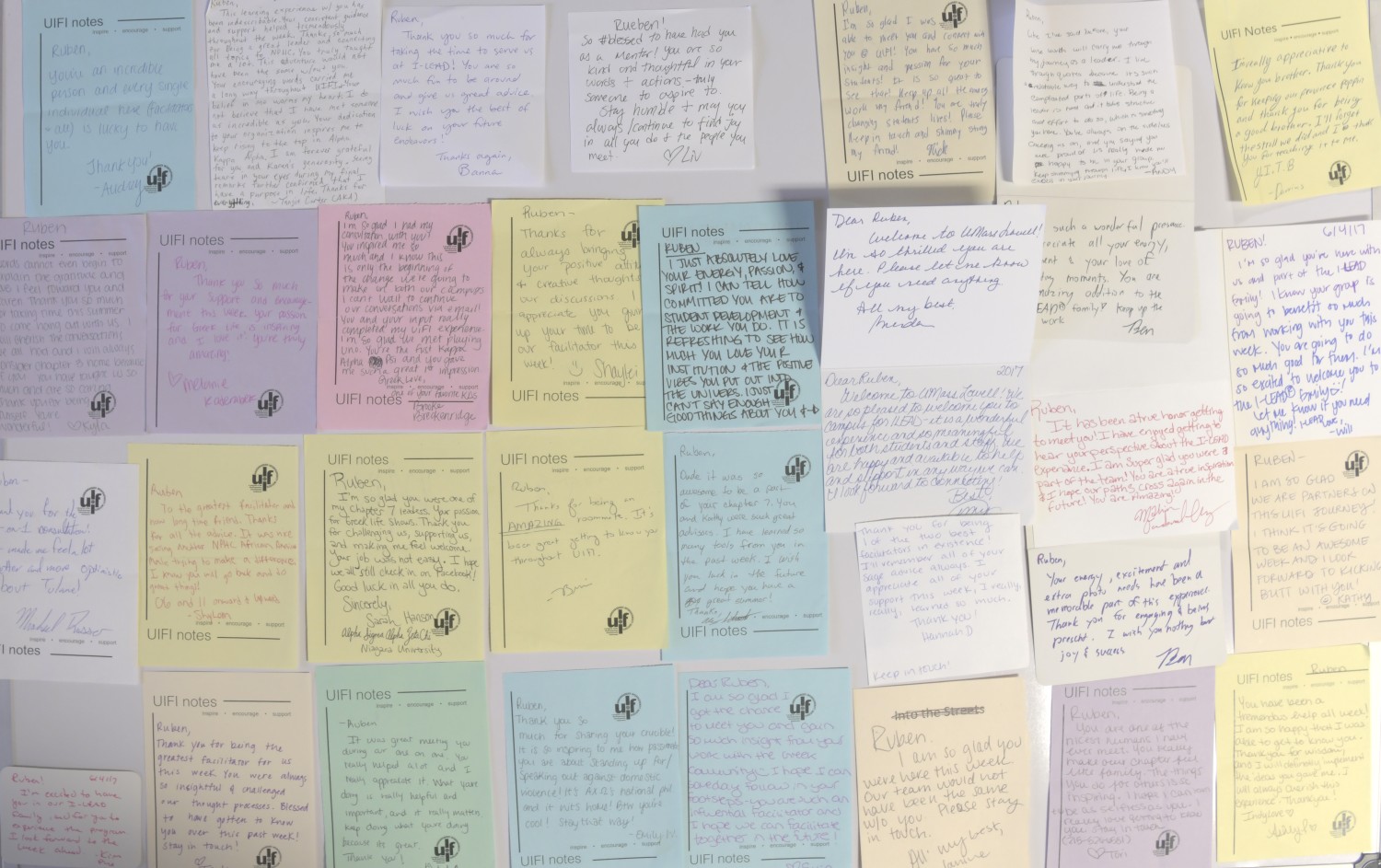
In addition to his undergraduate recruitment day job at UL, the number of committees on which Henderson serves (as listed on his impressive, nine-page resume) easily runs into double digits. As if that weren’t enough, in his spare time, he currently sits on several boards, including the Board of Directors for Miles Perret Cancer Services, the Lafayette Education Foundation, and the Hilliard Art Museum on UL’s campus. A recipient of numerous honours which reflect his many talents and achievement of excellence, this year alone, Henderson has been awarded the UL System Black Male Summit James Callier Servant Leader Award, together with the Dean Mary Olive McPhaul Award.
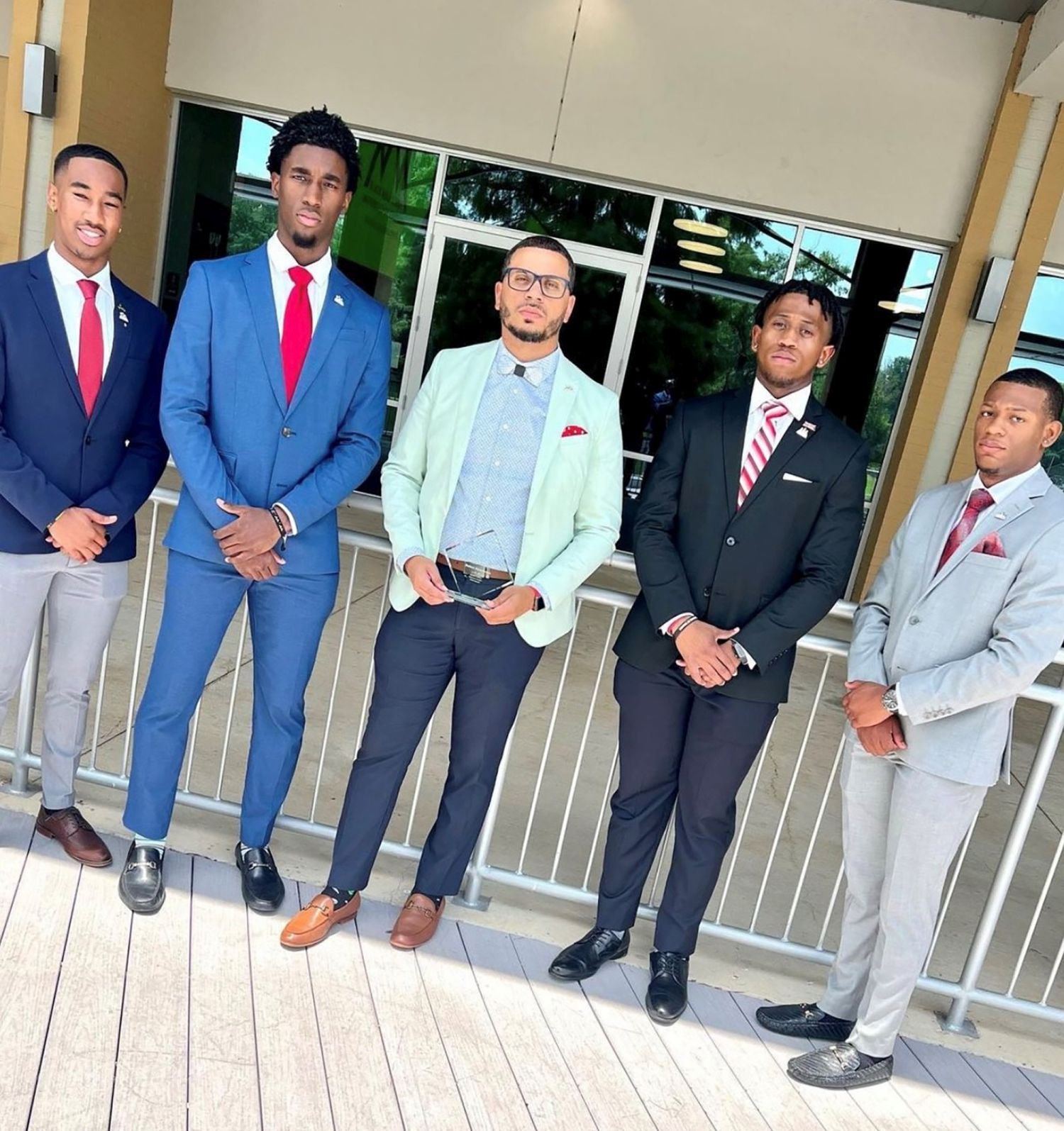
In short, this is one seriously busy, committed and downright engaged young brother – one consciously striving to make a difference to the wider Lafayette (and Louisiana) community, especially with young African-Americans. Even to a casual observer or from the most cursory glance at that nine-page C.V., it is clear that Henderson is a smart man on a mission, resolutely driven, focused and determined to assist young people with his educational outreach, all the while proselytising the many benefits and advantages of diversity and inclusion within such august academic institutions.
Lafayette Mardi Gras Festival 2022 King
Henderson is undoubtedly an unerringly positive black male role model in the greater Lafayette community, both on campus and further afield. So much so, in fact, that earlier this year, in February 2022, he had the honour of being selected as Lafayette Mardi Gras Festival’s king – King Toussaint L’Ouverture LXIV (named after the 18th-century Haitian slave revolt leader).
The organisation – the oldest African-American krewe in Lafayette – has a long tradition of selecting distinguished and accomplished young gentlemen to be its carnival king. Perhaps somewhat unsurprisingly, Henderson fitted the bill perfectly – and paraded with purpose, pride and jubilation on the day.
Like all those with a selflessly humanitarian outlook, he is now keen to use his platform and prominence as the 2022 Mardi Gras Festival King to further inspire others – especially other young black people, and those in urgent need of role models. As he states with faultless logic, a firm believer that representation – even regal representation – matters, “I want to impact the lives of others. Specifically, for the young black community. Now more than ever, they need to see someone who looks like them – a lawyer, a doctor, even a king. Serving as king will allow me to be that role model.”
He continues to explain, extolling the value of mentoring, “Mentoring is something that’s very important for me. I have worked at UL Lafayette for about 10 years now and in my position, I mentor a lot of students. A lot of Black males look to me for guidance and direction, so I really think that being king will continue to allow me to enhance my platform.”
On his Creole Identity
With a Creole lineage combining French, Indian and Black, stretching back to his great-grandparents, Henderson relishes his heritage and is proud to affirm his strong Creole identity. He grew up hearing the Creole language widely spoken, and, even though he sadly doesn’t speak it himself, is nonetheless familiar with several words and phrases, as well as those all-important Creole cadences and intonations which convey so much meaning. He is equally proud of the Creole culinary traditions he enjoyed during his childhood, even though he himself doesn’t cook.
As a child, he was often made to feel conscious of his light complexion and felt as if his Creole identity was being questioned and impugned since it was hard for others to place him. As he explains, with more than a hint of melancholy in his tone, “Growing up being a lighter complexion, being and looking different, it was always hard for people and for society to put us in a box. “Are you Black, or are you white?” He continues somewhat pensively, as if recalling childhood memories of alienation on account of his shade, “I think Creoles and Blacks, there’s both the struggle of trying to combat society and how society expects you to respond to things and also how society determines how you respond to things.”
Keen to give back from a young age
Henderson was born and raised in Lake Charles, Louisiana, with an elder sister and a younger brother. From an early age, he realised the value of community and the importance of “giving back” to build up that local community.
“I’ve always been very passionate about making a difference in the community. I look at the younger kids, and there’s always been a need for them to have a role model, for them to have someone that they can aspire to be like, someone that can motivate them to be their best selves.”
Gratitude
Cognisant of the many blessings he enjoyed during his childhood and of the way in which the men in his life have indelibly shaped his values and his personality, he recalls with visible gratitude, “I was very fortunate growing up – I had a dad, a stepdad, and two uncles. They were the men in my life who really taught me the value of being your best self; they taught me everything from riding a bike to understanding and appreciating financial responsibilities, from understanding the value of family to understanding the value of giving back. I think that really gave me the foundation that I needed to create who I am today.”
He continues thoughtfully, immensely grateful for those who cared about him during his childhood, “I’ve always considered myself privileged in a sense where I’ve had people that have cared about me, I’ve had people that have invested in me, not just money, but also time. And those people from my childhood, those people from the community, they’ve really played a major role in my faith, my values and everything that has shaped me into who I am today.”
Biggest role model
Henderson credits his uncle James as having been a brilliant – and perhaps the defining – role model and a seminal influence in his life, especially after his father passed, and the person who instilled in him the most valuable precepts which he retains to this day, in particular his notion of the correlation between blackness and success. He explains, speaking with evident warmth and emotion, “I was like the son he never had. He taught me how to ride a bike. He also taught me a lot of my foundation knowledge for appreciating Black people. He really helped me to understand, when you think about Black excellence as a Black man, “This is what you need to do, and this is what you have to do to be successful.”
A love of reading
It was also his uncle who was responsible for instilling in him a love of reading, one of the most important life skills one can ever possess. “Even as a little child, he taught me a lot of the fundamental things, such as why you should read. He really instilled in me an awareness that in reading is knowledge, and in knowledge is power.” As he adds ruminatively – and quite correctly, “At the end of the day, people can take a lot of things from you, but they can’t take away what you know.”
Valuing education
Furthermore, his uncle taught him to “always strive to get as much education as you possibly can, because that’s going to secure your long-term success, and you can use that education to make other people better.” Thus, having attended a predominantly white high school in Lake Charles, Henderson duly heeded his uncle’s advice, taking his sagacious words to heart, and proceeded to attend UL, Lafayette. He now proudly holds a Bachelor’s degree in Marketing and Legal Studies from the BI Moody III College of Business and his Master’s in Business Administration.
For Henderson, a large part of his upbringing which deeply shaped him was appreciating and valuing education and its broader aims. As he explains, “Education is a platform and is an opportunity to not just learn about specific topics, such as Maths or English, but it also gives you the ability to learn and understand life skills and concepts that are more “big picture” and more philosophical. Ultimately, through education, people’s lives can become better.”
With wisdom far exceeding his comparatively tender years, he adds, “I think school and education was something that I valued very heavily because I knew that was a way for me to not just make myself better, but also to make others better too.”
Giving back for the greater good
As for his deeply caring, humanistic ethos, Henderson is exceedingly clear, consistent and unwavering, articulating utilitarian ideas which are sure to be met with approval, not to mention vociferous agreement, by any right-thinking, compassionate audience. “Everything that you do should be for the greater good. All of the things that you do, you’re meant to use to help make other people better. It’s not about what you can do for yourself, but what you can do to give back and to make a difference and impact in the lives of other people.” As he explains, with both trenchant acumen and genuine altruism, “I’ve always made it my due diligence to be committed to being a part of things that I knew would have a bigger purpose and a bigger impact on society.”
Dressing to impress
It is now that Henderson expounds on his sartorial philosophy – namely how his choice of clothing is indicative of a winning mindset and has a direct bearing on how people perceive him.
“Being in the (business) programme here at UL, I think it really cultivated my respect for what it meant to be a professional and what it meant to dress to impress. During a normal semester or a normal day, I’m in a full suit. It really helped me to classify my attire, how I present myself, how I project myself and how people perceive me.” So far from style over substance!
Diversity and Inclusion
A passionate advocate of diversity and inclusion, and of greater representation for historically disadvantaged communities, Henderson’s workplaces much emphasis on ameliorating diversity within UL. He prides himself on his ability to work with many different types of people and to navigate different spaces, all with the aim of “teaching everyone the value and the significance of what it truly means to practise diversity and inclusion.”
However, he is acutely aware of the stresses and pressures which accompany such a role. “It’s a lot of weight on the shoulders to carry when you know that you have to be the voice for underrepresented and marginalised people who don’t have the privileges and the luxuries of being the majority of the population.” His desire to advocate for those whom history has conspired to divest of a voice is both noble and laudable, and as he freely admits, “I’ve found ways to intentionally forge myself into spaces where I knew I needed to be there. I needed to be there to be the voice. I needed to be there, to advocate and to make sure that voices were heard that were being left unheard, for people that were invisible.”
Fulfilment in his role
Henderson relishes his current role at UL and actively acknowledges both the freedom and the potential it allows him to play to his various strengths. “The space I’m in now – I can be an educator. I can be a businessman. I can teach professionalism. I can supervise and help young people become better individuals and better professionals.”
On the immense feeling of personal fulfilment he derives from his work, he remarks with evident satisfaction, “I can honestly say, there’s not a day that goes by that I don’t feel like I’m doing meaningful and purposeful work. So I feel like every day and every hour I’m adding value to something that’s bigger than myself.”
In addition to the obvious sense of accomplishment, his job affords him, there is a bigger reason why he is keen to remain in education – the glaring lack of black men currently in the profession. As he explains in a sobering, matter-of-fact tone, “We have a very limited amount of Black men doing what I do and being an advocate and being an ally.” Hence why he sees his role as having that additional importance and an extra sense of purpose.
Be a Sponge
Henderson’s advice to those he mentors is disarmingly simple, yet incredibly on point. When it comes to being receptive to all that life has to offer, he advises, “Be a sponge. When you have the opportunity to be in a space or to be a part of something, learn as much as you can. Learn to become better, learn to understand, learn to appreciate. Being a sponge helps us to get a better appreciation and a better understanding of the world around us.”

Embrace change & challenge yourself
Be it the importance of embracing change (“Change is difficult. Not changing is fatal.”) or the need to constantly challenge oneself, Henderson seemingly has a motivational quotation, aphorism or inspirational mantra to bring home the point. He encourages his students, mentees and colleagues not to be afraid to challenge themselves to be better. As he explains, “Challenging yourself to be better can be anything from reading more, exposing yourself to things that you don’t know about, to exposing yourself to opportunities to grow, opportunities to learn.” He continues, with an animated disposition, “I think that if we exposed ourselves more and we had the genuine desire to learn more about the world around us, it would help us to be more effective and efficient people.”
The next five years
Looking to the future, in particular to the next five to ten years, Henderson is both frank and lucid about where he sees himself, his desire to use his talents to tangibly help others always readily apparent. “I need to be at a place where I’m directly impacting others. So regardless of whether that’s higher education or corporate America, I need to know that I’m helping to make other people better.” He continues pointedly, tacitly rebuking the crassly materialistic culture at large, “At the end of the day, it’s not about the amount of money that you make or the number of awards that you’ve attained, but more importantly, how much of an impact have you had on the lives of others, and how much have you used your skills and your abilities to make other people better?”
Keen to be in a place where he can implement change, Henderson continues, warming to his vision, “In five years, I know I need to continue to be in the place where I can motivate, where I can encourage, where I can inspire and where I can challenge because I really appreciate the opportunity to challenge people and to challenge processes and systems. I need to be consistently in a place where I can challenge society and the barriers that society has put upon all kinds of people.”
Leaving a legacy
Wholly devoid of hubris, merely calling it as he sees it, Henderson speaks confidently of his work in higher education and on-campus – be it admissions, outreach or mentoring – and of the tangible legacy, he feels he is creating. “I know that I’m leaving my mark. And I know that when I’m no longer here, physically, people are going to remember me for what I’ve done and the impact that I’ve made.”
Ruminating on his “dash”
Meditations on mortality and the transience of human existence also motivate and inspire him. As he explains, not in the least bit morbidly, but with rare conviction, “Your dash is when someone enters the earth and when someone exits the earth, so when you’re born and when you die. You look at a tombstone, there’s your birth date, a dash, and your death date. So that dash in between those two dates, that one little dash is everything that you did in between the time you were born and the time you died.”
He continues animatedly, his philosophical way of looking at life’s ephemeral nature and our earthly achievements thought-provoking in the extreme, but also humbling: “So when you sit back and you reflect on all the things you did, what is your dash? What defines you? What makes you who you are? And what did you do to make the world a better place?”
Finding your purpose on earth
With the passion of a preacher ministering to the spiritual needs of his congregation, fulminating from the pulpit out of concern for their salvation, Henderson is likewise big on human purpose, and on encouraging others to find their purpose on their (all too brief) terrestrial journey. With a fixed gaze over the top of his spectacles, he asks with a deeply moving sincerity, “Why are you here? What is your purpose? What is your mission? What is the thing that you’re meant to do? I know what my why is. So as I live my life, I know why I’m on this Earth. I know what it is that I’m here for and what He needs me to do.”
He continues with infectious proselytising zeal, avidly keen for everyone to find their purpose, their “why”, as he calls it. “I wish everyone could understand and embrace what their why is, because if you understood your why and you knew what your why was, it would make you that much more passionate to do what it is that you’re meant to do, not what you necessarily want to do, where you want to go and what you want to be, but what you’re meant to be and what your why is meant to be, and what your purpose and mission in life is supposed to be.”
The importance of being strong
One of his favourite mantras is a meditation about strength. “Be strong for we are not here to play, dream, or drift. We have hard work to do and heavy loads to lift. Trial for the struggle for it’s God’s gift. Be strong.” As he then explains, “Nothing in life is easy, that you’re going to have trials, you’re going to have tribulations, you’re going to have rainy days, but you have to learn to develop the persistence to get through it and to deal with it in a way that you can come from every situation in life, as a learning experience and an experience to know better and to be better as a person. And being strong allows you to develop an exterior resilience.” Strength, he adds, can also engender confidence. “Being strong allows you to develop a confidence about yourself where when you walk into a room, people know what you are and know who you are and what you stand for before you even open your mouth.”
His message to the world
Henderson’s “message to the people of Louisiana and the world” is one of ardent self-belief – that ultimately, it’s about personal agency, as it all begins and ends with you. He exclaims with passion and a fervent sincerity, couched in a solemnity befitting such an important topic:
“Never stop believing, because once you’ve lost the ability to believe in yourself, you’ve lost it all. And so as much as someone may want something for you, as many mentors, as many friends, as many family members, as many people in your life that you may have to want you to be better and to become the best person you can be, the first step in all of that is that you have to first believe in you and believe that you can do it.”
He continues, exhorting us all to self-actualisation through the power of peerless positive thinking, “Just believe in you, and just believe that you can do what you put your mind to and that if you can believe it, then you can accomplish it, and you can attain it.”
With that, this unique, remarkably self-assured, relentlessly upbeat and extremely wise-beyond-his-years young man departs. His vibrant pastel suits and debonair demeanour may please the eye, but above all it’s his powerful, profound and optimistic message of human solidarity, his burning desire to ameliorate the life chances of young (black) people through education and to keep giving back to his Lafayette community by helping others which all linger in the mind long afterwards, touching the head, the heart and the soul. If only Lafayette, Louisiana and the world had more people like Ruben Henderson III!