
Author: Dr Colin A Michie, Paediatrician
When it is your birthday, or you have just had a weekend with some of your family, do you reflect on how blood must be thicker than water? Who else is left-handed in our family, where did those large ears come from? Why can my cousin sit so easily in a W, and I cannot? How much Yoruba, Amerindian, French, southerner, northerner or just foreigner is there in the family tree? Do I have an increased risk, or greater protection against cancers or dementias?
Quick on the heels of the ‘Who are we in our families?’ questions come the causes. How did we end up here in the rich messiness of this genetic inheritance? Contemplate the influence of migration, romance, religion or money. The wars, slave trafficking, indentured labour, disease, segregations that are likely to buried in our bloodlines. But our knowledge is so limited to just a few centuries of extravagant variety and human development. Few families can trace their origins back over 500 years; no written records link us as individuals into the 400 000 year-old progress of human evolution.
Your genetic records
It might not be written, but there is a record. It is all there, in your DNA. We each carry with us a genetic legacy of our incredible history. And just as there are fossils or patterns in our language that help explain our backgrounds in the words we use or the way we use them, and just as there are fossils in rocks under our feet that explain the way life forms change, there are footprints in our genes. Relics that relate a pre-recorded history, those many existences of which we are the only memorials. These genes are valuable in explaining where we come from. They are vital in planning our health.
In pre-historic times the survival of humankind was determined by avoiding malnutrition, predators and disease. Food was often limited; lifespans were short. Many infants died, often from infection. One set of parasites, malaria, was particularly hard on humankind. Malaria was around before humans. This parasite has been identified in mosquitoes preserved in fossilised amber, so it lived alongside the dinosaurs, long before our ancestors started causing trouble. Although predators and malnutrition will have killed many of our early ancestors, countless youth died of malaria before they had their own children. This meant that the humans that survived to have families will have had to overcome malarial infections. Over time, ancestral human gene pools were refined and modified therefore by lethal illnesses, malaria in particular.
Malaria, the child killer
Our predecessors that survived malaria had to have something special. Something that protected their red cells, brains and blood vessels from overwhelming assaults of malarial parasites. Those with stronger genetic defences had families that acquired their protective genes. Whole populations became better at surviving as they collected a number of genetic insurance systems against this killer. Anti-malarial genetic defences remain with us, like fossils, in the DNA; they are numerous and contribute to the great genetic diversity of humans, particularly in Africa.
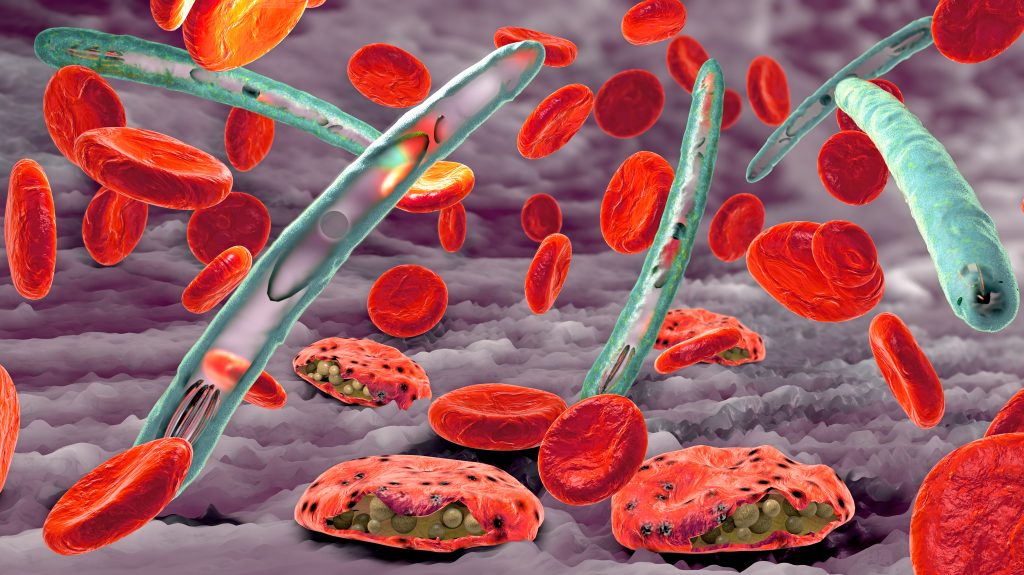
Malaria, or Plasmodium, is a sophisticated parasite that lives inside red cells. This is a comfortable spot because there is lots of protein food and oxygen available. Once inside these cells the parasite multiplies, then it breaks out to invade another. This cycle of breaking red cells causes fevers. Sometimes the fever repeats on a regular basis as thousands of red cells are broken by the parasites at the same time. Malaria parasites can also spread to the liver or the brain. Cerebral malaria in particular can kill children and infants. Some malarial parasites may be eaten in their red cells at the next mosquito bite, so malaria moves, by mosquito, to another human or perhaps a nearby ape if that is the source of the insect’s next blood feed.
If you are a malarial parasite, you will need to attach yourself to a receptor on a red cell (such as the Duffy receptor), then get into the red cell, consume the haemoglobin and multiply within that red cell. At each of these stages remarkable human genetic defences can be found. Duffy receptors for instance are less frequently found on the red cells of those from west Africa. (Duffy status was employed at one point in the United States to identify African ancestry). Other malarial receptors include large molecules called glycophorins: variants of these protect against infection. Two enzymes, glucose dehydrogenase and pyruvate kinase make red cells more useful food sources to a parasite. These are often deficient in African blood cells. Changes in a calcium pump in the red cells can protect against infection. A wide range of different haemoglobins, including the thalassemias, haemoglobins S, C, D and E and fetal haemoglobin are less easily used as food by parasites and provide resistance against malaria (and more effectively so if several of these mutations are present).
So with sickle-cell haemoglobin in your red cells you are more likely to survive a severe malarial infection. The success of the sickle cell mutation is particularly noteworthy as it would appear to have developed separately in 4 distinct geographical areas (Benin, Senegal, Bantu and in the area areas between Saudi Arabia and India). It is thought humans in Africa developed the sickle cell mutation between 3 and 6 thousand generations ago.
Why should we care about our red cell genetics?
In today’s world malaria is, in general, not the lethal killer it once was. Although severe in some countries, there are preventative measures, medical treatments and vaccine strategies that currently make control better that it has ever been in the history of our species. However as populations migrate and intermarry, the various red cell genetic ‘fossils’ are becoming more common. In particular sickle cell anaemia (drepanocytose in French, anemia falciforme in Spanish) is now more prevalent. It is the most common single gene disorder in the UK, and probably the USA. It is estimated that globally 300 000 infants are born each year with sickle cell anemia. The problem is now not surviving malaria but treating the genetic insurance policies our communities inherited.
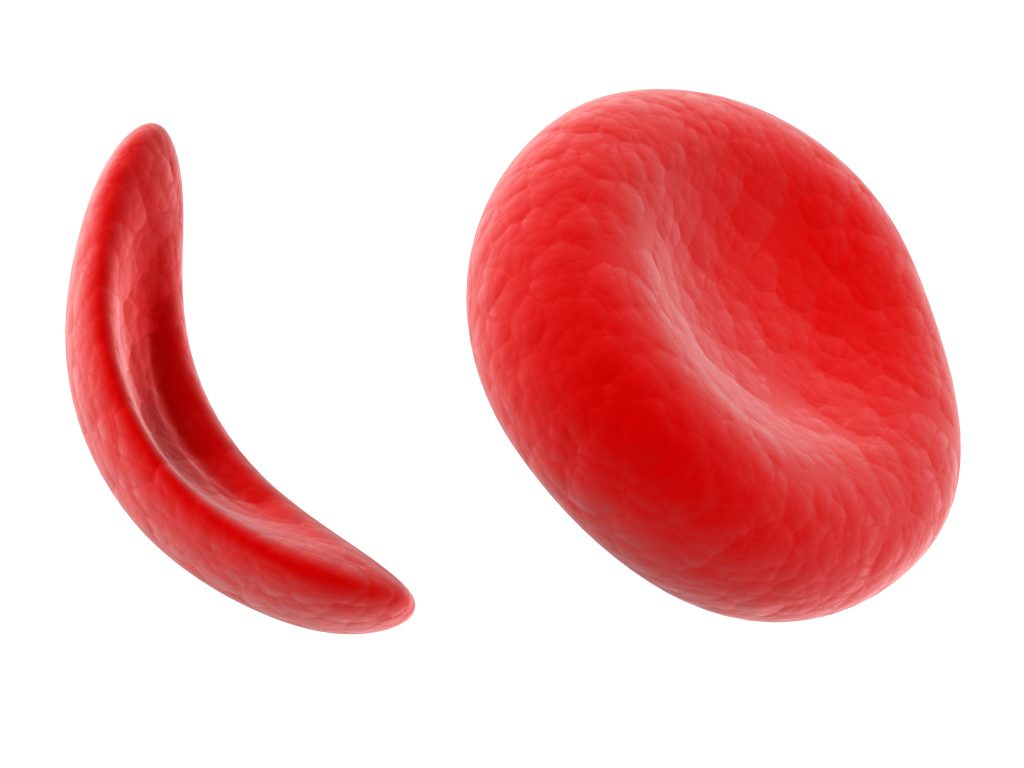
Migration of populations has dispersed these genes widely. Over a million individuals moved a year in the 1960s; this increased to over 3 million a year by the millennium. This is particularly important with respect to sickle cell, which some will associate, incorrectly, with African racial stereotypes. In the USA the mutation is found in Hispanic populations, in the UK it is identified in families with white skin, from India and from Mediterranean littoral. Back-stitches in family tapestries can come to light in surprising places!
In the early 1900s a young Grenadian student, Walter Clement Noel, moved from the Caribbean to Chicago to study dentistry. There he suffered with pains and chest problems; Dr Ernest Irons in the Chicago Presbyterian Hospital found that he was anaemic and described his “peculiar elongated and sickle shaped” red cells to microscopic examination of his blood. These observations were published by his colleague Dr Herrick in 1910. Walter Noel returned home and practised for as a dentist but he died in his 30s. Another case described in 1915 suggested there may be a genetic basis for these sickle cells; in 1922 it was proposed that the disorder was of African origin. Linus Pauling and his colleagues linked a genetic mutation to the abnormality in the haemoglobin protein in 1949; this was a pioneering discovery in molecular biology. However it is only recently that the global significance of this mutation has begun to be recognised. Historically it is possible to identify children in some regions who probably suffered with sickle cell. For instance in west African folklore certain children were referred to as ‘malignant ogbanjes’. They typically experienced pain and died before puberty, then were thought to ‘return’ to the same family again in the form of another child. Other mythologies offer similar explanations, such as the ‘changelings’ described in Gaelic and European mythologies.
What is it about sickle cell anaemia that makes it potentially dangerous?
The sickle cell mutation is unusual in that it involves a change of just one pair of those nucleic acid molecules in the DNA helix (on chromosome 11). This causes a change in one amino acid in the haemoglobin molecule. This tiny change has dramatic impact, making the haemoglobin less stable and prone to polymerisation. Haemoglobin polymers change red cells from rounded, flexible discs into more rigid, fragile sickle-shapes. These abnormal cells block small blood vessels by sticking to the lining. This is referred to as vaso-occlusion. They also break up easily too, surviving in the bloodstream for a few weeks rather than the usual 3-4 months. This is haemolysis.
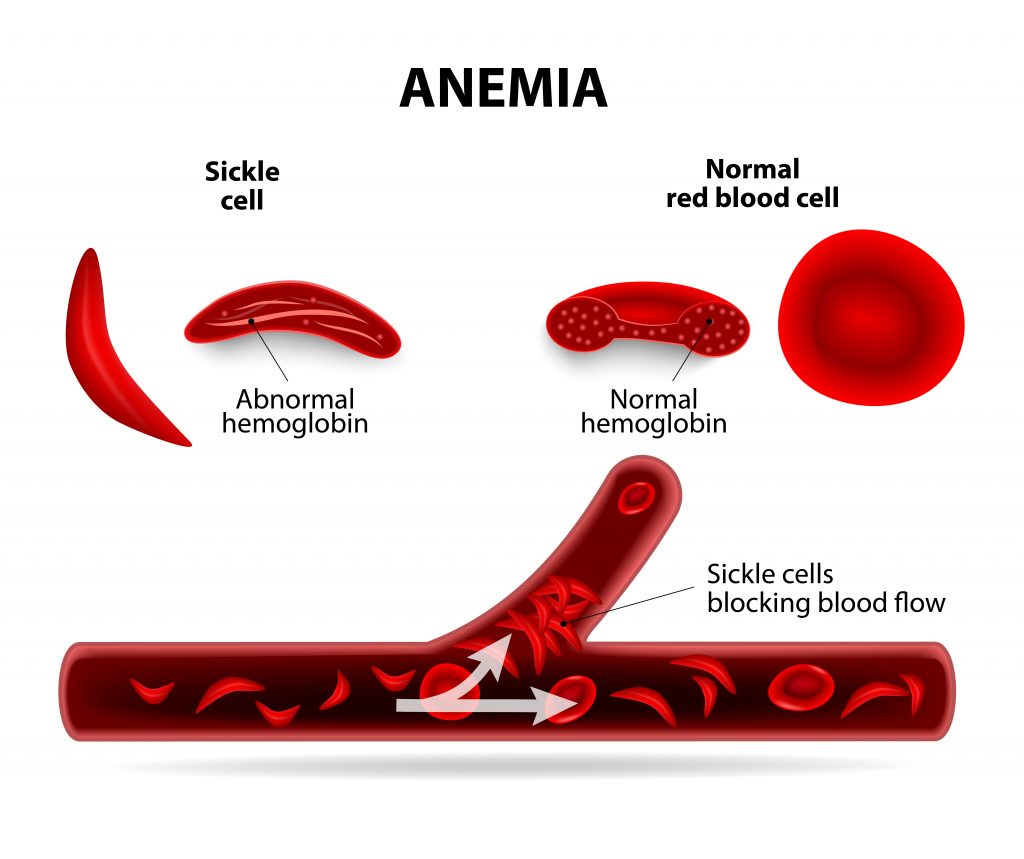
Both problems have a series of clinical consequences. Damage to small blood vessels reduces blood flow to the local tissues. This often causes pain – particularly in bones such as the ribs or vertebrae. Over time it can also cause other damage including lung, brain and kidney damage. Occluded blood vessels become inflamed exacerbating the effect. Shortened red cell lifespans cause anaemia (a shortage of red cells) and their breakdown causes jaundice. The combination of inflammation and ineffective blood flow makes those with sickle cell anaemia prone to infection as their normal defence mechanisms, for instance in the lung, lymph nodes or spleen do not work so efficiently. The clinical experience worldwide is that the greatest challenge to patients is pain.
A case history
Shereen is a twenty year old history student in Guadeloupe. She used to be certain of many things, determined and fierce. After all, she had gained a scholarship to the University of the Antilles from her homeland in Guiana. However the pressures of her studies had worn down her edges down. The faculty were friendly enough but the long hours of study had been challenging. She began to wake early in the morning, and was tired during the day. She caught a fever and cold that was going around the classroom.
One evening she developed pains in the centre of her back. Severe pains that caught her breath. This had never happened before! She fainted. Her friends took her to the Hospital. There she was given powerful analgesics, intravenous fluids, a transfusion and antibiotics. She was told she had been anaemic. A doctor asked her about her medical and family history. It appeared she had sickle cell anaemia, but had never known about it. She had no siblings and her parents had no contact with their families, so this diagnosis was a surprise. Today, two years after her diagnosis, she takes good care to drink fluids, take daily antibiotic and stay warm. She has had no further crises, and now helps with the local sickle cell support group on weekends. Her relatives ply her with traditional herbal medicines, but she has found these unhelpful. Living with a chronic, possibly painful disease in a busy world is never easy. However she has become a determined publicist and fundraiser for sickle cell care in the French Antilles.
Why is sickle cell so variable?
Globally sickle cell anaemia varies in its severity. Many sickle cell patients in the Middle Eastern countries in particular have a mild disease, with few crises. It was found those with mild or moderate sickle disease in this part of the world had raised levels of a specific haemoglobin molecule that we all have as a fetus – fetal haemoglobin. Similarly babies in the first six months of their life, when they still have some fetal haemoglobin, seldom suffer with complications of sickle cell anaemia. Other genes vary between families too: such as those directing the cells lining the blood vessels and the molecules on their surfaces. These variations have proved valuable in directing treatments for those suffering more sever forms of the disorder.
Sickle cell trait is the term applied to those with one gene for sickle haemoglobin. Those with two genes, one from each parent, have sickle cell anaemia or sickle cell disease. If both parents have the trait, there is a 25% chance that they will have a child with sickle cell anaemia, a 50% chance that they will have sickle cell trait and a 25% chance they will have no sickle haemoglobin at all. This is shown on the diagram.
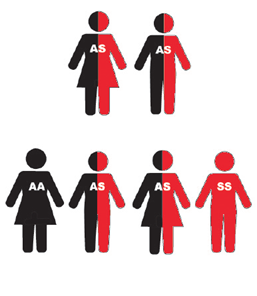
An illustration of how hemoglobin genes are passed down from parents to their children.
A = haemoglobin A (formed from a normal gene)
S = haemoglobin S (formed from a sickle cell gene)
AA= no disease
AS = sickle cell trait, milder disease
SS = sickle cell
What treatments are available for sickle cell? Crucial roles for communities.
Life expectancy for some of those with sickle cell was less than 15 years until the 1950s. Today, if picked up at birth, patients can expect much more normal lifespans. Identifying babies with sickle cell ensures they are given regular antibiotic and vaccines to protect them from infection, as well as folic acid to help them make red cells well. Patients with sickle cell anaemia are encouraged to drink extra fluids, to stay warm and avoid infection. They should be reviewed by a specialist doctor regularly and assessed to decide if they would benefit from other treatments. Careful assessment of their respiration and blood flow to the brain need to be made (this is achieved with ultrasound). Given that the majority of the burden of sickle cell disease is in developing countries, delivering this care is never straightforward.
Some medications can increase protective fetal haemoglobin. Hydroxyurea or hydroxycarbamide safely reduces the sickling of red cells and is used in some patients. The agent Voxelotor prevents the polymerisation of sickle cell haemoglobin. An antibody treatment, crizanlizuma, can be employed to reduce the sticking of sickled cells to the lining of blood vessels – this ‘smoothing’ strategy works! Treatments to reduce inflammatory changes in the blood vessels are taking place as these have been found effective in other chronic diseases of blood vessels. It is estimated that between 20 and 30 medications are currently being tested, including several herbal ones. It is possible that in future combination therapies, like those prescribed in chemotherapy routines may be found most effective – there is no ‘magic bullet’ single therapy.
Some patients benefit from regular blood transfusions. Others with more severe disease are recommended for bone marrow transplantation. This procedure can be curative, and it is optimal if a sibling or close match can be found for the patient. Gene therapy has been frequently debated as a treatment, but the ethics and practicalities involved pose significant hurdles.
Care for individuals with sickle cell anaemia is hugely helped by patient support groups and networks. This central element to the care for a chronic disorder was recognised and developed by Charles Whitten, a paediatrician and powerful advocate who helped found the Sickle Cell Disease Association of America. He was born in Delaware and was a distinguished teacher. He helped develop a congressional Act with the Nixon administration that mandated the delivery of 10 specialist centres for the care of sickle cell patients. His legacy had longevity and resulted in the development of a Congressional caucas in 2014 and a 2018 act that has helped guarantee research including much needed clinical trials in the USA.
Sickle cell trait
Those with only half the sickle cell gene, or sickle cell trait, have haemoglobin AS, which differs in some ways from the normal haemoglobin AA. In the main they are healthy, normal individuals. However experiences from those training elite athletes or military recruits suggests they do not always tolerate low levels of oxygen as well as those with AA haemoglobin. Recruits with AS showed greater muscle breakdown too. In other situations AS patients have been found more likely to develop blood clots or thrombosis. For this reason those entering military services or very strenuous athletic training may be asked to check their haemoglobin type.
Blood donation? Bone marrow donation? What can you do for sickle cell?
It is important that all of us reading this reflect on sickle cell anaemia, now a challenge to all our health care services. This challenge will only be exacerbated by the Covid-19 pandemic. The legacy or possibly curse of malaria will not leave our species, but we can all help in different ways. Mental and psychological supports are invaluable, as they will support early detection in anxious families. But for our communities, there are some awkward questions. Do we donate blood? Or bone marrow? Could you do so? Could you help with a trial to help with sickle cell treatments or management? It has been found that trials in this area of medicine as well as treatments with blood or bone marrow are often challenging because of a lack of support. Examples from many advocates have shown that positive changes and driving up standards can be achieved. Recognising and embracing this genetic fossil, hidden for so many generations, is a crucial first step to helping those who suffer from it.
Further resources can be found on these sites:
Videos and Podcasts on Sickle Cell Disease

Acknowledgement: Dr Michie would like to acknowledge the constructive review of this script by Sharmaine Harford