
The words ‘Mardi Gras’ are ones that conjure up the most vibrant images of New Orleans. The phrase is one that’s synonymous with colour, fun and tradition. This year’s Mardi Gras was all these things – and much, much more! With the 2020 celebrations marking yet another raucous and glorious event that created life-long memories for all who attended, it only seems appropriate to shine a light on the past, present and future of Mardi Gras.
What is Mardi Gras?
Mardi Gras – which translates to ‘Fat Tuesday’ – is a huge city-wide festival held to coincide with the start of lent in New Orleans. It’s world-famous, attracting roughly 1.4 million visitors to the state of Louisiana each year. While Mardi Gras is technically a single-day event, it’s often used to encompass the preceding weeks which mark the start of carnival season. These weeks are extremely lively and act as a great warm-up for the main event.
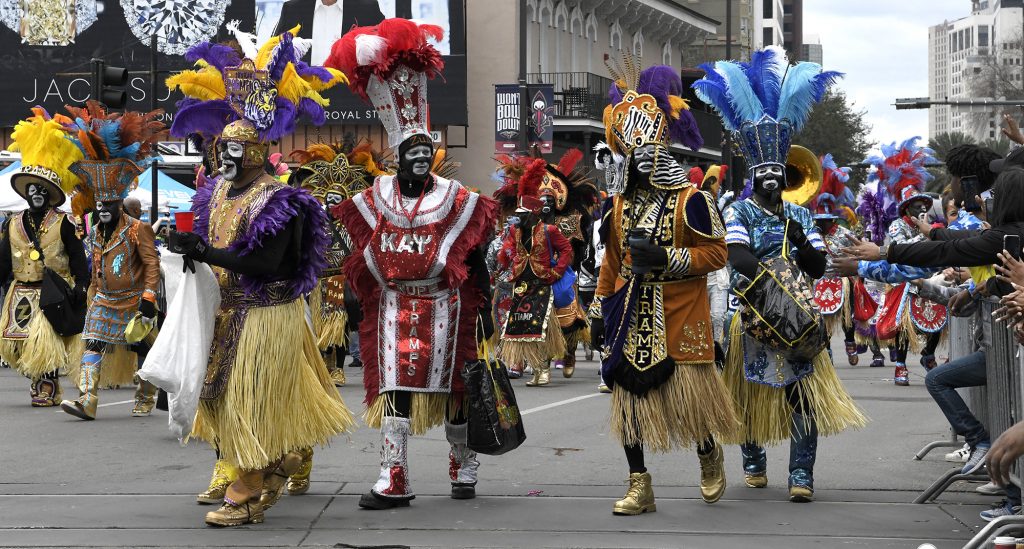
Unlike occasions such as Christmas Day and Valentine’s Day, Mardi Gras falls on different dates each year. This year, for instance, it took place on February 25. However, it was held as late as March 5 in 2019. In the end, millions attend no matter what month it falls in. This is perhaps the best evidence of just much people clamour to witness Mardi Gras!
While you can always expect the unexpected, there are certain staples of Mardi Gras. This includes parades running through the streets of New Orleans, with the biggest party happening in the city’s historical French Quarter. The parades typically feature a range of floats, bands and marchers travelling through a designated route while seemingly endless crowds assemble to the left, to the right, and, of course, up above on balconies.
Those involved are usually part of a krewe. This term (which was coined by the Mystick Krewe of Comus) is used to describe a social organisation which takes part, usually for a fee that helps fund the parade. The floats – which can be extremely elaborate – are used to showcase the talents of the krewes. For example, the well-established Krewe of Orpheus regularly feature a Trojan Horse (along with around 30 other floats in their fleet!).
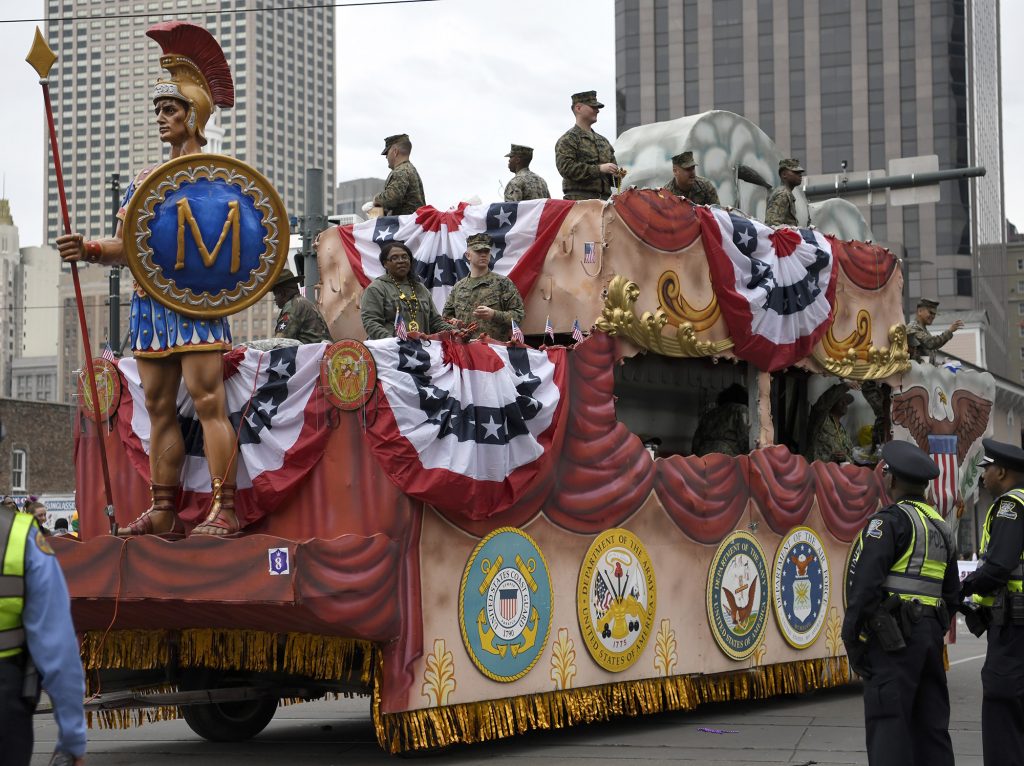
When did it start?
Whether it’s called Fat Tuesday or Shrove Tuesday, people have been celebrating the date for centuries. In fact, the original festivities date all the way back to the Romans! In terms of Louisiana, Mardi Gras – or at least the essence of it – can be traced back to the 18th century. As you can imagine, it was a much smaller affair! The first one that closely resembled the modern-day Mardi Gras took place in 1837, when parades first took to the streets of New Orleans.
Needless to say, from that point onwards the event picked up speed and grew rather fast. In fact, less than 30 years later it became a legal holiday in Louisiana. This became official when Governor Warmoth signed the Mardi Gras Act in 1875. This means that business and schools are closed on the day, so there’s nothing to stop people from get getting involved in the action if they are a New Orleanian.
What are the traditions?
There are so many traditions associated with Mardi Gras – with more and more being established each year. Take, for example, the colours. While on the day there are different shades as far as the eye can see, there are three ‘official’ colours. These are purple, green and gold. These first came into prominence back in 1872 after the event was attended by Grand Duke Alexei Alexandrovich of Russia. It’s believed the Rex Organisation (a famous krewe) chose the colours in honour of him, with purple representing justice, green representing faith and gold representing power.

Then there are the beads. There are conflicting reports on exactly who started the trend, but from the 1870s onwards it became fashionable for people on the floats to throw prizes at festival-goers. While the first beads were only single stones at that point, the craze of string necklaces really took off in the 1920s. These beaded necklaces are actually sold in shops – and dropped from balconies – pretty much all year long now in New Orleans.
Who exactly are the individuals who throw the beads? Well, it’s sometimes hard to say! The people involved in the parade either wear masks or face paint – and not just by choice! Originally those on the floats would wear masks to hide their true identity and escape certain social constraints. These days the law insists that you must wear a mask if you’re part of the parade! This is to ensure the highest level of quality and the most impressive visuals.
One person who revellers always keep an eye out for is the ‘king’. This is, of course, the King of Bacchus. Since 1969 a celebrity has been deemed royalty for the day and sat on a throne during Mardi Gras, with the first one being actor Danny Kaye. A whole host of famous faces have reigned over the parade since then, including Kirk Douglas, Hulk Hogan and Will Ferrell. The honour was bestowed upon singer Robin Thicke in 2020.
What can you expect?
There really is something for everyone at Mardi Gras. With that said, it’s true that some of the more adult-oriented behaviour tends to take place through Bourbon Street in the French Quarter. Meanwhile, you’ll find people of all ages – including families – placed in areas such as St. Charles Avenue between First Street and Napoleon Avenue.

There’s an abundance of accommodation in New Orleans, but typically the best hotels fill up rather quickly. Naturally, there’s a premium for staying on the busiest night of the year. Therefore, it would be wise to book early if you’re keen to get in on the action.
Thankfully, the weather should be on your side. There’s usually a chance of rain and at times it can become somewhat chilly, but it’s actually a great time of year to visit the city compared to the notoriously humid summers experienced each year in New Orleans.