
A review of: “The Mosquito” by Timothy C. Winegard
By: Dr Colin Michie, Paediatrician, London
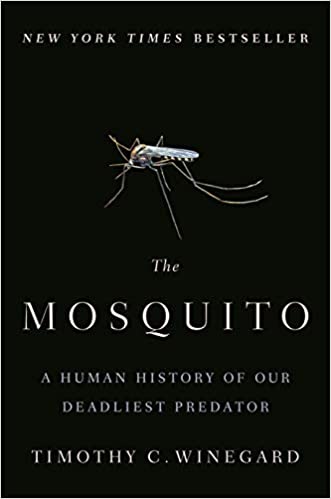
by T Winegard
Continuing fascination with romantic vampires contrasts with the reality that over a trillion real blood-suckers attack humans today. At least 12 000 species of insect can drink human blood. Of these, mosquitoes deserve our greatest respect, having killed more humans than the others.
This excellent and very readable book tackles the influence of mosquitoes throughout human history. Deploying military analogies and analysis, Winegard dissects the past to demonstrate the many outcomes of diseases spread by these beasts. Mosquitoes existed long before humans. A mosquito preserved in amber provided scientists with a blood meal from Tyrannosaurus rex. And yes, the T. rex suffered from malaria! The health of dinosaurs was compromised too, perhaps by the same Generals, Aedes and Anopheles. Today this insect holds the pole position as these animals have killed more humans than any other.
Why should a tiny biting insect be such a pest? In order to drink your red cells, the insect must cut a small hole in the skin, stop your blood clotting and reduce white cell attack. Males do not feed on us; it is female mosquitoes that use our blood, or that of your pets, animals or wildlife to make their eggs. They have evolved a powerful cocktail of salivary molecules to secure their crucial dinner. Many pathogens, including malaria, West Nile virus, dengue, filariasis, and zika travel in this saliva to be injected into the host at the start of their feed. Other nasties such as Clostridium tetani, Streptococci or Staphylococci from the skin surface may be introduced into the tissues by their bites, where they cause further illness.

Eighteenth-century New France and New Orleans were plagued by endemic yellow fever (“His Saffron Majesty”) and malaria (“marsh miasm”). Only recently have local organisations such as the Louisiana Mosquito Control Association succeeded in controlling the marsh mosquitoes locally. Although a few Italian doctors (who named malaria after its association with ‘bad air’) and pioneer physicians in the Caribbean basin linked mosquitoes with these illnesses by 1860, many had taken to bed nets and draining swamps before then. Musketas later hampered the building of the Panama Canal; this resulted in a critical linking of Federal American Funding to mosquito control and public health.
Winegard describes how mosquitos can work together with their dangerous payload. Some types of malaria reduce saliva production in the skeeter, for instance, forcing it into biting and feeding more frequently. This cunning strategy allows for transmission of malaria to more humans.
An estimated 750 000 individuals die each year from mosquito-transmitted diseases. This number will increase with current rates of deforestation and climatic change, which extend the feeding ranges of several zancudos. The Covid-19 pandemic is predicted to cause significant increases in deaths too, as it will damage supply chains for anti-malarial measures. Dr Seuss, in his army days, introduced soldiers to these dangerous animals:
“This is Ann…she drinks blood! Her full name is Anopheles Mosquito and she’s dying to meet you!”