
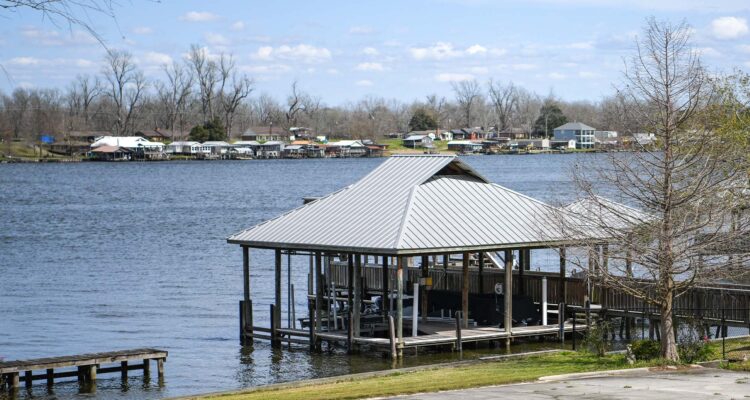
Deep in the heart of Acadiana, where two bayous meet and nearly four in ten people still speak French at home, the small Louisiana town of Arnaudville carries a cultural memory that much of the modern world has forgotten how to hold.
For International Kreol Magazine, this is not simply a Louisiana story. It is part of a wider Creole world, where language, ancestry, migration and survival continue to shape identity across generations and continents.
This is a story about a place that has never stopped listening to its ancestors.
Stand on the bridge over Bayou Teche and listen. The water moves slowly beneath you, dark and deliberate. Somewhere nearby, a porch door closes. A fiddle begins. A few words of French drift through the afternoon air. This is Arnaudville, Louisiana. A town where culture has not disappeared. It has simply kept speaking.
The road in does not announce itself. There is no welcome arch, no billboard promising attractions. What there is instead is the quiet unfurling of south Louisiana: Spanish moss hanging from live oaks, a thinning of traffic, and then the water. Two bayous. Bayou Teche from the west. Bayou Fuselier from the north. Meeting here, as they have always met, at a place the French-speaking residents still call La Jonction. The junction. The meeting place.
Population just over one thousand. One of the oldest towns in St. Landry Parish. Surnames like Broussard, Guidry and Richard on every other letterbox. Boudin at the roadside stop. A fiddle player who needs no stage. This is the town that Kreol Magazine has come to meet.
A Small Town with a Deep Cultural Soul
Arnaudville sits in the belly of Acadiana, straddling the border of St. Landry and St. Martin parishes just north of Lafayette. On the map, it is easy to miss. In person, it is impossible to forget.
The town belongs to that particular Louisiana tradition where the weight of history is not stored in museums but carried in people’s bodies: in the way they season a pot of étouffée, in the inflection of a greeting called across a garden fence, in the decision to hold a child’s naming ceremony in the language of the grandparents rather than the language of the school.
Small towns, in Louisiana as elsewhere, are often the true custodians of culture. Large cities absorb and reinvent. They soften the edges of tradition. But in places like Arnaudville, there is neither the size nor the appetite for that kind of erasure. Culture here stays close to its origins because it is inseparable from family, from faith, from food, from the rhythm of bayou life. It is not performed for an audience. It simply is.
The town was first known as La Murière when French colonists arrived in the late 1700s, establishing a community on land that had long belonged to the Attakapas people, one of Louisiana’s original Native nations. That indigenous foundation is not incidental to Arnaudville’s story. It is foundational. The French who came, and the Acadians who followed, learned to live within a landscape already shaped by centuries of Attakapas knowledge. What emerged was never purely European. It was always a creolisation: an adaptive, living blend of peoples, tongues and ways of being.
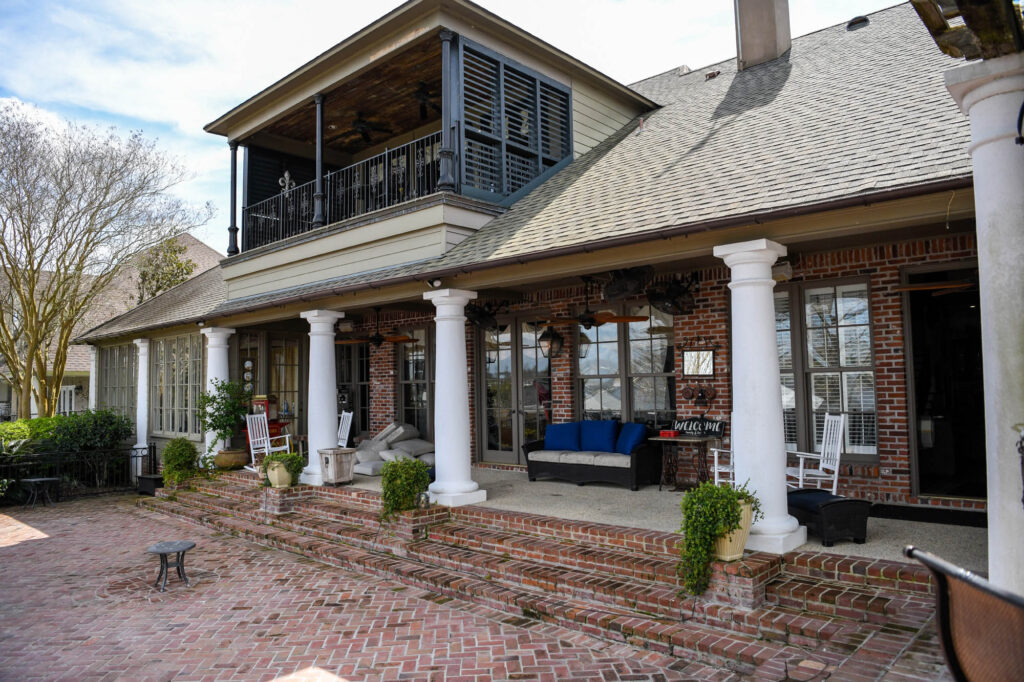
The Bayou as Living Memory
There is a temptation, when writing about Louisiana, to treat the bayou as scenery. It is not. The bayou is a character. It is the oldest storyteller in the region.
Bayou Teche flows for more than 125 miles through the heart of Acadiana. It was the corridor along which the expelled Acadian people moved when they arrived in Louisiana after the Grand Dérangement of 1755. Driven from Nova Scotia by British colonial forces, thousands made the long journey south, following the Teche as it curved through the prairies and marshes. They stopped here. They built. They remained. Arnaudville was, in this sense, born of displacement and resilience in equal measure.
Bayou Fuselier, meeting the Teche at La Jonction, was an artery of trade and movement. Goods moved along these waters. Families settled beside them. Children were baptised in churches whose bells echoed across them. Stories were told along their banks: stories about the old country, about the journey, about what was kept and what was lost.
Today, kayakers and paddlers explore these same waterways on the National Paddle Trail, and the TECHE Project has worked to restore and honour them for future generations. But even in its most recreational form, the bayou carries its old weight. You cannot dip a paddle into the Teche without touching something older than you.
The French That Refused to Disappear
Nearly four in ten people in Arnaudville speak French at home. That statistic, quietly extraordinary in a nation where minority languages so often vanish within two or three generations, tells you everything about how seriously this community takes its linguistic inheritance.
The French spoken here is not Parisian French. It is Cajun French: the descendant of the Acadian dialect brought from Nova Scotia, shaped over centuries by contact with Louisiana Creole, with Spanish, with German, with the Native languages of the land, and with the African French of enslaved communities. It is a language stretched and seasoned by every people who passed through this region. And it is alive.
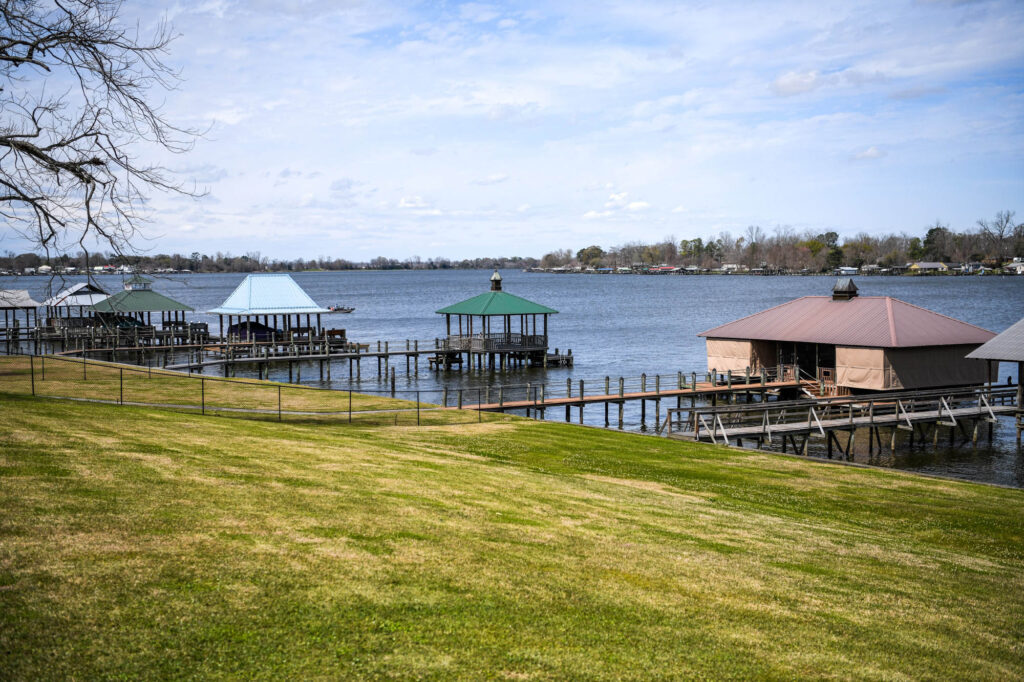
Community French Tables meet regularly in Arnaudville, gathering speakers of all ages around coffee cups and conversation. The motto is simple and generous: “Tout le français est bon français.” All French is good French. No hierarchy of dialect. No gatekeeping of heritage. If you speak it, you belong to it.
In the 1920s, a wave of Americanisation swept through Louisiana and French was effectively banned in many schools. Children were punished for speaking it. Entire communities were pressured into silence. That Arnaudville’s French survived is not an accident. It is an act of love, repeated quietly across generations, until the moment passed and the language could breathe again.
The Saint Luc French Immersion and Cultural Campus, led for many years by Mavis Arnaud Frugé, worked to deepen this commitment by bringing students, scholars and visitors into extended immersion in Louisiana French and Acadian culture. Its legacy endures in the French conversation tables, craft classes and cultural gatherings that continue to anchor Arnaudville in its linguistic identity.
Where Food, Fiddle and Faith Still Gather
You cannot understand Arnaudville without eating in it. Boudin sausage is standard fare: that dense, fragrant blend of pork, rice and seasoning, eaten standing up, without ceremony or cutlery, at a roadside stop or a kitchen counter. This is not street food. It is ancestral food.
Étouffée follows: rich and slow-cooked, crawfish or chicken smothered in a sauce built from the Holy Trinity of Cajun cooking, onion, celery and bell pepper. The town celebrates this dish annually at its Étouffée Festival each April, when the smell of cast-iron skillets and good company fills the air for an entire weekend.
Myran’s Maison de Manger brings the bayou to the table with Creole seafood rooted in the land and water of St. Martin Parish. The Little Big Cup, perched at the water’s edge, offers the particular pleasure of eating beside the waterway that has fed this community for centuries.
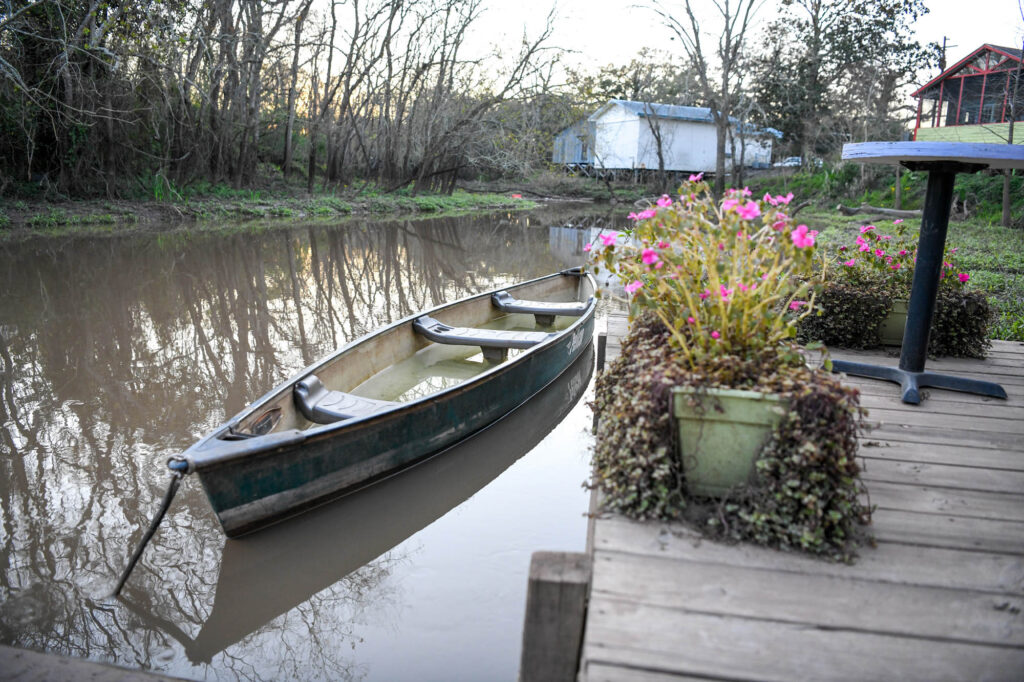
At Bayou Teche Brewing, founded by the Knott brothers on land their French-Acadian family has worked for three generations, you can drink a craft beer named Joli Blon or LA 31 Acadie beside a statue of Mary watching over the fermenters, each one named after an old town along the Teche. Heritage is in the very naming of things here.
On Friday evenings, a Cajun or Zydeco band takes the stage. Sundays are for Cajun Jam sessions. Spontaneous fiddle music still breaks out on street corners. The Cajun fiddle, that four-string instrument brought to Louisiana by Acadian settlers and transformed by three centuries of improvisation, is not a museum piece. It is a voice.
Zydeco is part of the conversation too: that joyful, propulsive fusion of rhythm and blues, Creole folk music and accordion-driven energy that emerged from the African American Creole communities of southwest Louisiana. When the fiddle meets the accordion, when Creole meets Zydeco, you hear the whole story of this region told in three minutes of music.
Faith shapes the gathering rhythm of Arnaudville as well. St. Francis Regis Catholic Church stands as it has for generations, a building that exists because the Arnaud family donated the land and asked that it serve everyone. Faith here is not austere. It is communal and celebratory, woven into festival, feast and family life.
Why Arnaudville Matters to Kreol Magazine
International Kreol Magazine exists to tell the stories of Creole people and communities wherever they are found: in the Caribbean, in the Indian Ocean, in Europe, and in the living heart of Louisiana. Arnaudville is precisely the kind of place our magazine was created to honour.
This is a community shaped by creolisation in its fullest sense: by the meeting of French and Acadian settlers with Native American peoples and African Creole traditions. The culture that emerged is not a diluted culture. It is a concentrated one. Every element has been kept because it mattered enough to keep.
During Black History Month, Creole art collections and cultural exhibitions across Arnaudville remind the town and its visitors that Louisiana Creole identity has always included African and African American lineages. That the music, the food, the language and the faith of this town are inseparable from the contributions of Black Creole communities is not a footnote to Arnaudville’s story. It is a central chapter.
Creoles artist , local galleries and cultural venues ensure that Arnaudville does not only remember. It creates. It generates new work, new conversation, new ways of carrying old meaning forward. For Kreol Magazine, places like this are the heartbeat of our mission. The small town where a grandmother still tells her grandchildren stories in French. Where the correct way to make étouffée is a matter of genuine family debate. Where a fiddle player can stop on a street corner and gather a crowd without a single advertisement.
When You Visit Arnaudville
A guide for Kreol Magazine readers planning a journey to La Jonction.
- ♪ MUSIC Bayou Teche Brewing hosts live Cajun and Zydeco bands every Friday evening and Cajun Jam sessions on Sunday afternoons. The Al Berard Music Festival (autumn) celebrates Louisiana fiddle traditions.
- ♥ EAT Myran’s Maison de Manger for Creole seafood. The Little Big Cup for bayou-side dining. Boudin sausage and étouffée are the essential dishes: never leave without them.
- ★ FESTIVALS The Étouffée Festival (April) and the Le Feu et l’Eau Rural Arts Celebration (December) are the two unmissable annual events. The Bayou Teche Wooden Boat Show (October) is also well worth the visit.
- THE BAYOU Kayak or paddle along Bayou Teche on the National Paddle Trail. The TECHE Project has installed trailhead facilities to welcome visitors by water.
A Small Town That Still Remembers
There is a moment, if you stay long enough in Arnaudville, when the town stops feeling like a destination and starts feeling like a home. It happens somewhere between the second cup of coffee and the third time a stranger waves from a passing truck. It happens when you hear French spoken not as a performance but as a convenience, the natural shorthand of two people who share a world.
Arnaudville is small on the map. By the measures the world uses to assign importance, it barely registers. But by the measures that matter most to Kreol Magazine, it is enormous. It carries, in its one thousand souls and its two converging bayous, a cultural inheritance that entire nations have lost.
Creole and Cajun identity is not only found in famous festivals or celebrated cities. It is found here, in the slant of afternoon light on the Teche. In a cast-iron pot that has been in the family since before anyone alive can remember. In the decision, made quietly and repeatedly across generations, to keep speaking, to keep cooking, to keep singing, to keep gathering.
Arnaudville does not need to be famous. It needs only to continue being itself. As long as French is spoken across porches, as long as music rises beside the bayou, and as long as families keep passing down what they were given, the bayou will keep speaking. And those who understand heritage will always know how to listen.