
Written by: Dr Colin Michie
One of the more unusual pioneering activists and philanthropists in the history of care for the blind is Frances Batty Shand, the daughter of an emancipated Jamaican slave.
John Shand left Scotland for Jamaica in the 1780s to become an estate manager. He became a plantation owner and met a slave, Frances Brown, of St Catherine’s. Together they had 7 children: Frances Batty-Shand was born in about 1815. Four years later Frances was taken to a maiden aunt in Elgin, Moray, in the north of Scotland. She attended a local school where she was educated alongside children in a traditional Scottish parish.
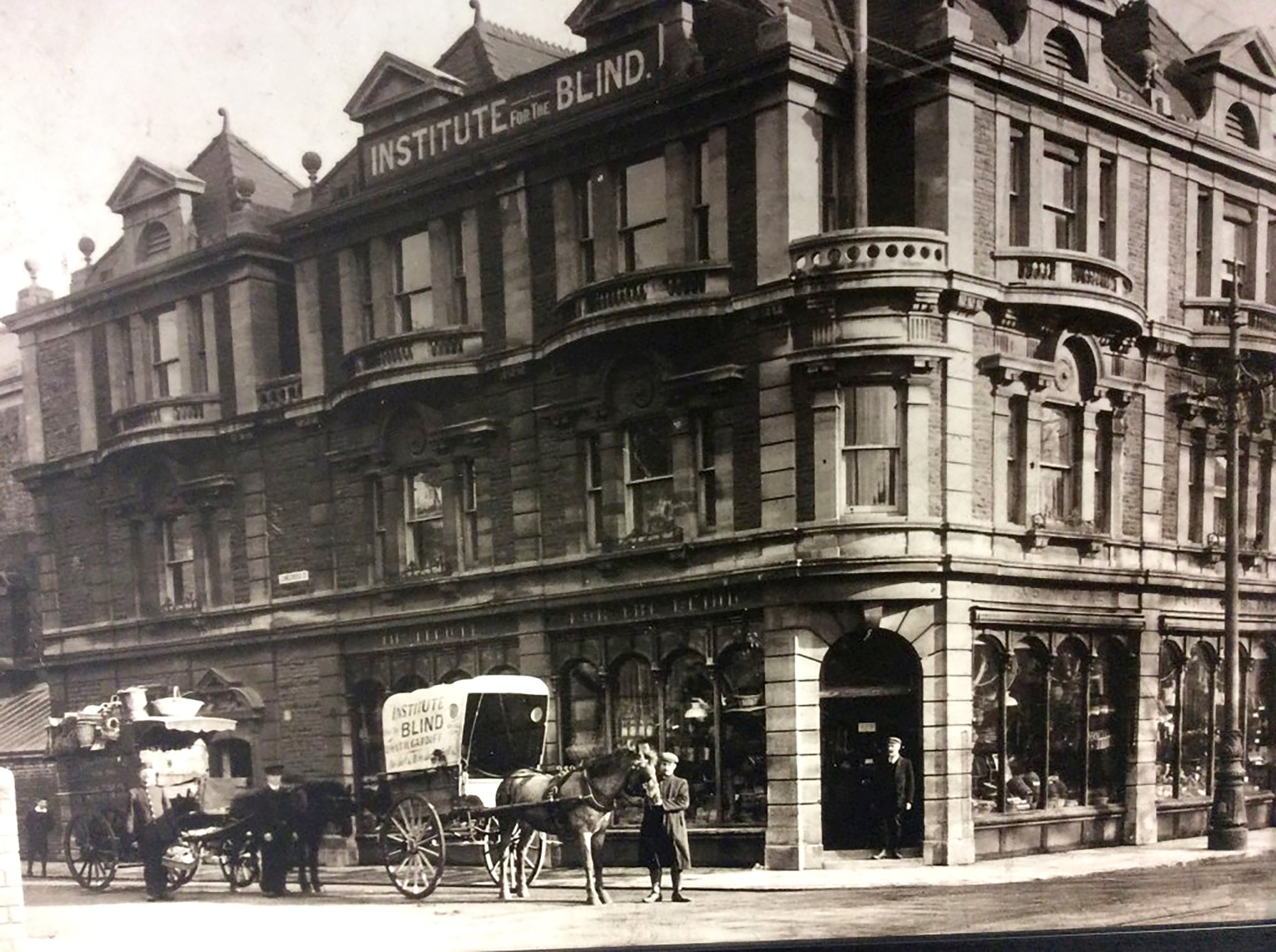
Frances moved to Cardiff with her elder brother, John, who had been engaged by the Rhymney Line, a rail company moving iron and coal from the valleys to the port of Cardiff. Industrialisation in this part of Wales had been rapid; urban slums posed many challenges, particularly for the disabled. Frances started her ‘Association for Improving the Social and Working Conditions of the Blind’ in a small workshop upstairs of a terraced house in Canton. This was the first workshop of its kind in Wales – its design was copied in many other cities over the following years. Crucially the sheltered gathering Frances developed also educated too – those working there received lessons in braille, singing, piano coaching and fitness exercises employing dumbells. Her new arrangement was subsidised; it did not come with uniforms or a religious commitment. It was distinctive and a significant advance on local workhouses.
Early recruits to the Association included men blinded by infection, injuries during the Crimea war and mining accidents. The venture was successful; renamed ‘The Cardiff Institute for the Blind’ it expanded over successive moves into different quarters, funded by Frances Batty Shand. In 1877 it supported 21 associates, and by the turn of the century 100 visually impaired people including women worked in the Institute, making baskets, mats, brushes and fenders, largely for a marine market.
Frances retired to Switzerland where she died in 1885; she was buried in Cathays Cemetery, Cardiff, next to her brother. She left bequests in her will for a children’s ward in the Cardiff Hospital, as well as for the Institute. The Institute was renamed Shand House in her honour in 1984. This building is now used by a sixth form college as student accommodation. However, The Cardiff Institute for the Blind, described as Cardiff’s oldest charity, was supporting over 7000 people in 2005. It is now part of the Royal National Institutes for the Blind.