
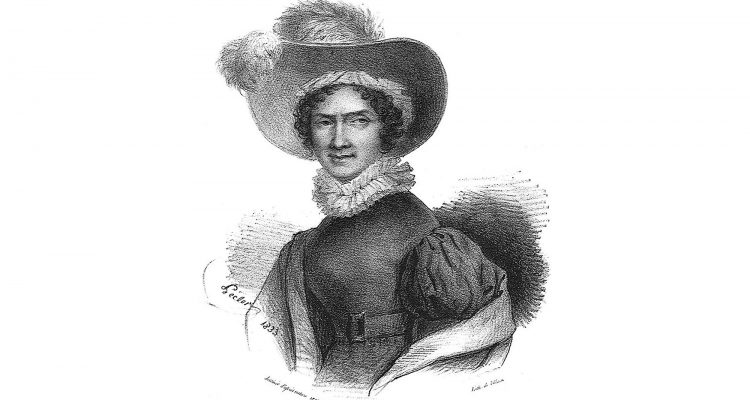
Written by: Dr Colin Michie
This woman has probably had an effect on each of us and our families, although we probably have never heard of her. Marie-Louise Lachapelle has often been called the “mother of obstetrics”. Our own mothers will tell us that the threshold of birth is an occasion best looked after carefully by experienced supporters. Whether we are poor or rich, urban or rural, midwives are crucial to safe birthing. Midwives, parteras, knee-women, nanas, doulas or the accoucheuse work in those intensely personal, ancient spaces between men and women, a mother and her child, birth chambers and legal authorities. Crucial to the outcomes of this process is how they learned their craft and vocation.
Two or three hundred years ago most midwives were local women, collecting skills from family members and confidantes. Their training typically evolved with their own experiences based on a relatively small number of women delivered locally, at home. Midwives were almost always respected and feared, as they would manage an area of social life where men had little knowledge or influence. However, their expertise, like many other practitioners, was inevitably restricted by this shortage of formal training and education.
Marie-Louise Lachapelle, an only child, began learning midwifery from her mother during her adolescence. She helped re-organise the ward on which they worked: in 1797 aged 28, Marie-Louise inherited her mother’s position of the chief midwife in the Maison Dieu, the largest public hospital in Paris. A few years later the Napoleonic government appointed her to lead La Maternité, a Hospital in Port Royal, Paris, where she was to establish midwifery training. Apprentice midwives were sent from all over France to be trained, for a year, under her patient supervision. They delivered the poor women of the capital before transferring their new proficiencies to their local communities. Marie-Louise was described as treating students as members of her own family. She removed onlookers from the birthing rooms, improved hygiene and opposed the application of forceps unless absolutely necessary. Perineal tears were repaired rapidly.
Marie-Louise assisted with the delivery of some 40 000 women during her career. She collected and collated statistics of her results and published these together with Jean-Louis Baudlocque, the lead obstetrician. Mother and infant survivals were better than those from ‘Lying-in Hospitals’ in London or Dublin; in particular, infant tetanus and puerperal fever were rare in La Maternité. She distilled her invaluable experiences into a distinctive midwifery textbook whose influence persists. Along with the great majority of midwives, Marie-Louise Lachapelle never sought publicity or fame. She died in 1821; her school at La Maternité continued as an influential centre for midwifery training that became famous internationally.
Marie-Louise Lachapelle
1 Jan 1769 – 4 Oct 1821