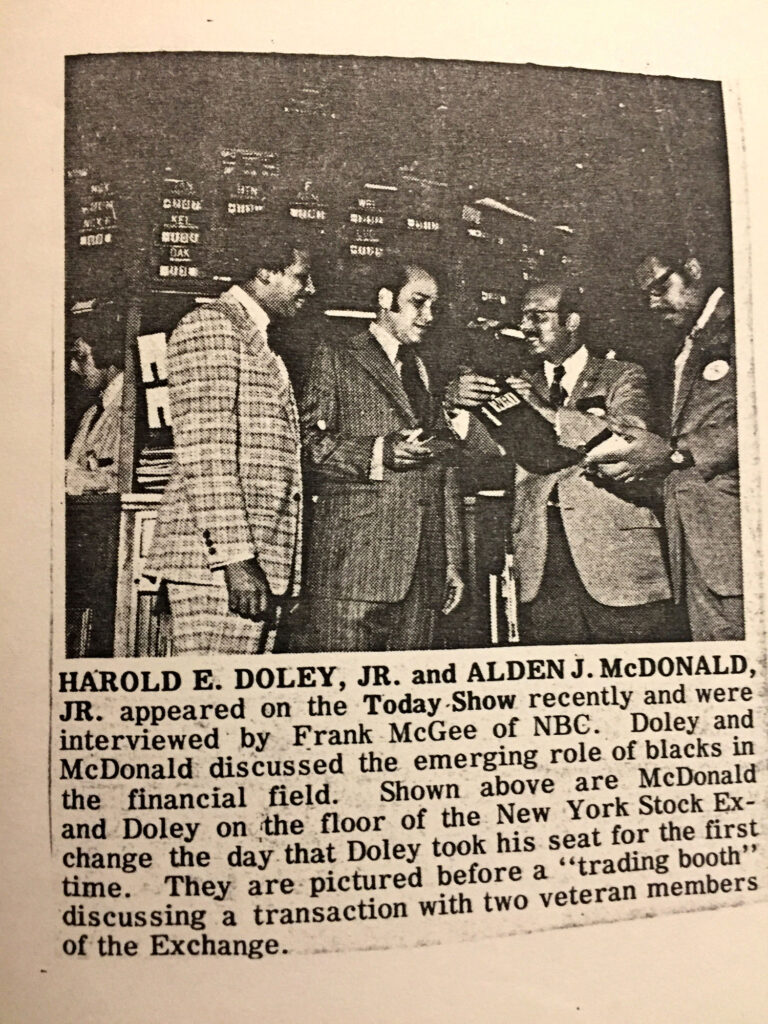
Ambassador Harold E. Doley, Jr is a formidable Wall Street titan who has had the ear of successive presidents, world leaders and global governments thanks to his considerable financial acumen. Doley is also the only African-American individual to have owned a seat on the New York Stock Exchange, which he proudly purchased at the age of 26 in 1973.
He was the first U.S. Executive Director to the African Development Bank and Fund. Doley chaired the Southern Africa Enterprise Development Fund’s (SAEDF) investment committee, a private equity fund whose board chairman was Ambassador Andrew J. Young Jr.
Harold Doley was born into a close-knit family in New Orleans on March 8, 1947, the elder of two sons of Harold Doley, Sr., a grocer and educator and his wife Kathryn, a Clinical Instructor of Nursing. His brother, Keith, would go on to achieve success in his own right as a lawyer, businessman, and diplomat, both sharing a deep interest in Africa.
The Mayflower Connection: A Legacy of Pioneers
Harold Doley’s lineage is not the typical American success story. His heritage traces back to the first American settlers, including an ancestor who sailed on the Mayflower in 1620. Doley’s Grandfather, a notable Mayflower descendant, was featured in the 400th-anniversary issue of the Mayflower Descendant’s Magazine. Doley’s maternal side dates back to 1619 in Jamestown, Virginia, known as the first permanent English settlement in North America.

Roots in Louisiana: The Doley Family’s Agricultural Legacy
Doley’s ancestry traces back to Convent, Louisiana, where his paternal family gained their freedom. They were manumitted in the 1700s by Auguste Doley, who earned freedom for himself and his family through his work as a cooper. Proudly, Doley notes, “My family were free people of color”, which was a legal status in Louisiana. Clarifying a common misconception, he adds, “We did not own a plantation… we owned actual farms on the River Road in Convent, Louisiana. Those farms are reflected on readily available maps of those days.” This enduring connection to Louisiana’s land and history is a testament to the family’s resilience and presence in the region.
From Childhood Wisdom to Diplomatic Aspirations: The Early Years of Harold Doley
The would-be entrepreneur’s early years were shaped by valuable lessons in frugality and the enticing nature of wealth imparted by his maternal Grandmother during his time in Corsicana, Texas. He fondly recalls, “My Grandmother had an oil well in her backyard but was thrifty. She would have us check the oil levels in the storage tanks by climbing up and spitting into the tanks to gauge the depth of oil as opposed to buying or renting a gauge”.
This unconventional method of measuring oil left a lasting impression on young Harold.
He also witnessed the ease of earning money through property rentals, observing, “On Saturdays, my grandmother would sit in her backyard, and tenants would come and pay their rent. This made me think about the efficiency and appeal of passive income.”
Doley’s interest in diplomacy was kindled early in life during a memorable encounter with President William Tubman of Liberia in New Orleans. The respect and honor accorded this Black man, especially during severe segregation, profoundly influenced Doley. He reflects, “Seeing President Tubman receive such high regard was a defining moment, inspiring me to pursue a role in diplomacy to lend equity in social standings.”

A family trip to New York sparked Harold’s interest in stocks!
His visit to Wall Street during the Kennedy-Nixon Presidential campaign was a transformative experience. Doley, an avid reader, was already familiar with the Kennedy Family’s Wall Street connections. He shares, “The stories of Kennedy’s father and father-in-law, Black Jack Bouvier, fascinated me. I was drawn to the fusion of power and money on Wall Street.”
This visit was instrumental in cementing his ambition to join the financial world. At just 13 years old, Harold expressed his desire to one day be a part of the New York Stock Exchange to his parents. True to his word, at the age of 26, he fulfilled this aspiration by purchasing a Seat on the Exchange.
Education
As a child, Harold attended New Orleans’s segregated schools for Black children, so he was always well aware of the disadvantages he faced. He did not always excel academically but went to the local HBCU (Historically Black Colleges and Universities). He reflects, “I went to Xavier University in New Orleans, a Catholic university, where I studied Accounting.”
During his time in college, Harold initiated an investment club, showcasing his early financial savvy and foreshadowing his future successes in the financial realm.
Despite his initial dislike for accounting, he understood its significance in achieving business success. With a rueful grin, he acknowledges, “There is nothing that I disliked more than accounting, but I knew that if I was going to be successful in investment banking, I would have to understand the workings of accounting.” In an eloquent defense of the profession, he cites some of the richest people in history, “The Medici’s (the Italian banking dynasty who ruled Florence during the Renaissance) created double-entry accounting, which is used today. Warren Buffet basically studied accounting. And John D. Rockefeller was a clerk (accountant). People think he was a wildcatter drilling oil wells, but that’s not the case. He was an accountant and kept the books, so he knew the goings on and the intricacies, and that’s how he accumulated his fortune.”
In 1990, later in his career, Doley graduated from the Owner/President Management (OPM) program at the Harvard Business School.

Early Career
After graduating from Xavier, Doley began his career as a stockbroker in 1968 at the New Orleans branch of Bache & Company, a national brokerage house later acquired by Prudential Financial to form Prudential Bache. His early success led to recognition by his industry peers, who honored him with an Outstanding Broker of the Year Award in 1971.
In 1973, at just 26 years old, Doley boldly invested $90,000 to buy a Seat on the New York Stock Exchange (NYSE), a remarkable feat for someone so young.
Doley was an independent Member of the New York Stock Exchange!
While there were two African American firms with seats on the exchange, Doley’s achievement gained national attention because he accomplished it independently, without the backing of a major investment firm and a large group of owners.
With this move, his client portfolio began to expand rapidly, starting with the Catholic Archdiocese of New Orleans as his first client for the new firm. In 1975, Doley founded his eponymous investment banking firm.
Undaunted by those critics who said that the majority community and large institutions would not invest money in a company founded by an African American, Doley spectacularly proved their prejudices wrong by consistently making his clients wealthy. Later in his career, Doley was selected by the Dow Jones Wall Street Journal in 1990 as the Stock Picker of the Year, evidence of both his manifold abilities and popularity.
Fast forward half a century, and in 2022, Doley was accorded the honor of ringing the closing bell of the NYSE in recognition of the fiftieth anniversary of the purchase of his Membership!

Ventures in Oil, Gas and Real Estate
Throughout the late 1960s and into the 1980s, armed with his accounting knowledge, Doley also ventured into the oil and gas industry, building upon his Mother’s family’s ties to the oil-rich town of Corsicana, Texas.
Additionally, he made significant investments in real estate, including the ownership of a commercial building in the Central Business District of New Orleans. As he explains, “I owned a building on Baronne Street in New Orleans, about five blocks from the Superdome, for 40 years. I bought it when I was in my late 20s.”
Contributions to the Mineral Industry and Diplomatic Considerations
Doley’s deep knowledge of the oil and gas industry resulted in his appointment by the Louisiana governor to the State Mineral Board, a body analogous to the Texas Railroad Commission that regulates oil and gas intrastate. As the Royalty Accounting Committee chairman, he was recognized for his significant contributions to the field.
At the time, he was a progressive Republican; Doley’s remarkable achievements eventually caught the attention of the Reagan Administration leading to his founding directorship in 1982 of the Minerals Management Service (MMS) within the U.S. Department of the Interior.
His role as the head of the second-largest revenue source to the U.S. Government, and managing an organization of more than 5,000 employees and a budget of $1.2 billion, and its collection of $12 billion, demonstrated his ability to navigate complex industries and showcased his intellectual rigour.
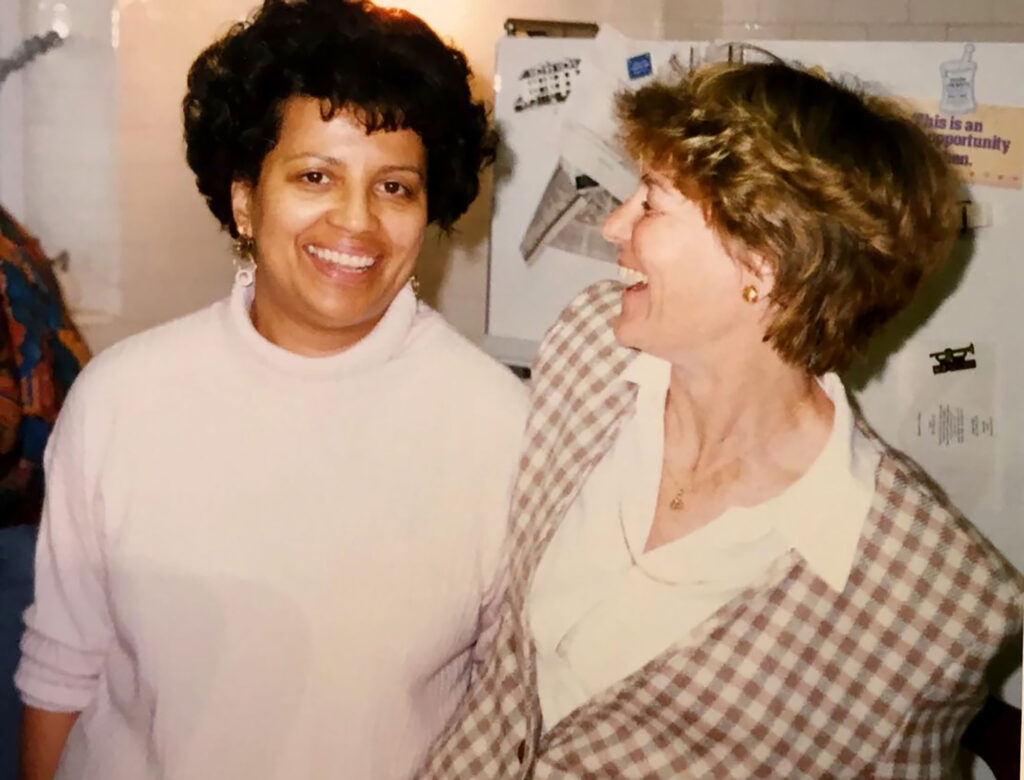
Imagine Award 2018 for Special Recognition in Social Justice (Cape Town, South Africa)
In 2018, Ambassador Harold Doley was honoured with the Imagine Award for Special Recognition in Social Justice during an event in Cape Town, South Africa. This accolade acknowledged his pivotal 1977 analysis of the platinum sector in South Africa. This groundbreaking study critiqued the U.S. government’s policy of appeasement towards South Africa, which was justified by the need for access to essential strategic and military resources, notably platinum. It argued against the prevailing belief that U.S. support for South Africa contributed to regional stability, revealing instead that such support for the apartheid regime was unfounded. The research highlighted the inherent instability and the continuous labour unrest within South Africa, challenging the notion that the apartheid government was a reliable partner.
The findings underscored that this stance was a misconception, portraying the South African government as a ticking time bomb that could disrupt the supply of critical minerals and metals. At that time, the alternative source for these materials was believed to be Russia, amidst the tensions of the Cold War. Ambassador Doley’s study received significant recognition, being reviewed in The Wall Street Journal, utilized as reference material by the CIA, and it is presently archived in the U.S. Library of Congress.
Beyond his research contributions, Ambassador Doley has actively participated in efforts towards peace, notably delivering a speech at the United Nations titled “Peace through Profits,” advocating for economic engagement as a pathway to peace.
Ambassadorial Aspirations and Professional Connections
Doley’s meteoric rise continued in the early 1980s. As he relates, wholly devoid of hubris, “I was asked by the White House, “Do you have any other ambitions?”
His desire to become an ambassador prompted discussions with influential figures.
Although initially considered for the role of U.S. Ambassador to Kenya, his financial background led Vice President George Bush to suggest exploring the Executive Director’s position at the African Development Bank, an institution that the U.S. had recently joined.

A Francophone Experience in West Africa
In 1983, President Reagan appointed Harold E Doley Jr as the first U.S. Executive Director to the African Development Bank (AfDB) in the Ivory Coast. This multi- lateral development institution, akin to the World Bank and the International Monetary Fund (IMF), conferred upon him ambassadorial rank. In his role as Executive Director, Doley was instrumental in developing a structure that increased the AfDB’s capital by over 300%.
Embracing the Challenge of Language Learning
When Doley and his Family relocated to Abidjan, Ivory Coast, he was in a francophone environment despite his initial aversion to the French language. Having opted to study Russian in college, Harold aimed to level the playing field with his classmates some of whom had solid French and Spanish foundations.
As he explains with impeccable logic and good grace, “I took French in high school, but I disliked French, so when I reached college, I decided to elect Russian to fulfill my foreign language requirement. I concluded that everyone would have to start in the same place. We had to start by learning the alphabet. So I said, I want to be on an equal footing – zero. That’s why I selected Russian.”
However, fate had a different plan, as Doley now resided in a country where French was the official language. While he struggled to speak French fluently, he developed his reading skills over time. With good humor, Harold recalls his younger son urging him not to attempt speaking French during a playdate, given his spectacular lack of linguistic prowess. As he says with a grin, “My son said, “Daddy, please don’t embarrass me by trying to speak French.”
Doley reflects on his Family’s time in Abidjan as “a fulfilling tour of duty.” Despite the initial language challenges, their experiences living across the street from the president’s official residence (the first leader after the country gained independence) and being surrounded by significant diplomatic figures offered a unique perspective on international relations.
The Doley’s residence was located in a prestigious Diplomatic neighborhood (Cocody Ambassades), which was directly across from the French Ambassador’s home and adjacent to the Papal Nuncio’s residence. Being immersed in such a high-profile area, amongst the upper echelons of African political and diplomatic society, provided Doley with the unique opportunity to witness and engage in interactions between heads of state and diplomats firsthand.
Harold’s wife Helena, fluent in French and Spanish, taught English as a second language at the International School in Abidjan, where their younger son Aaron attended while his elder son studied in Switzerland. Helena’s students were from diverse backgrounds, including Enuma Okoro, who would later become a notable features writer for the Financial Times and Nkechi Okoro Carroll is a screenwriter, executive director and actor..
Additionally, Aaron improved his French through interactions with the 24-hour guards stationed outside their home, and his fluency served as a testament to the immersive and transformative nature of their time in Abidjan. As Doley relates, “At night, Aaron would go out and play wale (African checkers) with the guards, so he learned how to speak, I mean, really speak French from them.”

From Diplomatic Aspirations to Business Ventures: Returning to New Orleans and Overseeing Real Estate
In late 1985, following his tenure at the African Development Bank, Doley decided to return home to his base in New Orleans. Owning a considerable amount of real estate in the city, he wanted to dedicate his time to overseeing the remodeling projects associated with his properties. Unfortunately, in the meantime, his mother fell ill with aggressive breast cancer and passed away swiftly. His father had passed away three years prior. These unfortunate events and Doley’s long-standing intention to move back to New York ultimately led to the Family’s relocation.
However, his commitment to Africa’s economic development and unity was unrelenting, and Doley was a founder of the U.S.-Africa Chamber of Commerce to increase trade between African nations and the United States. During the 1990s, he consulted with the stock exchanges of Nigeria, Tanzania, Kenya, Ghana and Zambia. He even played a role in the negotiations for peace in the Angolan Civil War.
Acquiring Madam C.J. Walker’s Estate
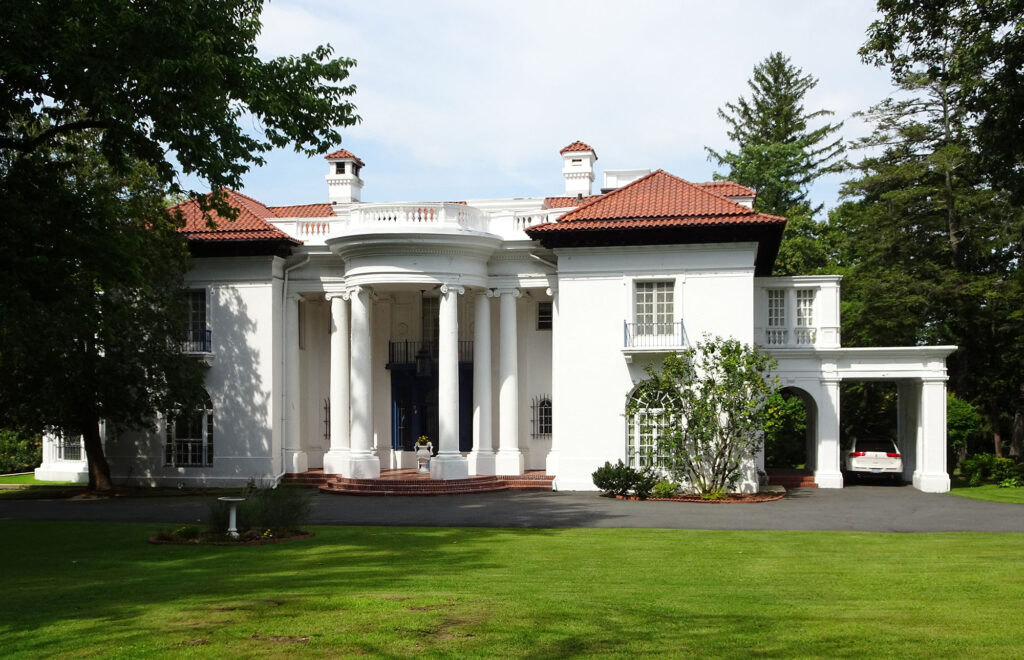
Closer to home, Doley’s passion for and keen commitment to preserving African-American history and Culture can be seen by the Family’s acquisition of the former residence of Madam C.J. Walker in Irvington-on-Hudson, New York.
Madam Walker (1867 – 1919), the first self-made American millionairess, according to the “Guinness Book of World Records”, made her fortune in the early 20th century as a beauty, cosmetic and hair care products entrepreneur.
Doley’s dream of owning Madam Walker’s historic estate began when he first saw the house. “When I was 21, I said, “This is the only home I want to own.” He relates with evident pride and satisfaction, “One Sunday afternoon in 1968, I got on the train and went to see the estate. I had said that I was going to own that house one day. And actually, that was one of the reasons why we moved to New York.”
Never one to be outdone on a deal, Doley was adamant that he would pay a fair price for the house. As he recalls with a sly grin, “The owner of the Villa thought he could make a killing on selling it, but he wasn’t going to make a killing on me. So we negotiated for over 2 years. His wife was a psychiatrist, and she declared us both insane and said that we would never strike a deal, but we did eventually.”
Finally, in 1993, Doley and his wife purchased the Villa, the opulent Hudson River-area mansion originally named by Italian opera singer Enrico Caruso in honor of Madam Walker’s daughter, A’(Le)lia (Wa)lker (Ro)binson. The mansion had been bequeathed to the NAACP (National Association for the Advancement of Colored People) but was immediately sold.
Doley was motivated to purchase Madam Walker’s estate for various aesthetic, historical, geographical and emotional reasons. As he explains, “It was beautiful. She was a great woman, a genius, and a historic figure from Louisiana, and I appreciate History. And her history was phenomenal.” In fact, in an earlier New York Times interview, he was quoted as saying, “To walk the halls that she once walked and to sleep in the room where she once slept is a feeling that is indescribable.”
Restoring The Estate
Despite his wife’s reluctance to move into the expansive, neglected property, they embarked on what was a labor of love, completely restoring and furnishing the estate over the course of the next 25 years. “My wife never wanted to move into the Villa. She said it was just too much to deal with, 20,000 square feet, four floors, plus a carriage house. And when you own a national historic landmark, which it was when I purchased it, you have all sorts of issues. It’s an old house, so you have maintenance issues.” He adds with a smile, “When we moved in, every morning was an adventure. You had to go to one bathroom to use the face bowl, then you had to go to another for the tub and another for the shower.” He continues, evidently very fond of the house.
“We lived there for a quarter of a century. We completely restored it to the glory of Madam’s time at the Villa!”
Eventually, Doley decided to sell the property. Explaining how he envisaged the conditions of the sale, he states, “I needed a unique buyer. I also wanted the home to maintain the same look and beauty that it had when Madam Walker was there and when we left.”
Enforcing the Easement and the Future of the Estate
Thanks to an easement prepared by the Doley Foundation attorneys in conjunction with the National Trust for Historic Preservation, the Doley Foundation ensured that the architectural integrity of the mansion would be protected with Doley’s Foundation funding of the easement in perpetuity. He states with satisfaction. “So, I had my lawyers draw up an 87-page easement to maintain the property at the same level in perpetuity. Therefore, the buyer needed to possess the finances to take on that kind of commitment.”
Fortunately, a suitable buyer who fit the criteria was found in the person of Richelieu Dennis, the owner of Essence Magazine, a man whose wealth had also been made, rather aptly, in the same industry as Madam Walker.
“He had previously purchased what amounted to a shell of the Madam CJ Walker Manufacturing Company, and I knew he was a motivated buyer. We finally came to an agreement on price, and he accepted the terms of the easement.”
Although he no longer owns the property, Doley maintains control over the Villa’s fate through the enforcement of the easement.

Message To Young People: Be Prepared, Adapt, and Pursue Passions
In a heartfelt and timely message to young people, specifically tailored to the ever-changing world in which we live, Doley emphasizes the importance of being prepared and adaptable for the challenges ahead.
Recognizing that one must have the ability to pivot as a key element of survival, he urges young individuals to embrace life’s inherent uncertainty and the constant evaluations they will face.
“Young people must be prepared for the future. They have to be adaptable. Being adaptable is the prerequisite to survival. You are going to be challenged every day. You are being evaluated every moment of the day.”
Doley stresses the importance of establishing a strong foundation with defined goals for success. He believes genuine enjoyment in your work is the key to success. Reflecting on his journey, he shares, “I dedicated myself to my business while drawing compensation only three years from my investment bank. My wealth accumulation and income stemmed primarily from strategic investments.”
Citing an Indian multi-billionaire steel magnate, Doley stresses the constant judgment young people face and the need to continually refine and improve their skills in order to compete successfully!
“This magnate states that he evaluates a person in less than two minutes based on the manner of their speech, their delivery, and their enunciation. Today, we are being judged constantly. The criteria are dynamic, and you must be prepared for all obstacles and challenges.”
Doley unequivocally encourages young individuals to align their career choices with their passions and aspirations. Whether it is business, the trades or the professions, he emphasizes the significance of finding true love and dedication for one’s chosen path.

Reflections: The Dual Sides of Harold Doley’s Journey
Dedication to Work: A Path to Success
Harold Doley’s career trajectory demonstrates a remarkable blend of dedication and strategic acumen. He describes one of his unique approaches by taking “working vacations,” a concept that exemplifies his commitment to blending business with pleasure. “For years between Christmas and New Year’s Eve, my family skied in Switzerland, and we were hosted by the Deputy Minister of Commerce and several Summers at least two weeks in Monaco,” Doley recalls, indicating how he seamlessly merged family time with business opportunities.
His schedule often involved flying internationally, using the Concord, helicopters and private planes, a routine that symbolized meeting commitments with time constraints.
This lifestyle was not merely about luxury but was a calculated move to be amidst as many influential circles as time permitted. Doley’s success narrative underscores the notion that a relentless work ethic and strategic networking are a cornerstone for achieving and sustaining wealth. For him, these experiences were integral and required!

Reflecting on Regrets: Learning from Challenges
Despite a largely successful career, Doley’s journey has been interspersed with challenges and disappointment, which he candidly discusses. He reflects on some decisions with a critical eye, “One of my biggest mistakes was affiliating with Reverend Jesse Jackson and his family-owned Rainbow Push Coalition,” Doley admits, highlighting a decision he now regrets.
Another point of reflection for Doley was his and his business partner’s investment into a “Minority Enterprise Small Business Investment Company” (MESBIC) in the 1970s, which did not yield the desired financial results. “We had the mandate of investing in minority startups, and we lost money,” he explains, providing insight into the complexities and risks of niche market investments.
Perhaps the most significant moment in Harold Doley’s career came when President George W Bush approached him with an offer to play a defining role in the reconstruction of New Orleans post-Hurricane Katrina as the US Small Business Administration (SBA) administrator. Reflecting on this, Doley acknowledges the gravity of the situation, stating, “You could not, under normal circumstances, have a greater challenge and Honor in rebuilding your home community.” This proposition presented him with a rare opportunity to contribute significantly to the recovery of his hometown.
However, Doley chose to decline President Bush’s offer. His decision was deeply rooted in his principles and his vision for the city’s reconstruction. He envisioned a smaller footprint, a more concentrated effort in rebuilding efforts, which starkly contrasted the broader plan proposed. “The path was not one I would have chosen,” Doley remarks, highlighting his disagreement with the proposed recovery process. This difficult decision was a testament to his commitment to what he believed was the best course for New Orleans, even when it meant turning down a significant and prestigious role. Doley’s choice reflects his deep connection to his community and his willingness to stand by his convictions.

Conclusion
Despite his astonishingly successful banking and diplomatic career and the enviable lifestyle he now enjoys as a result of his myriad investment portfolios, Doley possesses that unique ability, famously lauded by Rudyard Kipling in his magisterial poem If, to “walk with Kings, nor lose the common touch.” Harold Doley’s reflections paint a picture of a life marked by extraordinary success, driven by a unique approach to work and life. His story is a testament to the importance of hard work, strategic thinking, and the willingness to take risks.
At the same time, his ability to critically assess his disappointments and learn from them offers a valuable lesson in the complexity of decision-making and the humility to recognize and grow from one’s conclusions, good or not-so-good. Doley’s journey, with its highs and lows, encapsulates the essence of a life lived with both ambition and introspection.
Adding another layer to this rich tapestry, the Doley’s are completing a cookbook, “Dining at the Madam Walker Estate, 1993 – 2018.” This endeavor offers a glimpse into the personal life behind the public figure, bridging the realms of culinary art and history, and showcasing a side of Doley that complements his professional achievements and philosophical outlook.


The gifts are complete with the two intricate accoutrements that are necessary to complete the process
The gifts are custom designed and custom made by the Stadelmaier Studio of Nijmegen Holland and are encased on both sides of the Nave upon entering the Basilica
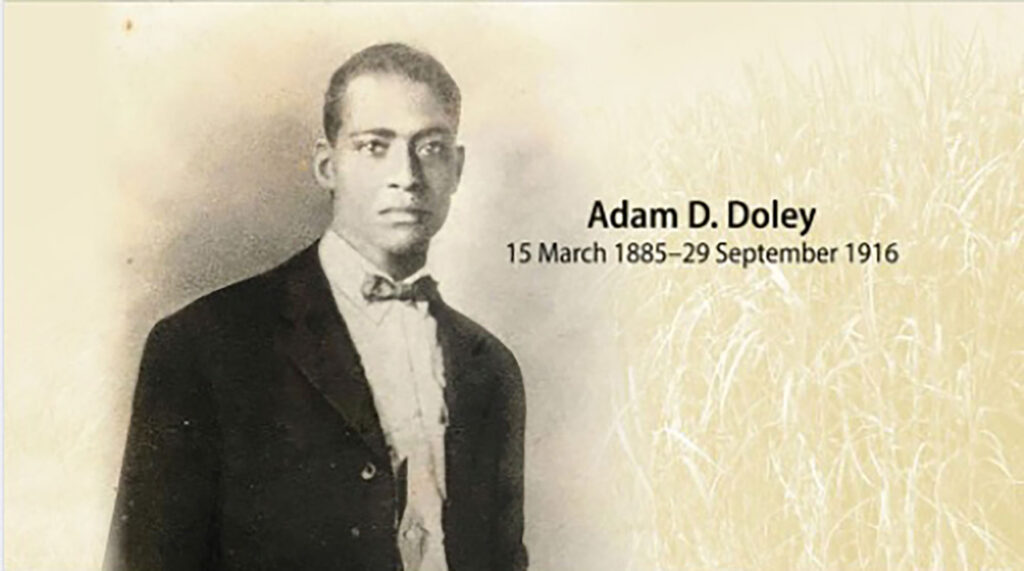


Harold III and Aaron Doley holding the Family Bible The first Birth entry in the Bible dates back 225 years

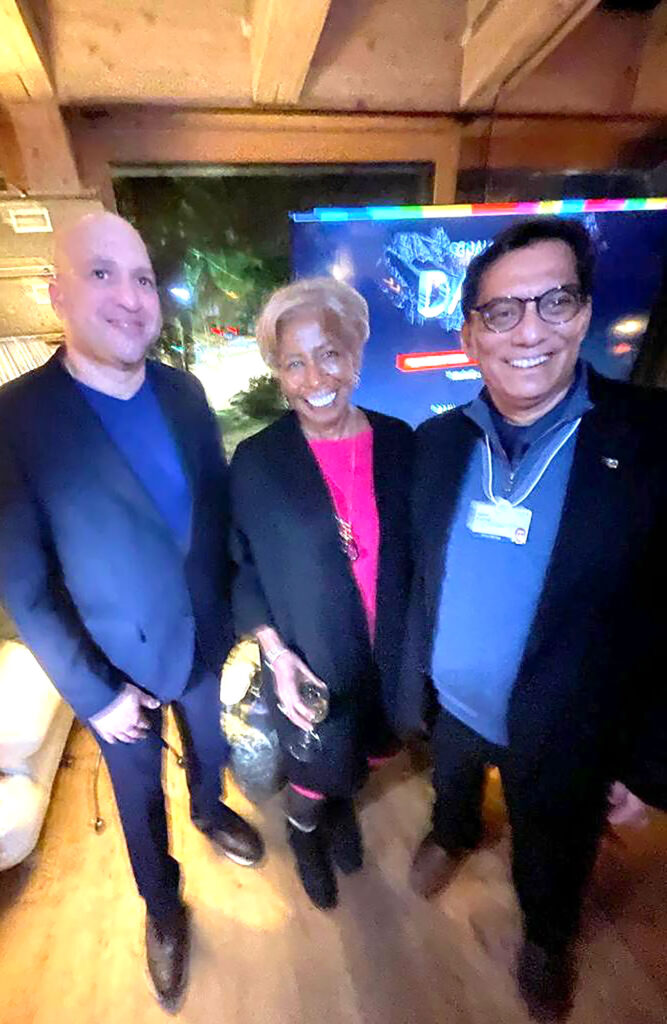
Dr Iqbal Surve at the World Economic Forum in Davos Switzerland 2023

The Doley Familys Plot in St Louis 1 Cemetery has an obelisk sculpture designed by Clifton G Webb
The monument pays tribute to the remarkable Louisianans of African descent who have a Doley connection
The categories are in Amharic Haitian Creole French and English