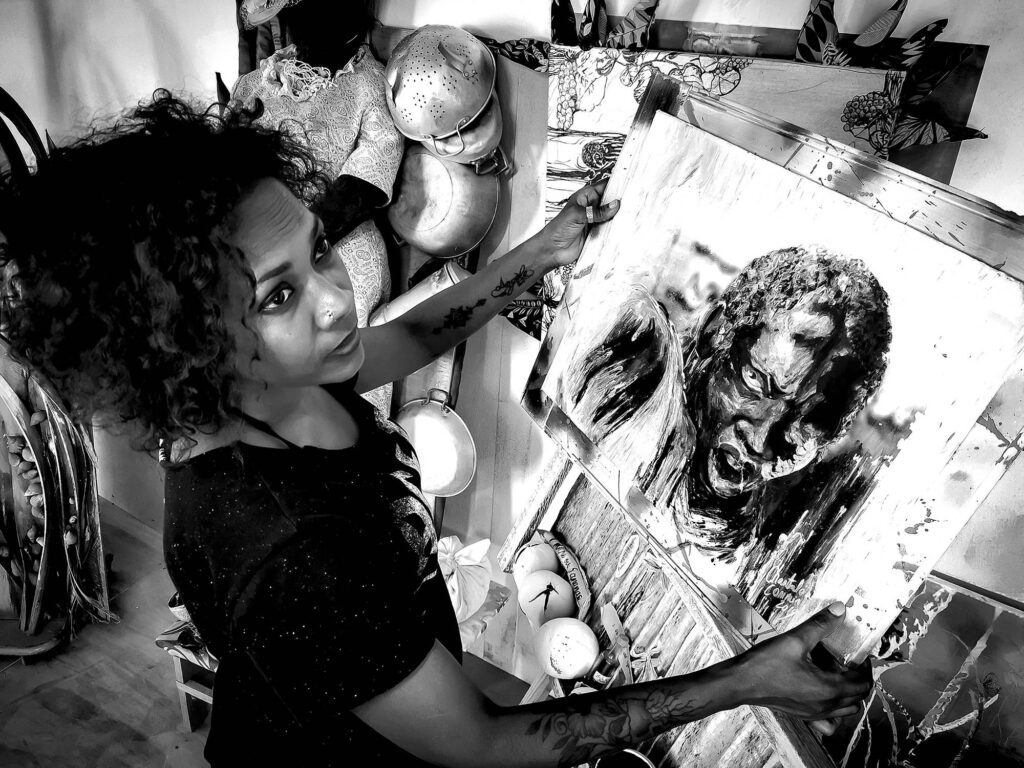
A profound exploration of Guadeloupe’s authenticity beyond its paradisiacal facade, as told through the life and artwork of internationally recognised visual artist, Chantalea Commin
Guadeloupe is sometimes referred to as ‘paradise’. A French overseas region boasting beautiful sun-kissed beaches and a population of just under 400,000 people (many of whom speak the poetic language of Guadeloupean Creole), this cluster of small islands remains a popular place to visit in the Caribbean.
But for visual artist Chantalea Commin, however, it’s not paradise. Instead, it’s simply the place that she calls home. Guadeloupe is where she was born, grew up, and eventually returned to in later life once she’d become established in her profession.
In her opinion, Guadeloupe is far from the picturesque postcard that many people across the world are led to believe that it is. It’s not that it’s not beautiful or stunning or any of the words commonly used by tourists, but more that systemic problems are hiding not too deep below the surface.
Still, it is Chantalea’s home. It’s a place that’s tied closely to her family’s heritage and has played a big part in developing the distinctive artistic style that has allowed her to make a name for herself. The artist you see today – whose work is sold and exhibited internationally – is very much a product of Guadeloupe.
And Chantalea is rightfully proud of this fact.
The Early Years
It was in 1993 when Chantalea had the first of many opportunities to show her work. This took place at an exhibition in Bagneux, located in one of the southern suburbs of Paris. Those expecting to see inside the mind of a city girl whose artistic style was solely influenced by years of gallivanting around the City of Love might have been surprised to discover that her roots stretched much further than the capital.
In fact, they stretched much further than mainland France.
Chantalea was born in Guadeloupe in 1971. With hotspots such as Anguilla to the north and Barbados to the south, it became an overseas department of France in 1946.
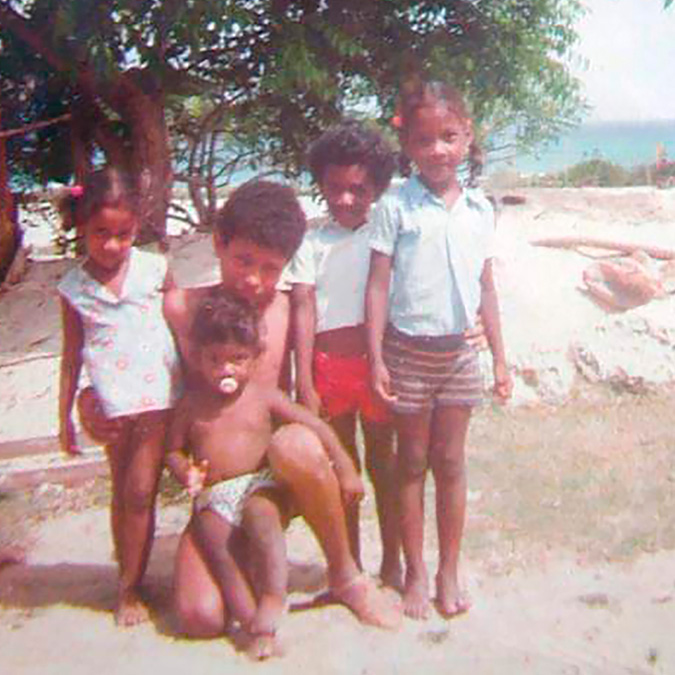
Chantalea was one of five children from the marriage of two sugar cane farmers. Regardless of how lucrative this industry was or how hard her mother and father worked, Chantalea is under no illusions regarding the economic hardship that her family faced when she was growing up. “We were very poor, with few prospects for emancipation, even less for girls” she admits.
Of course, many artists throughout history have struggled with financial burdens or gender discrimination – only to eventually lean on this experience and use it as a source of inspiration when creating work. For Chantalea, however, the event that spurred this came when her parents lost their jobs. The factory they worked at closed down and, with few prospects in Guadeloupe, the situation worsened after the catastrophic hurricane Hugo ravaged the island in 1991. They were left with no option but to move away.
The next stop? Paris. While both Guadeloupe and Paris are classed as French, they couldn’t be more different in many ways. Bidding goodbye to the Caribbean, Chantalea was about to experience what it was like to live in one of the world’s biggest and most famous cultural metropolises – including the opportunities that come from this.
A Budding Artist
With the window temporarily closed on Guadeloupe, a door swung open in Paris. After all, this was the place where artists like Pablo Picasso, Niki de Saint Phalle and Sonia Delaunay had found fame and acclaim. For an artist in the making, there’s arguably no better place to be than the capital of France.
Chantalea would enrol to study Aesthetics, Literature and Experimental Cinema at Pantheon-Sorbonne University. She rubbed shoulders with Michel Journiac among the artist-teachers, which seemed crazy to her and so far from the narrow world of her village; everything became possible. She mixes with a very arty crowd. She originally wanted to be an art teacher but soon found that she needed to be in a role where she could constantly scratch her creative itch.
“I learned art philosophy, aesthetic of art and painting,” she details. “The aim was to become an art teacher. But finally, I realised I was more interested in creating, not being a teacher.”
This education provided the backbone of the visual artist that we see today. Chantalea now boasts a diverse and eclectic catalogue of work featuring drawings, installations and videos. It’s these kinds of pieces that she’s managed to build a strong reputation upon since that first show in Bagneux in 1993.
Since then, art lovers have had many opportunities to savour and enjoy what Chantalea can do through these mediums. Over the course of her career, she’s continued to show her work in Paris, as well as places much further afield, such as Japan, Senegal, Martinique and Guadeloupe.
In particular, one of her most standout achievements came when she was part of a writing and filming residency in Casamance. There’s no doubt that she’s managed to establish an international presence.
Yes, Paris afforded Chantalea many amazing opportunities. Living, studying and working there opened up many doors for her – but she never fully closed the door on Guadeloupe.
After more than two decades, she would once again return to the islands where she called home. She was back in Guadeloupe.
The Power Of Art
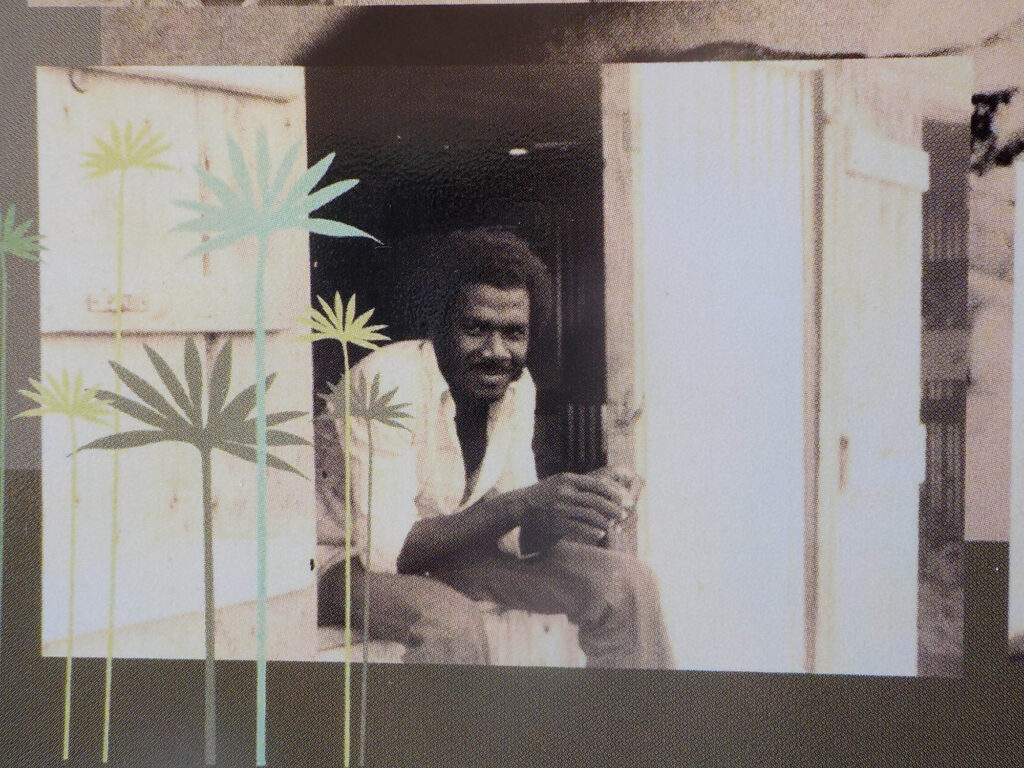
Chantalea, her brother, and their mother moved back to Guadeloupe. Her talented slam poet brother is a testament to the family’s creative streak and penchant for self-expression.
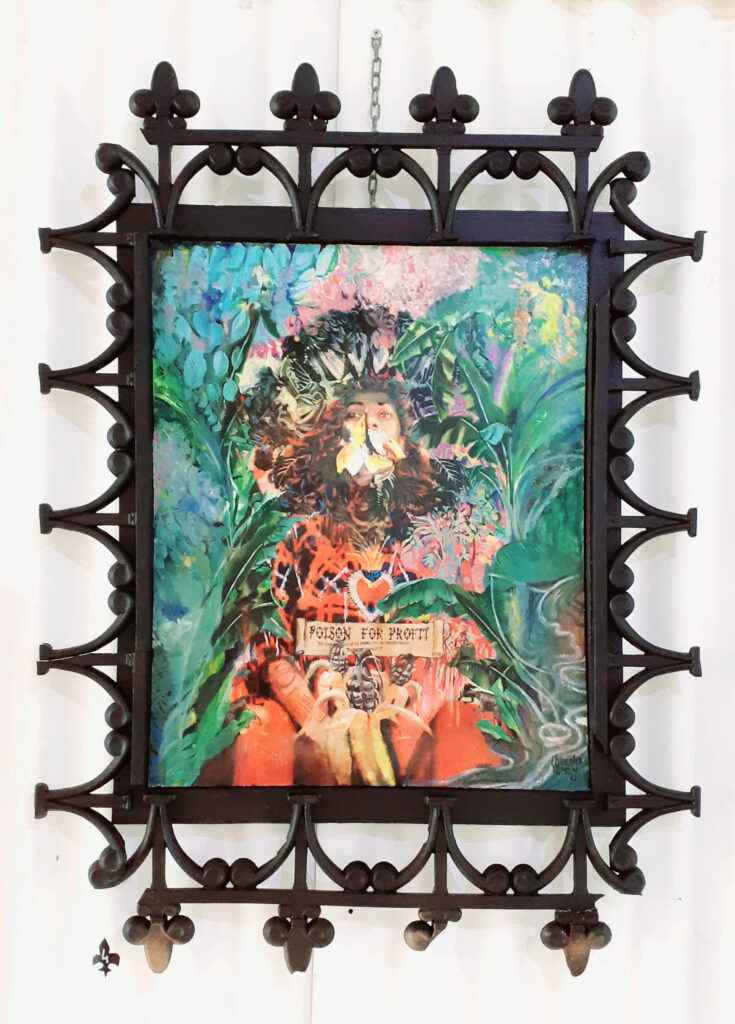
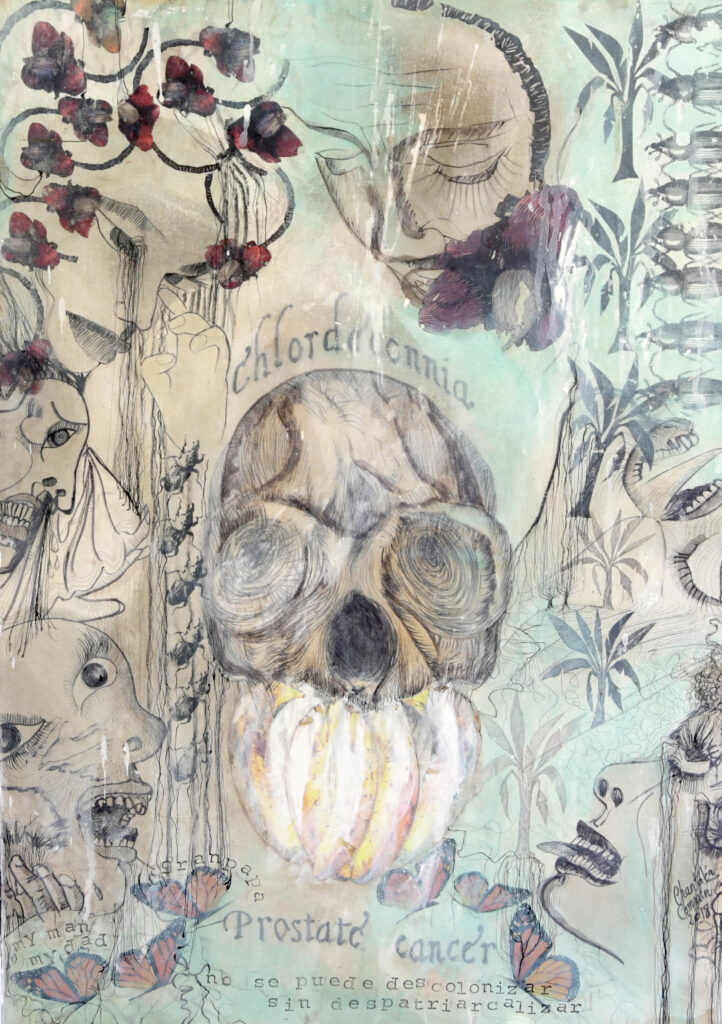
Unfortunately, Chantalea’s father had passed away after multiple battles with cancer by the time she made the move. In total, he battled the disease five times. She blames this on the amount of pesticides he was exposed to while working as a farmer.” The poisoning of the population due to the Chlordecone pesticide, banned in mainland France but tolerated in the cultivation of bananas in the French islands, is the best known and makes people forget all the other products handled by small producers and farmers. Pesticides, insecticides for cattle and goats, are often used without precaution.
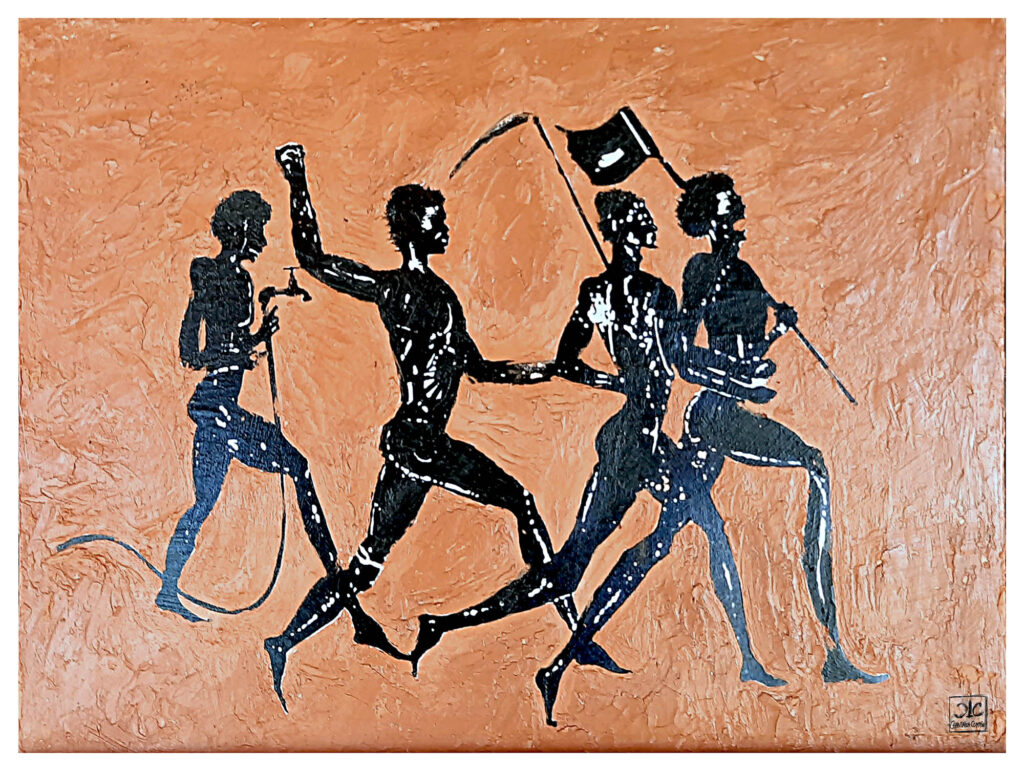
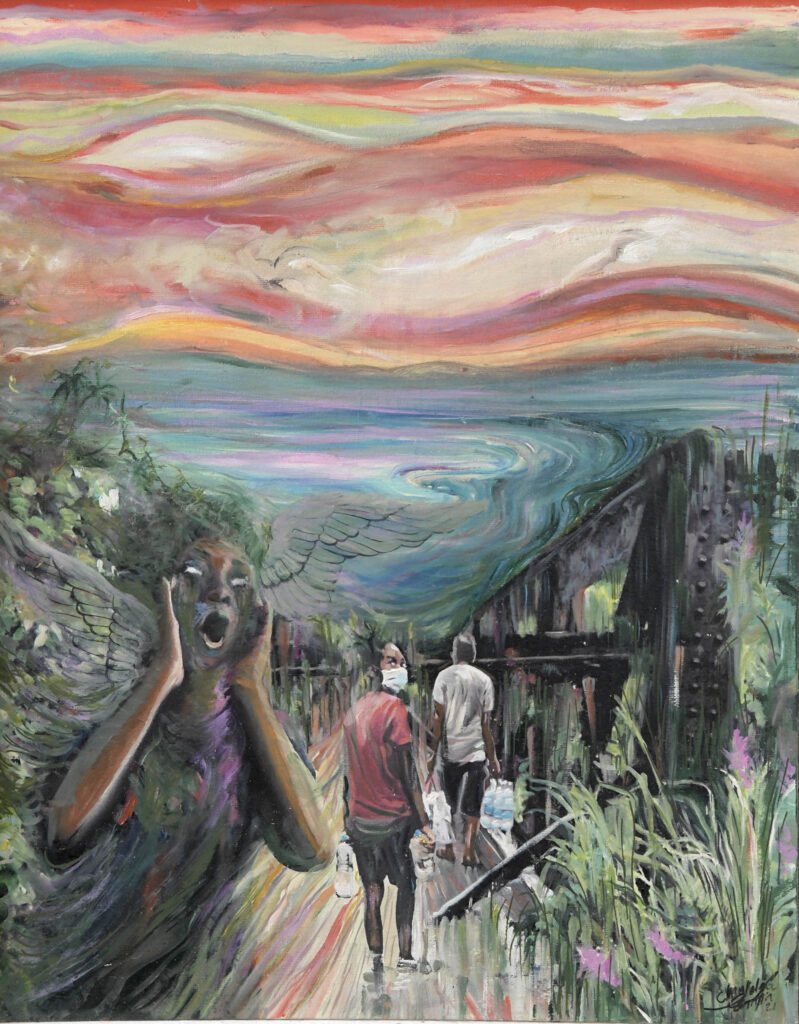
This is just one of Chantalea’s grievances with the way things are governed in Guadeloupe. She’s quick to point out other issues that mean the islands are not able to fully reach their potential, including a lack of drinking water, and the extremely high cost of living. “Food prices in Guadeloupe being up to 40% higher than in mainland France. Even local products are sold at higher prices. Everything is expensive!”
Chantalea says: “I have lived in Paris for 23 years, and when I return here, it is not France. Even though we pay taxes like French people. Walking into the city, you see it’s not the standard of French cities. Much remains abandoned in terms of architecture and infrastructure.”
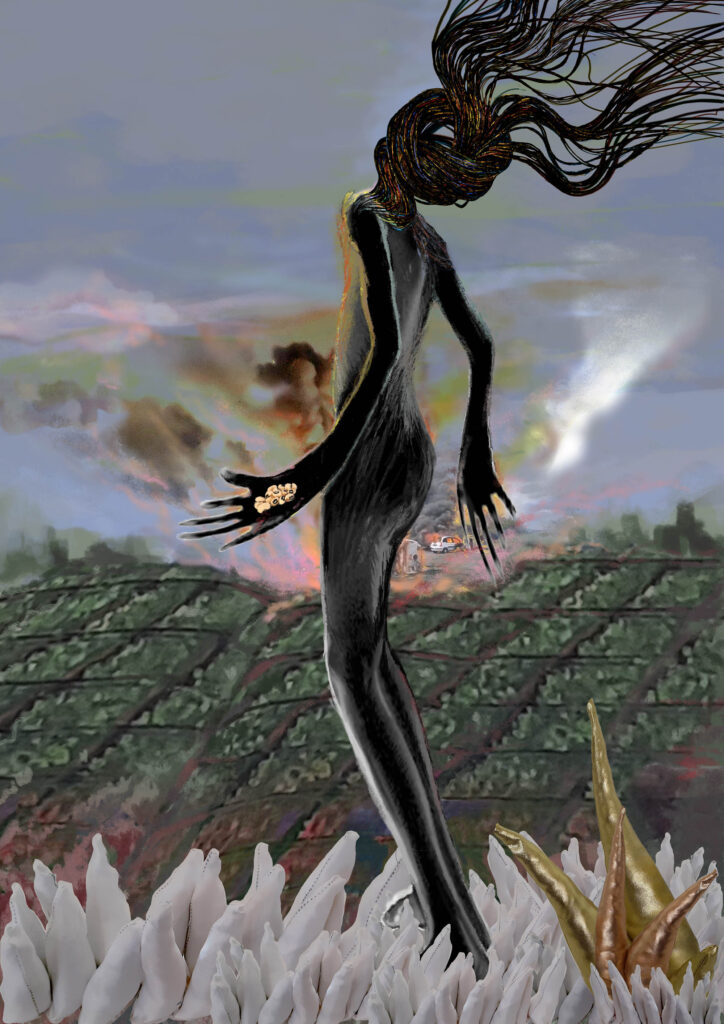
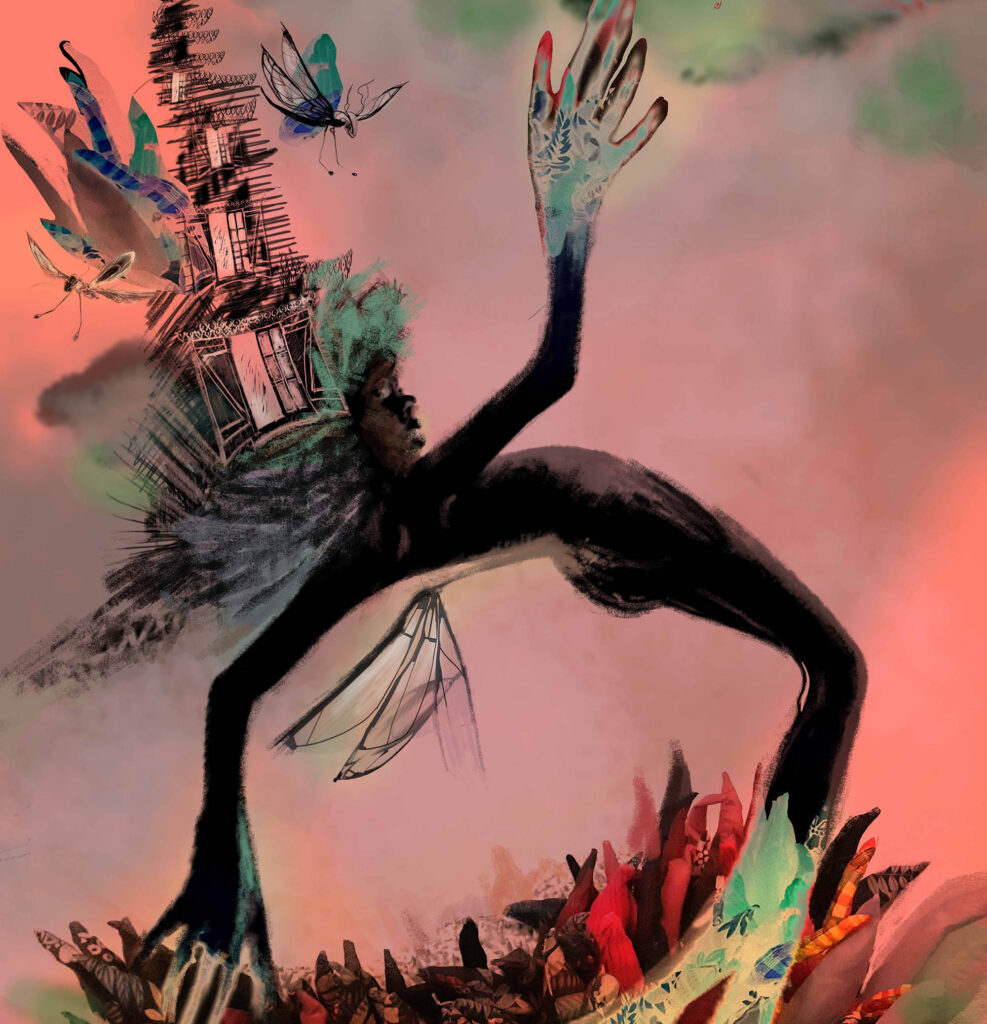
Ever the skilled artist, Chantalea knows how to channel such energy into her work. When looking at many of her pieces, it’s not hard to see that she’s an artist who’s at one with nature and not afraid to use her talent to sound social and environmental alarms.
Indeed, Chantalea has a gift, and she’s using it in all the right ways.
To point out some of the wonders that they do have, though, she adds: “But we have the sun, we have the beach, when it is not infected with Sargassum algae, a scourge which disfigures the landscape but which could be exploited if harvested and transformed.”
Ultimately, Chantalea did become an artist. But perhaps she didn’t entirely leave her teaching dreams behind. While it might not be her full-time job, she’s undoubtedly educating people with her art and using it to start meaningful conversations.
Much like Chantalea’s work, life is far from black and white.
Chantalea’s Art
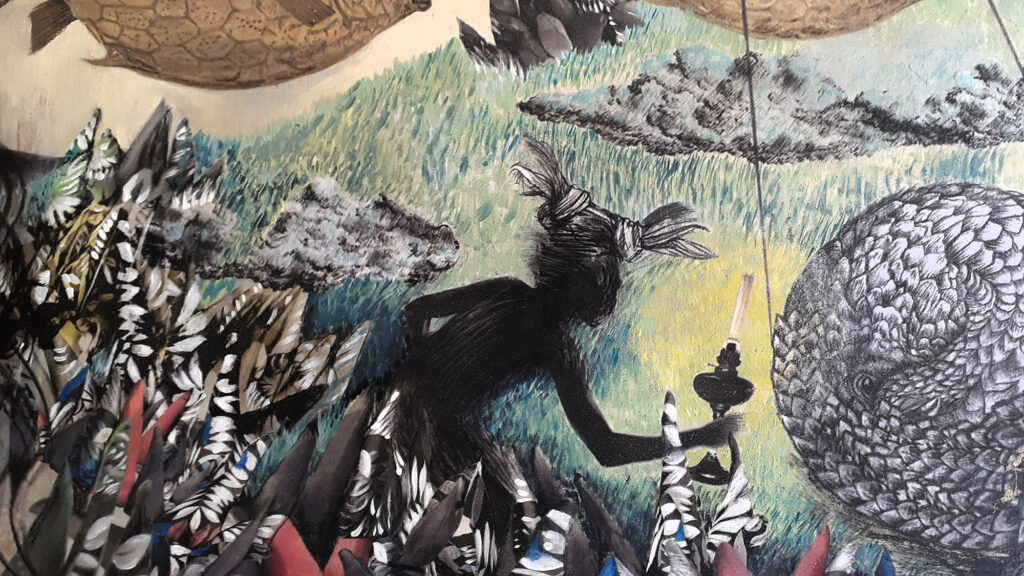
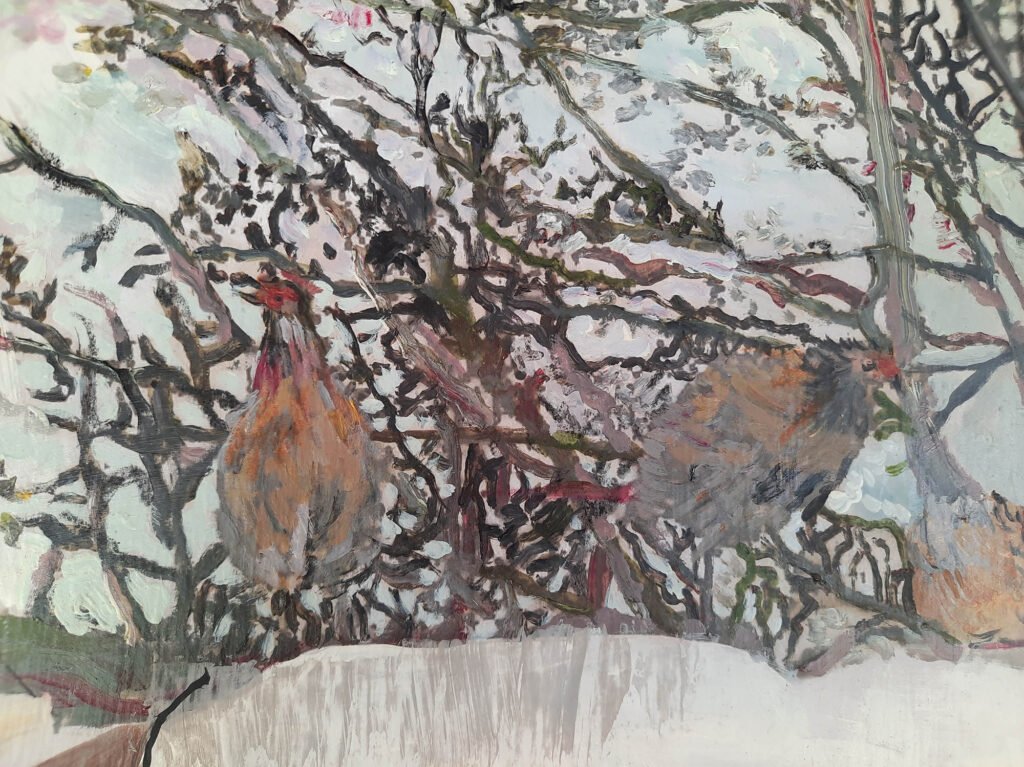
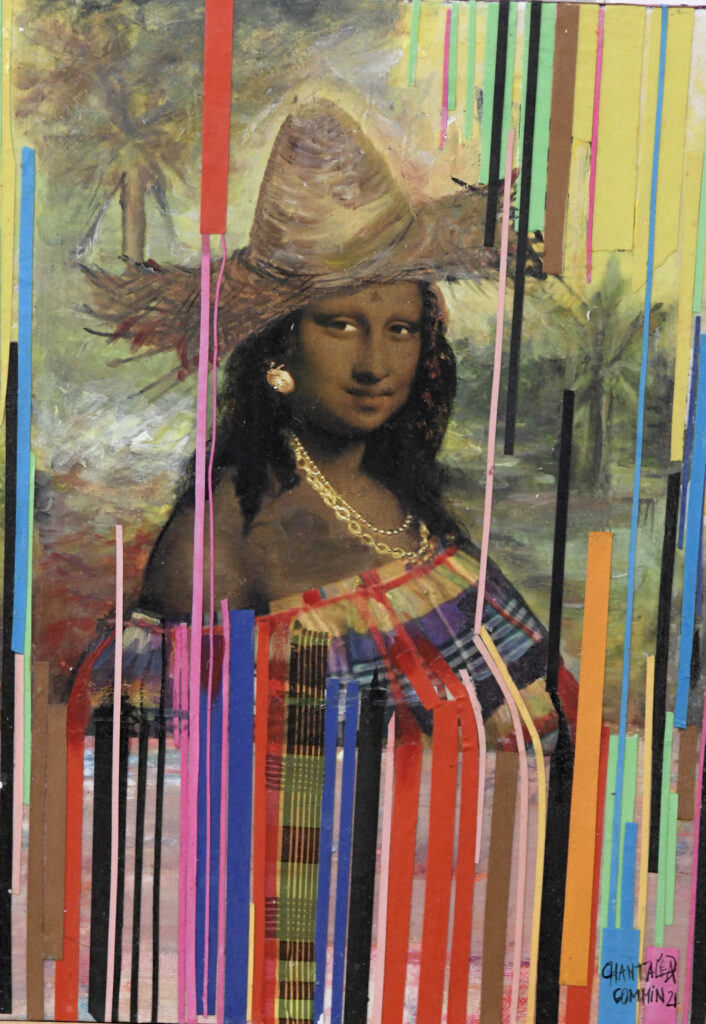
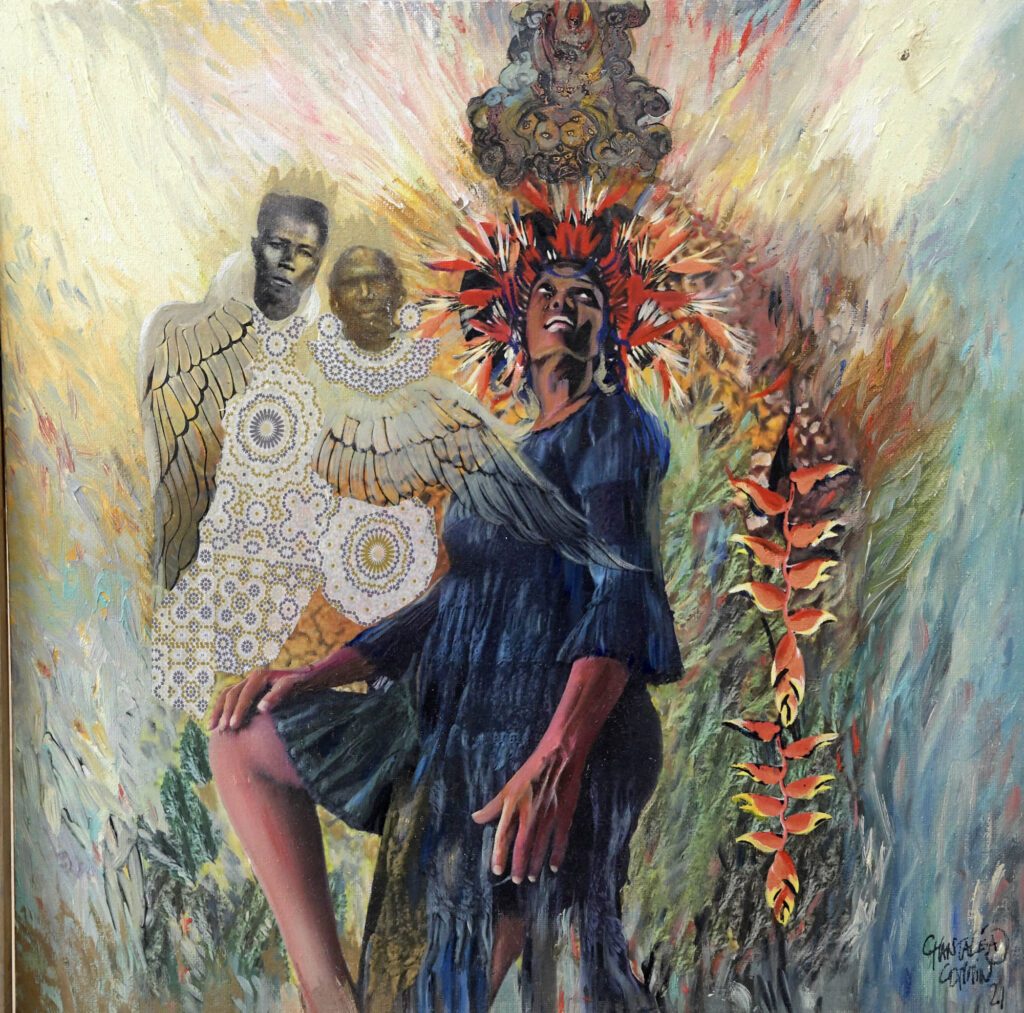
Chantalea Commin’s art is an intricate tapestry of diverse disciplines and ideas, embodying various techniques and media. Her work echoes the digital nature of our society, emulating practices such as ‘copy-paste’ and transfer between mediums, offering fresh perspectives and stimulating reflection.
Chantalea’s work explores the cultural signals of a diverse and evolving society. She critically examines the rapid dissemination of ideas, frequently in opposition to the ‘cancel culture,’ and shines a light on the urge to stand out in French society amidst the growing segregation of individuals and ideas.
Chantalea’s art, deeply immersed in individual and shared experiences, is firmly anchored in universal themes. She does not simply portray the past but explores its consequences and implications. Through her drawings, installations, and videos, she uncovers a disenchanted world fraught with change yet grounded in tangible realities, challenged by the domination of profitability.
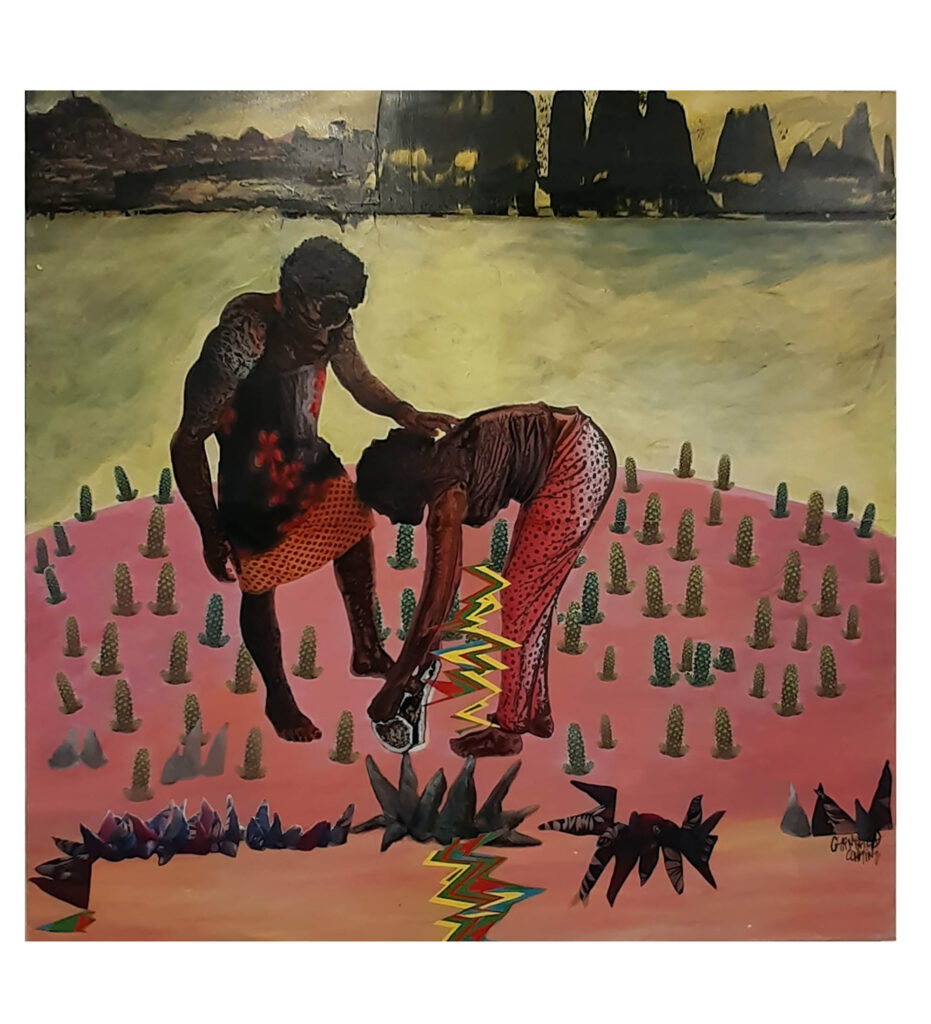
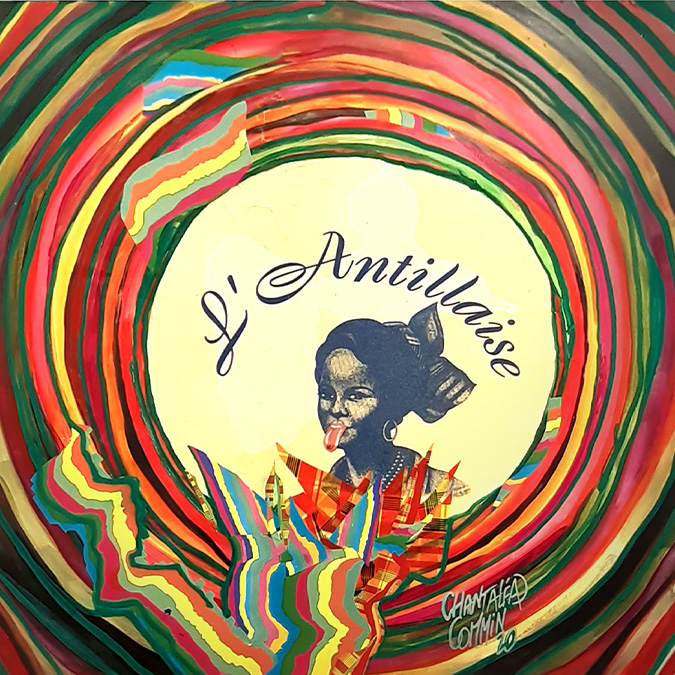
A recurring feature in Chantalea’s work is the presence of vertical lines, drips, and organic peaks, characteristic symbols resembling computer glitches that denote discomfort and its aftermath in a graphic way. These elements symbolise revolt and resistance against societal and environmental triggers, reminiscent of the punk ethos she encountered during her underground phase.
However, these symbolic “spines” exhibit varying degrees of texture and colour, reflecting the multitude of policies and their diverse responses to the issues they highlight. Commin’s work underlines the premise that “nothing is as it appears to be”, inviting the viewer to delve deeper beyond the surface.
Chantalea’s artwork incorporates various classifications, techniques, and styles, including ink and figurative painting, drawing on the freedom to include all art forms without cultural or geographical boundaries. Furthermore, her technical drawing offers a unique dimension to her work. She meticulously depicts objects not just by their outlines and characteristic lines but also by their volume through shadows, often using hatching. This technique bridges the gap between drawing and painting, blurring the boundaries and creating a cohesive artistic expression.
Simply put, Chantalea Commin’s art is a dynamic fusion of diverse media, techniques, and themes that profoundly explore societal, cultural, and personal narratives.

Making A Statement
“It’s very good to be here,” says an optimistic Chantalea. “But we are desperate.” This is the push-and-pull dynamic she faces while living and creating art in Guadeloupe.
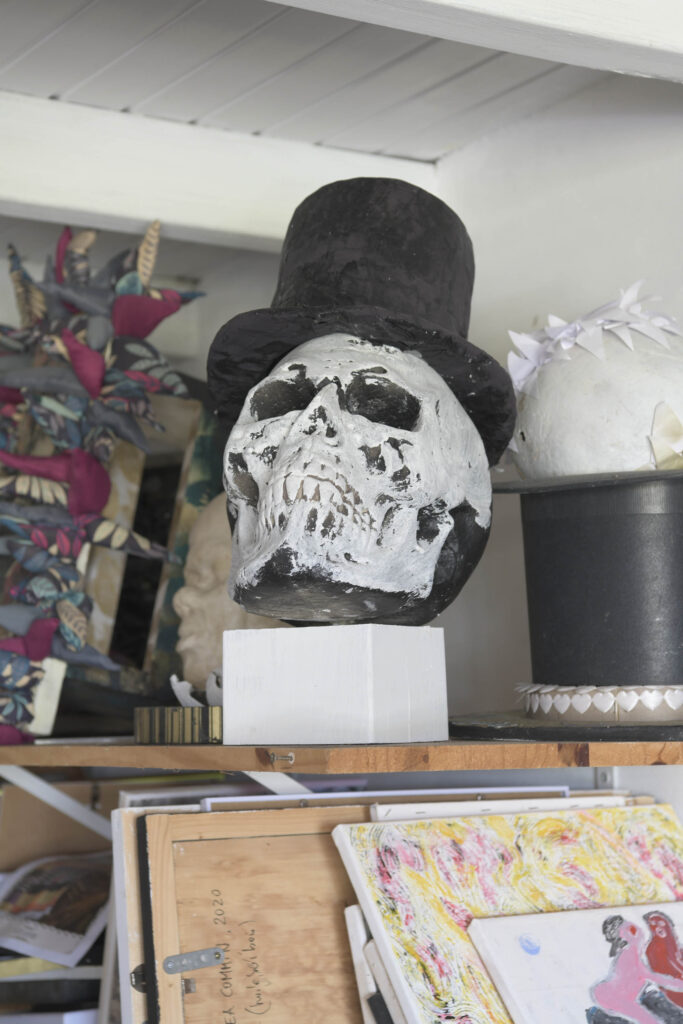
In one installation, Chantalea tackles the idea that Guadeloupe is not ‘paradise’. That’s not to say that it couldn’t be. Its potential to be a truly heavenly place arguably makes it all the more frustrating.
“This installation represents the things you can’t see when you arrive in this place they call paradise,” she reveals. “When you can discover many things that are not paradise like there’s no water here to drink.”
Chantalea claims that pollution – including the use of pesticides accepted in Guadeloupe but not in France – is so bad that locals now won’t eat the fruit grown in their gardens. Instead, They will visit the supermarket, steering away from nutritional treats and towards spaghetti and pizza.
“It’s universal,” she says. “We have the same problem all over the planet. It’s capitalism – poison for profit.”
Adding to this, Chantalea says that she doesn’t believe the current system is racially motivated but that it’s just a product of capitalism.
“It’s about capitalism,” she argues. “II think it’s about money. I don’t think it’s about racism,or will to genocide, as we can hear, money has no smell or colour.”

A Change Of Order
Change doesn’t happen overnight, but voices like Chantalea’s can certainly speed it along. She truly believes that art can change the world. To cure him of many ailments. Not only symbolically but by actively acting by linking with politicians, social workers, and scientists, breaking down barriers between practices, and pushing the walls and boundaries of the workshop. The ways that things are typically done did change dramatically when Covid struck in 2020.
Chantalea remained active during this time and produced an online blog about her experience in lockdown. In one particularly insightful post, she wrestled with the anguish of needing to stay away from relatives alongside the ‘inspiration’ that came from living through such a momentous time in world history.
She wrote: “Not being able to visit one’s relatives, especially the oldest, in whom one feels a lot of latency and loneliness, is torture… but confinement in itself is a great source of inspiration. This period taught me to communicate about my art, promote it, take good photos, and promote it by putting my work online professionally. We couldn’t exhibit face-to-face, never mind, we learned to do it remotely, something very interesting when you live on a small island far from the big art cities.”
Of course, the world re–opened, and when it did, Chantalea was ready to seize all the opportunities coming her way. This included exhibiting her work at the French Embassy in Tokyo, Japan, in a collective with Japanese artists.
In addition, she was able to attend the renowned AKAA Art and Design Fair in Paris. This allowed her to sell pieces she had been working on and allow people to enjoy her work in person. “To see Paris again, to be able to travel again, was invigorating”
Thankfully, those who can’t attend such events always have the opportunity to see what Chantalea has been creating and can even purchase the work for their own collection.
As well as her online blog, Chantalea, can be found on numerous social media sites. She’s active on platforms such as Instagram and Twitter, where she offers daily insight into her world as an international artist.

What’s Next?
Chantalea has exhibited her art across the world. While it must be incredibly rewarding to have found so much success, she’s certainly not finished yet.
She reveals that she has a ‘big masterpiece’ that she’s been working on – which will undoubtedly excite people in the art world. In addition, as she continues to update her blog and social media platforms, she’s earning quite an online following.
This is important because it gives people a glimpse of the artist. Chantalea has a unique perspective and isn’t afraid to show it to the world. Luckily for us, she’s doing so through her art – and in spectacular fashion too!
This is a story that started in Guadeloupe. It’s also a story that ends in Guadeloupe. Overall, it’s a great reminder that the best works of art come from all corners of the globe and don’t have to be concentrated to cultural hubs such as London, New York and Paris.
It’s beautiful that Chantalea made sure to return to her roots. The world is still her oyster, but it appears that home will always be Guadeloupe.
And thanks to Chantalea, the change could start to happen that would make it truly reach its potential. Indeed, Guadeloupe could truly become a paradise.

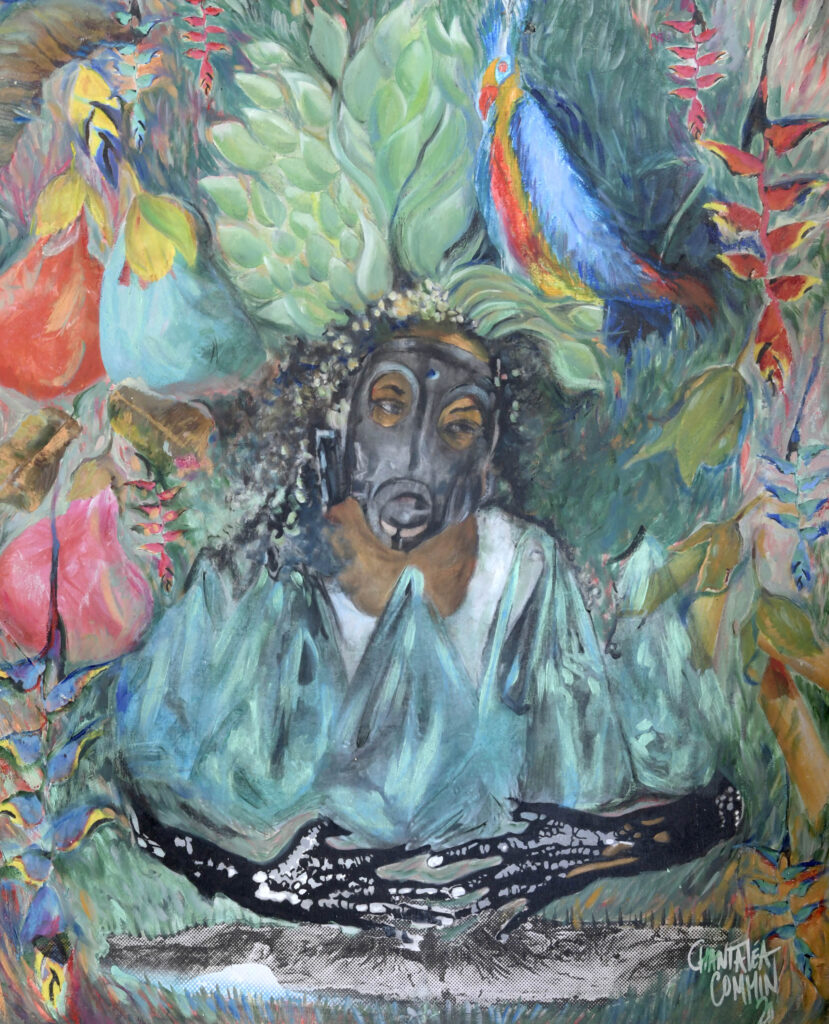
ACRYLIC ON CANVAS 65X80cm 2019