
For the last few decades, New Orleans’s groundbreaking music output has owed much to the genius of Ronnie Kole. This jazz pianist, creative music arranger and consummate entertainer is also a well-known philanthropist and exponent of his adopted home city.
Ronnie Kole is respected throughout the music industry for his unique personae, elegant piano sounds and smooth playing style. His international appearances – often in conjunction with a full symphony orchestra – are deemed unforgettable. Not surprisingly then, Kole has been quoted as a key influencer by other music greats, such as Allen Toussaint, Fats Domino and Harry Connick Jr.

Yet Kole is a gifted jazz musician who is still very much in touch with his roots. In fact, he’s so humble Kole is content to admit his favourite piano is a Yamaha! Hardly the name you would expect to see picked out by a pianist who has performed extensively throughout the US but also Europe and Asia.
His music arrangements are equally unassuming, and Kole’s concert repertoire can pass effortlessly from playing music from Mozart, Gershwin, film scores, modern pop classics and iconic pieces such as Amazing Grace.
Though his command of piano keys and creative flair are legendary, Kole describes himself as largely self-taught, with a succession of piano teachers put off by the fact he was – in his own words – “a lousy student.”
He added:
“I was a terrible student. How the hell I ever ended up being as talented as I am, I’ll never know because I really, really was bad.”
The early influences that resulted in prestigious talent
Ronnie Kole’s age is somewhat shrouded in mystery, but he’s likely to be in his mid to late 80s. Kole estimates that he first started playing the piano at age 13.
Chicago born, much of his early life was shaped by a diagnosis of a weak heart as a result of a bout of scarlet fever as a child. This condition put a constraint on physical pursuits but sharpened his appreciation of music and particularly the piano.
Though he didn’t always confine his activities to sedentary pursuits! He said: “My parents didn’t want me – and the doctors didn’t want me- running outside, and playing baseball. I’m from Chicago originally, and of course, that’s what we did.”
“We played softball and baseball, and of course, that didn’t stop me. I’d sneak out and I was playing baseball and everything else.”
This belief that Kole had a weak heart also led to his placement in a school for handicapped youngsters, an experience that was to shape his charitable pursuits many years later. More on this further into our profile.
Ironically, more recent tests have revealed a startling update. It would appear that this earlier diagnosis was inaccurate, and Kole’s heart was perfectly healthy.
However, at the time Kole’s father had to work hard to meet medical bills for not only Ronnie but his brother too.
Kole explained: “For a living, he drove a garbage truck for the city of Chicago. And at night time he would tend bar at a local bar to get some extra money, and even at some times on weekends. On his lunch hour, he would run out and stack beer cases at a tavern, just to keep making money, to keep us going.”
It is clear from talking to him that not only did his father’s multiple jobs and devotion result in Kole’s first piano. They also shaped the future jazz musician’s own personal work ethic.
He also attributes some of his love of music to the fact his mother was a dancer in her youth.
Another important influence while Kole was learning his craft was an artist called Mercedes, who played at New Orleans bar Pat O’Brien’s and visited his Chicago home.
He said: “She was the one that actually started the Twin Pianos in the thirties at Pat O’Brien’s.”
“She was a legend there. So here she is in Chicago and she’s over at the house, and I’m lying in bed, you know a sick kid, and she’s in there playing.”
“I said carry me out there, carry me out there, and I’m seeing these hands flying like this. Her hands were flying. I said oh my god, this is wonderful, and probably subconsciously, she probably really inspired me a lot.”
“Fast forward many years after that, when I moved down here and all of the sudden I became a big name, well became known, and I went in to hear her play once at Pat O’Brien’s, and she wasn’t as good as I thought. But, as a kid, she really inspired me.”
Another highly formative encounter helped to develop some of Kole’s practical abilities.
“There was a pianist where my dad would tend bar on Sundays, on weekend, and his name was Herman Brand. I think it was probably a stage name, a black pianist and he would play there on Sunday afternoons, and mom and dad would take me in there and he’d call me up to play it. Of course, all I could play was Boogie Oogie, you know, and he would sort of teach me some things. A couple of times he came over to the house and taught me a few things and next thing I knew, you know, I was picking up on these things.”

Leaving to tour as a skinny 16-year-old
Following school concerts – and an elementary school bandmaster who threw a baton at his head when he improvised out of boredom – Kole earned the mentorship of the late trumpet legend Al Hirt.
It was Hirt who suggested his protegee’s music education could be advanced by going on the road.
“Actually I did a very stupid thing, but it worked for me. I came home from school on a Friday and told my mother and father.”
“I was sixteen years, I said, I’m quitting school, I’m going on the road with a band on Monday. My mother was about to kill me. My dad says, go for it son.”
So the shy, skinny 16-year-old began playing in a band and found his way to Al Hirt’s club on Bourbon Street, New Orleans. Eventually, Ronnie Kole opened his own club in the city, Kole’s Corner.
He also notched up a diverse and ever-growing list of television, studio and live performances.

of Ronnie Kole
Career highlights of the jazz wizard
Though he has composed some original pieces, Kole’s gift as a musician is in blending together many influences into perfect arrangements. He said: “There are so many great tunes, why fool around with my own?”
He is now a multi-award-winning jazz performer, including many international accolades and every honour than New Orleans can bestow on such a prestigious talent. This includes a Lifetime Achievement Award and induction into the Louisiana Music Hall of Fame. There is a life-size bronze statue of Ronnie Kole at the New Orleans Music Legends Park on Bourbon Street.
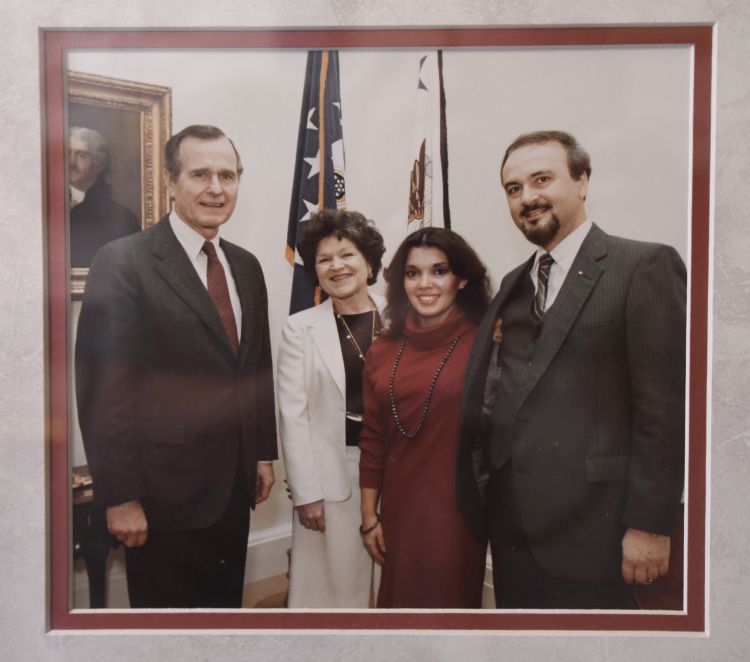
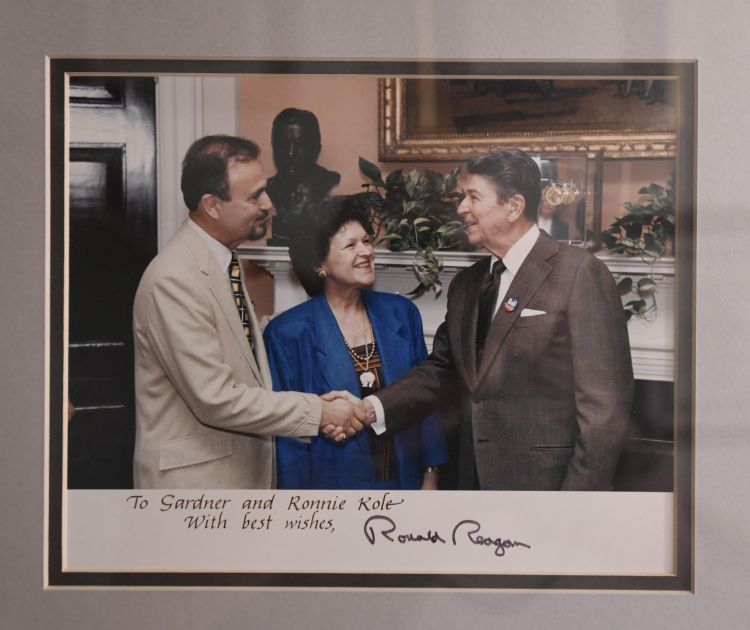
Kole has played for more presidents than he can remember (it is six to date) but feels his biggest performance was for Pope John Paul II.
A reported 125 million audience across the globe heard Kole’s moving rendition of Amazing Grace for his eminence the Pope. The musician’s own recollection is: “I played the Papal Mass here in New Orleans, and we had a couple hundred thousand people. And three hundred-fifty voices and Al Hirt played. Pete Fountain played, and I performed, and the Pope was there. And a storm came, so all of the musicians, with their violins and everything, are under the stage and the poor three-hundred and some odd voices just got soaked. It was one of these quick storms that came like this and ten minutes later it was gone but I mean, it was not a drizzle, it was a storm.”
Kole concluded:
“Well that had to be the crowning glory, playing for the Pope.”
New Orleans advocate and philanthropist
Despite playing for presidents and religious heads – and in some of the top international venues – Kole treats all audiences as equal. “I have found out I don’t care where we go, the people are all the same as long as you don’t look down at them, but you make them part of the whole show. And that’s me.”
Twice married and the father of four, Ronnie Kole is also keen to ‘give back’ and he sits on many charitable boards and committees.
“Well, I’ve tried to figure out how and why I got interested in giving of myself. Let’s put it that way. And just over the years, the more I think about it, it’s just myself going to a school for handicapped children. I was diagnosed as a bad heart and I was picked up by a bus and taken to a school in Chicago for handicapped children, and these crippled children, blind, and so on. And I’d see radio celebrities, that maybe we heard on the radio and all these people coming in and talking to us and trying to make us feel like things are going to be better. Sometimes you’d even meet them in the hallway and they’d be talking to you, and that probably worn off on me. Why I’m pretty much the same way.”

He and wife Gardener are particularly passionate about Jazz on the Bayou, their big annual spring fundraiser that’s been running for close to three decades. The event has raised millions of dollars for causes, especially Easter Seals Louisiana, STARC, Safe Harbor shelter and Slidell Cultural Arts Society. It combines the area’s classic cuisine with music performances and a silent auction Kole has also helped to organise both the New Orleans Jazz Festival and the French Quarter Festival.
Ronnie Kole concluded on his work for charity and music:
“Well, I think I could sum it up in a handful of words. I’m just giving back what I’ve already received, and first of all, a wonderful talent, many friends.”
On his awards, the humble genius said: “I’m very honoured by all the awards that Gardner and I received, but we don’t do it for that.”
“But it is nice to walk by the wall and see the award and say, yeah I remember that, that was so much fun, you know?”


