
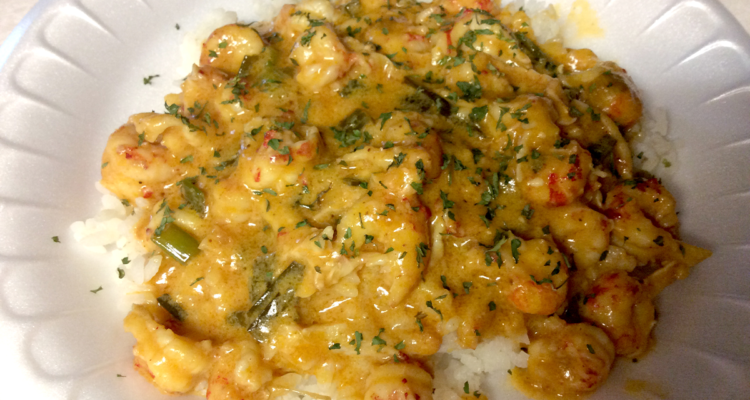
Growing up in South Louisiana, everyone knows the different seasons throughout the year, the most famous & anticipated, CRAWFISH SEASON! Extending from mid-January to early July. Each year, thousands of pounds of crawfish caught by Louisiana seafood processors are boiled & packaged to supply the very high demand to customers all around the US. I, being one of those looking forward to these few precious weeks, can’t wait to prepare a pot of fresh CRAWFISH ETTOUFEE’.
When preparing my Crawfish Ettoufee’, I must insist on using only fresh, never frozen crawfish tails (of course, frozen is the only option if preparing outside crawfish season). The fresher for the best flavor is better; never sacrifice great taste. This recipe was developed for beginners new to Ettoufee’s cooking. It is very hard to mess up & your whole family will be requesting more.
History of Étouffée
Étouffée is a dish with deep roots in Louisiana’s rich culinary tradition. It reflects the blend of cultures that have influenced the region’s cuisine over centuries.
Origins:
French Influence: The word “étouffée” comes from the French verb “étouffer,” which means “to smother” or “to suffocate.” This technique of slow-cooking food in a covered pot is a hallmark of French country cooking, brought to Louisiana by French settlers in the 18th century.
Creole and Cajun Influences: Étouffée is a staple in both Creole and Cajun cuisines, which are distinct but interconnected. Creole cuisine is often associated with New Orleans and influenced by French, Spanish, African, and Caribbean culinary traditions. Cajun cooking, on the other hand, originates from the rural French-speaking Acadian people who settled in the bayous and swamps of southwest Louisiana.
Cultural Significance:
Étouffée is often prepared for special occasions, family gatherings, and local festivals, such as the Breaux Bridge Crawfish Festival. It represents the communal spirit and the rich cultural heritage of Louisiana.
The dish is a testament to the blending of various culinary traditions and the adaptability of Louisiana’s people.
Ingredients:
- 2 lbs (1kg) FRESH Louisiana Crawfish Tails
- 1 can Cream of Shrimp Soup (I usually make a peanut butter roux with butter & flour, but I wanted to make the recipe easy for beginners).
- 1 can Golden Mushroom Soup
- 3 bars of unsalted butter
- 2 large bunch of chopped onion tops
- 1 small can of tomato sauce
- 1 heaping tablespoon of sugar
- 1 bunch chopped parsley
- Pot of cooked white rice
Preparation:
- Combine butter, soup, tomato sauce, sugar, & 1 bunch of chopped onion tops in a coated pot of your choice.
- Cook everything together, except tails & parsley, on a low fire for approximately 1 hour, stirring often so as not to stick.
- After cooking for an hour, increase the fire to medium-high.
- Once the base starts to boil heavily, add crawfish tails & the remainder of the onion tops, and stir well.
- Once mixed well, drop to medium heat & cook for 5 minutes, then taste gravy & season to preference (tomato sauce & soup have salt, so don’t season crawfish tails ahead).
- Cook another 10 min on low fire & remove from heat. Add parsley & stir until well mixed.
- Let it rest for another 20 minutes before serving over rice.
THIS RECIPE CAN BE SUBSTITUTED WITH SHRIMP, FISH, OR EVEN ALLIGATOR. Cooking time may have to be adjusted.
IT’S THAT SIMPLE!!! ENJOY