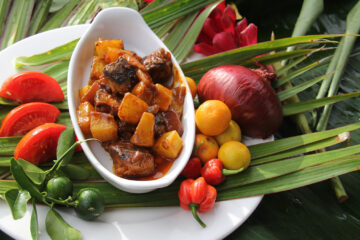
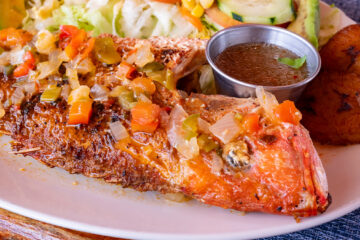
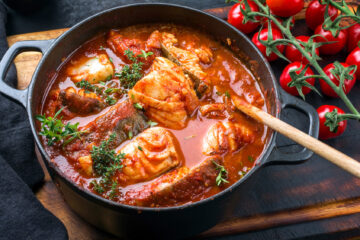
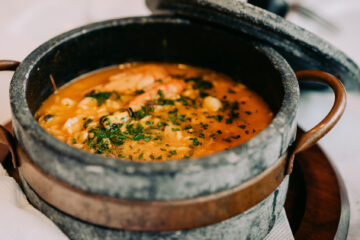
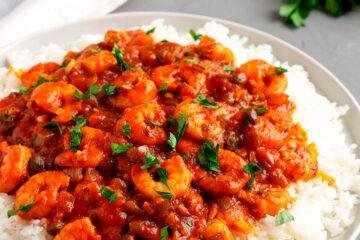
This dish reflects the everyday cooking of island households, where fresh fish from the sea is paired with vegetables grown close to home. Pumpkin adds natural sweetness and body to the dish, balancing the ric...
Food travels more easily than people think. It crosses oceans in memory, in habit, and in instinct. Long before recipes were written down, they moved with migrants, sailors, workers, and families who carried flavors with them as they left everything else behind. In Creole cultures around the world, food has always been one of the most powerful ways identity survives displacement.
This stew traces its roots to West Africa, carried across the Atlantic in the hands of enslaved peoples who brought with them a memory of cooking with palm oil, coconut, and spice. In northeast Brazil, these traditions merged with Indigenous ingredients and Portuguese influences, giving birth to a comforting and vibrant dish.
In Cape Verde, a bubbling pot of cachupa is more than a meal — it is the soul of the islands. This slow-cooked stew of hominy corn, beans, vegetables, and meat or fish is the country’s national dish, loved in both its rich (Cachupa Rica) and simple (Cachupa Pobre) forms.
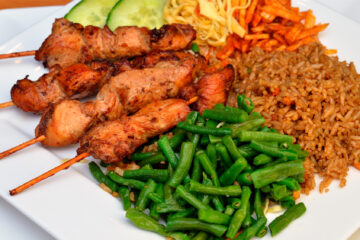
Chicken Saté (or sate) with fried rice is a popular street food and home-cooked favorite in Suriname, rooted in the country’s rich Indonesian-Javanese heritage.
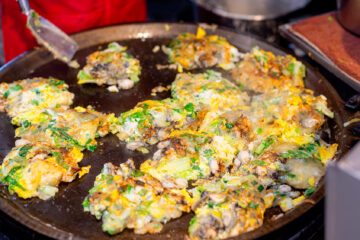
In the bustling night markets of Taiwan, amidst glowing lanterns and sizzling woks, one dish stands out—the Oyster Omelette, known locally as Orh Jian. It’s crisp, chewy, briny, and rich, combining Chinese techniques, indigenous ingredients, and Southeast Asian flair. This dish has travelled across regions and generations, shaped by migration, local agriculture, and Creole-style fusion — the story that resonates with our readers from Mauritius to Martinique. The Oyster Omelette is a celebration of resourcefulness and flavour, where no ingredient is wasted, and every bite tells a story.
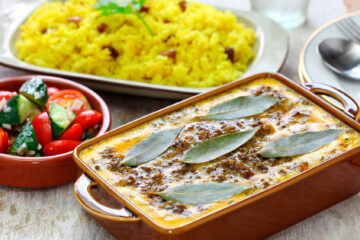
Originating from South Africa, Bobotie is a rich and aromatic dish with roots that reach back to the Indonesian influence brought by Dutch colonizers. This baked meat pie consists of spiced, curried minced meat topped with a creamy egg custard, and it is often served with yellow rice, banana slices, and chutney. It’s a harmonious blend of sweet and savoury flavours, making it a quintessential dish in South African cuisine.
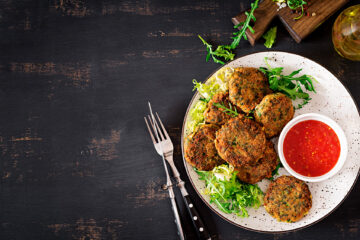
Fish cakes are a beloved dish in many Creole cultures, especially in the Caribbean. Here’s a basic Creole fish cake recipe, often referred to as “fish accras” in some parts of the Caribbean like Martinique and Guadeloupe.
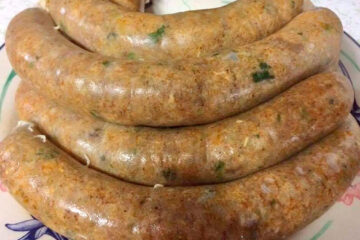
Back before refrigerators & freezers were available, people that lived in the country would raise their own livestock for survival. So, not being able to preserve meat in bulk after livestock was slaughtered, families would slaughter hogs or cattle every week but at a different family locations every week. The families, which had their own groups, would separate all the meat from that weeks kill. When a hog was butchered, the process was call a “Couchon Boucherie”, although much smaller in size than cattle, it took 3 times longer to process.
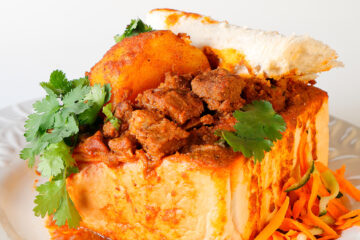
Bunny Chow, often referred to simply as a ‘Bunny’, is a popular South African fast food dish consisting of a hollowed-out loaf of bread filled with curry. Despite its name, there are no bunny rabbits involved in the making of this dish.
Nana’s Creole Italian Table: Recipes and Stories from Sicilian New Orleans is a beautiful and informative cookbook that explores the rich culinary history.
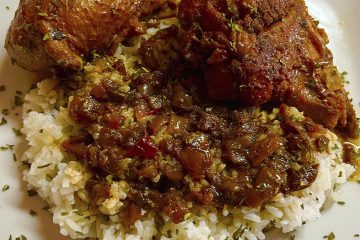
One of the most satisfying Sunday meals was a fresh yard chicken smothered in a thick fricassee’. The flavour from a corn-fed, coupe-raised chicken was just unbeatable.
International Magazine Kreol Cookies Policy
Our Website uses cookies to improve your experience. Please visit our Cookies page for more information about cookies and how we use them.