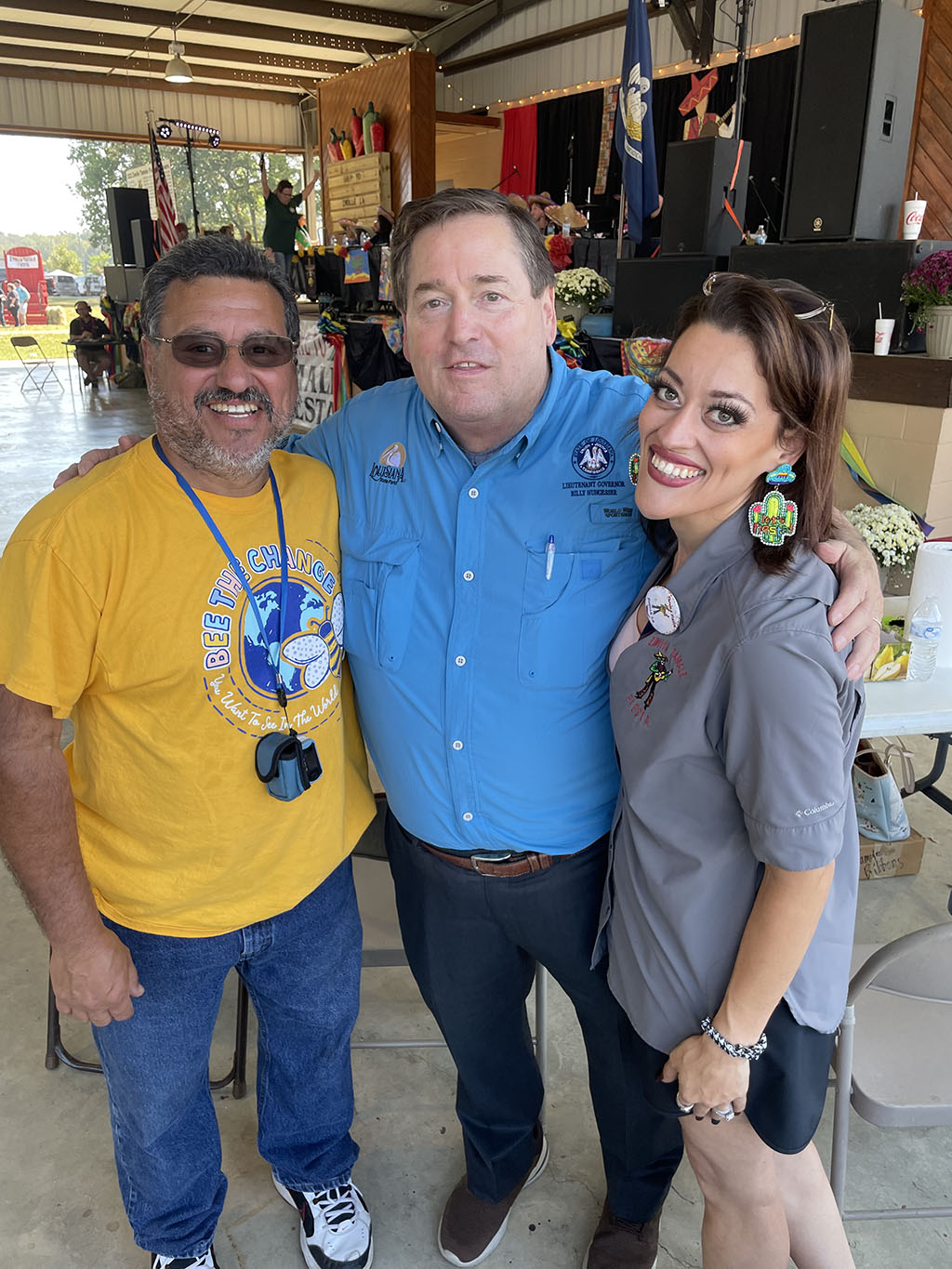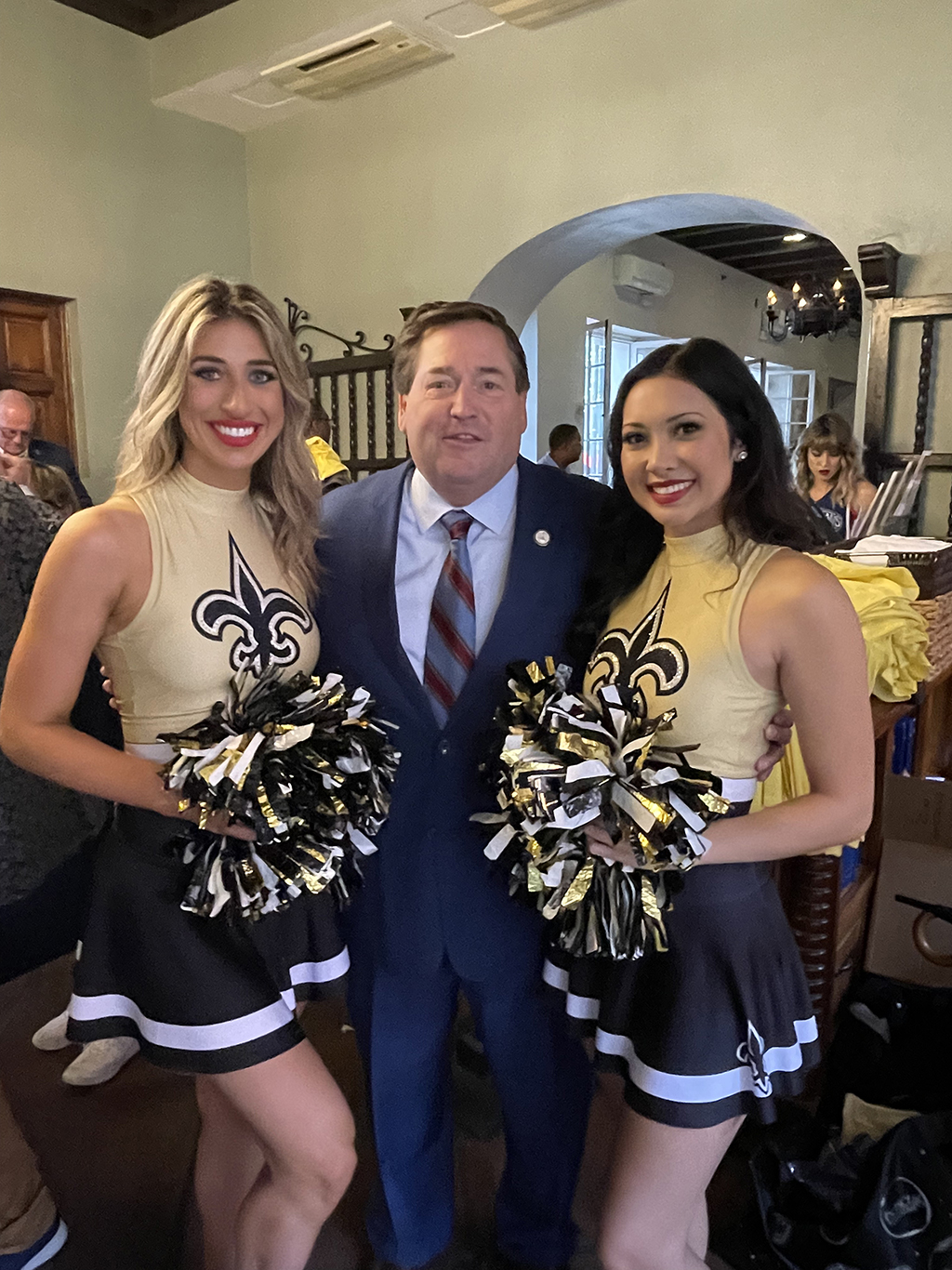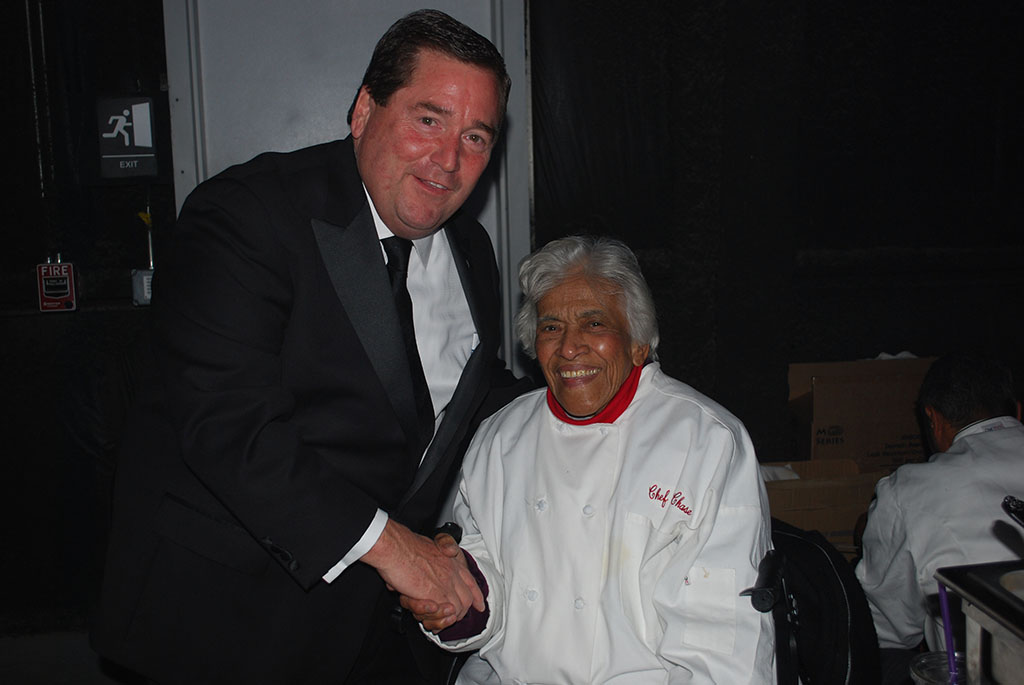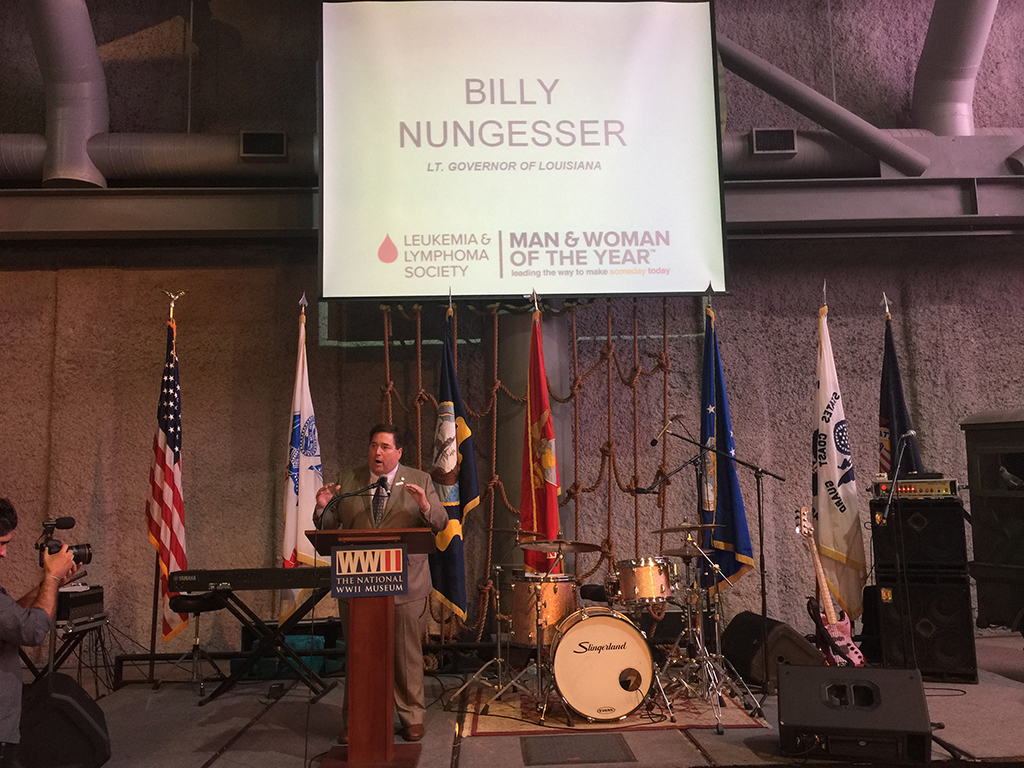
Billy Nungesser is by all accounts the very definition of a self made man. Hailing from a poor, working class background to become a multi-millionaire at a young age (thanks to an ingenious business idea), he has served as Lieutenant Governor of Louisiana since 2016 – a political role which primarily seeks to promote and boost the state tourism industry. With his acute business acumen, big heart and ebullient character, as well as an ardent passion and colossal pride in his home state, he has managed to prove the naysayers wrong and continues to do so, now that he has made the admirable switch from business to politics and philanthropy.
Like a modern day Pelican State Falstaff, unstinting in his appetites, full of face and with a hale, hearty and exceedingly amicable demeanour, Billy Nungesser is someone who, like Tennyson’s Ulysses, “drinks life to the lees.” Even a comparison with one of Shakespeare’s greatest and most memorable characters scarcely does justice to his vivaciousness and charisma. Talking with him is relaxed and pleasurable, and his convivial and down-to-earth manner, with its occasional jovial banter, is disarming and infectious.
Upbringing + Influence of his Father
With an endearing honesty, he recalls that his schooling was brief and sporadic, given that education wasn’t really his thing. He freely admits, “School wasn’t my favourite. I would play like I was sick until the school bus left, and then all of a sudden I felt better to go to work with my father. He had a shrimp factory. He cooked and peeled shrimp and sold them to the restaurants in New Orleans.” He continues with an almost glowing filial pride in the achievements of his father, “I loved going to work with my dad. My dad worked hard. We were poor, but I never knew we were poor. I learned my work ethic from him.”
From such a relatively humble, blue collar beginning, his father in fact rose to become Chief of Staff during David Treen’s term as Governor of Louisiana and was later the state Chairman of the Louisiana Republican Party. As Nungesser readily quips, “My dad always believed in supporting good people, even if they couldn’t win an election. So I learned at an early age that if they wouldn’t embarrass you and you knew they were good people, support them.” Recalling his father’s political choices, he adds, “He supported Dave Treen many times before he became Governor, and ultimately, he was the Governor’s Chief of Staff.”

Education
Nungesser is admirably frank on the subject of his own tertiary education (or lack of). With no need or desire to evade the issue or be disingenuous, he freely states, with a remarkable degree of self-knowledge and welcome candour, “I went to LSU and realised college wasn’t for me.” He then adds, keen to explain how he found his true vocation and calling, “So I went home to work in the offshore catering business. From the seafood industry, we went into offshore providing cooks to cook the food on the oil rigs.” He continues, “And whenever a cook would get run off, he’d send me out there to take care of the problem until he could find a cook.”
Eureka Moment and its Aftermath
With an endearing glint in his eye, he then starts to describe his delightful (and ultimately hugely lucrative) Eureka moment – the advent of the brainwave which would result in his career trajectory making a sizeable shift in course, not to mention fortune. Discernible pride and passion etched on his face, he recounts the genesis of the idea with a mixture of chutzpah, conviction and glee.
“Well, they put me to sleep in buildings that leaked and stunk. The mattresses were out of shape, and there was no hot water. In offshore, all you’ve got is a comfortable bed and a good meal. You can’t go home to your family.” He continues unabated, “So I’m 23 years old, and one day I’m crossing the Greater New Orleans Bridge and I see them putting containers on a ship. So, I went back to the office and I said, “Dad, I want to borrow some money. I want to build living quarters out of shipping containers.”
Recounting with joy his father’s reaction to his ostensibly hare-brained idea, “He said, “Son, those containers have been around a hundred years. Somebody a lot smarter than you would have already thought of that”. So I went to my mom and I had $7,900 left in my college fund, I said “Mom, I need that money”. She said, “Your dad will kill me”. I said, “Mom, trust me. This is going to work.”
The remarkable, back and forth dialogue between him and his parents is delivered by Nungesser with an actor’s panache and perfect comedic timing, together with requisite accents, with the result that one can almost feel what it must have been like to be present at that auspicious exchange with his parents which would come to define his future, and that of his family.
“I took that $7,900 and I bought a 20 foot shipping container. I put in six bunks, a small bathroom and a kitchen, and I rented it to a company called Homer Industries for six guys to paint a rig down in south Texas.” He continues with a telling smile, recalling how utterly galvanised he was to make his idea come to fruition, and the cojones, if not courage it took to convince his first big customer.
As he explains, “While it was offshore, I went to all the oil companies, and Joe Kramer, who is vice president of Shell today in Houston was in purchasing in New Orleans. He needed four buildings for six months, two sleepers, a galley down and a laundry room. And I told a little white lie. I said, “Mr. Kramer, all my buildings are offshore. If you can give me a year contract, I’ll give you the best buildings you ever had. If you don’t like them, you don’t have to pay for them”. He says, “Well, come back and see me tomorrow. I don’t think I can give you a year contract”. With a concluding smile, he says, “I was waiting by the escalator with a dozen donuts when he got to work. He called me in his office. He brought his boss and he said, “Give the kid a try.”
Nungesser then adds wryly, as if to show just how spectacularly he disproved his doubters, “That year I built 54 for Shell and 30 for Chevron. So I told my mom, when I sold the company, “You go and buy any house you want from your dumb son. My dad’s like, “We don’t need to move.” I said, “Well, Mom’s moving, so you can go with her if you like.” He recalls, with extreme pride and a sense of achievement, “When I sold that company, I had over a thousand buildings, 20 modular prisons out of old shipping containers. Sales over $20 million. And I built it all internally.”
Billy Nungesser – Business Career
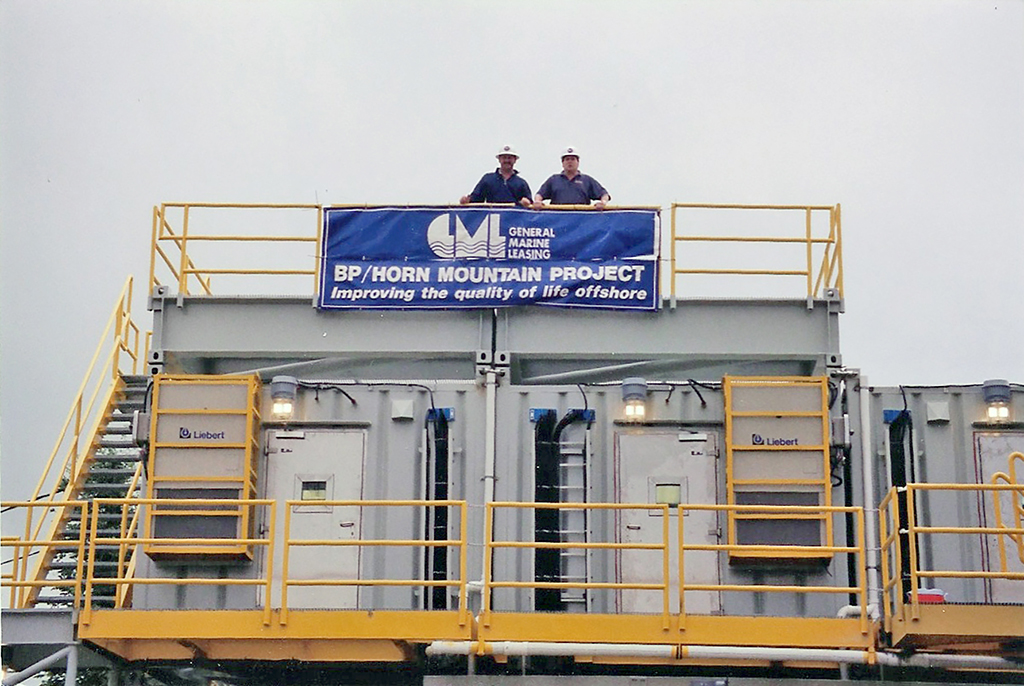
In 1991, Nungesser established General Marine Leasing Company, a business which provided portable living quarters for offshore workers built from shipping containers. The company exponentially grew to employ two hundred people and eventually reached $20 million in sales – arguably a remarkable feat from such an ostensibly simple concept – and one which hints at both genius and a colossal amount of hard graft.
Philanthropy
Nungesser’s journey from volunteering at a riding school to becoming a major philanthropist in Louisiana was equally serendipitous. He recounts the story with profound humility. “I had volunteered one day with one of my welders. He said, “You work too much, Billy, come with me this Saturday morning because I work weekends.” So we went to a riding centre and I lifted a little girl out of a wheelchair. It was a therapeutic riding facility and I was her walker. When she got out that chair, I saw her life change. I had so much fun I went back the next Saturday and lifted the same little girl of her wheelchair. But as I started to walk, it started to rain, and they cancelled class. That little girl gripped me and started crying and her daddy said, “All she looks forward to is riding that horse.”
Nungesser continues, evidently emotional, “That day I made a promise if I could ever afford it, I’d make a covered arena for the riding sessions where they’d never have to cancel the class. I’m living in a shipping container. My friends are laughing at me saying “You dummy, nobody’s going to sleep in shipping containers.” But when I sold that company nine years later, I bought all this land and I built a $2 million arena and over 200 children rode our horses, seven days a week, at no cost to them.”
As he concludes, his voice full of heightened emotion at the memory, imbued with tangible compassion recollecting his kept promise, Nungesser admits with touching sincerity, “I found it the greatest thing I ever did with my life. I watched miracles happen on that horseback.”
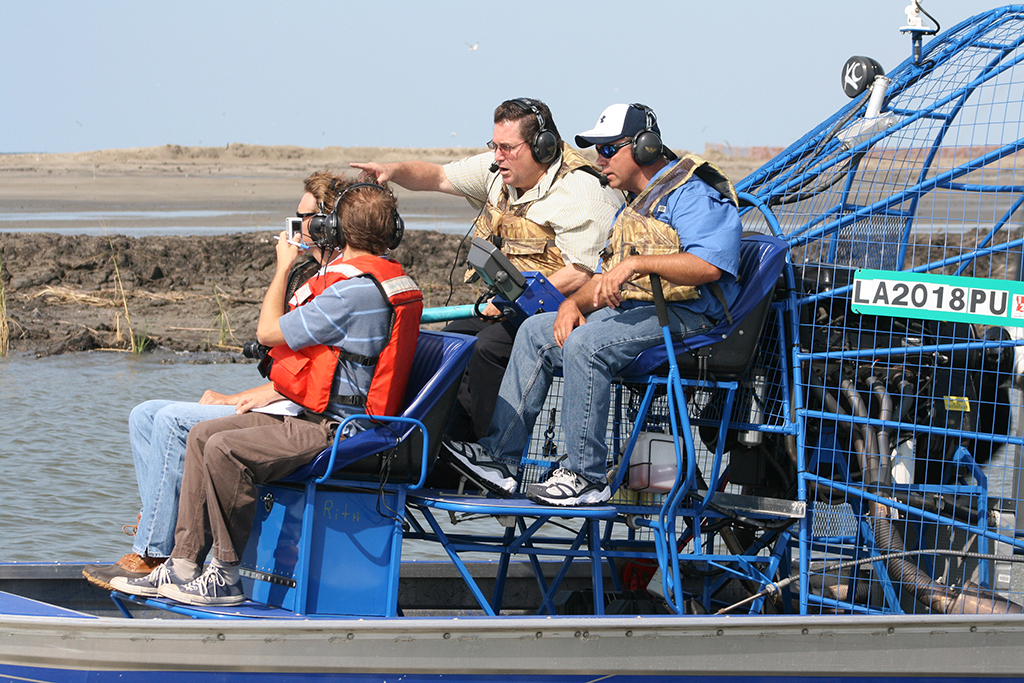
That initial act of selfless volunteering at the riding centre subsequently led to even greater philanthropic acts (several rather heroic, it should be said) and commitments for the good of his community, especially in the wake of Hurricane Katrina. As he explains, “We rode out Katrina to protect the horses. I had nowhere to bring them. Immediately after the storm, we headed south in the airboat and rescued 34 people that lived with me. I didn’t even know their names. They lived with me for months. My wife cared for an elderly lady and we went out rescuing animals.”
But Nungesser’s decisive, Damascene moment – one which would shake his convictions to the core and dramatically alter the subsequent course of his life – came during Hurricane Katrina. And it came with such force that he ultimately decided to change career, leave his business and go into politics, having been chronically disillusioned by what he had seen and experienced firsthand during the tragedy.
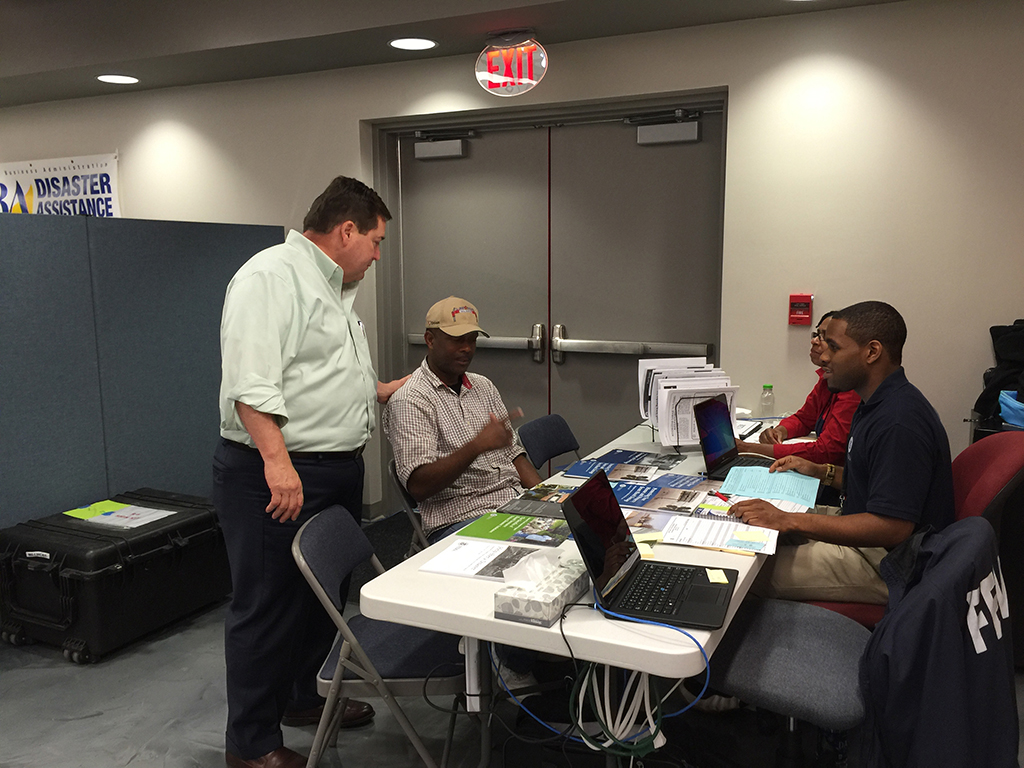
“I never saw a politician. All eyes were on New Orleans. We housed people, we fed them and we cleaned the highway. I bought $10,000 worth of washing dryers to put in the community because FEMA trailer parks had no washing dryers. I bought 150 bikes for Christmas and gave them to the kids in the trailer parks as a private citizen. And it just infuriated me that the politicians didn’t really care.”
Post-Katrina Political Career
Nungesser subsequently left his career as a successful businessman to embark upon a political career following the physical destruction and social upheaval wreaked by Katrina. In 2005, he had ridden out the hurricane at his ranch in southern Plaquemines Parish, but what he saw there convinced him to enter the political fray. “It just infuriated me that the politicians didn’t really care. So they talked me into running for parish president (in 2006). They laughed at me ad they said “You can’t win, you’re a Republican.” I knocked on every door twice and I beat three council members. Then I got re-elected (in 2010) with over 70% of the vote. And I saw that if you care about people, it’s really easy.”
Lieutenant Governor of Louisiana
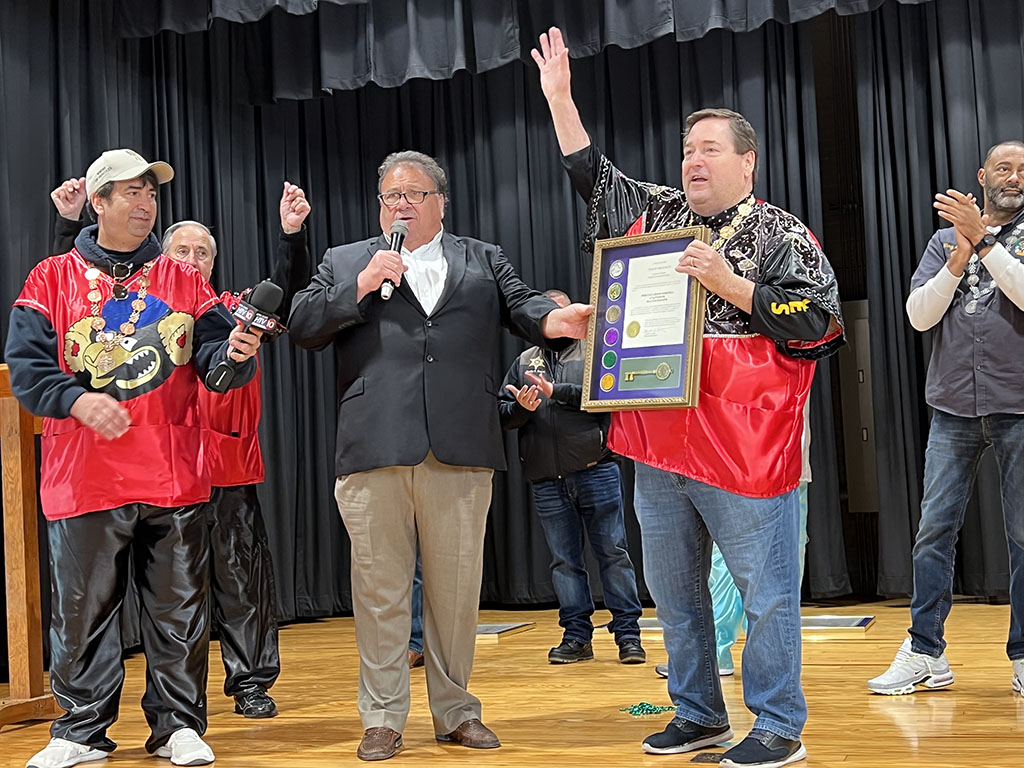
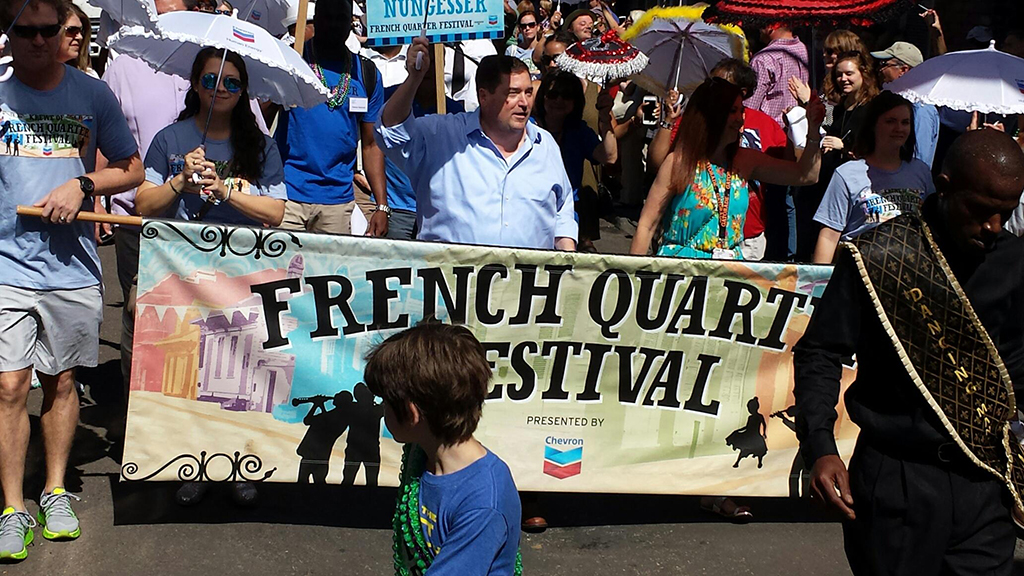
Elected in 2015, Nungesser took office in January 2016. In the intervening six years, he has done a great deal with the money raised by tourism in the state. As he explains with a tangible sense of pride in his many achievements as Lieutenant Governor, “I give tourism money to grow the trash clean up programme. I fund services to the blind through the library system. How do you not? Given that all these valuable programmes over the years have been cut, I take tourism money and fund them because the people that most need help the most seem to be the ones that get cut first.”
Nungesser is both clear and adamant about how he perceives his job. “I do a lot more than Lieutenant Governor, but Lieutenant Governor’s the best job in the world.” He adds, wholly devoid of any trace of bombast, “Since we took office prior to Covid, we had record breaking tourism years every year. In 2019, over 53 million people visit little old Louisiana and they left behind 1.9 billion in taxes. It’s become the fourth biggest industry in Louisiana. That’s over $1,100 per Louisiana family, taxes we don’t have to pay and it’s good clean fund. And we’re just getting started.”
His energy, commitment and zeal for his role is almost audible, rising to a crescendo as he explains what for him is the biggest draw in Louisiana – the people themselves, and the feelings their warm welcome engenders. “Had it not been for Covid, we would continue to see tourism grow. And we did it several ways. We spend money to get the most bang for our buck. We go out and meet with the travel agents in every country because they see our how much we love people. We do have the best food, music and culture, but it’s our people. We treat strangers like family. The Canadians tell me, where else in the world do you invite Canadians to your backyard to eat crawfish with people you don’t even know? Only in Louisiana! So it’s our people they keep coming back for – because of that warm and fuzzy feeling they get when they’re here.”
Never one to rest on his laurels, Nungesser is always alert to even more ways to effect change in the state he dutifully serves and obviously adores. As he explains, “It truly is a great job promoting Louisiana. But I’m always looking to do more to help people.”
By way of example, he then recounts something which happened to him a few years back. “The thing I’m most proud of is we never tell anyone “no” when they call my office, whatever it is. I remember reading my staff a letter I got from a lady whose son was in prison. She had called me and asked me if I could move her son closer to home because her daddy, all he wants to do is go see his grandson. I said, “Ma’am, I’ll try.” So I made a phone call and duly forgot about it. Six months later, I got a letter in the mail. “Mr. Nungesser, I told my daughter she was wasting her time, but last Saturday, thanks to your kindness, I had lunch with my grandson for the first time in six years. I’ve never voted for a Republican, but I’ll be voting for you.” Such a story is indicative of Nungesser’s solicitous, caring nature and his compassionate approach to the people he represents. As he readily states, “Whereas most politicians say, “Well that’s not my job”, we find a way to help people.”
As result of his many accomplishments and proven track record of helping people, Nungesser is now arguably a victim of his own success. He continues, detailing his new, unenviable predicament – a result of his doing such exceptional work, and yet also wanting to see more good work by done in Louisiana. “The greatest gift I got from my mother is I love helping people. And if you love helping people, public service is a good way to do that. And if you get self reward in doing that, and I do, it’s a tough decision that I have to make this year because so many people want me to run for governor. I love what I do. I don’t have an ego to have to be governor, but I do want this state to do better and help people. And I want somebody good that wants to fix everything.”
Unlike most politicians, Nungesser is a fan of unselfish leadership. Resolutely not driven by ego, he is therefore unconcerned if he doesn’t get to take the credit for things which are implemented on his watch, but which don’t come to fruition until after his term of office. What matters infinitely more to him is that things are done to ameliorate the quality of life in the state for its inhabitants, irrespective of which leader ultimately takes the plaudits and the praise. As he explains with passion, “We’re at the bottom of every list, because we elect people that say a lot of good things. And yet, when they get in office, they only do what they have to do to get re-elected. No more, no less.”
By way of example, he then explains, “I went to the Hunt Institute in Arizona because I wanted to learn how to really fix education. It’s simple, but it’s a seven and nine year plan and every kid’s got to be reading in third grade level. You can’t give the teachers a little money every time you want them to vote for you. And if you do a seven and nine year plan, you’re not going to get credit for it. The next guy is. But that’s okay. Let’s get the ball rolling. So it’s going to be an unselfish leader that says we’re going to set things in motion. The next guy is gonna get all the credit.
When I was parish president, I went to Washington and fought for $2 billion in levies. The Parish president today is cutting a ribbon. I don’t get credit for that. That’s okay. But the people in Blackham’s parish are protected now. So we need unselfish leaders everywhere.”

Louisiana’s Problems are Solvable
As a perennial optimist, Nungesser believes that he has the solutions to solve the state’s problems. As he says with a mixture of earnestness and brio, “The problems in Louisiana can be fixed.”
He continues, “For starters, we’ve got a lot of wasteful spending. When I took office, they said “You’ve got to close seven state parks, you don’t have the money.” Well, I got rid of so much wasteful spending in a short period of time that we not only didn’t have to close them, we got seven parks making a profit.” He the adds, “And I see a day when we don’t need any tax dollars around our parks. They will generate millions of dollars through private public partnerships for educational programmes for kids to teach them about the wildlife. And so this state is a treasure.”
Monetizing the Mississippi
He then proceeds to share his thoughts on how he plans to generate more income from the Mississippi – what he considers to be a hitherto relatively untapped resource. “We’ve got the Mississippi River, but we don’t take full advantage of it, because ports fight each other, instead of working together. We’re now going to have riverboats heading up river, stopping in many places in Louisiana. We’ve got a world heritage site up in the north which is very hard to get to. It’s a long drive. Well, now Viking Cruise Lines is going to have boats stopping there, bringing passengers.”
Nungesser has also made it a priority during his time in office to promote the touristic appeal of every corner of the state, not just the major cities (where the majority of voters reside). As he is keen to explain, “I’m very proud that we promote every corner of the state. The big cities where the most voters are used to get all the attention. But for years, I’ve been to every city, town or parish at least twice and I fund tourism dollars all over the state. We promote family friendly, affordable, safe Mardi Gras in every corner of the state. This past year we saw double digit improvements in places like Shreveport, Lafayette, Monroe, Nakadish, and Lake Charles. There’s so many different things in every corner and everywhere you go, the food, the people and the festival, it’s a little different.”
Louisiana Tourism Post-Covid
Nungesser then details the many and varied challenges Louisiana tourism has faced post-covid and the measures he chose to take to overcome them. “Coming out of Covid, we had to think outside the box. How are we going to compete against every other state that has much bigger budgets for tourism? So we came up with the idea of trying to get a float in Macy’s Parade in New York.” He continues with a wry smile. “Well, they sent us a float. I’m like, “We build floats. I’m not putting my name on that.” So we went back and forth and we end up with the longest float ever. That alligator crawling down the street blowing confetti stole the show and was the hit of the parade. And when you went into Times Square, you looked up and all the screens had alligator eyes looking around. You stopped and it zoomed up and would say “Get ready, New York, Louisiana’s coming.” We spent $1,300,000 on that float for three years and we got over 25 million in exposure worldwide the first year.”
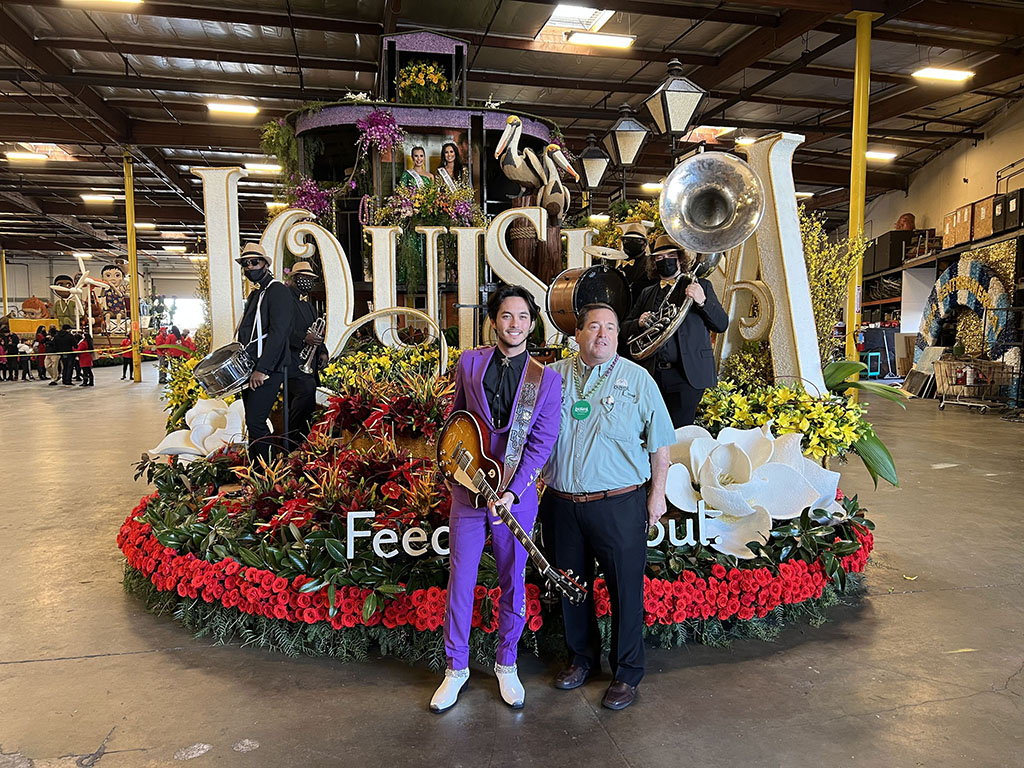
Nungesser’s next aim was to try and get a float at the Rose Parade (in Pasadena, Los Angeles), which he duly accomplished to great effect. In fact, under Nungesser’s administration, Louisiana celebrated a fourth consecutive year of record-breaking visitor numbers, welcoming more than 53.2 million visitors and bringing in more than $18.9 billion in revenue to the state – a sign that his “hands-on” leadership and strategy is evidently working.

In Praise of the People of Louisiana
Nungesser is both eloquent and unstinting in his praise of the inhabitants of the Creole State. As he proudly and vociferously admits, “I tell people there’s something special in the soul in Louisiana. We grow passionate people, caring people, great athletes, singers and musicians. Just in terms of the talent pool, we hit way above our weight. Per capita, we send more people to the Grammys than anybody. I don’t know what it is, but it’s something in the soil or in the food – it might even be the spices! Louisiana has incredible talent and passionate people.”
The solidarity of the people of Louisiana in the face of adversity and their desire to help each other also profoundly inspires Nungesser. As he says, “Another thing I’m most proud of is that we may disagree politically, we may disagree on certain football games, but when it comes to helping our neighbours, Louisianans give way above their weight. You see it every time someone is in need, whether it’s a family or a situation like the hurricanes.”
Where his Desire to Help comes from
Nungesser then addresses how his outlook differs from that of most politicians, who he feels focus too much on vote winning in large urban areas, at the expense of poorer, rural communities (where there are less votes) and who are thus neglected.
“With a lot of damage, at times, you feel like giving up. But when somebody shows up and puts their life on hold to come to help you, it’s not the physical help they give you, it’s how they lift you up in spirit. And I think that has helped me focus on helping every community around this state that is normally forgotten. Because a lot of times, politicians go to the big cities where the majority of the votes are. I try to help the less fortunate communities, people all over this state.”
Dedicated to Helping Small Communities
To employ a biblical analogy, when it comes to promoting tourism in the state, Nungesser is a man as much on the side of the Davids as that of the Goliaths, which is highly unusual. As he explains, “I’m most proud of the fact that we’ve been able to help small communities who have never had tourism. I’m all over the nine Louisiana museums, but we’ve got 211 museums that have no money to promote. So we now have Louisiana Museums.com. We’re filming every museum in the state and we are going to push it out through social media.”
Tax Breaks to Incentivize Filming in Louisiana
Nungesser also sees the value of offering tax breaks to incentivise filming in Louisiana, in the hope of attracting more production companies to film in state. His logic is clear and based on an empirical study. “Some people want to take the tax credits away. So last year I did a study that shows 9% of everyone who comes to Louisiana is heavily influenced by a TV show or a movie. So it’s big money for tourism. We were able to save the tax credits by that study and we’re updating it this year because it comes up for a vote this year.”
Three Wishes
When it comes to the proverbial three wishes he would like, Nungesser’s response to such a telling question is swift and clear, mentioning both global and local, grass roots desires. He states with sincerity, vision and a fundamental grasp of what really matters, “World peace, a healthy life, and that we can work together to bring Louisiana to the top of the list that they deserve in the realms of education, health and business.” He adds, “We’ve got the tools in our toolbox. We just need to work as a team to make that happen.”
A Message to the World
As for his “message to the world”, Nungesser has a rousing and heartfelt exhortation specifically aimed at young people. As he wisely – and rightly – says, “Nothing great in life has ever been achieved without passion. Whatever you do, make sure you have passion for it. There have been great ideas, great business plans, etc, but if they’re not executed with passion, determination, drive, what’s the point?”
He concludes, full of Falstaffian wisdom and warm, gentle humanity, “The greatest gift you can have is the gift of helping someone else. If you get joy in helping someone else, you’ll have a lot happier life.” He then adds, warming to the theme, “Too many people are about what can I get? And I’ll tell you, when I built that riding centre with the proceeds of selling my company, I have an elder sister who’s a lawyer and she said, “You could travel the world, you could do anything with that money. Why did you do this?” And I said, “If you have to ask that question, when you see that little girl get out of the wheelchair or you go to the little girl that I lifted out of the wheelchair when she was seven, I watched her dance at her wedding. She walks today because of that horse. Because that horse gives you therapy, even if you don’t know it’s therapy. And it gave her a life worth living outside that wheelchair.” That is, if you get joy in that, there’s nothing better.”
Magic Wand Changes
Nungesser is both clear and cogent about what needs to be done to improve the realm of politics, believing in unity across the political divide and wishing to focus on similitude and communality, as opposed to difference: “Being in the political arena, I wish everyone could work for the greater good, put our differences aside and come together to accomplish things to improve the quality of life for everybody. There’s too much fighting, arguing and political grandstanding that doesn’t benefit anyone and there’s too much energy, money and propaganda put towards that. If we all sat at the table and really tried to work together for the greater good, we’d find out we’ve got more things in common than we really know.”
Civil Rights Trail
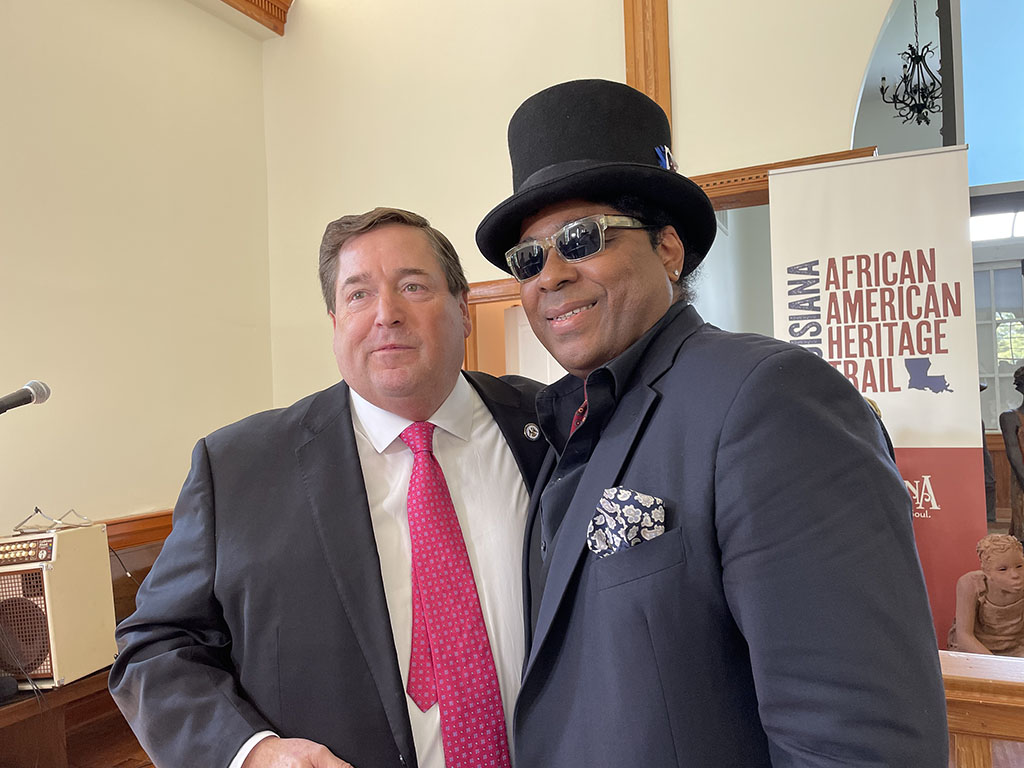
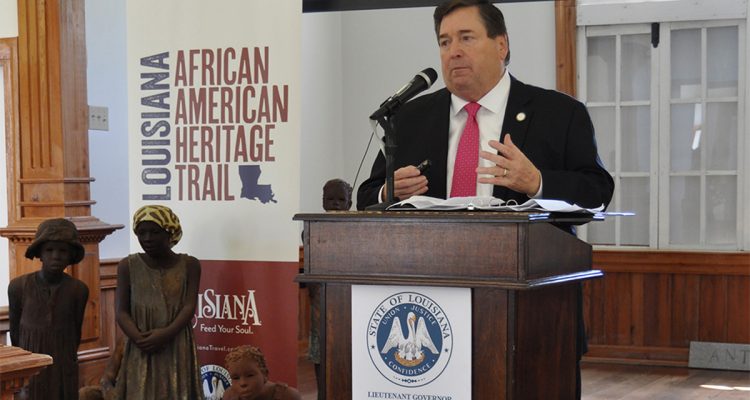
Nungesser then proudly mentions the state’s newest tourist initiative, which he has been instrumental in – a Civil Rights Trail, which he helped to inaugurate in August 2022. He admits, “I didn’t know we didn’t have a Civil Rights Trail. Then I went to work on it and I found out some of the real heroes of that era started here.”
He has been deeply moved, humbled and inspired by some of the stories and testimonies of the heroes that the Trail celebrates, as well as by their brave deeds and acts of defiance in the face of the pernicious racial segregation which casts an ugly shadow over Louisiana’s not too distant history.
“To get the story from Dr. Jones’ lips about how he was 17 days out of law school, filing a lawsuit so that black people didn’t have to ride in the back of the bus, was incredible.” Or to hear from Leona Tate’s lips how she was led into school and saw police on horseback. And she said, “Mama, why do I have to go to school for Mardi Gras?” “Honey, that’s no parade. You keep your head down and keep walking.” To hear those stories that started here in Louisiana is genuinely remarkable.”
He continues, full of admiration for the Trail and a modicum of pride in his role in making it happen. “When we started this journey, Louisiana had one site on the National Civil Rights Trail. Given our efforts over the last couple years, they have added nine more sites to the national trail. And when we finish this, and this journey will continue, but when we’re done with the markers all up, I think you will see that so many of the things during that movement started right here in Louisiana. And that’s special.”
He then mentions the recent efforts to commemorate the Bob Hicks house, which served as the base of operations for the Bogalusa Civil Rights Movement. “The march from Bogalusa to Baton Rouge, we just put a marker up at the Hicks family where that started. I can’t imagine walking from Bogalusa to Baton Rouge in August. But guess what? Those were some brave, determined, passionate people that had an impact on this whole country, so to be able to tell that story and do it for the greater good, not worrying about politics, not worrying about anything else because it’s a story that needs to be told is pretty special.”
Conclusion
Billy Nungesser is a devoted stalwart of the state of Louisiana and someone who strives daily for all its citizens. This Pelican State Falstaff is passion incarnate and a thoroughly decent and capable man to have at the helm of the Louisiana tourism industry. With a combination of solid business acumen, moral rectitude and a hugely affable personality on his watch, it is beyond doubt that even more visitors will wish to flock with alacrity to the state this year, next year and for years to come. Such is his rare gift and manifold ability for promoting the myriad charms of Louisiana that one can safely say, they truly have the right man in the job.