

The inspiring journey of George Bell, a remarkable blend of health care executive and jazz musician, who transforms non-profit organisation Capital Area United Way into an outstanding beacon of positive change.
Successful Louisiana health care executive, accomplished trumpeter, jazz band leader and now President and CEO of non-profit organisation Capital Area United Way, George Bell has a genial, commanding presence, as befits a principled, driven and charismatic man who has devoted over 35 years of his working life to helping people in the medical and now non-profit fields.
With a hint of greying hair and broad in the shoulders, he conveys wisdom and decency, a surfeit of worldly experience and an avuncular gravitas, but also possesses the latent swagger, showmanship and brio of a talented jazz musician who plays for pleasure in his spare time and who knows only too well how to hold the stage and move the crowd.
Bell joined Capital Area United Way as president and CEO in 2016, after having worked for thirty years as a health care executive in physician practice management and hospital administration, both in Columbus, Ohio and Baton Rouge, Louisiana, and in the seven years to date since being at the helm of CAUW has striven to make his non-profit – and those around him – excel and flourish, and in so doing raising vast amounts of money for good causes while adhering to ethical dictates.
Under Bell’s dynamic, galvanising and inspirational leadership, CAUW has rapidly become one of the most recognised and well-respected non-profit organisations in the greater Baton Rouge region, having received the 2017 Force For Good Leadership Award from Louisiana Association of Non-profit Organisations, selected as one of 384 recipients of a multi-million dollar grant from MacKenzie Scott in 2020 and being named one of the area’s Best Places to Work in 2021.
In short, George Bell is evidently a man with a vision who is doing plenty right and, after a long and fulfilling career in health care, is now an unquestionable force for positive change in the Louisiana non-profit sector, intent on using all that he has learnt in his career to raise money for the benefit of the less fortunate.


Family and Parents
With a father from Greensburg, Louisiana, the descendants of slaves, and a mother from north Louisiana, near the Louisiana-Arkansas state line, Bell readily admits that his parents inhabited “two different worlds.” Recounting how his parents ended up meeting, he says proudly, “They met when my mother went to Grambling (college), where my father’s sister went, and they became friends, and my mother then went to Greensburg to teach. Then my dad returned from serving in WWII, went to Southern University, finished at Southern, and met my mom, and the magic happened.”
Bell’s parents duly moved to south Louisiana, where they had an opportunity to both work as teachers and were proud parents of four boys. He adds, forcefully and with some regret at how things have changed nowadays, “Back then, teaching was a noble profession, and they were very well regarded.”
Upbringing
Born and raised in Thibodaux, Louisiana (a mid-sized college town about 60 miles from both Baton Rouge and New Orleans), as a result of his parents moving there after finishing university, Bell enjoyed a stable, loving and resolutely middle-class upbringing. With his father, an Industrial Art teacher and his mother, a History and Maths teacher, Bell was surrounded on all sides while growing up by a culture of education and learning.
Bell was fortunate to enjoy an Edenically blissful, happy childhood, despite the baleful spectre of segregation that cast shadows in the background, given Louisiana’s troubled and problematic racial history. As such, Bell is immensely grateful to his parents for fostering such a loving atmosphere conducive to stability and growth, and to this day speaks so volubly and with unerring positivity of his childhood: “I have some wonderful memories. Our upbringing was just very special, being a family, especially a family of boys. I only have fond memories of my parents supporting us and giving us all of the opportunities that one could ask for, despite growing up at a time when things were rather segregated.”
Summer vacations were often spent helping his father, who was also the superintendent of the parks and the public pool. As Bell recalls with a smile, indicative of the plethora of fond memories he has of that time, “Needless to say, every summer we were at the pool and learned how to swim. Then during the regular year and sometimes during breaks, my father would take on odd jobs as a carpenter and with a workforce of four boys, we were always brought along to do work.”
Bell admits that he gained a lot working for his father and to this day retains the work ethic he absorbed from these formative experiences. As he explains with conviction, “We learned a work ethic – that if you’re going to work, you’re going to learn how to do things to the best of your ability. Especially if my father’s name was on it, then he held us to a high standard of making sure the work was representative of something he would do.”
With both parents very active in the African Methodist Episcopal church, Bell was raised in the denomination. Talking of this childhood in glowing terms, he repeats, underlining what a joyful period it was in his life, “It was just wonderful growing up as part of that family.”


Education
Sadly, Bell’s education, like that of many of his era in Louisiana, was blighted by the spectre of racism, living as he did in a heavily segregated community and at a time when de-segregated schooling was gradually being introduced across the state. He is refreshingly honest about the racism his generation faced during their school years and equally candid about the effects of forced de-segregation on his own schooling when it was introduced in 1968.
As he recounts, “One of the first real challenges was that I attended segregated schools until I was in third grade. That was until 1968 when forced integration came along, and I was part of a group that was offered the opportunity to go to a predominantly white school. So I was among one of the very few that went to the white school. It was just a big cultural change for us, on every level, because it was so different.”
For Bell, attending the local black school certainly had many advantages. “I knew all the kids, good and bad. I knew the bullies, and I knew the guys who would take my lunch money, but there was a sense of community, where if one of the teachers saw us messing around, that word got back to our parents – and that was before the internet and before texting.”
In contrast, the formerly whites-only school he then attended had many challenges. As he explains with lucidity, but not anger, phlegmatic and measured, “When I went to the new school, it was a different world, and oftentimes I was the only African-American in the class.” He continues, “I was a bit of a novelty in that they wondered why my hair was different. For a long time, when people didn’t know my name, I was the Coloured boy.” By way of a caveat, he adds with a euphemistic nod, “I was bigger and taller than most of my peers, which certainly helped.”
Bell was struck most by the novelty of myriad new experiences and opportunities, mainly because the white school was infinitely more affluent and better equipped. “For the most part, it was just this discovery. For example, learning they had tetherball. We didn’t have tetherball at my old school, so I didn’t know how to play. I didn’t even know what that was. Everything they had at the white school was always just nicer, just better, and they had books that weren’t hand-me-down or used.”
Reflecting on what the experience of integrated schooling taught him, Bell is contemplative and grateful since he feels it stood him in good stead. “That experience really exposed me to a different kind of learning opportunity, and it helped me to adapt to what would then become the norm – and that was being comfortable in integration, being myself in and around other people who were different.”
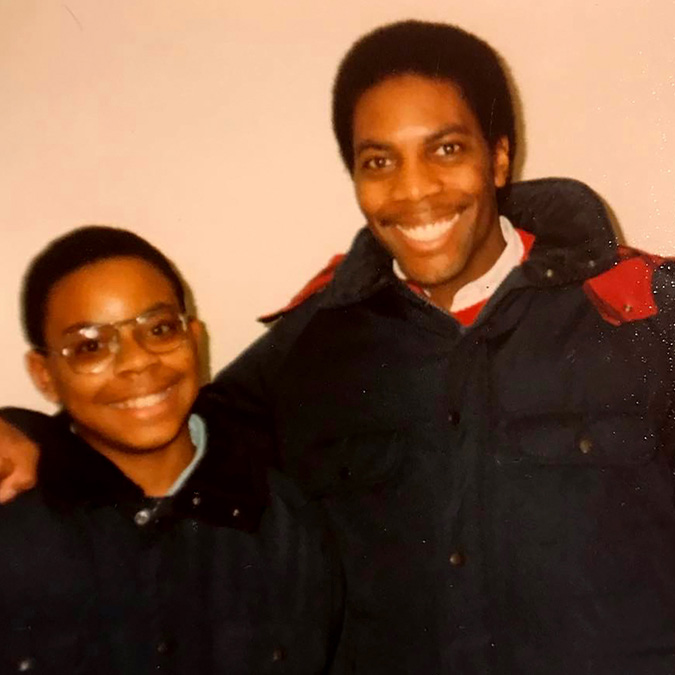
As the school became integrated, Bell was also able to function as a connector for his black friends from his local neighbourhood. As he explains, “It was nice to be able to be that connector, to be that bridge from one culture to the other culture. I think that’s a place that I’ve always found myself throughout my career.”
His Father’s Experience of Teaching
However, Bell’s father’s experience of being in a de-segregated school, albeit as a teacher, was rather less favourable than his son’s. Having moved over the year before forced integration to teach at the local, predominantly white school, Bell Senior was on the receiving end of much vile and demeaning racial abuse. As Bell relates with genuine sadness and emotion in his voice, “On many occasions, he was called names. Junior high school kids would tell him, “Go back to where you came from.” Even fellow teachers would leave the teacher’s lounge when he would go in.”
Consciously trying to protect his son from the toxicity of the racial hatred and animosity he unfairly encountered at the school, Bell’s father never shared any of this with him until he was in his seventies. As Bell admits, now understanding his father’s motives for not disclosing his experiences earlier, “It brought tears to my eyes to hear him talk about it, but he never poisoned us with that kind of hatred. He was always there to support us if we were dealing with it, but he didn’t project his feelings towards that on us.”
Bell then adds ruminatively, the enormous love and respect for his father evident in both his voice and his face, “There’s this fine line between making sure kids have their eyes open and know what the real world is like and allowing that to unfold and deal with it as appropriate. I gained tremendous respect for what he did and how he handled it.”


Inspired By His Older Brother
Inspired by the example of his older brother, who played the trumpet, Bell also took up the instrument at school and also excelled at sports like football and basketball. “I just followed in my brother’s footsteps. So I played in the band from fifth grade all the way through high school. I was an all-state level musician and I played all the way through college. So it was a big, big, big thing for me.”
Bell observed his second oldest brother, five years his senior, go through college, pursue his passion to major in music, and then go out to work. He explains, “Before he graduated, my brother worked a summer offshore and made a fair amount of money. So when he graduated, he taught for one year and realised that he made more money that summer than he did the entire year as a teacher. So he went to work for Exxon and never looked back.”
Observing his elder brother was valuable for Bell in many ways. He explains, “That experience taught me two things – that music is wonderful, but at the time, the options are you either teach or you move away and try and take on the world as a musician. And I had second thoughts about whether I was good enough, number one. And I had second thoughts about the kind of quality of life that it would allow me.”

Teenage Dad
One of the significant factors which indelibly altered and defined Bell’s life – and one which offered a very steep learning curve – was becoming a teenage dad at seventeen when he was in his senior year at high school, along with his now wife of 42 years, Terri. She was a cheerleader for the school football team, for which Bell played quarterback. As Bell recalls with humility, “It was a real shock to all of us. It was one of those things that just rock your world because here I am, looking at colleges and scholarships and maybe going off to college, and she was in the same position. Breaking that news to our parents and facing the reality of being a father, number one, and raising a son was hard.”
Reacting to the news, Bell admits that his parents “were obviously disappointed, but they were very, very loving.” However, whereas such a teenage mishap would have doubtless floored others, Bell learnt much from the experience and, with his wife, son and supportive parents by his side, actively flourished, taking it all in his stride and, despite the ostensible challenges of the situation, actively enjoyed fatherhood.
Moreover, becoming a father at such a young age caused Bell to re-evaluate his priorities radically. He thus opted away from a music career, as he figured that it would have taken him away from being involved in his son’s life. Choosing to remain local to pursue his studies, he decided to go to Nicholls State University.
Clothing Store Work Experience
Working part-time on weekends and during the summer at a local clothing store was also supremely beneficial for Bell. Not only did it provide much-needed money, but by his own admission, it taught him some invaluable, and perhaps surprising, life lessons which inordinately boosted his self-esteem and confidence and would remain with him throughout his professional career. As he relates, “I learnt how to sell to a clientele that was certainly much older, predominantly white and professional, like lawyers, doctors, university professors, and businessmen. That helped me overcome a sense of being intimidated by older white men because I learned that they all put their pants on one leg at a time.” He adds, reflecting on what the job taught him, “For a 15-year-old to get that kind of confidence and ability to interact in a positive yet effective way with that kind of clientele was priceless for me.”

Decision Not To Pursue Career In Music
Despite winning multiple awards and playing to a very high standard, an unexpected encounter with a bona fide musical genius in high school made Bell actively decide not to pursue a music career. As he relates the anecdote, humility and respect are in his voice, “In my sophomore year in high school, I heard a trumpeter at a festival who was an eighth grader at the time. This young man was from New Orleans, and he was just phenomenal. I had never heard anything like it, and how good he was was spooky. I decided that if there are a bunch of other guys like this out there, then maybe I need to look at doing something else.”
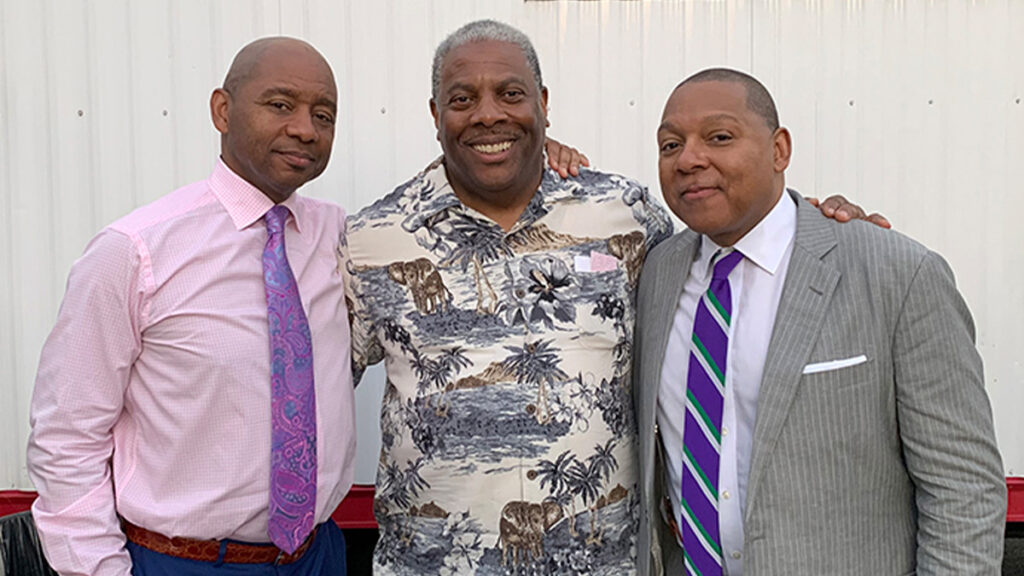
Bell then delivers the punchline to his story, adding with a rueful smile, saluting genuine musical talent with good grace and kindness, “Little did I know that this gentleman would later become the most prolific trumpeter of my generation – Wynton Marsalis. It just goes to show you how little things can change the course of your life.” The two are still friends and have even played together occasionally.
Bell continued to play in a band whilst in college, playing private parties, corporate events and weddings two or three weekends a month and continued to do so for eight years so that he “really got to scratch the itch of being a musician and playing without having to leave and travel to do tours.”
Education
Despite the initial turmoil of becoming a father during his teenage years and all its challenges, Bell resolutely decided to pursue his education. His girlfriend, who later became his wife during his final year of college when their son was four, also chose to continue her studies.
Having majored in Political Science at Nicholls State University, Bell initially nurtured thoughts of going to Law School, but an internship with a judge in Thibodaux resolutely turned him off the idea, as he found it rather dull and devoid of passion. Instead, he interned with then-freshman Congressman Billy Tauzin, working for him in the district office. As Bell says with relish, “That was exciting because I got to go into the district, I got to help people, and I got to meet many people.”
Reflecting on the leadership he learnt interning with Tauzin, he says, “That opened my eyes to a real proven leader, and somebody who was a master at developing, building and maintaining relationships.”
First Job
resh out of college, Bell was recruited as an employee relations coordinator by the CEO of an oil field service company in New Iberia, which, due to the recent oil boom, had grown from a 75-person company to having over 800 employees. Yet the rapid growth had created many problems for the company, which ironically allowed Bell to look at ways to try and mitigate some of those challenges, such as high workforce turnover and increased absenteeism.
Explaining his motivation for not pursuing law school, Bell adds, “Along with the fact that people that I went to school with and some of these folks never went to college, but were making a lot of money in the oil industry – it was like a gold rush. That’s what really sealed the deal for me: I wanted to do this, not go to law school for three more years, but do something more immediate.”


Journey Into Healthcare
Call it serendipity, but Bell’s entry into the professional world of healthcare in the mid-1980s was largely due to a rather tenuous introduction – his elder brother’s roommate from college.
As Bell explains in his avuncular manner, full of bonhomie, “My older brother was roommates at the University of Louisiana Monroe with a guy who went to work for Humana, which at the time was the largest for-profit hospital chain in the country. They created this health services division that would focus on developing urgent care clinics across the country – urgent care clinics being these walk-in clinics, though theirs was for-profit, like a retail type model.” Bell continues, still passionate about the opportunity he was afforded. “They needed young, talented individuals who could follow their recipe to make that work. You didn’t have to have prior healthcare experience, and they provided an infrastructure that allowed you to just focus on the day-to-day operations.”
New Horizons
For Bell, this was a welcome, exciting new opportunity that he seized avidly and relished. However, it came with an unexpected twist. “I trained for six weeks with plans to go to St. Louis, and at the 11th hour, in the fifth week, they came to me and said we have an opportunity for you in Columbus, Ohio. They had an area manager that resigned and asked if I would be willing to go there.” He adds, with an admirable sense of pioneering, frontier spirit, “So I loaded up the family, and we went to Columbus, Ohio. I had never been to Columbus before.”
Bell was duly responsible in his new role for seven existing clinics and two new startup clinics, all at the tender age of 27. Looking back, he readily admits, “Needless to say, it was a very steep learning curve for me. It was just different in every way that I could imagine.”
But, thanks mainly to his clothing store work experience as a teenager, where he has grown accustomed to working with older white men, Bell was in no way disconcerted by the different demographic he was now interacting with. “Working for that clothing store had given me the confidence and the ability to not be intimidated and to just use the gifts that God has given me – to listen, to understand, and then to build the support base that I needed to help me do what needed to be done.”
Yet within a year of being there, the seven clinics, plus the other two that Bell was responsible for, were all sold to Ohio State University Hospital – itself a very different entity. As Bell explains, “Ohio State was a beast. This 1,100-bed hospital, it was very bureaucratic. Everybody around me had advanced degrees.”
An independent auditor assessed and approved Bell’s ability to continue leading the group of clinics, and the hospital CEO kept faith in him. Inspired by that vote of confidence in his ability, Bell did not fail to deliver.
In fact, Bell remembers to this day that meeting with all the VPs, directors and managers, seated at the head table next to the CEO. As he recalls, thinking back to that auspicious day, “This was probably one of the most daunting things you could ask for as a young African-American new to healthcare, sitting next to one of the premier CEOs in the country who leads this world-class hospital. And he said, “George, I’m counting on you.”
Bell continues, the gratitude for the CEO’s faith in him still apparent in his tone, “That was the beginning of my journey in healthcare – of not just working in the outpatient arena, but being a part of what’s called an integrated delivery system, where you’re part of a hospital that owns physician clinics.”
Bell duly spent five years at The Ohio State University Hospital, then went to another competing system to do the same again in a different setting and with a different model, so then spent another five years growing and managing physician practices.
Outside of his day job, Bell also attended The Ohio State University in his spare time, where he pursued graduate-level courses in Public Policy and Management. He later completed the highly acclaimed Wharton School of Business Health Care CEO Talent Development Course.
The Move Back To Louisiana
Bell moved back to Louisiana from Ohio following his father’s prostate cancer diagnosis, eager to be near him. He was then enlisted to work for a budding HMO, an insurance company strategically established to vie for the Medicaid-managed care contract being considered by Louisiana. African American physicians primarily owned this company. However, Louisiana decided not to pursue it, leaving Bell with a major decision – whether to try and convert to a commercial insurance strategy. Sadly, after eighteen months of deliberation, it was decided to throw in the towel, and Bell subsequently lost money.
He then decided to return to working with physicians, so he started consulting, which led him to develop a client base of doctors in Baton Rouge. Word of his work got back to the local health system at Baton Rouge General Hospital, and after a year and a half of consulting, Bell then went to work directly for Baton Rouge General to oversee their employed physician division.
Following a rocky beginning marked by staff departures and the passing of his mother, Bell demonstrated his abilities and secured the faith and assurance of the doctors. This marked the commencement of his tenure with Baton Rouge General, during which he expanded the group from 14 to over 85 physicians in 12 years. Bell earned several promotions, including roles as vice president, physician group president, senior vice president, and administrator of one of the two hospitals. Bell devoted 16 years of his professional life to Baton Rouge General Hospital.
Journey Back To Music
During that period, Bell also found his way back to his first true love – playing music, particularly the trumpet. Having modestly dabbled a little while living in Ohio, playing every Sunday at church services, music was still his abiding and animating passion. As he admits with a chuckle, breaking his infectious ardour and love of it down, “I love music. I don’t golf. I don’t hunt. I don’t fish. I mean, I play music.”
Working at the hospital in Louisiana, Bell was particularly struck, as well as saddened, by the number of patients who did not receive any visitors, especially during the holiday season, and, moved by the plight of their apparent loneliness, would go to their rooms to play music for them, even giving it an appropriately medical-sounding name. Explaining it thus, “I called it the music rounds, similar to the way physicians make rounds.”
Word quickly spread about Bell’s musical prowess and the calibre of his playing, so he was asked to put together a concert for high-end donors to the hospital as a thank-you, which became an annual event due to its overwhelming success. More concerts followed, be it for Valentine’s or holiday jazz ones. Having started these concerts in 2011 at the Manship Theatre in Baton Rouge, Bell has hosted over 25 mostly sold-out concerts with his band, the George Bell and Friends ensemble
Prior to the pandemic in 2020, Bell regularly served as a member of the music ministry band at his church, Word of Life Christian Center, and has also volunteered in local schools to promote and support music education.
Healing Power Of The Arts
Given his day job in hospitals and his long-standing, all-consuming passion for music, and having seen how the two can be such productive bedfellows when playing to patients on the wards to lift their spirits and aid their recovery, Bell is a fervent believer in the healing, uplifting and transformational power of the arts. He proudly states, “At Baton Rouge General, we started an arts and medicine programme in 2012, for which I was the executive lead.” He continues, “We used to have a Friday concert during lunch at one or both of our hospitals. Those concerts were just nice intimate concerts – it may be a school group, a local artist or a trio.” Looking back on what he accomplished, he is clear. “It’s one of the legacies that I am most proud of – that we were able to bring in the healing power of arts, be it visual, music, and sculpture, into the hospital.”
Capital Area United Way Non-Profit
At the end of 2015, Bell retired from Baton Rouge General Hospital after 16 years, yet he felt he was still young enough to contribute to society in other meaningful and important ways.
Having already served on several non-profit boards, he was familiar with a non-profit organisation called United Way since many of the boards he had previously served on had received funding from them. Then at a Rotary Club meeting, someone mentioned to him, “Hey, George. Have you ever thought about leading the United Way?”
Thus Bell decided to throw his hat in the ring for the top position, which had recently become vacant. Bell was then selected from close to a hundred candidates who applied, and he duly started in August 2016 as president and CEO of Capital Area United Way, beginning only two weeks before devastating floods struck the Baton Rouge region. He was thus instrumental in coordinating the United Way’s efforts in the city’s recovery.
Proud of the organisation he leads and of the abundance of good work it does to ameliorate the local community, Bell continues to elucidate the non-profit’s modus operandi: “So instead of all of these local non-profits going to all of these companies, asking them for money, we go to them in a very professional, structured way and request the opportunity to go to their employees, to get them to give to United Way via workplace pledges. We then collect those pledges over the course of a year. That allows us to pool those dollars and then make grants to other non-profit organisations that can benefit the community.”
Bell then succinctly explains why people choose to give to United Way. “To help benefit the community, instead of them having to go through all of the effort to vet other organisations. We give them one channel, one portal through which they can do that in a way that’s efficient and transparent through payroll deduction.”
Thanks to Bell, corporate social responsibility is also high on United Way’s agenda, with partnerships with many major companies, such as ExxonMobil, Shell, Dow, Turner Industries and Nucor Steel Louisiana.
As to how it is decided which local organisations will be supported, Bell is transparent and lucid, “We have committees of volunteers who help us make the decisions as to whom we donate, and at what level, based on community priorities.” With characteristic zeal and an over-arching sense of mission, he adds, “The four focus areas are health, education, income stability, and basic needs.”
Under Bell’s galvanising, people-centric leadership, CAUW has become one of the most recognised and respected non-profit organisations in the Greater Baton Rouge region, having received the 2017 Force For Good Leadership Award from the Louisiana Association of Non-profit Organizations. It was selected as one of 384 recipients of a multi-million dollar grant from MacKenzie Scott in 2020 and also named one of the area’s Best Places to Work in 2021. In October 2022, under Bell’s tenure, United Way’s annual Jambalaya Jam raised $195,000 for the community in Baton Rouge. Bell himself also completed the United Way Worldwide Executive Leadership Development Program in 2021.
Bell certainly has his work cut out. As a funder, CAUW grants over $4 million in competitive impact and project grant funding annually to local non-profit organisations. In addition, in 2020 CAUW launched and hosted 225 Gives, a community-wide day of-giving event that has raised over $6 million in three years, providing support for over 200 non-profit organisations. Such impressive metrics make Bell rightly proud of the work that his organisation is doing and the difference it is making.


Active In The Community
Given the ethos of community service and compassion which animates him, especially after such a long career as a healthcare executive, it is no surprise that Bell has been remarkably active in the Baton Rouge community for many years. His tireless input has been acknowledged on several occasions, having been presented with the Camelot College Community Award of Excellence in 2015 and the 2016 Medical Professional of the Year Award by the Mu Zeta Chapter of Zeta Phi Beta Sorority.
His affiliations to local charities and arts institutions are legion. He currently serves with the Louisiana Association of United Ways as Board Chairman, My Brother’s Keeper, Baton Rouge, as the past Steering Committee Chairman, and as a past board member with the Salvation Army Board of Advisors, with the Arts Council of Greater Baton Rouge, Baton Rouge Symphony Orchestra, as Education Committee Chairman. In addition, he has also been a former board member of the Rotary Club of Baton Rouge.
Family
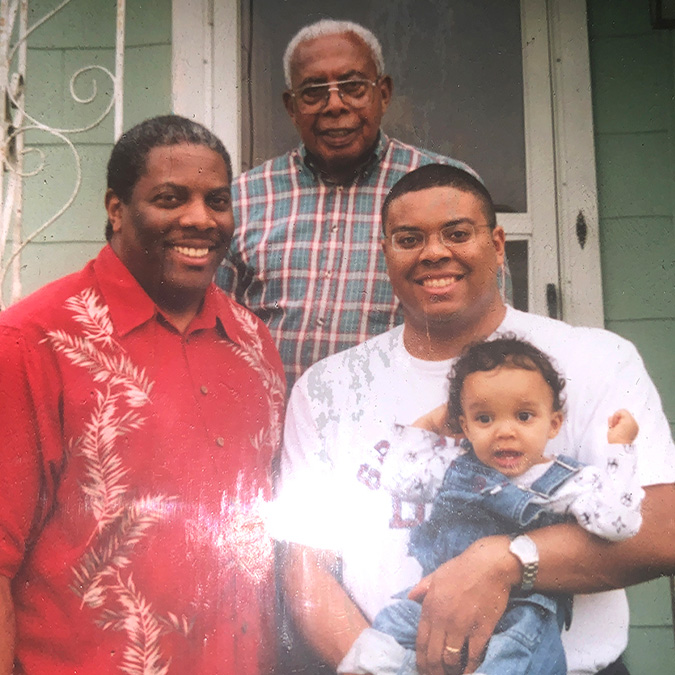
Given his many work commitments and philanthropic endeavours, Bell’s family are his rock, and he lives in Baton Rouge with his wife, Terri. Together, they have one son, Gordon (Dana), and four grandchildren, Talia, Seyan, Grant, and Gianna, to whom he is very close.
Looking back at his remarkable career journey, Bell is stoical and unrepentant when asked if he would have changed anything. “I had to learn a lot as a young father and husband. I was growing up.” He then adds, with a tone of incredulity creeping into his voice, referring to Terri. “She’s still the love of my life. We have been married for 42 years.”
Three Wishes
Bell’s desires are intelligently divided into a tri-partite structure of family, community and country when it comes to the proverbial three wishes he would like were he granted them. He says eloquently and thoughtfully, “I wish for continued health and completeness for my wife, myself, my family, and that we may continue to grow in every way, spiritually, to grow in love, and grow in maturity.”
Continuing with purpose, he states, “Secondly, I pray for our community. We were fortunate to have access to opportunities because of my parents, but I pray for those who don’t have those opportunities, especially the younger generation, the kids. There are a lot of hopeless kids and hopeless folks out there.”
Thirdly, with genuine insight into the glaring discrepancy between the country’s founding constitutional principles and the lived experience of many of its citizens, he concludes with passion and integrity, “I pray for our country that we can have a place where we embody the principles that we talk about, that we say we’re founded upon. That we truly embody that respect for others, that respect for life and other people’s ability to pursue their happiness.”
Conclusion
George Bell is an intensely likeable, decent and inspiring man who has achieved a vast amount in his life, professionally and personally, yet who retains a sense of endearing humility. A big man, both in physical stature and personality, and one at ease with himself and the tangible good he has managed to effect in both the health care field and now non-profit arena, Bell has the jazz man’s swagger, but the heart of one selflessly dedicated to improving the life chances of others.
Long may he keep playing his beloved trumpet, making beautiful, mellifluous jazz music and also leading United Way with a deft combination of dynamism, integrity and panache, ensuring that community ventures are funded in ethical ways which directly boost the health, happiness and flourishing of Baton Rouge’s citizens.